Warm Up with My Miso Coconut Noodle Soup Recipe
I reach for this miso coconut noodle soup when I want big umami without fuss — it’s creamy, bright, and calm in a bowl.
I make it in one pot and it’s ready in about 20–30 minutes, depending on how fast you chop. The base is rich from coconut cream and layered with savory miso, garlic, and a splash of sesame oil for depth.
I whisk the miso off the heat so the probiotics and fresh flavor stay lively, and I use flexible ramen or whatever noodles I have on hand. Toppings like mushrooms, bok choy, edamame, or a squeeze of lime let you tailor each bowl to your taste.
This recipe is friendly to swaps, quick on time, and comforting on chilly nights — practical cooking that still feels special.
Key Takeaways
- One-pot method gets dinner ready in about 20–30 minutes.
- Finish miso off the heat to preserve flavor and brightness.
- Use ramen, udon, or pantry noodles — the broth carries the dish.
- Add sesame oil and a touch of tomato paste for layered flavor.
- Top each bowl with crunchy greens, mushrooms, or beans for texture.
A Cozy One-Pot Bowl that’s Fast and Flexible
For a comforting meal in under half an hour, this single-pot bowl hits the spot. I keep the method simple so the flavors shine and the cleanup stays minimal.
At a glance, plan about 20–30 minutes total time. The recipe yields roughly four bowls, so you’ll have dinner and easy leftovers. Everything cooks in the same soup pot, which saves time and dishes.
At-a-Glance: Time, Yield, and What Makes this Special
- Total time: about 20–30 minutes, depending on chopping and your chosen noodles.
- Yield: serves around 4 bowls — great for weeknight dinners and lunches.
- One-pot approach: build the rich broth right in the pot, add vegetables and tofu for balance.
- Finish off heat: whisk the miso off the heat to keep the broth nuanced and smooth.
| Key Detail | Typical Value | Why it matters |
|---|---|---|
| Cook time | 20–30 minutes | Fast prep and cooking for busy evenings |
| Yield | ~4 bowls | Feeds a family or makes reliable leftovers |
| Main add-ins | Bok choy, mushrooms, edamame, tofu | Color, texture, and balanced nutrition |
| Noodle options | Ramen, udon, or pantry pasta | Use what you have; the broth carries the dish |
Miso Coconut Noodle Soup
I keep this bowl in my weeknight rotation because the base is rich but simple to build. Start with canned coconut milk or coconut cream for the body; I use one cup of full-fat milk when I want a lush texture, or more cups of lighter milk for a thinner finish.
Core Ingredients
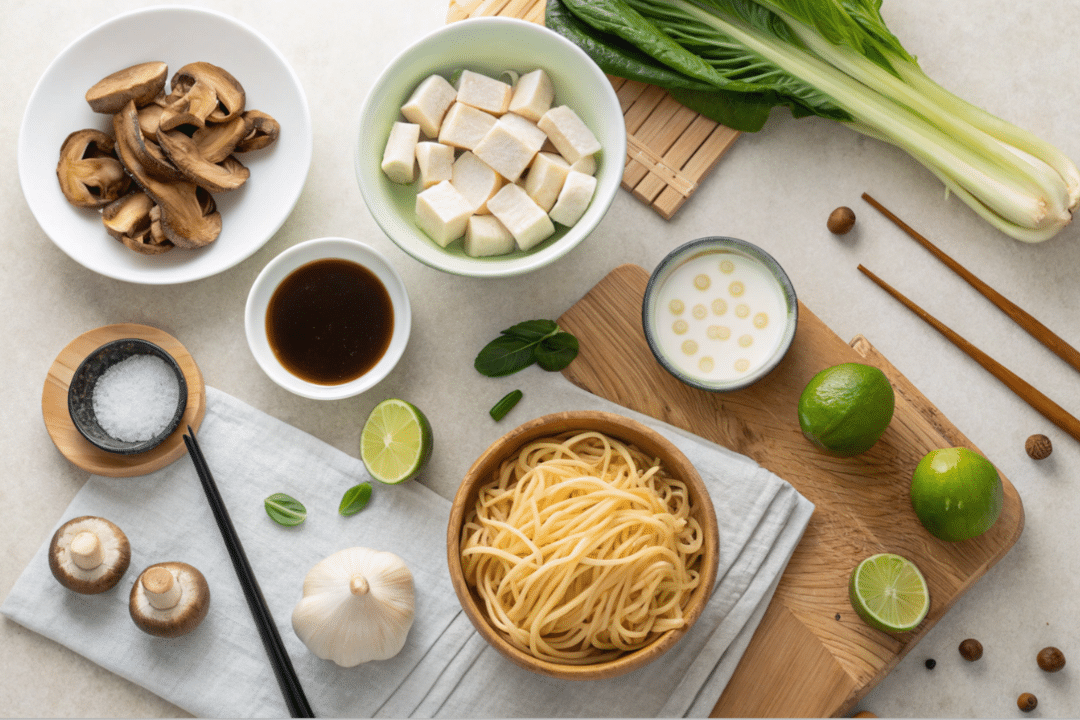
Miso paste, dissolved off the heat, preserves a bright, complex flavor. Use vegetable broth as the savory backbone; in a pinch, water plus a splash of soy sauce works. Pick ramen, udon, or soba — even spaghetti will do when you’re low on pantry options.
Smart Swaps and Diet Notes
For gluten-free bowls, swap tamari and GF noodles. To skip soy, try rice or chickpea miso and coconut aminos for a lower-sodium sauce alternative. If you want to reduce fat, use light milk and skip the full-fat option.
Add-Ins and Toppings
- Sautéed mushrooms and tender bok choy for texture.
- Edamame or tofu for extra protein.
- Finish with a drizzle of sesame oil, a sprinkle of sesame seeds, and a squeeze of lime.
How to Make It: Creamy Coconut Broth, Silky Noodles, Perfect Miso Finish
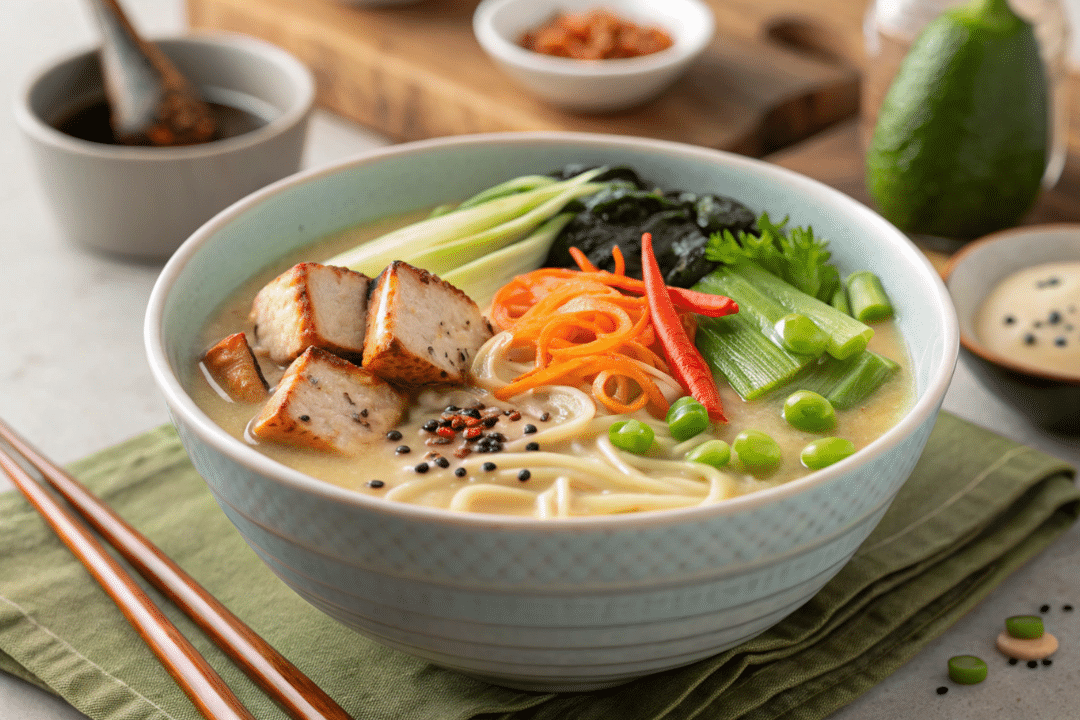
I keep the method tight and practical. Work in a large pot so you can build flavor without crowding ingredients.
Sauté and Build Flavor
Warm a soup pot over medium heat. Add a tablespoon of oil and a splash of sesame oil, then sauté garlic and shallots or green onions for 1–2 minutes until fragrant.
For added depth, stir in a tablespoon of tomato paste and cook for an additional minute to enhance the flavor.
Simmer the Broth and Cook the Noodles
Pour in the vegetable broth and a cup of water, if needed, then add the coconut milk. Bring to a gentle simmer—avoid a rolling boil to keep the milk from splitting.
Add ramen or udon and cook noodles to just shy of tender, usually 3–5 minutes. Taste at the minute mark and check every minute from there.
Off-Heat Finish and Serve
Ladle hot broth into a small bowl and whisk in miso paste until smooth. Turn off the heat, then stir the miso slurry into the pot so the live flavor stays bright. Fold in mushrooms, bok choy, and tofu. Add soy sauce to taste, then finish with a squeeze of lime and a sprinkle of sesame.
| Step | Timing | Common issue | Fix |
|---|---|---|---|
| Sauté aromatics | 1–2 minutes | Burning | Lower the heat, add oil |
| Simmer broth | 3–5 minutes | Milk splitting | Keep the gentle simmer, whisk in a splash of milk |
| Cook noodles | 3–5 minutes | Soggy noodles | Cook last or in a separate pot |
| Off-heat miso | 1 minute | Bitter/overcooked miso | Mix with hot broth off the heat |
Conclusion
For an easy, satisfying dinner, I often turn to this rich, adaptable bowl that holds up well as leftovers. Make the broth ahead and cook the noodles separately if you want a crisp texture—then combine them just before serving so the bowls stay perfect.
Bake tofu crusted with sesame seeds for added crunch, or set out mushrooms, edamame, chili oil, and extra seeds so everyone can build their own bowl of ramen. Finish each bowl with a splash of lime to brighten the richness of the coconut miso.
Store leftovers in two parts: broth and tofu together, and noodles in a small amount of the broth. Rewarm gently over low heat, add noodles, and dinner is ready in minutes.
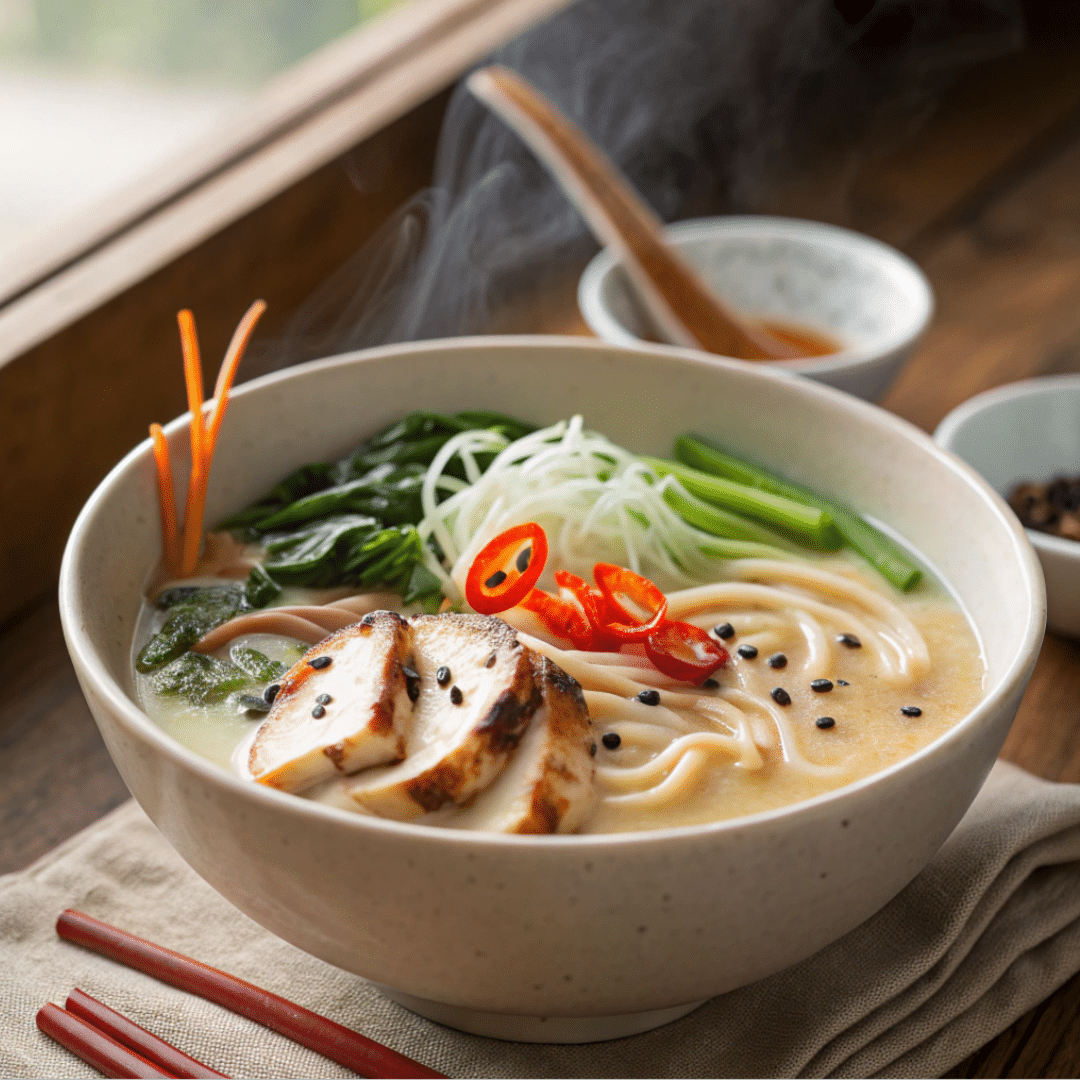
Miso Coconut Noodle Soup
Ingredients
Method
- Warm a soup pot with oil and a splash of sesame oil, then sauté garlic and shallots for 1–2 minutes until fragrant.
- Stir in tomato paste and cook for one minute to deepen flavor.
- Pour in broth and water if needed, then add coconut milk and bring to a gentle simmer.
- Add your chosen noodles and cook for 3–5 minutes until just shy of tender.
- Scoop hot broth into a bowl, whisk in miso, then turn off the heat and stir the miso mixture back into the pot.
- Fold in mushrooms, bok choy, tofu, or edamame and adjust salt or soy sauce to taste.
- Finish with lime juice, sesame oil, and sesame seeds before serving.
Notes
FAQ
How long does this warm, creamy bowl take to make?
Can I swap the broth or milk for a lighter option?
What noodles work best, and how do I avoid them getting soggy?
How much miso paste should I use, and when do I add it?
Can I make this gluten-free or soy-free?
What protein additions do you recommend?
How do I prevent the milk from splitting when simmering?
What veggies and toppings brighten the bowl?
Can I make this in advance and reheat it later?
Any tips for balancing salt and umami?
About The Author

John
John Watson is the passionate food enthusiast behind MePlusFood.com. With a deep love for exploring culinary delights, he shares honest restaurant reviews, mouthwatering recipes, and culinary adventures. Join John on his flavorful journey to savor the world one bite at a time.