Garlic Scape Pesto with Bold Green Flavor
Every June, I wait for those curly green stalks to emerge. Garlic scapes are nature’s fleeting culinary treasure. My garlic scape pesto transforms these seasonal gems into a vibrant sauce.
This sauce captures the essence of summer in one remarkable bite. It celebrates a brief but magical moment. Garden flavors reach their most intense, bright potential.
Imagine a sauce that whispers of fresh garlic without overwhelming. That’s the magic of garlic scape pesto. These delicate green stems are harvested before the garlic bulb fully develops.
They offer a milder, sweeter flavor that dances between green and garlicky. My kitchen comes alive with its crisp aroma. It promises a culinary experience that’s both familiar and wonderfully unique.
Key Takeaways
- Garlic scapes are available only during a short window in early summer
- Garlic scape pesto offers a gentler, fresher garlic flavor compared to traditional pestos
- This seasonal recipe captures the essence of summer in a single, vibrant sauce
- Garlic scapes are the flowering stems of garlic plants, trimmed to help bulb growth
- The pesto can be easily prepared and frozen to preserve its fresh flavor
What Makes Garlic Scape Pesto a Seasonal Must-Try
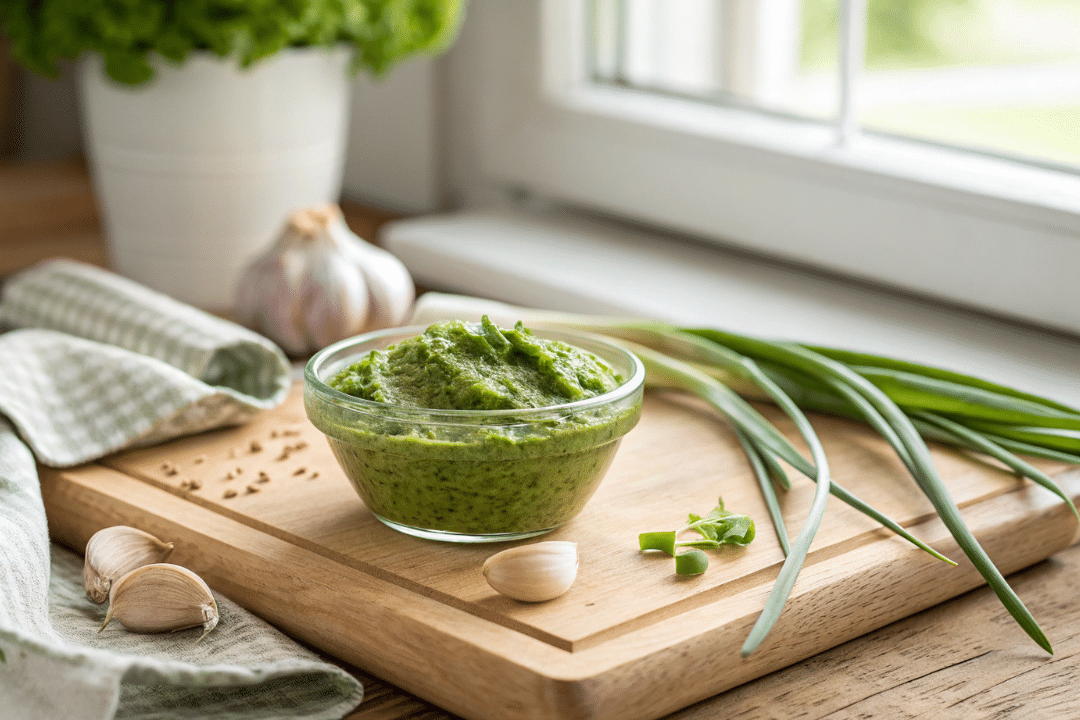
Summer brings a culinary treasure that transforms home cooking: garlic scapes. These curly green stalks are more than just a quirky farmers’ market find. They’re a seasonal ingredient that can elevate your homemade garlic scape pesto recipe from ordinary to extraordinary.
Discovering what to do with garlic scapes opens up a world of fresh, vibrant flavors. These unique green stems emerge from hardneck garlic plants. They create a delightful culinary opportunity during late spring and early summer.
Understanding Garlic Scapes and Their Unique Flavor Profile
Garlic scapes are the flowering stems of garlic plants—nature’s clever way of redirecting the plant’s energy. They boast a bright green color and a graceful, curly shape. You’ll spot them easily at local farmers markets.
Their flavor profile is a delicate dance between mild garlic and green onion. This creates a less intense taste compared to raw garlic cloves.
- Harvested in late spring
- Primarily found in hardneck garlic varieties
- Texture similar to tender asparagus
- Mild, fresh garlic flavor
Why This Pesto Stands Out from Traditional Basil Versions
Unlike delicate basil, garlic scapes bring robust qualities to pesto. They hold their vibrant green color longer and create a smoother, creamier texture when blended. The result is a pesto that’s both visually striking and packed with a gentler garlic punch.
| Characteristic | Garlic Scape Pesto | Traditional Basil Pesto |
|---|---|---|
| Color Stability | Stays bright green longer | Tends to brown quickly |
| Flavor Intensity | Mild garlic notes | Strong herbal taste |
| Texture | Creamy and smooth | Can be more delicate |
By embracing garlic scapes, you’re not just making a pesto—you’re capturing a moment of seasonal culinary magic. Simple ingredients transform into something truly special.
How to Make Homemade Garlic Scape Pesto
Learning how to make garlic scape pesto is easier than you might think! This seasonal delicacy transforms fresh garlic scapes into a vibrant, green sauce. It elevates everything from pasta to sandwiches.
I’ll walk you through the process of creating a delicious pesto. It captures the essence of summer’s most exciting ingredient.
Here are the key ingredients you’ll need for an authentic garlic scape pesto:
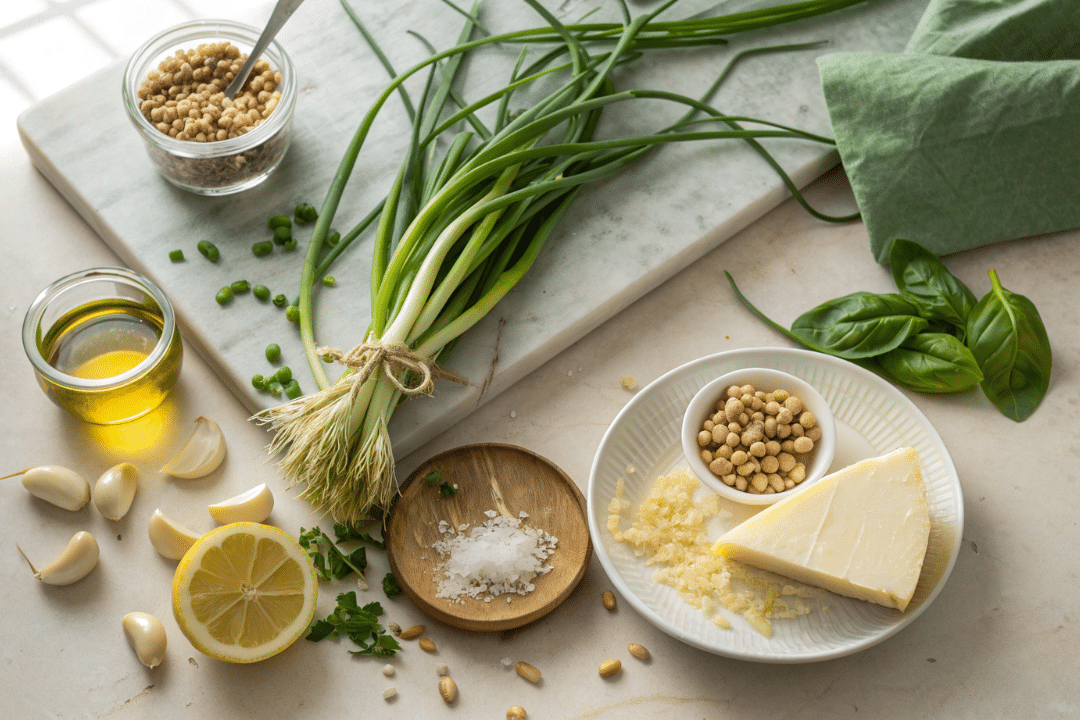
- 1-1.25 cups chopped garlic scapes (about 8-15 scapes)
- 1/3 cup pine nuts (or alternative nuts)
- 1/2 cup grated Parmesan cheese
- 1/2 cup extra virgin olive oil
- 2 tablespoons fresh lemon juice
- Salt and pepper to taste
You can easily substitute the pine nuts with sunflower seeds for a nut-free version. Replace Parmesan with nutritional yeast for a vegan option. This flexibility makes garlic scape pesto pasta accessible to everyone!
Preparation steps for your homemade pesto:
- Toast nuts in a dry skillet until golden
- Trim woody ends from garlic scapes
- Pulse scapes and nuts in a food processor
- Stream in olive oil and lemon juice
- Add cheese, blend until smooth
- Season to taste
If your garlic scapes are particularly strong, blanch them quickly in boiling water for 30 seconds. Then shock them in an ice bath. This technique softens their intense flavor while maintaining that beautiful green color.
Your homemade garlic scape pesto will keep in the refrigerator for up to a week. For more extended storage, freeze in small portions using ice cube trays. They’re perfect for quick pasta nights or spontaneous cooking adventures!
Storing Your Pesto and Making the Most of Garlic Scape Season
Proper storage keeps your homemade garlic scape pesto fresh and flavorful. Store it in an airtight container in the fridge for up to one week. Pour a thin layer of olive oil on top to protect its bright green color.
Freezing extends the life of your pesto for up to six months. Use ice cube trays to create perfectly portioned servings. Each frozen cube adds a quick burst of flavor to pasta, soups, or other meals.
Make a double batch of your seasonal garlic scape recipes. Keep one batch for immediate use and freeze the other for later use. Visit local farmers’ markets in late spring and early summer for the freshest scapes.
Don’t have a food processor? An immersion blender or mortar and pestle works great too. Dairy-free? Swap cheese with nutritional yeast or leave it out completely. This recipe is simple and adaptable, so feel free to experiment!
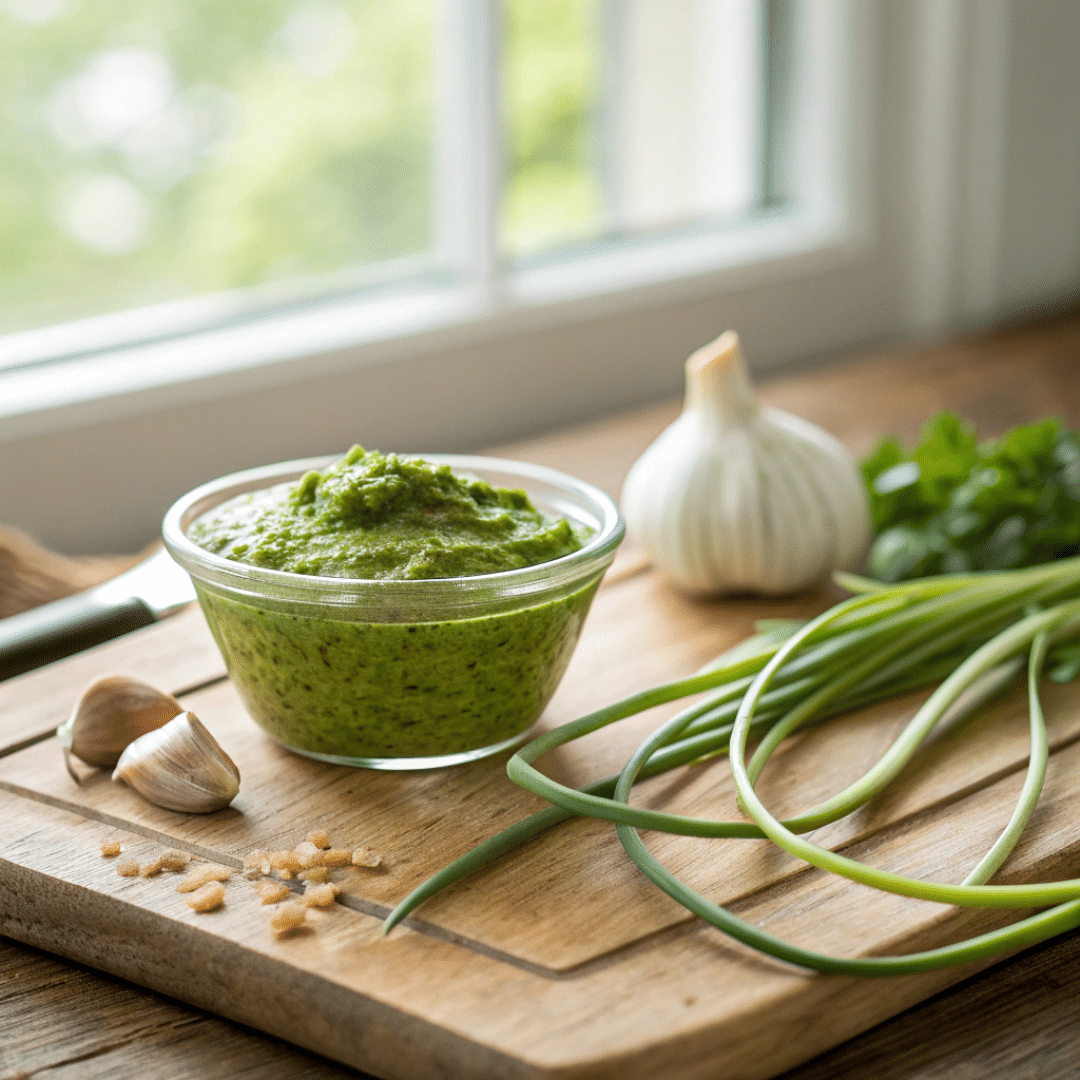
Garlic Scape Pesto
Ingredients
Method
- Toast nuts in a dry skillet until golden and fragrant.
- Trim woody ends from garlic scapes.
- Pulse garlic scapes and toasted nuts in a food processor until roughly chopped.
- Slowly stream in olive oil and lemon juice while blending to form a smooth paste.
- Add Parmesan or nutritional yeast and blend until creamy.
- Season with salt and pepper to taste.
- Optional: blanch scapes in boiling water for 30 seconds and shock in ice bath for milder flavor and brighter color.
- Store in an airtight container with a thin layer of olive oil for up to one week or freeze in ice cube trays for up to six months.
Notes
FAQ
What exactly are garlic scapes?
Can I make garlic scape pesto if I don’t have a food processor?
How long will garlic scape pesto last in the refrigerator?
Is there a way to make this pesto vegan or dairy-free?
Where can I find garlic scapes?
Can I freeze garlic scape pesto?
What else can I do with garlic scape pesto besides pasta?
About The Author

John
John Watson is the passionate food enthusiast behind MePlusFood.com. With a deep love for exploring culinary delights, he shares honest restaurant reviews, mouthwatering recipes, and culinary adventures. Join John on his flavorful journey to savor the world one bite at a time.