Lemon Garlic Roast Chicken with Root Vegetables
Jump to Recipe
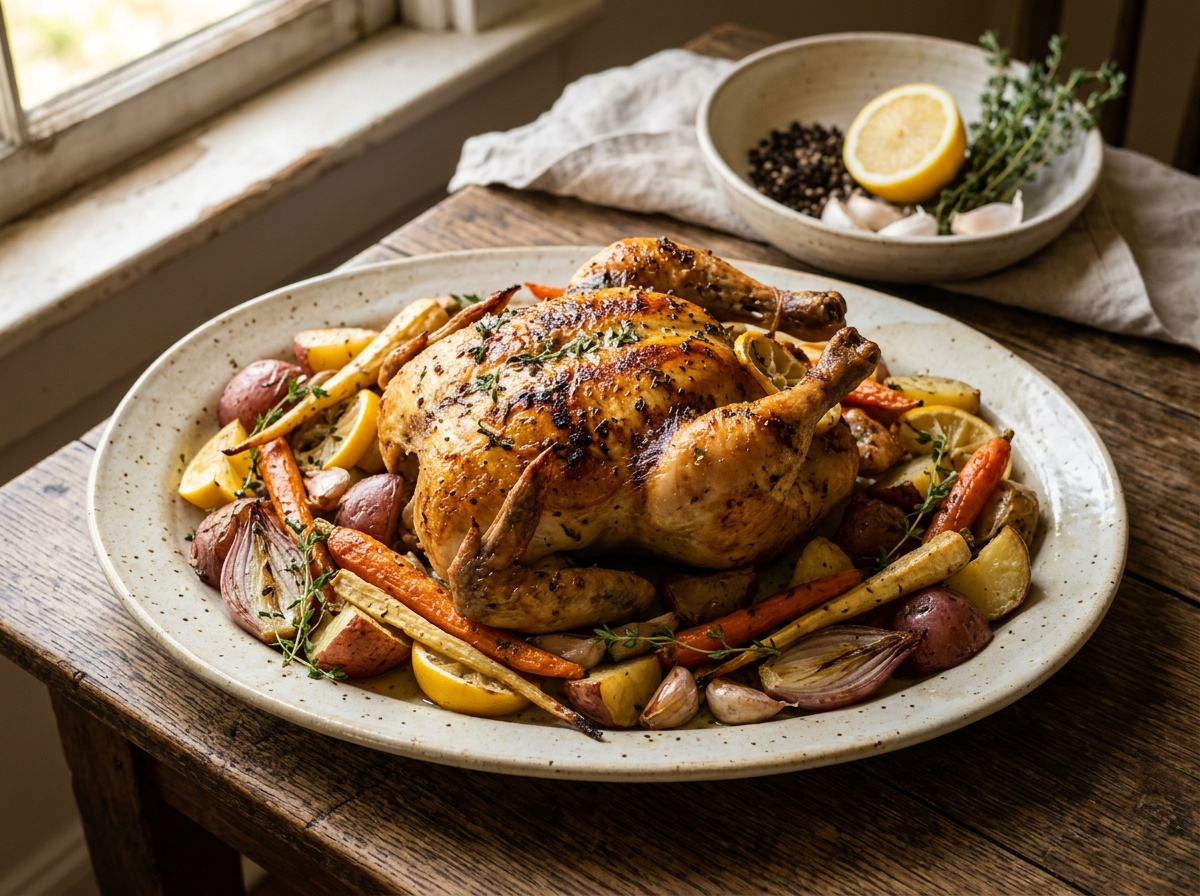
A whole roasted chicken is one of those dinners that looks like effort but mostly runs on oven time. You prep the bird and the vegetables in about 15 minutes, slide the pan in, and the oven does the rest.
The combination of lemon zest, minced garlic, and fresh thyme goes under and over the skin, which keeps the breast meat from drying out and gives the skin a clean, sharp flavor.
Root vegetables sit beneath the chicken the entire time. They absorb the drippings as the bird roasts, turning soft inside and slightly caramelized at the edges — the same effect you get with the root vegetables in duck confit, where slow oven heat does the work. Carrots, parsnips, potatoes, and shallots all work well here.
This is a proper weeknight-to-Sunday crossover. It takes about 1 hour 40 minutes total, including resting, but only 15 minutes of hands-on work.
Why You’ll Love This Recipe
- One pan means fewer dishes after dinner
- Root vegetables cook in the chicken drippings
- Garlic-lemon rub keeps the breast meat juicy
- Leftovers make excellent next-day sandwiches or soup
Ingredient Notes
- Whole chicken: A 1.5 to 1.8 kg bird feeds four comfortably. Pat it completely dry before seasoning – surface moisture is the main reason skin stays pale instead of browning.
- Lemon: You need the zest of one lemon for the rub and the juiced halves to stuff inside the cavity. One large lemon handles both jobs.
- Garlic: Six cloves minced goes into the rub. If you want a milder result, swap two of the minced cloves for a few whole crushed cloves tucked into the cavity with the lemon.
- Fresh thyme: Fresh thyme holds up to the roasting time without turning bitter. Dried thyme works at half the quantity, but the aroma is less pronounced.
- Root vegetables: Carrots, parsnips, and Yukon Gold potatoes are the base combination. Turnips, sweet potatoes, or beets can replace any of them – just cut everything to roughly 4 cm pieces so they cook evenly.
- Olive oil: Used both in the rub and to coat the vegetables. A neutral oil like avocado oil also works if you want a higher smoke-point option.
Lemon Garlic Roast Chicken with Root Vegetables
Ingredients
Method
- Heat the oven to 220 C / 425 F. Take the chicken out of the fridge 20 minutes before cooking so it comes closer to room temperature.
- In a small bowl, combine the minced garlic, lemon zest, stripped thyme leaves, olive oil, salt, pepper, and paprika to form a thick paste.
- Pat the chicken dry with paper towels. Loosen the skin over the breasts by sliding your fingers gently underneath. Push half the garlic paste under the skin and spread it evenly over the breast meat.
- Rub the remaining paste all over the outside of the chicken, including the legs and back. Stuff the cavity with the lemon halves and the 2 whole thyme sprigs. Tie the legs together with kitchen twine.
- Toss the potatoes, carrots, parsnips, and shallots in a large roasting pan with olive oil, salt, pepper, and dried thyme until evenly coated.
- Spread the vegetables in a single layer across the pan, leaving a clear space in the center for the chicken.
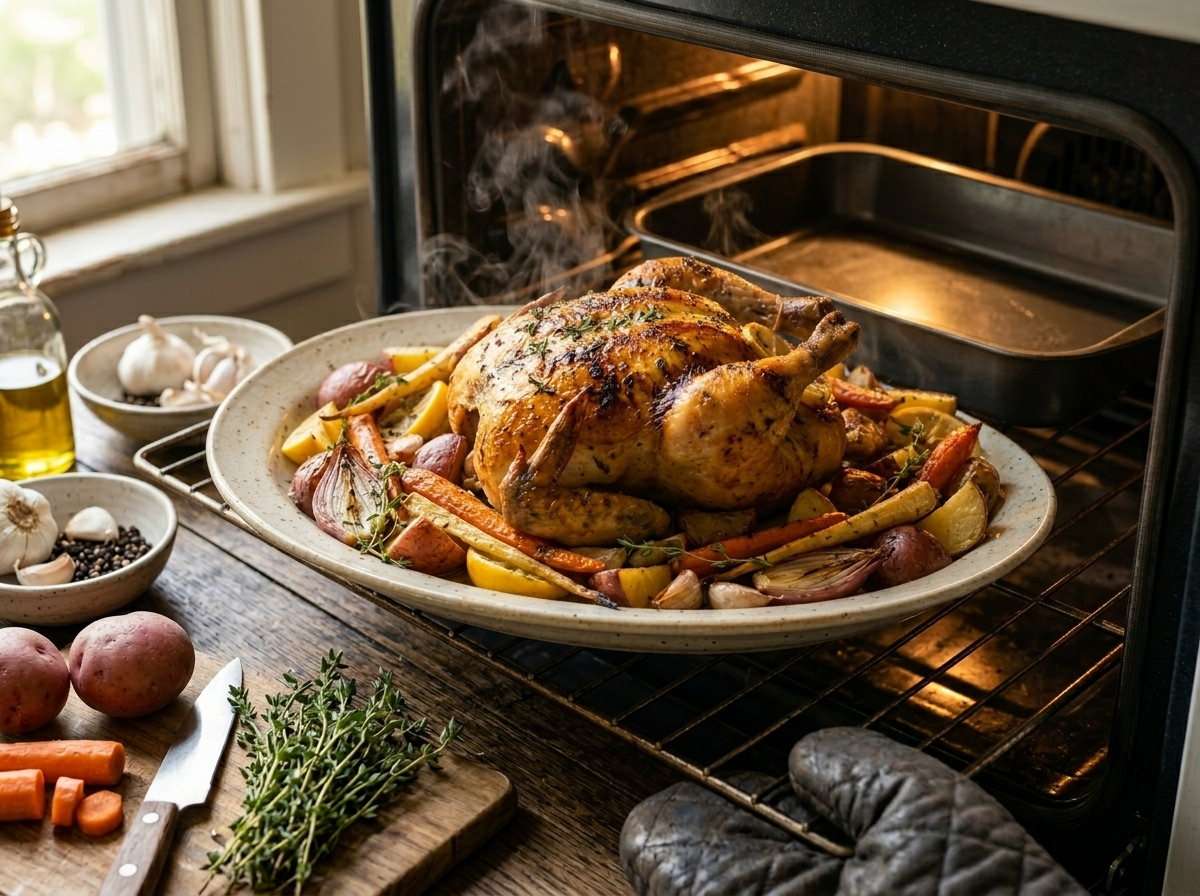
- Place the chicken breast-side up on top of the vegetables in the center of the pan. Transfer to the oven and roast at 220 C / 425 F for 20 minutes until the skin starts to turn golden.
- Reduce the oven temperature to 190 C / 375 F and continue roasting for 60 to 70 minutes, until the skin is deep golden brown and crisp. Stir the vegetables once halfway through to prevent sticking.
- Check doneness by inserting an instant-read thermometer into the thickest part of the thigh, away from the bone. It should read 74 C / 165 F. The juices should run clear when pierced.
- Transfer the chicken to a cutting board and tent loosely with foil. Rest for 10 minutes before carving.
- Return the pan of vegetables to the oven for 10 minutes if they need more color while the chicken rests.
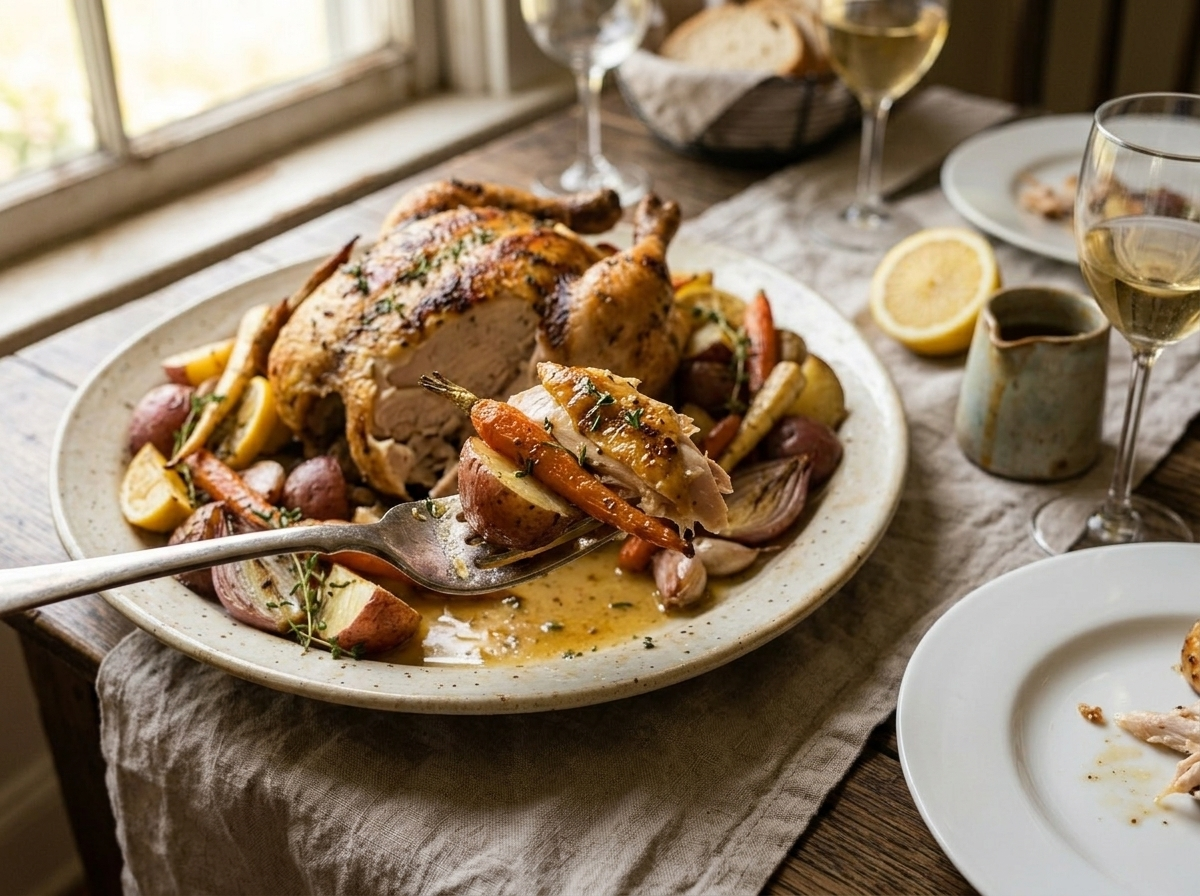
- Carve the chicken and serve over the roasted vegetables. Spoon any pan drippings over the top before serving.
Notes
Tips for Success
- Dry-brine the chicken uncovered in the fridge for at least 4 hours before roasting for noticeably crispier skin — the same principle behind the crispy skin on harissa roasted chicken thighs.
- Push the garlic-lemon butter under the breast skin directly to season the meat, not just the surface.
- Cut root vegetables to uniform 4 cm chunks so they finish at the same time as the chicken.
- Rest the chicken on a cutting board for 10 minutes before carving to let the juices redistribute.
- Check doneness with an instant-read thermometer – 74 C / 165 F at the thickest part of the thigh, not touching bone.
Variations
- Swap thyme for rosemary and add 1 tsp smoked paprika to the rub for a deeper, earthier flavor profile.
- Use bone-in chicken thighs instead of a whole bird and reduce the cook time to 40 to 45 minutes at 200 C.
- Add a handful of pitted olives and a few anchovy fillets to the vegetables for a Mediterranean-style pan sauce.
Storage and Reheating
Leftover chicken and vegetables keep well in an airtight container in the fridge for up to 3 days. Store them together so the vegetables continue to absorb moisture from the meat.
To reheat, place everything in a covered baking dish with 2 tablespoons of water or chicken stock and warm at 175 C / 350 F for 15 to 20 minutes. This prevents the breast meat from drying out on the second day.
The cooked chicken freezes well for up to 2 months. Freeze it off the bone in portions. The roasted vegetables become soft after freezing, so they’re better used in a soup or hash than served as-is.
Serving Suggestions
The pan already includes your starch and vegetables, so it eats like a full meal on its own. A simple green salad with a sharp vinaigrette cuts through the richness of the drippings.
If you want something extra, a bowl of chicken gravy made from the pan drippings and a splash of white wine goes well alongside. Crusty bread to mop the pan is the other easy addition.
Leftover carved chicken works in sandwiches the next day with mustard and watercress, or pulled into a quick broth-based soup with any remaining vegetables, much like you’d repurpose the meat from a lemongrass coconut chicken curry into a second meal.
FAQ
Why is my roast chicken skin not crispy even after an hour in the oven?
The most common cause is surface moisture on the bird before it goes in. Pat the chicken completely dry and, if time allows, leave it uncovered in the fridge for a few hours before roasting. Starting the oven at a high temperature, around 220 C / 425 F for the first 20 minutes, also helps set the skin early.
Can I use chicken stock instead of stuffing lemon halves inside the cavity?
The lemon halves inside the cavity release steam and citrus oils that flavor the meat from the inside out, which stock alone won’t replicate. You can pour a small splash of stock into the bottom of the pan for extra drippings without skipping the lemon in the cavity.
How do I know when the root vegetables are done alongside the chicken?
Pierce a carrot or parsnip chunk with a skewer or paring knife – it should slide in with no resistance. If the chicken is resting and the vegetables still have a bite, return the pan to the oven uncovered for another 10 minutes at 200 C.
Can I prep the lemon garlic rub and season the chicken the night before?
Yes, and it’s worth doing. Seasoning the chicken the night before lets the salt draw out surface moisture, which dries the skin overnight in the fridge. The garlic and lemon also have more time to penetrate the meat, giving a more pronounced flavor.
Is lemon garlic roast chicken gluten-free?
This recipe is gluten-free as written – no flour, breadcrumbs, or soy-based sauces appear anywhere in the ingredient list. Just confirm your chicken stock or any added condiments are certified gluten-free if you’re cooking for someone with celiac disease.
What is the difference between spatchcock roast chicken and this method?
Spatchcocking removes the backbone so the chicken lies flat, which reduces cook time significantly and gives more even browning across the whole bird. This recipe uses a whole trussed chicken, which takes longer but keeps the breast and thigh cooking at a more similar rate and makes presentation at the table easier.
Loved this? Try these next
About The Author

John
John Watson is the passionate food enthusiast behind MePlusFood.com. With a deep love for exploring culinary delights, he shares honest restaurant reviews, mouthwatering recipes, and culinary adventures. Join John on his flavorful journey to savor the world one bite at a time.