Lemon Thyme Roasted Cornish Hen
Jump to Recipe
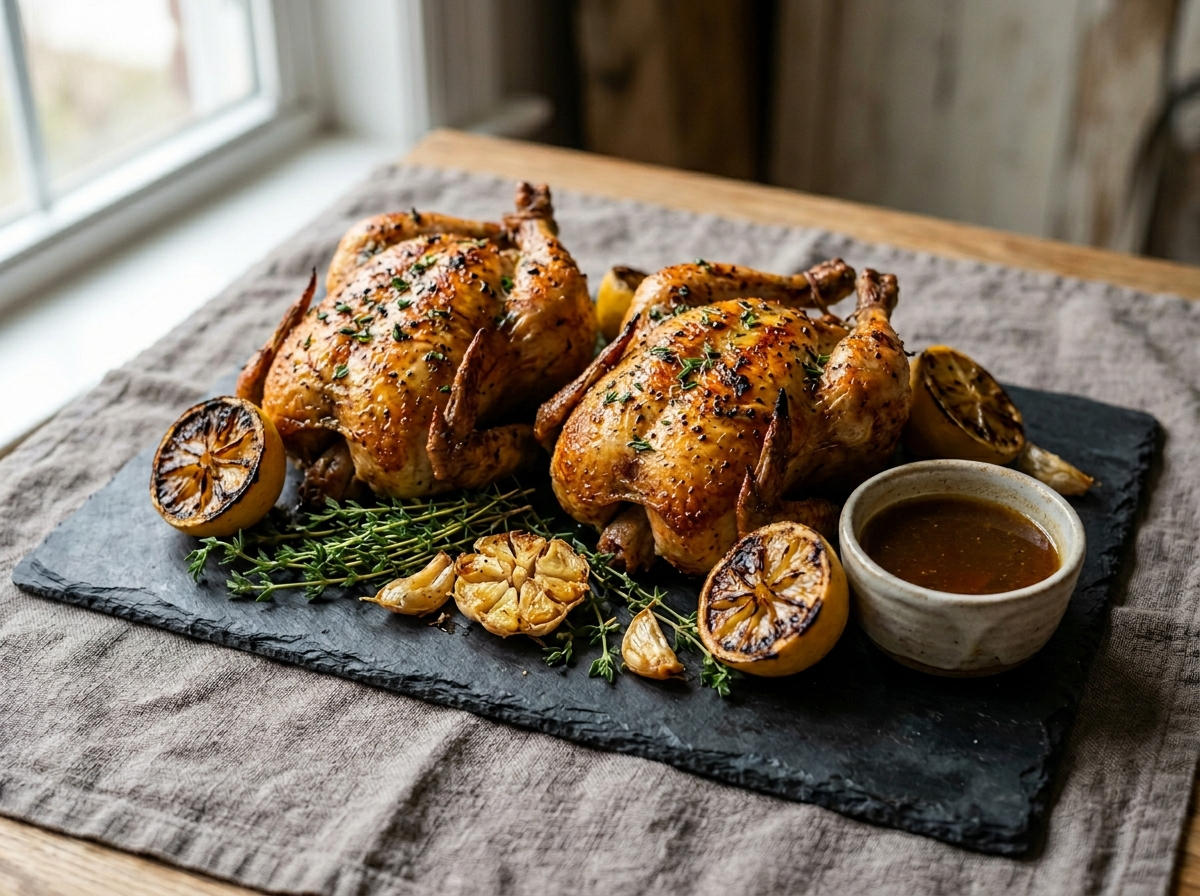
Cornish hens roast faster than a whole chicken and plate beautifully with almost no carving. Each bird is a single serving, which makes portion control effortless and presentation clean.
The technique here is straightforward: compound butter with lemon zest, garlic, and fresh thyme goes under the skin before the bird ever touches the pan. That placement keeps the fat basting the breast meat directly throughout cooking.
High heat – 220 C / 425 F – drives the skin from pale to deep golden in about 45 minutes. You’ll know they’re done when the thigh registers 74 C / 165 F on an instant-read thermometer and the juices run clear.
This comes together in about an hour from fridge to table, and most of that is hands-off oven time. One roasting pan, minimal cleanup.
Why You’ll Love This Recipe
- Individual portions mean no carving, just plate and serve
- Lemon-thyme butter under the skin flavors every bite
- High-heat roasting builds genuinely crisp, golden skin
- One roasting pan means cleanup takes five minutes
Ingredient Notes
- Cornish hens: Look for birds around 700-900 g each. Pat them dry before seasoning – surface moisture is the main reason skin stays soft instead of crisping.
- Fresh thyme: Dried thyme works in a pinch; use 1 tsp dried for every 1 tbsp fresh. Fresh gives a brighter, more floral result.
- Lemon: Use the zest and half the juice in the butter, then tuck the spent halves inside the cavity for extra fragrance during roasting.
- Unsalted butter: Softened, not melted – you need it spreadable to get it under the skin without tearing. Olive oil works as a dairy-free swap, though the skin won’t brown quite as deeply.
- Garlic: Fresh cloves minced into the butter add more punch than powder. Four cloves for two birds is assertive but balanced once roasted.
- Kosher salt: Season generously both under the skin and on the exterior. Fine table salt can over-season; use about two-thirds the quantity if substituting.
Lemon Thyme Roasted Cornish Hen
Ingredients
Method
- Mix softened butter, thyme leaves, lemon zest, lemon juice, minced garlic, salt, and pepper in a small bowl until fully combined. Set aside at room temperature.
- If prepping ahead, roll the butter in plastic wrap into a log and refrigerate. Remove 30 minutes before using so it softens again.
- Heat the oven to 220 C / 425 F. Pat the hens completely dry inside and out with paper towels.
- Starting at the neck cavity, slide two fingers gently under the breast skin on each side, loosening it without tearing. Push one-quarter of the compound butter under the skin of each hen, spreading it as evenly as possible over the breast.
- Rub any remaining butter over the outside of each hen. Season exterior generously with kosher salt and black pepper.
- Stuff each cavity with half a lemon and 2 thyme sprigs. Tie the legs together with kitchen twine.
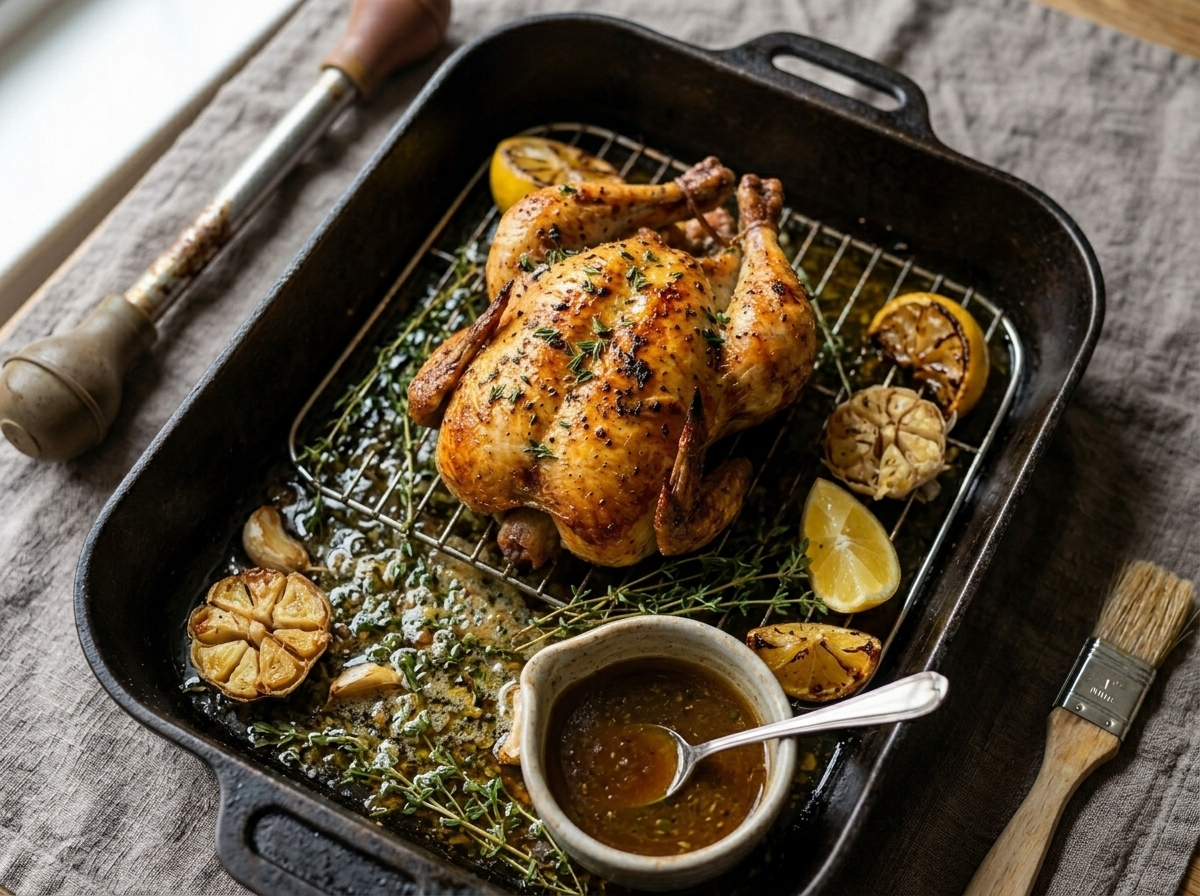
- Scatter smashed garlic cloves and remaining thyme sprigs in the base of the roasting pan. Pour in stock or wine.
- Place a wire rack in the pan and set the hens breast-side up on the rack. Drizzle exterior with olive oil.
- Roast at 220 C / 425 F for 45 to 50 minutes, until skin is deep golden brown and an instant-read thermometer inserted into the thickest part of the thigh (not touching bone) reads 74 C / 165 F.
- If skin is darkening too fast after 30 minutes, tent loosely with foil and continue roasting.
- Transfer hens to a cutting board or warm plates. Tent loosely with foil and rest for 10 minutes.
- Optional pan sauce: place roasting pan over medium heat on the stovetop. Add 60 ml chicken stock, scrape up the browned bits, and simmer for 2 minutes until slightly reduced. Spoon over hens before serving.
- Remove twine, discard lemon and thyme from cavities, and serve whole or halved with pan juices.
Notes
Tips for Success
- Pat hens completely dry with paper towels before applying butter to maximize skin crispness.
- Push butter under the breast skin using your fingers, working slowly to avoid tearing the membrane.
- Roast breast-side up on a wire rack set inside the pan so air circulates under the bird.
- Rest hens for 10 minutes under loose foil before serving so juices redistribute into the meat.
- Use an instant-read thermometer at the thickest part of the thigh, avoiding the bone, for an accurate reading.
Variations
- Swap thyme for fresh rosemary and add crushed fennel seed to the butter for an Italian-leaning profile.
- Rub hens with harissa instead of compound butter, then finish with a squeeze of preserved lemon.
- Spatchcock the hens before roasting to cut oven time to about 30 minutes and maximize crisp skin surface.
Storage and Reheating
Leftover Cornish hen keeps well in an airtight container in the refrigerator for up to 3 days. Store the carcasses separately if you plan to make stock.
To reheat without drying out the meat, place the hen in a baking dish with 2 tbsp of chicken stock or water, cover with foil, and warm at 160 C / 320 F for about 15 minutes. Remove the foil for the last 3 minutes to re-crisp the skin.
Cooked hens can be frozen for up to 2 months. Wrap tightly in plastic wrap, then foil, before freezing. Thaw overnight in the refrigerator before reheating.
Serving Suggestions
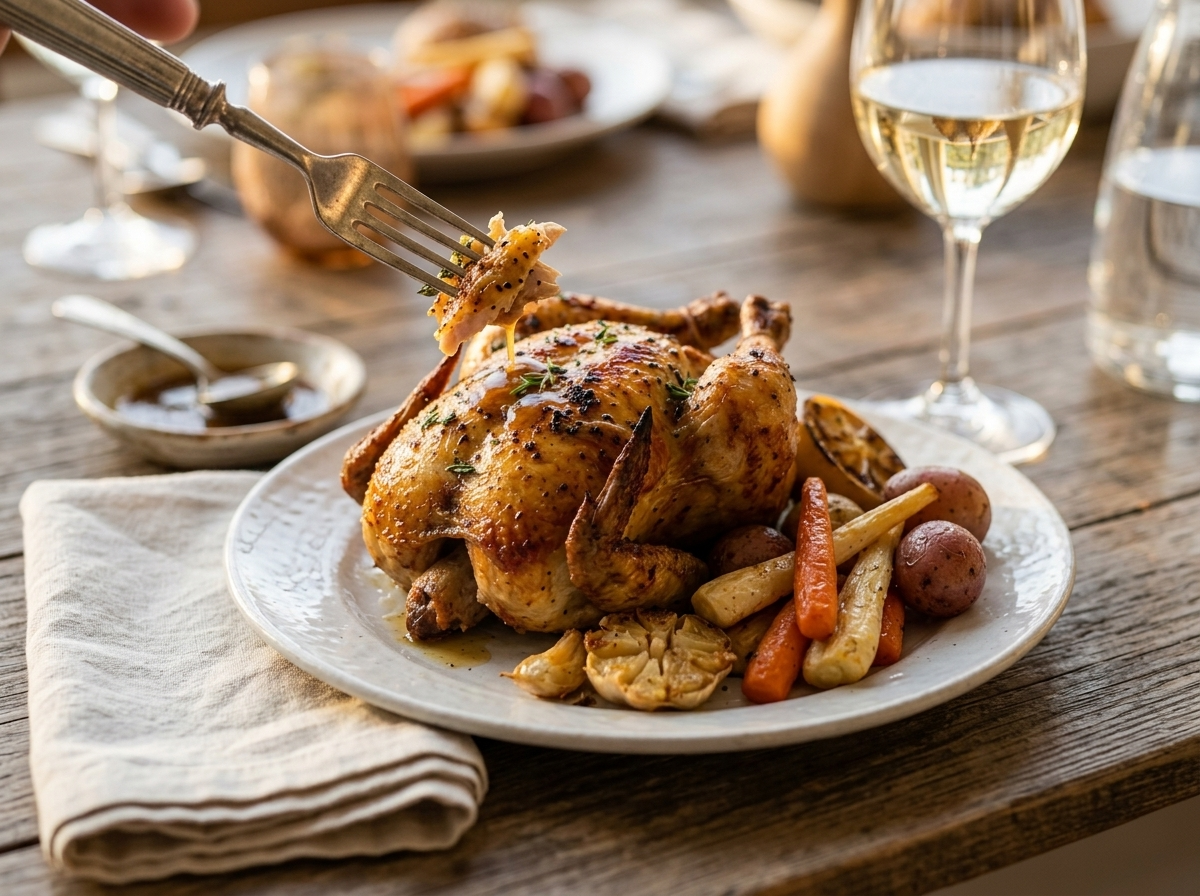
These hens pair naturally with roasted root vegetables cooked in the same pan during the last 20 minutes. Parsnips, carrots, and small potatoes all work well and pick up the lemon-thyme drippings.
For a lighter plate, serve alongside a simple arugula salad dressed with lemon juice and olive oil, much like the sharp parsley and caper salad that cuts through rich roasted meat. The peppery greens cut through the richness of the butter-basted skin cleanly.
If you want something more substantial, a side of creamy white bean mash or herb-flecked couscous absorbs the pan juices and rounds out the meal without competing with the bird’s flavors.
FAQ
Why is my Cornish hen skin not crispy after roasting?
The most common cause is surface moisture. Pat the bird dry before applying the butter and make sure it’s on a rack so the underside isn’t sitting in liquid. Roasting at a lower temperature than 220 C / 425 F will also slow browning significantly.
Can I use dried thyme instead of fresh in this lemon thyme butter?
Yes. Use 1 tsp dried thyme for every 1 tbsp fresh called for in the recipe. Dried has a more concentrated, slightly earthier flavor, so the result is still good but a little less bright.
How do I know when a Cornish hen is fully cooked?
Insert an instant-read thermometer into the thickest part of the thigh, not touching bone – it should read 74 C / 165 F. The juices will also run clear, not pink, when the thigh is pierced.
Can I prep lemon thyme Cornish hens the night before?
You can apply the compound butter under and over the skin up to 24 hours ahead. Store the seasoned birds uncovered on a rack in the fridge – the air dries the skin further, which actually improves crispness.
What is the difference between a Cornish hen and a regular roast chicken?
Cornish hens are a hybrid breed harvested young, typically at 4-6 weeks, so they weigh around 700-900 g compared to a standard 1.5-2 kg roasting chicken, though both share the same quality you’d find in fragrant chicken dishes with tender thighs. The meat is slightly more tender and the cooking time is shorter, but the flavor is similar.
Is lemon thyme roasted Cornish hen gluten-free?
Yes, this recipe is naturally gluten-free. All the ingredients – butter, herbs, lemon, garlic, and chicken – contain no gluten. Just confirm your stock or any added seasoning blends are certified gluten-free if you’re cooking for someone with celiac disease.
About The Author

John
John Watson is the passionate food enthusiast behind MePlusFood.com. With a deep love for exploring culinary delights, he shares honest restaurant reviews, mouthwatering recipes, and culinary adventures. Join John on his flavorful journey to savor the world one bite at a time.