Olive Oil Poached Veggie Wrap with Roasted Peppers and White Beans
Jump to Recipe
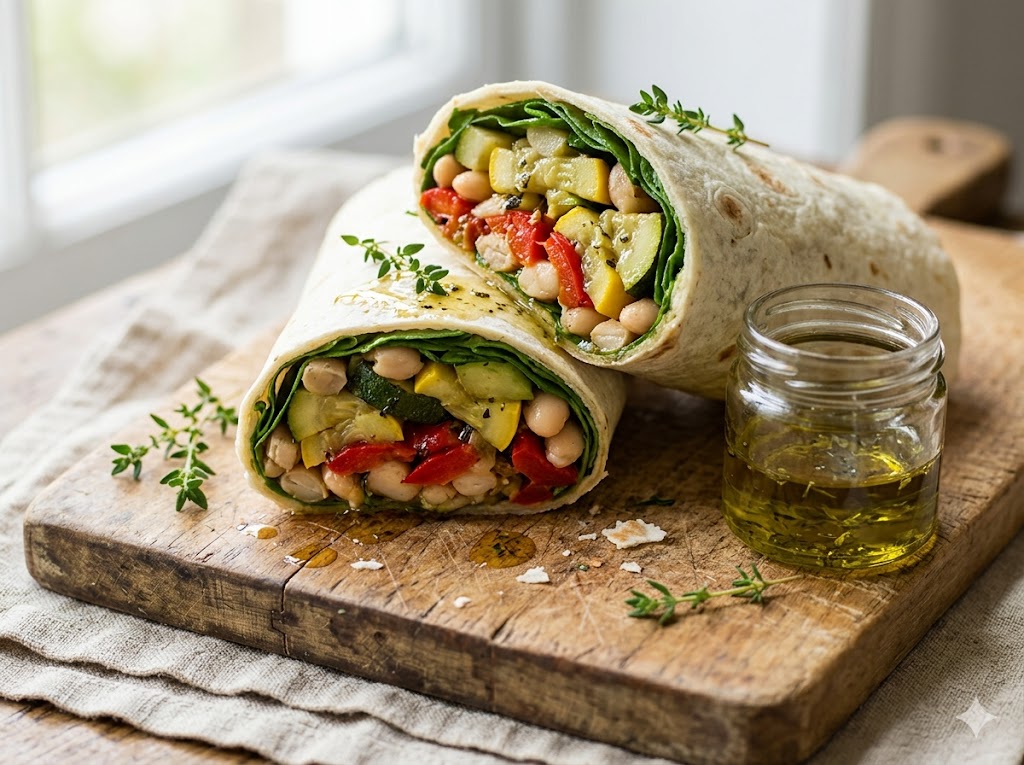
Poaching vegetables in olive oil is a low-effort technique that delivers a texture you can’t get from roasting or steaming. The oil stays well below boiling, so zucchini, fennel, and cherry tomatoes turn tender and almost jammy without losing their structure.
The oil itself becomes infused with garlic and herbs as the vegetables cook. You’ll use some of that oil to dress the wrap filling, which keeps every bite cohesive and well-seasoned.
These wraps hold up well at room temperature, which makes them practical for packed lunches, picnics, or a quick dinner that doesn’t require reheating. The white beans add enough protein and creaminess that the wrap eats like a full meal.
Why You’ll Love This Recipe
- Silky poached vegetables with deep, herb-infused flavor
- White beans add protein without any meat required
- Holds well at room temperature for packed lunches
- One pan of infused oil does double duty as dressing
Ingredient Notes
- Extra-virgin olive oil: Use a mild, affordable extra-virgin for poaching since heat mutes delicate notes. You’ll need enough to submerge the vegetables about halfway, roughly 180 ml.
- Zucchini: Cut into thick half-moons so they hold shape during poaching. Yellow squash works the same way if zucchini isn’t available.
- Fennel: Sliced thin, fennel softens beautifully and loses most of its raw anise sharpness during poaching. You can swap in thinly sliced leek if fennel isn’t your preference.
- Cherry tomatoes: They blister and collapse slightly in the oil, releasing sweet-acidic juice into the poaching liquid. Regular tomatoes cut into wedges work but release more water.
- Roasted red peppers: Jarred peppers are ideal here for convenience and consistent smokiness. Pat them dry before adding so they don’t make the wrap soggy.
- Cannellini beans: One 400 g can, drained and rinsed. Navy beans or butter beans are solid alternatives with a similar creamy texture.
- Large flour tortillas: Use 30 cm burrito-size tortillas so the filling has room to roll tightly without tearing. Whole wheat or spinach tortillas both work.
- Fresh herbs (thyme and rosemary): Two sprigs of each go into the poaching oil and scent the entire batch. Dried herbs can substitute at half the volume in a pinch.
Olive Oil Poached Veggie Wrap with Roasted Peppers and White Beans
Ingredients
Method
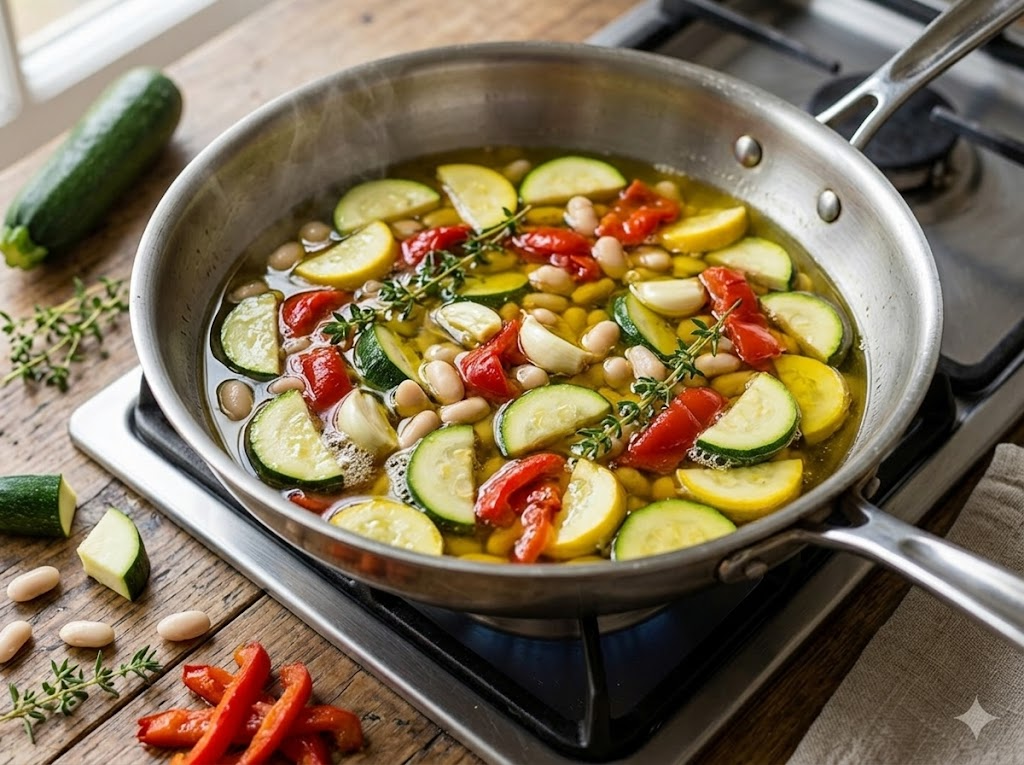
- Combine the olive oil, garlic, thyme, and rosemary in a wide, heavy-bottomed skillet or saucepan over medium-low heat.
- Heat the oil to 80 C to 90 C (175 F to 195 F), checking with a thermometer. Small bubbles may appear around the herbs but the oil should not shimmer or smoke.
- Add the fennel slices in a single layer. Poach for 6 minutes, turning once, until slightly translucent at the edges.
- Add the zucchini half-moons and cherry tomatoes. Season with fine sea salt and black pepper. Poach for 10 to 12 minutes, turning the vegetables gently halfway through, until the zucchini is just tender and the tomatoes are blistered and starting to collapse.
- Use a slotted spoon to transfer the vegetables to a plate. Reserve 2 tablespoons of the infused oil and set aside. Discard the herb sprigs.
- Place the drained cannellini beans in a bowl. Add the lemon juice and 1 tablespoon of the reserved infused oil.
- Mash roughly one quarter of the beans with a fork until you have a rough, spreadable paste mixed through with whole beans. Season with a pinch of salt.
- Warm each tortilla in a dry skillet over medium heat for 30 seconds per side until pliable.
- Spread a generous layer of the bean mixture across the lower half of each tortilla, leaving a 3 cm border at the edges.
- Layer on the sliced roasted peppers, then the poached vegetables, then a small handful of baby spinach.
- Drizzle about half a teaspoon of the remaining infused oil over the filling. Add a pinch of flaky salt.
- Fold the sides of the tortilla in, then roll tightly from the bottom up. Slice on a diagonal and serve immediately, or wrap in parchment for later.
Notes
Tips for Success
- Keep poaching oil between 80 C and 90 C using a thermometer so vegetables soften without frying.
- Pat fennel and zucchini dry before adding to the oil to prevent splattering and dilution.
- Mash roughly a quarter of the beans with a fork before spreading for better structural hold in the wrap.
- Warm the tortillas in a dry pan for 30 seconds per side so they stay pliable and don’t crack when folding.
- Drizzle 1 to 2 teaspoons of the infused poaching oil over the filling before rolling for seasoning without extra ingredients.
Variations
- Add a thin layer of ricotta or goat cheese under the beans for a creamier, richer wrap.
- Swap cannellini beans for chickpeas and add a teaspoon of smoked paprika to the poaching oil.
- Use grilled flatbread instead of tortillas and serve open-faced with fresh arugula on top.
Storage and Reheating
Assembled wraps keep well wrapped in parchment or foil in the refrigerator for up to 3 days. The poached vegetables actually improve slightly after a night in the fridge as the oil-and-herb flavor settles in.
The poached vegetable filling stores separately for up to 4 days in a sealed container with a thin layer of the infused oil on top to keep things from drying out. Reheat gently in a skillet over low heat for 2 to 3 minutes before assembling.
These wraps are not ideal for freezing. The poached vegetables turn watery once thawed and the tortilla texture suffers.
Serving Suggestions
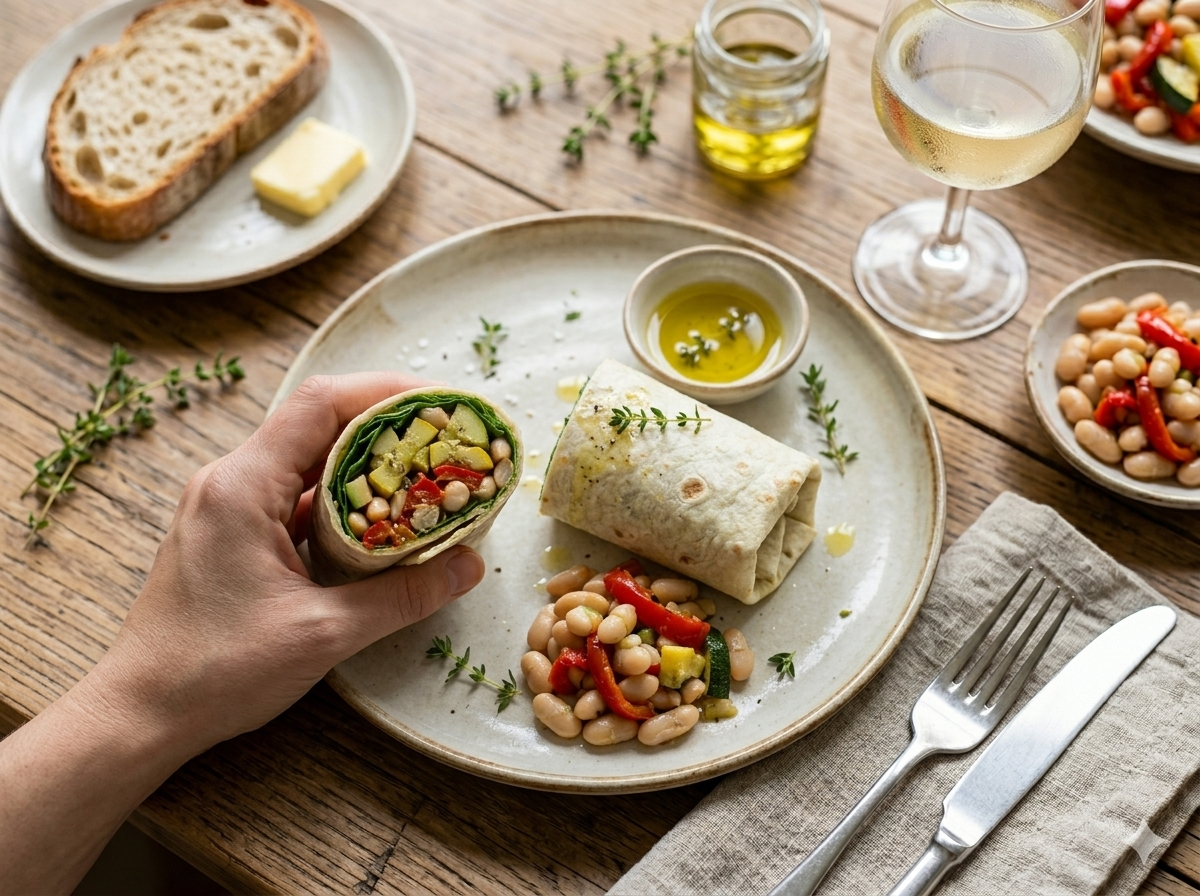
These wraps pair well with a simple salad of shaved fennel fronds, lemon juice, and the leftover infused oil as a dressing. The flavors echo what’s inside the wrap without competing.
For a more substantial spread, serve alongside a bowl of tomato soup or a cup of white bean soup. The olive oil notes carry across both dishes naturally.
Cut each wrap on a diagonal and serve with a small dish of the infused poaching oil for dipping. A glass of crisp white wine or sparkling water with lemon rounds it out.
FAQ
Why are my olive oil poached vegetables falling apart in the wrap?
The oil temperature was likely too high. Poaching above 95 C causes vegetables to break down quickly rather than hold a tender-firm texture. Keep the oil between 80 C and 90 C and check with a thermometer.
Can I use avocado oil instead of olive oil for poaching the vegetables?
You can, but you’ll lose the grassy, herbal backbone that makes the infused oil worth using as a dressing. Avocado oil is neutral and will carry the herb flavors less distinctively.
How far ahead can I poach the vegetables for meal prep?
You can poach the vegetables up to 4 days ahead and store them submerged in the infused oil in a sealed jar in the refrigerator. Assemble the wraps the day you plan to eat them so the tortillas stay firm.
What cheese goes well inside an olive oil poached veggie wrap?
A thin spread of ricotta or a crumble of feta works well without overwhelming the vegetables. Both are mild enough to complement the herb-infused oil rather than compete with it.
Is this olive oil poached veggie wrap gluten free?
The filling itself is gluten free. Swap the flour tortilla for a certified gluten-free wrap or use large collard green leaves as a low-carb, naturally gluten-free alternative.
How do I know when the vegetables are done poaching?
Pierce a piece of zucchini with a paring knife. It should slide in with gentle resistance but not feel mushy. Fennel slices will look slightly translucent at the edges, which is the visual cue that they’re ready.
About The Author

John
John Watson is the passionate food enthusiast behind MePlusFood.com. With a deep love for exploring culinary delights, he shares honest restaurant reviews, mouthwatering recipes, and culinary adventures. Join John on his flavorful journey to savor the world one bite at a time.