Coconut Curry Mussels with Lemongrass
Jump to Recipe
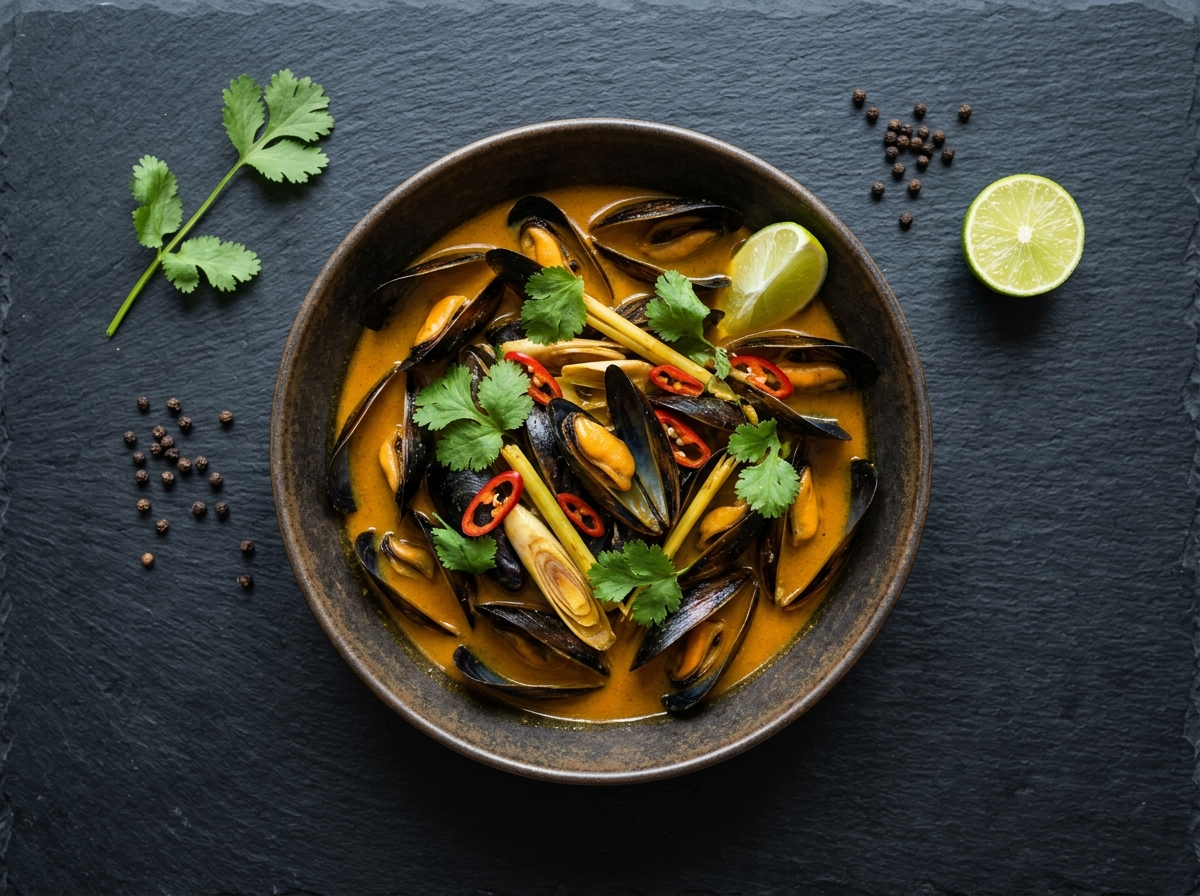
Mussels are one of the most underrated weeknight proteins. They cook in minutes, cost less than most fish, and soak up whatever broth you put them in.
This version uses a base of lemongrass, shallots, ginger, and Thai red curry paste cooked down in coconut milk, built on the same aromatics as a lemongrass coconut chicken curry. The result is a broth that’s rich without being heavy, with a clean citrus lift from the lemongrass and a gentle heat from the curry paste.
The whole pot comes together in about 35 minutes from start to finish. You don’t need restaurant experience – just a wide, heavy pot and fresh mussels.
Serve it with a baguette or steamed jasmine rice to catch the broth. It eats like a full meal.
Why You’ll Love This Recipe
- Full pot of fragrant broth ready in 35 minutes
- Mussels are budget-friendly and high in protein
- One-pot cleanup with minimal prep work
- Broth doubles as a dipping sauce for crusty bread
Ingredient Notes
- Fresh mussels: Buy live mussels the day you cook them. Discard any with cracked shells or that don’t close when tapped.
- Lemongrass: Use fresh stalks and bruise the lower third with the back of a knife to release the oils. Dried lemongrass works in a pinch but the flavor is noticeably muted.
- Thai red curry paste: I use Mae Ploy for a more complex, less sweet result. Green curry paste works as a substitute and gives a grassier, slightly milder broth.
- Full-fat coconut milk: Don’t swap for light coconut milk here – the fat content is what keeps the broth from tasting thin. Shake the can well before opening.
- Fish sauce: Adds depth and salinity without tasting fishy. For a shellfish-only approach, soy sauce or tamari works but you’ll lose some umami complexity.
- Fresh ginger: Grate it fine so it melts into the broth. Ground ginger is a backup but use half the amount.
- Lime juice: Add it at the very end, off the heat. Cooking lime juice flattens its brightness.
Coconut Curry Mussels with Lemongrass
Ingredients
Method
- Scrub the mussel shells under cold running water. Pull off any fibrous beards by tugging firmly toward the hinge end. Discard any mussels with cracked shells or that stay open when tapped.
- Set the cleaned mussels aside in a colander while you build the broth.
- Heat the coconut oil in a wide 6-quart pot over medium heat. Add the shallots and cook for 3 to 4 minutes, stirring often, until softened and just starting to color.
- Add the garlic, ginger, and lemongrass pieces. Stir for 1 minute until fragrant.
- Add the red curry paste and stir it into the shallot mixture. Cook for 2 full minutes, pressing the paste against the bottom of the pot, until it darkens slightly and smells toasted.
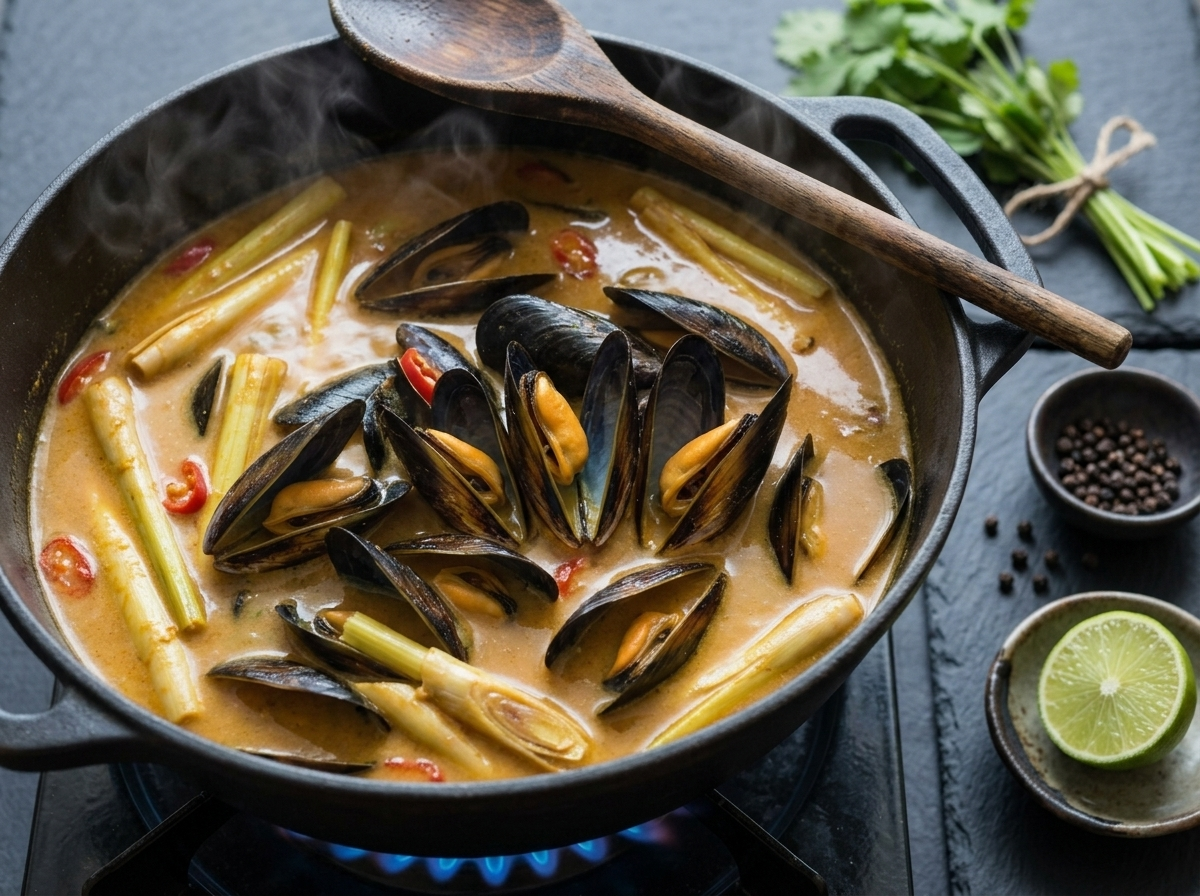
- Pour in the coconut milk and stock. Stir to combine and bring to a gentle simmer over medium-high heat.
- Stir in the fish sauce and brown sugar. Taste the broth and adjust seasoning - it should be savory, slightly sweet, and aromatic. Remove the lemongrass pieces with tongs if you prefer.
- Increase heat to bring the broth to a rolling simmer. Add all the mussels in one go and cover the pot immediately with a tight-fitting lid.
- Steam for 4 to 6 minutes, shaking the pot once halfway through. The mussels are ready when the shells have opened wide.
- Discard any mussels that have not opened after 7 minutes - do not force them open.
- Remove the pot from heat. Squeeze the lime juice directly over the mussels and stir gently.
- Ladle into deep bowls, making sure each serving gets plenty of broth. Top with fresh cilantro and sliced red chili. Serve immediately with lime wedges and crusty bread or steamed rice.
Notes
Tips for Success
- Scrub mussel shells under cold water and pull off any beards right before cooking, not hours ahead.
- Cook the curry paste and lemongrass in oil for a full 2 minutes before adding liquid to develop the base flavor.
- Add mussels only once the coconut broth is at a rolling simmer – this ensures they steam evenly and open quickly.
- Cover the pot immediately after adding mussels and resist lifting the lid for the first 3 minutes.
- Discard any mussel that hasn’t opened after 7 minutes of steaming – do not force them open.
Variations
- Swap mussels for clams or a mix of both for a different texture in the same broth.
- Add a handful of cherry tomatoes and baby spinach in the last 2 minutes for extra color and body.
- Use green curry paste and swap lime for lemon juice for a brighter, herbier version of the broth.
Storage and Reheating
Mussels are best eaten the day they’re cooked. Leftover broth keeps in an airtight container in the fridge for up to 2 days.
To reheat the broth, warm it gently in a small saucepan over low heat. Don’t reheat already-cooked mussels – the texture turns rubbery. If you have leftover broth, use it as a base for a quick noodle soup — it works similarly to the broth in a black garlic ramen with soft egg.
Do not freeze cooked mussels. The texture breaks down completely on thawing.
Serving Suggestions
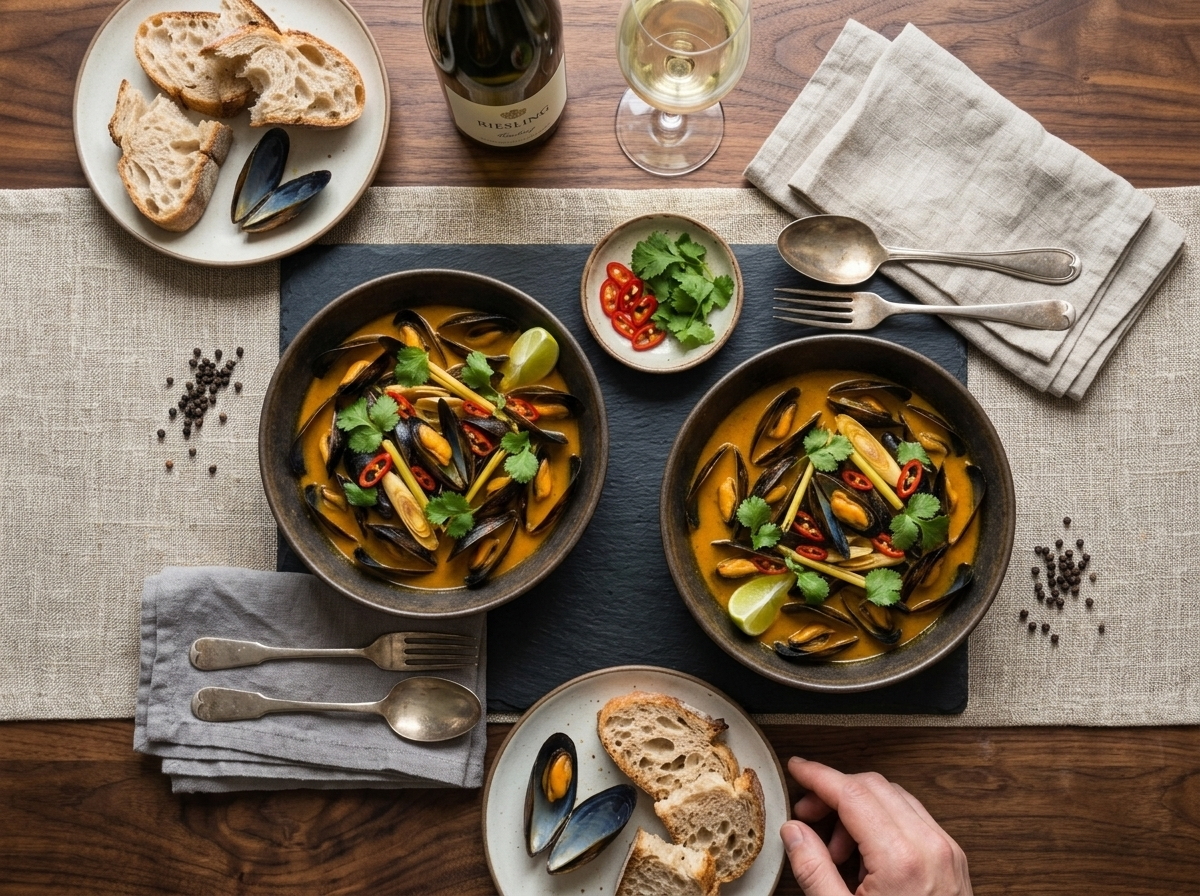
A thick slice of toasted baguette or sourdough is the obvious move here – you want something sturdy enough to hold the broth. Steamed jasmine rice also works well and turns this into a more substantial bowl.
For a full spread, a crispy skin snapper with green mango salad or a simple cucumber salad dressed with rice vinegar and sesame oil cuts through the richness of the coconut milk. Cold beer or a dry Riesling pairs well with the lemongrass and curry heat.
If you’re serving a crowd, set the pot on the table with small bowls and a ladle. People tend to eat more when they can serve themselves directly from the pot.
FAQ
How do I know when the mussels in coconut curry broth are done?
The shells open up fully – that’s the clearest sign they’re cooked through. Most will open within 4 to 6 minutes of steaming in the hot broth. Any that stay closed after 7 minutes should be tossed.
Can I use canned mussels instead of fresh for this coconut lemongrass curry?
Technically yes, but the result is quite different. Canned mussels are already cooked, so you’d stir them in at the very end just to warm through. The texture is softer and the flavor less briny than fresh.
Can I make the coconut curry broth ahead and add the mussels later?
Yes – the broth can be made up to a day ahead and stored in the fridge. Bring it back to a rolling simmer before adding fresh mussels, then cook as directed from that point.
Why does my coconut curry mussel broth taste watery or bland?
Most likely the curry paste wasn’t cooked long enough in the oil before the liquid went in. Give it a full 2 minutes of frying to bloom the spices. A splash more fish sauce usually fixes a flat-tasting broth too.
What’s the difference between using red and green curry paste in this mussel recipe?
Red curry paste gives a warmer, slightly sweeter heat with a deeper color in the broth, similar to what you’d find in a spiced goat curry with roti. Green curry paste is fresher and grassier, with a sharper heat that works well with the lemongrass. Both are good – it mostly depends on what you have.
Are these coconut curry mussels gluten-free?
They can be. The base recipe is gluten-free as written, but check your curry paste label since some brands add wheat-based thickeners. Fish sauce is naturally gluten-free, but tamari is a safer swap if you’re strict about it.
About The Author

John
John Watson is the passionate food enthusiast behind MePlusFood.com. With a deep love for exploring culinary delights, he shares honest restaurant reviews, mouthwatering recipes, and culinary adventures. Join John on his flavorful journey to savor the world one bite at a time.