Crispy Pan-Roasted Chicken with Preserved Lemon Sauce
Jump to Recipe
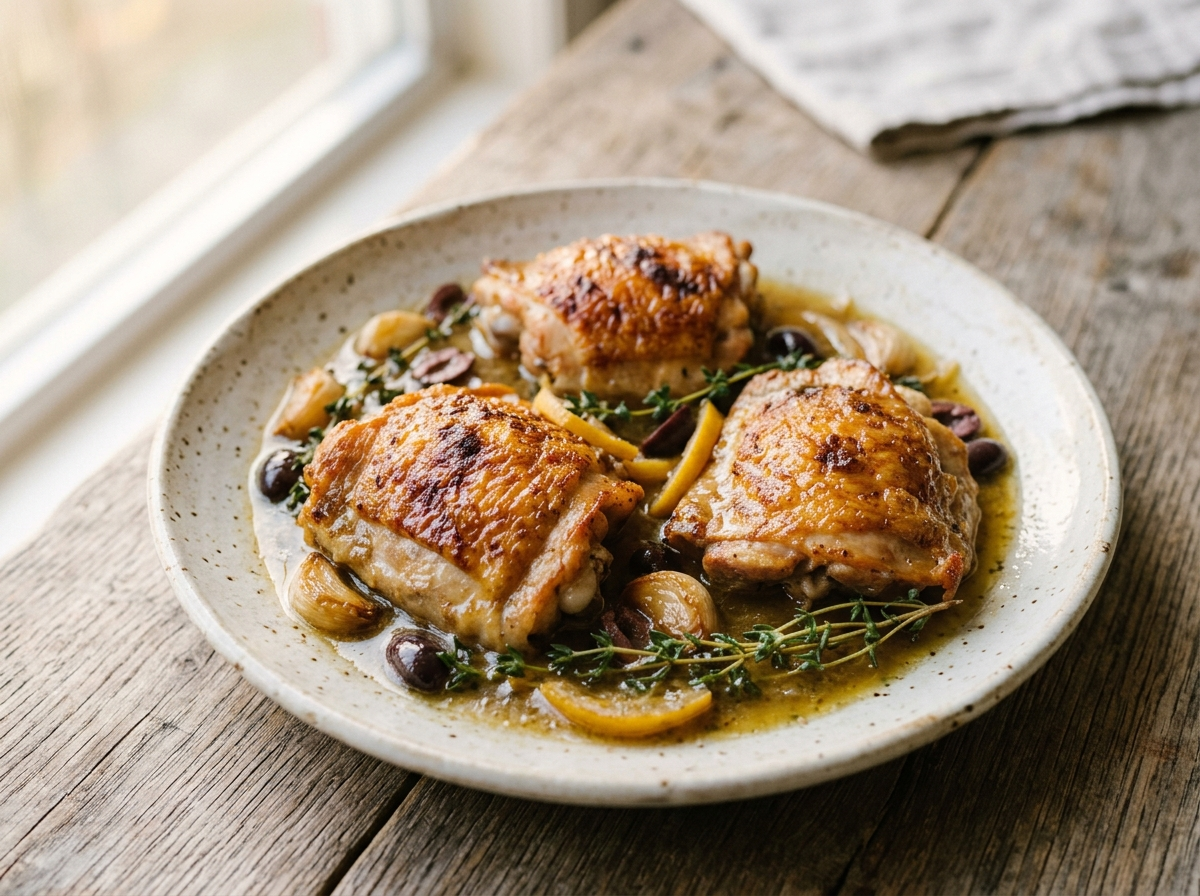
Pan Roasted Chicken with Preserved Lemon starts with bone-in, skin-on thighs seared in a hot skillet until the skin turns deep gold, then finished in the oven with preserved lemon rind, garlic, and a splash of white wine. The sauce ends up salty and bright rather than sour, since the curing process mellows the lemon’s harsh edge.
I use preserved lemon here instead of fresh because the rind has already broken down over weeks of salt curing. It adds a rounder, almost fermented citrus note that fresh lemon zest can’t match.
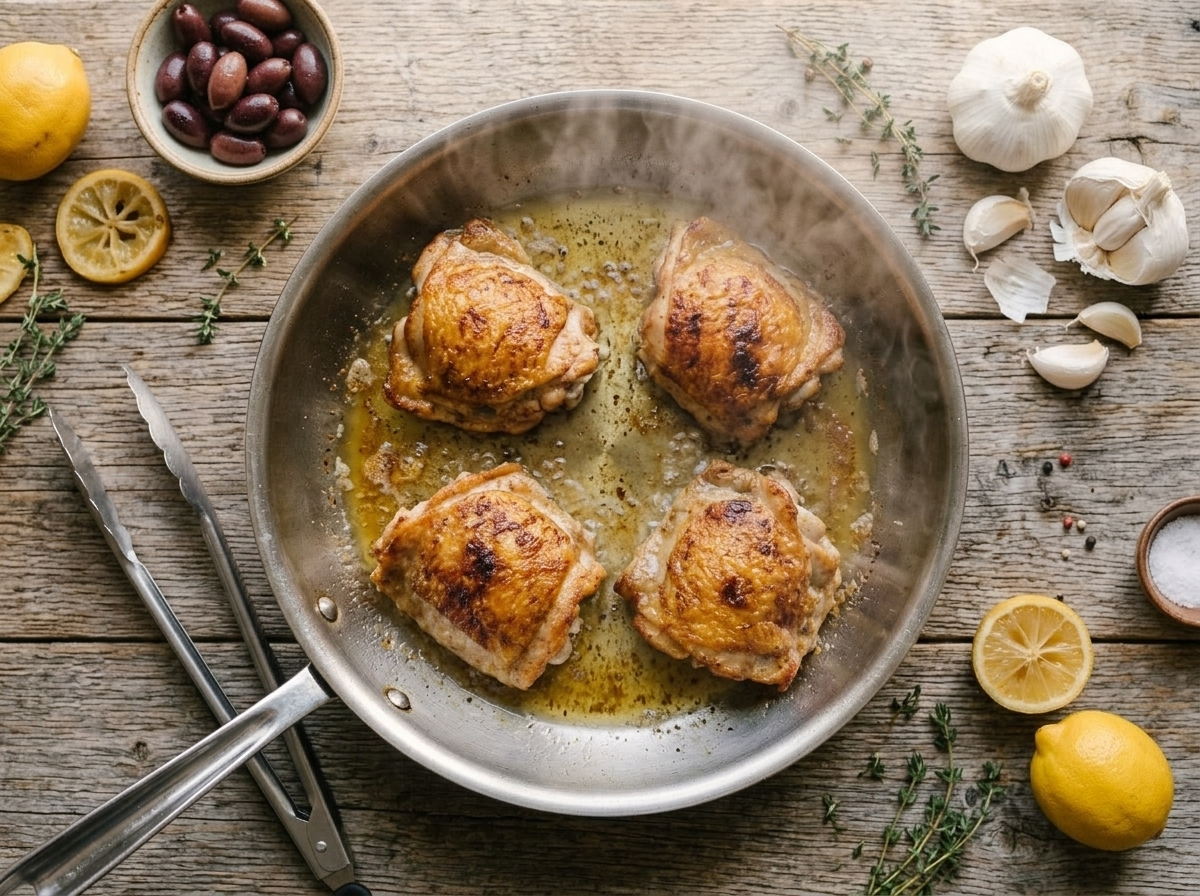
The technique matters more than the ingredient list. Sear the chicken skin side down and leave it alone for a full 6 to 7 minutes; if you flip too early or move the pan around, the skin steams instead of crisping and turns rubbery by the time it hits the oven.
One skillet goes from stovetop to oven, so cleanup is minimal and the sauce builds right where the chicken cooked.
Why You’ll Love This Recipe
- Crisp skin comes from a long, undisturbed sear
- Preserved lemon adds salty tang without added sourness
- One skillet goes from stovetop to oven with minimal cleanup
- Ready in under an hour for a weeknight dinner
Ingredient Notes
- chicken thighs: Bone-in, skin-on thighs stay juicier than boneless and the skin gets crisp under high heat. You can swap in drumsticks with a similar roast time.
- preserved lemon: Look for it jarred near olives or in the international aisle. Rinse the pulp off if yours tastes too salty and use mostly the rind.
- dry white wine: A dry sauvignon blanc works well here. Swap in extra chicken stock plus a squeeze of fresh lemon if you’d rather skip the alcohol.
- green olives: Optional, but they add another layer of brine that pairs naturally with the preserved lemon. Capers make a smaller-bite substitute.
- unsalted butter: Swirled in at the end for a silkier sauce. Leave it out or use olive oil to keep the dish dairy free.
Crispy Pan-Roasted Chicken with Preserved Lemon Sauce
Ingredients
Method
- Pat chicken thighs dry with paper towels and season both sides with the salt and pepper.
- Heat olive oil in a 10-inch oven-safe skillet over medium-high heat until it shimmers.
- Place chicken thighs skin side down and sear undisturbed for 6 to 7 minutes until deep golden and crisp.
- Flip and sear the second side for 2 minutes, then transfer chicken to a plate.
- Heat the oven to 200 C / 400 F.
- Add garlic and preserved lemon rind to the skillet and cook 1 minute until fragrant.
- Pour in the white wine, scraping up any browned bits, then add chicken stock, thyme, and rosemary.
- Return chicken skin side up to the skillet, tucking it into the sauce without submerging the skin.
- Transfer the skillet to the oven and roast 18 to 20 minutes until an instant-read thermometer reads 165 F / 74 C at the thickest part.
- Rest the chicken in the skillet for 5 minutes, then stir butter and olives into the sauce, spoon over the chicken, and top with parsley.
Notes
- Sear skin side down first and don't move it for 6 to 7 minutes for max crispness.
- Use a cast iron or stainless skillet that can go from stovetop to oven.
- Pull chicken at 165 F / 74 C measured at the thickest part near the bone.
- Taste the sauce before adding extra salt since preserved lemon varies in brine strength.
Tips for Success
- Pat chicken thighs completely dry before seasoning so the skin crisps instead of steaming.
- Let the skillet get fully hot before adding chicken, then leave it undisturbed for 6 to 7 minutes.
- Rinse the preserved lemon pulp off if it tastes too salty, and slice the rind paper thin.
- Use an instant-read thermometer and pull the chicken at 165 F / 74 C rather than guessing by time.
- Deglaze with wine before adding stock to lift the browned bits stuck to the pan.
Variations
- Swap chicken thighs for bone-in drumsticks or a spatchcocked half chicken, adjusting the roast time accordingly.
- Add sliced fennel or halved shallots to the skillet before roasting for a softer, sweeter bite.
- Stir in chopped kalamata olives or capers for extra brine alongside the preserved lemon.
Storage and Reheating
Refrigerate leftover chicken and sauce together in an airtight container for up to 3 days. Keeping the sauce with the meat stops it from drying out.
Reheat in a covered skillet over medium-low heat with a splash of stock for about 8 minutes, until the chicken registers 165 F / 74 C again. A microwave works in a pinch but the skin loses its crisp.
This dish doesn’t freeze well since the skin turns soggy on thawing, though the meat and sauce alone, with the skin removed, freeze fine for up to 2 months.
Serving Suggestions
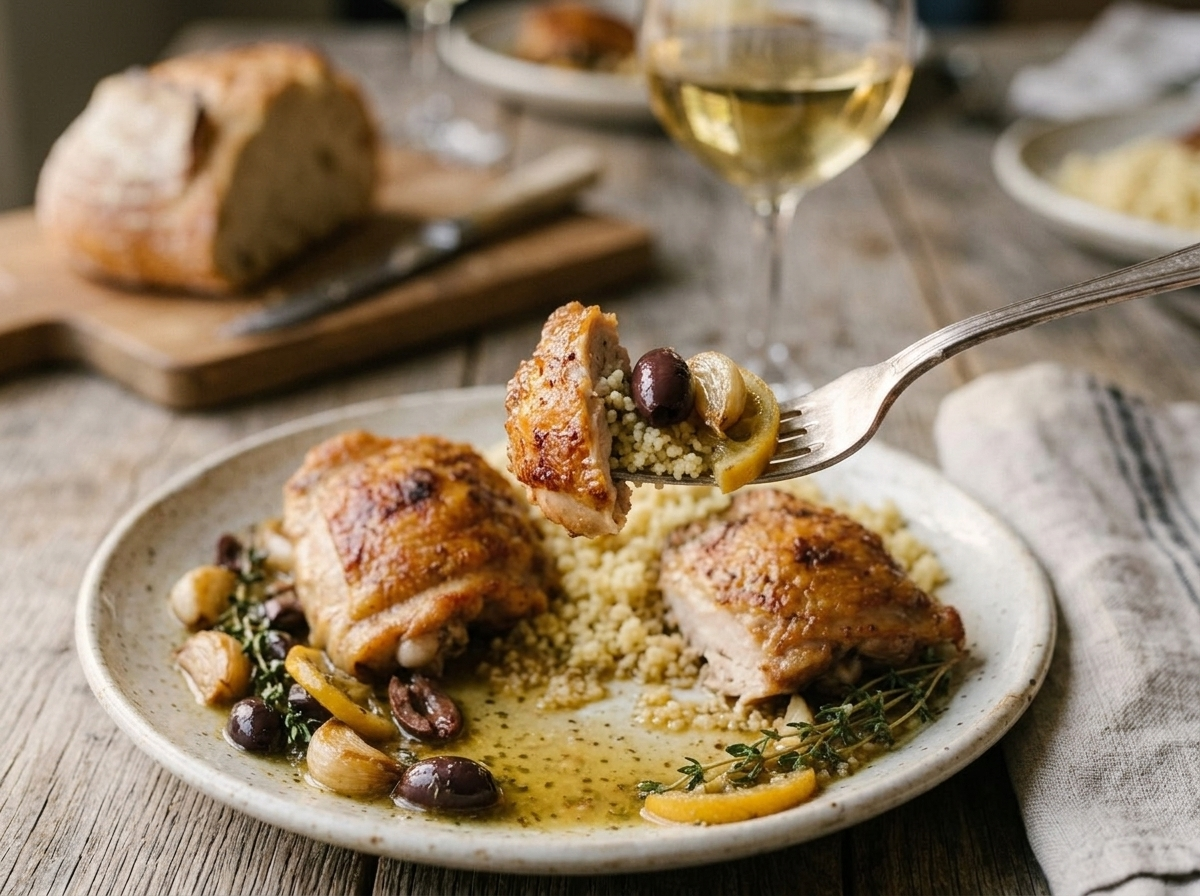
Serve pan roasted chicken with preserved lemon over couscous or warm flatbread to soak up the sauce. A simple green salad with parsley and thin-sliced radish cuts through the richness.
Roasted potatoes or a pile of garlicky greens work too if you want something heartier than grains.
Spoon extra sauce over everything at the table, since the preserved lemon and pan drippings carry most of the flavor.
FAQ
Why isn’t the skin on my pan roasted chicken with preserved lemon getting crisp?
Wet skin or a pan that isn’t hot enough is the usual cause. Pat the thighs completely dry before seasoning, and let the oil shimmer before adding chicken. Skin side down, leave it undisturbed for 6 to 7 minutes; moving it early traps steam and keeps the fat from rendering out.
Can I use fresh lemon instead of preserved lemon in this recipe?
You can, but the flavor changes. Preserved lemon is salt-cured and mellow, while fresh lemon is sharper and more acidic, so swap in thin fresh lemon slices plus an extra pinch of salt to make up for the missing cure. Expect a brighter, more sour sauce rather than the rounded tang preserved lemon gives.
How do I store and reheat leftover pan roasted chicken with preserved lemon?
Store the chicken and sauce together in an airtight container in the fridge for up to 3 days. Reheat in a covered skillet over medium-low heat with a splash of stock until the chicken hits 165 F / 74 C again. The microwave works but softens the crisp skin.
What goes well with pan roasted chicken and preserved lemon sauce?
Couscous, warm flatbread, or roasted potatoes all work well since they soak up the salty pan sauce. A simple green salad with radish and parsley adds crunch and cuts the richness. Garlicky sautéed greens make it a heartier plate if you want more vegetables.
Is pan roasted chicken with preserved lemon gluten free?
Yes, as written this recipe is gluten free since chicken, preserved lemon, garlic, stock, and olive oil contain no wheat. Double check your chicken stock label, since some brands add gluten-containing thickeners. Skip the wine if you’re avoiding alcohol; extra stock works instead.
What’s the difference between preserved lemon and regular lemon for this chicken?
Preserved lemon is a whole lemon cured in salt for weeks until the rind softens and turns almost jammy, with a funkier, salty-sour flavor. Regular lemon is fresh and sharply acidic with a firmer rind. In this recipe, the cured rind melts into the sauce instead of just adding zest on top.
More from the kitchen
About The Author

John
John Watson is the passionate food enthusiast behind MePlusFood.com. With a deep love for exploring culinary delights, he shares honest restaurant reviews, mouthwatering recipes, and culinary adventures. Join John on his flavorful journey to savor the world one bite at a time.