Garlic Confit Roasted Chicken
Jump to Recipe
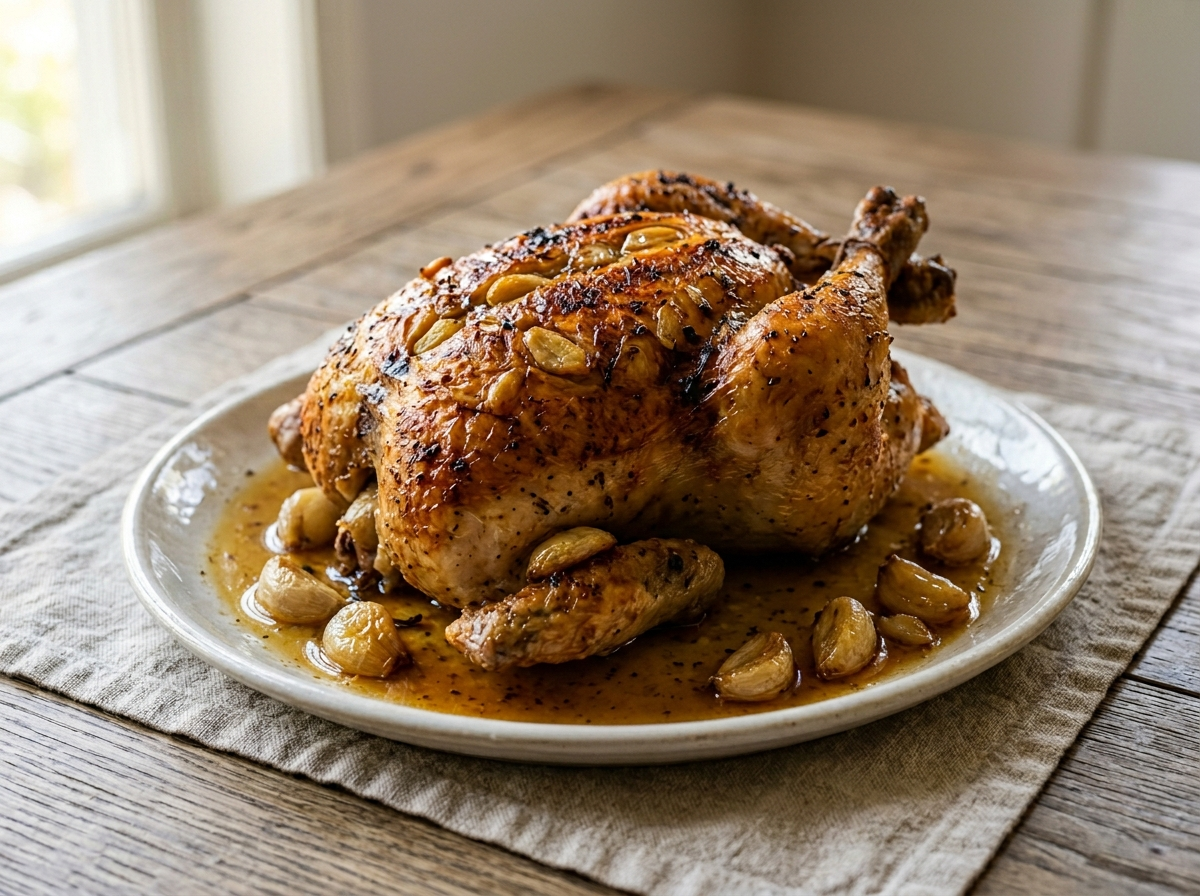
Garlic confit is just garlic cloves cooked low and slow in oil until they turn soft, golden, and almost jammy. That process strips out the harsh bite and leaves something mild, rich, and deeply aromatic.
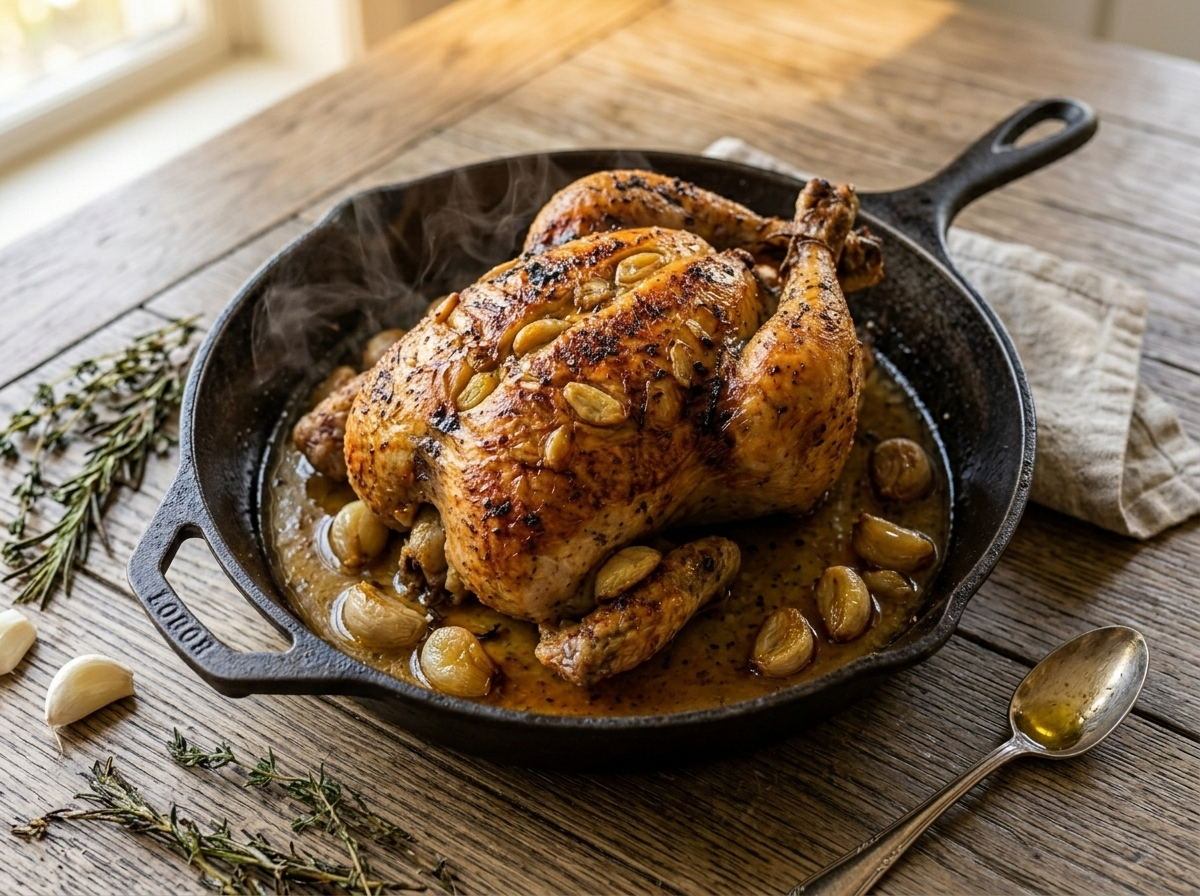
When you tuck those cloves under the chicken skin before roasting, they essentially baste the breast meat from the inside. The fat carries flavor straight into the flesh while the skin above crisps up hard and brown.
The leftover garlic-infused oil goes into the pan drippings. You end up with a pan sauce that needs almost no work – just a splash of stock and a quick scrape.
This is a Sunday-style roast that doesn’t ask much from you, much like a slow-cooked confit based dish that does most of the work on its own. Most of the time is hands-off, and the results hold up for weekday leftovers.
Why You’ll Love This Recipe
- Garlic loses all sharpness and turns silky and sweet
- Skin stays crackled without any basting or flipping
- Pan sauce builds itself from the drippings
- Leftovers reheat well without drying out
Ingredient Notes
- Garlic confit cloves: You need about 20 to 24 cloves fully submerged in oil and cooked at 90 C / 195 F for 45 minutes. Store-bought confit works in a pinch, but homemade tastes noticeably better.
- Garlic confit oil: Use the same oil the garlic cooked in – it’s loaded with flavor. Neutral olive oil or a light extra-virgin both work for the confit itself.
- Whole chicken: A 1.8 to 2 kg / 4 lb bird gives even cooking. Spatchcocking it cuts the roast time by about 15 minutes and keeps the breast from drying out.
- Chicken stock: Low-sodium stock lets you control the salt in the pan sauce. Homemade or a good-quality carton brand both work fine.
- Fresh thyme: A few sprigs tucked into the cavity add a clean herbal note. Rosemary works if you prefer something more resinous.
- Unsalted butter: Mixed with a few crushed confit cloves and rubbed under the skin, it helps the breast stay moist. You can skip it for a dairy-free version and use extra confit oil instead.
Garlic Confit Roasted Chicken
Ingredients
Method
- Place the peeled garlic cloves, thyme sprigs, and bay leaf in a small saucepan. Pour over the oil until cloves are fully submerged.
- Heat over the lowest possible flame to reach about 90 C / 195 F. Cook for 40 to 50 minutes until cloves are pale golden and crush without resistance. Do not let the oil bubble aggressively - that fries rather than confits.
- Remove from heat and cool completely. Transfer cloves and oil to a jar. Can be made up to 2 weeks ahead and refrigerated.
- Heat the oven to 220 C / 425 F. Pat the chicken completely dry inside and out with paper towels.
- Mash 10 confit cloves with a fork to a smooth paste. Mix with the softened butter, 1 tsp salt, and half the black pepper until combined.
- Loosen the skin over the breast and thighs by gently sliding your fingers underneath without tearing. Press the garlic butter evenly under the skin over both sides.
- Rub the outside of the chicken with the 2 tbsp confit oil. Season the skin and cavity with remaining salt and pepper. Stuff the cavity with lemon halves and thyme sprigs.
- Place the chicken breast-side up on a rack inside a roasting pan. Scatter the remaining 12 garlic confit cloves around the base of the pan.
- Roast at 220 C / 425 F for 15 minutes until the skin starts to brown and blister at the edges.
- Reduce the oven to 190 C / 375 F. Continue roasting for 50 to 55 minutes until an instant-read thermometer inserted in the thickest part of the thigh reads 74 C / 165 F and juices run clear.
- Transfer the chicken to a cutting board and rest uncovered for 10 minutes before carving.
- While the chicken rests, place the roasting pan over medium heat on the stovetop. Pour in the chicken stock and scrape up all browned bits with a wooden spoon.
- Add the roasted confit cloves from the pan and press a few with the spoon to thicken the sauce slightly. Simmer for 3 to 4 minutes until reduced by about one-third.
- Remove from heat and stir in the cold butter until melted and glossy. Taste and adjust salt. Strain or serve with the cloves intact, topped with parsley if using.
Notes
Tips for Success
- Pat the chicken completely dry before adding the garlic butter – wet skin steams instead of crisping.
- Press confit cloves gently under the skin without tearing it so the fat stays trapped against the meat.
- Start the chicken at 220 C / 425 F for the first 15 minutes to set the skin — the same high-heat principle that makes crispy skin on fish work — then drop to 190 C / 375 F.
- Use an instant-read thermometer at the thickest part of the thigh – pull at 74 C / 165 F for safe, juicy meat.
- Rest the bird uncovered for at least 10 minutes before carving so the juices redistribute rather than run out.
Variations
- Lemon and herb version: add lemon zest and fresh tarragon to the garlic butter under the skin.
- Spatchcock method: remove the backbone, flatten the bird, and roast at 220 C for 45 minutes for crispier skin all over.
- Sheet pan dinner: scatter halved baby potatoes and cherry tomatoes under the chicken to roast in the drippings.
Storage and Reheating
Leftover chicken keeps in an airtight container in the fridge for up to 4 days. Store the pan sauce separately and it will keep just as long.
To reheat, place pieces skin-side up on a wire rack set over a sheet pan and warm at 175 C / 350 F for 12 to 15 minutes. This keeps the skin from going soggy in a way that the microwave never will.
For longer storage, freeze cooked chicken pieces wrapped tightly in foil and sealed in a zip bag for up to 2 months. Thaw overnight in the fridge before reheating.
Serving Suggestions
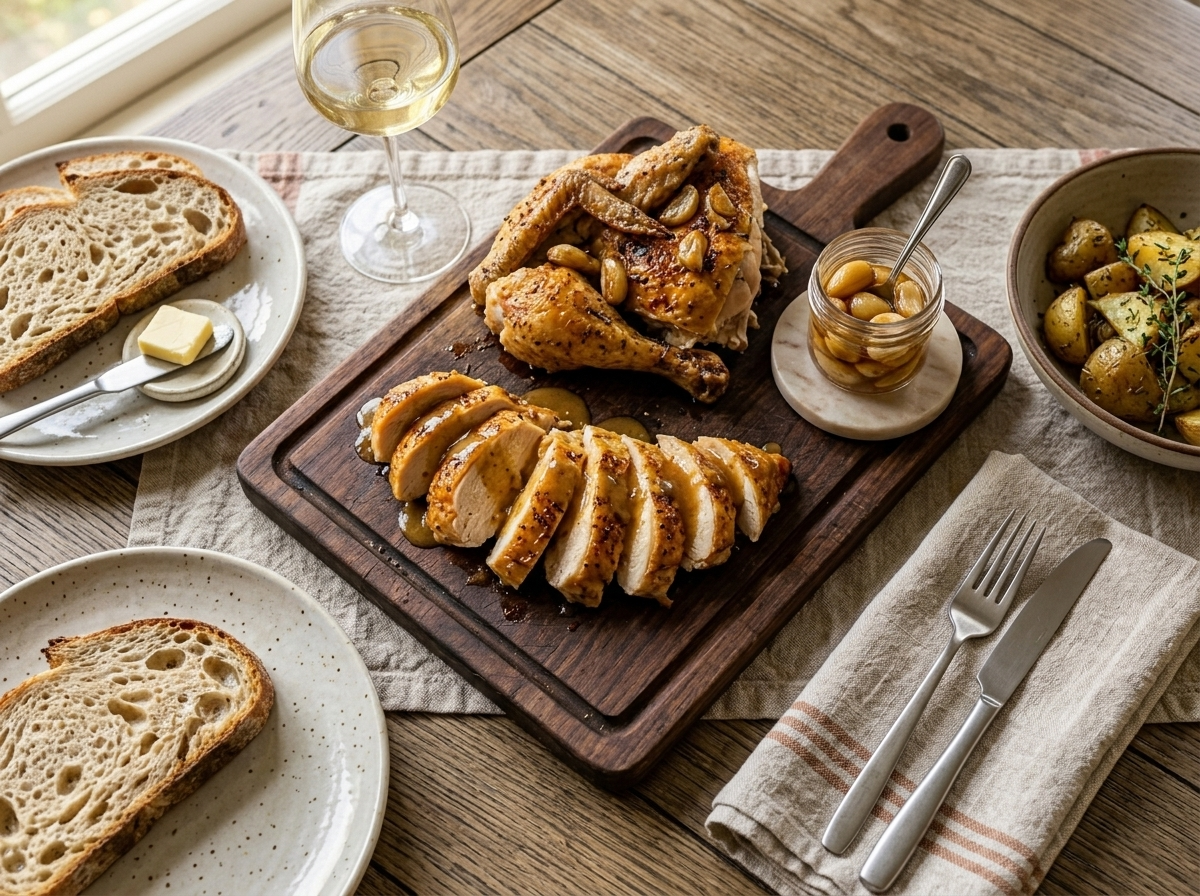
The pan sauce is thin enough to pour but rich enough to coat roasted vegetables. Spoon it over the carved chicken and let it pool around whatever starch you serve alongside – crusty bread, roasted baby potatoes, or a simple white bean mash all work well.
A sharp green salad with a lemon vinaigrette cuts through the richness, the same way a bright herb salad balances the fat in roasted bone marrow with parsley salad. Blanched green beans or roasted broccolini alongside give the plate color and a slightly bitter contrast that balances the sweet garlic.
Any leftover confit cloves not used under the skin can be spread on toast or stirred into mashed potatoes the next day.
FAQ
Why is my garlic confit roasted chicken skin soft instead of crispy?
The most common cause is moisture – either the chicken wasn’t dried well enough before roasting, or the pan was overcrowded. Pat the skin completely dry with paper towels and make sure there’s airflow around the bird in the pan.
Can I use roasted garlic instead of garlic confit under the skin?
You can, but the texture is drier and less spreadable than confit, so it won’t melt into the skin as smoothly. Confit garlic has a higher oil content that actively bastes the meat during roasting.
Can I make the garlic confit a week ahead and store it before roasting the chicken?
Yes. Garlic confit keeps submerged in its oil in a sealed jar in the fridge for up to 2 weeks. Keep it cold and fully covered in oil to prevent any food safety issues.
What goes well with garlic confit roasted chicken besides potatoes?
White bean mash soaks up the pan sauce the same way mashed potato does but adds a nuttier, earthy note, much like the base you’d find under a rich garlic butter dish. Roasted broccolini or sauteed spinach both balance the richness of the garlic-infused drippings.
Is garlic confit roasted chicken gluten-free?
The chicken itself is naturally gluten-free as long as your stock is certified gluten-free. Check the label on any store-bought chicken stock, since some brands use wheat-based additives.
How do I know when the garlic confit cloves are done cooking before I use them on the chicken?
They should look pale golden, not brown, and a clove should crush to a smooth paste when pressed with a fork with no resistance at all. If they’re still firm in the center, give them another 10 minutes at low heat.
About The Author

John
John Watson is the passionate food enthusiast behind MePlusFood.com. With a deep love for exploring culinary delights, he shares honest restaurant reviews, mouthwatering recipes, and culinary adventures. Join John on his flavorful journey to savor the world one bite at a time.