Pan Seared Scallops with Cauliflower Puree
Jump to Recipe
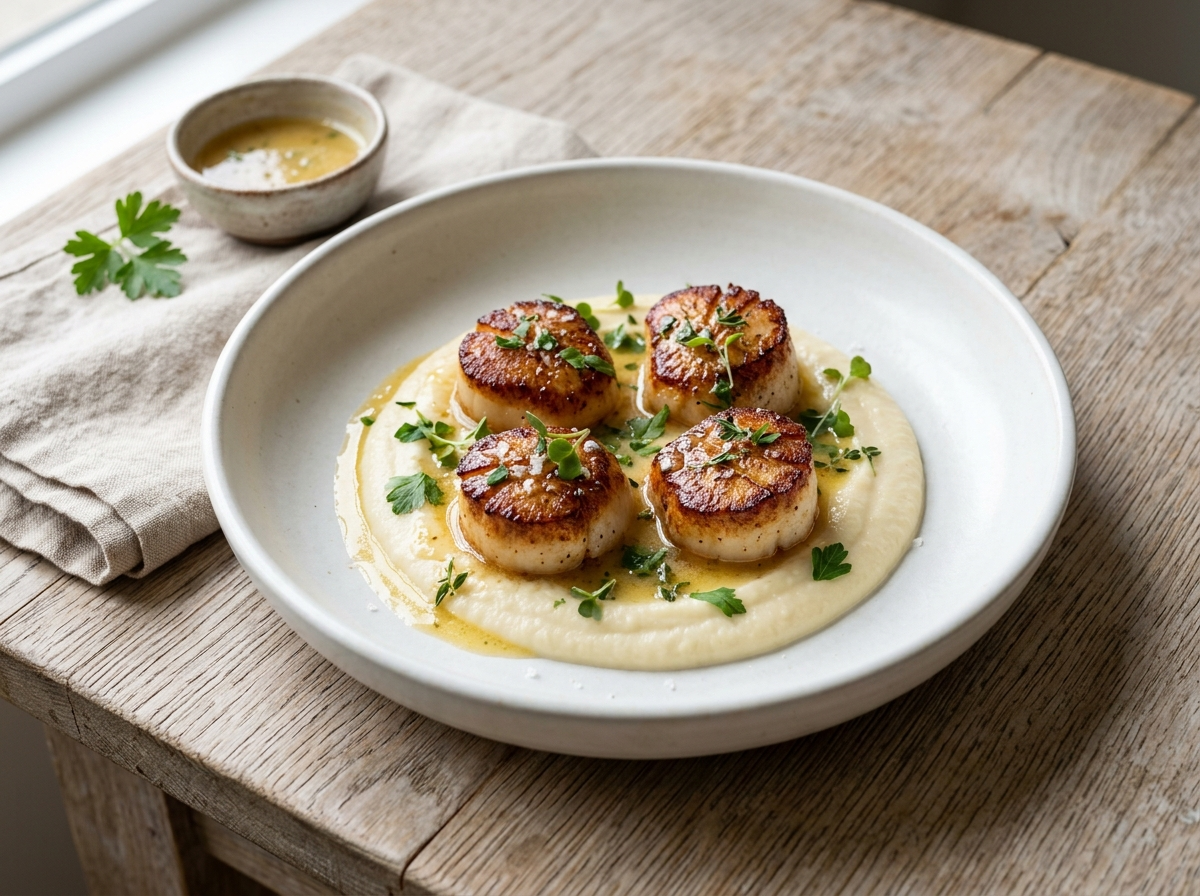
Scallops have a reputation for being restaurant-only food, but the technique is straightforward once you understand the single rule that matters most: the scallop must be completely dry before it touches the pan.
I pat mine with paper towels at least twice, then let them sit uncovered on a wire rack for 10 minutes. Any surface moisture turns to steam and you lose the crust before it forms.
The cauliflower puree underneath does real work here, and if you love what roasting does to this vegetable, lemon roasted cauliflower steaks are worth keeping in your rotation. It’s rich from butter and just enough cream, with a mild sweetness that balances the briny, lightly caramelized scallop. It also holds heat well, so the plate stays warm while you finish searing.
This comes together in about 40 minutes and eats like a full restaurant main course. Four scallops per person over a generous spoon of puree is the right ratio.
Why You’ll Love This Recipe
- Restaurant-quality sear with a clear, repeatable technique
- Cauliflower puree is low-carb and genuinely creamy
- Whole dish on the table in 40 minutes
- Naturally gluten-free with no substitutions needed
Ingredient Notes
- Sea scallops (dry-pack): Buy dry-pack scallops, not wet-pack. Wet-pack scallops are treated with sodium tripolyphosphate, which causes them to release water in the pan and steam instead of sear. Dry-pack scallops are more expensive but the difference in crust is dramatic.
- Cauliflower: One medium head (about 800 g / 1.75 lb) gives you enough puree for four generous portions. Frozen cauliflower florets work fine here – steam them until very tender and drain thoroughly before blending.
- Heavy cream: Two to three tablespoons is all you need for a smooth, pourable consistency. For a dairy-free version, swap the cream with full-fat coconut milk and use a good-quality vegan butter.
- Unsalted butter: Used in both the puree and the pan sauce. Using unsalted lets you control the salt level precisely, which matters in a dish this simple.
- Neutral oil (for searing): Use a high-smoke-point oil – avocado oil, grapeseed, or refined sunflower oil all work. Olive oil will smoke too aggressively at the temperature you need.
- Lemon: A squeeze of fresh lemon directly into the pan after searing lifts the browned bits and cuts through the butter. Bottled juice is flat by comparison – use fresh.
Pan Seared Scallops with Cauliflower Puree
Ingredients
Method
- Place cauliflower florets and smashed garlic in a medium saucepan. Cover with cold water, add a generous pinch of salt, and bring to a boil over high heat.
- Reduce heat to medium and cook for 12 to 15 minutes until the cauliflower is completely tender and a fork slides through with no resistance.
- Drain thoroughly in a colander and return the florets to the hot saucepan for 1 minute over low heat to steam off excess moisture.
- Transfer the cauliflower to a blender. Add 2 tablespoons of the cold butter and the warm cream. Blend on high for 60 to 90 seconds until completely smooth.
- Add the remaining 1 tablespoon of butter, season with salt and white pepper, and blend briefly to combine. Taste and adjust salt. Keep warm on low heat, stirring occasionally.
- Pat the scallops dry with paper towels on both sides. Place them on a wire rack and leave uncovered at room temperature for 10 minutes while the puree cooks.
- Season the top flat side of each scallop with sea salt and black pepper just before cooking.
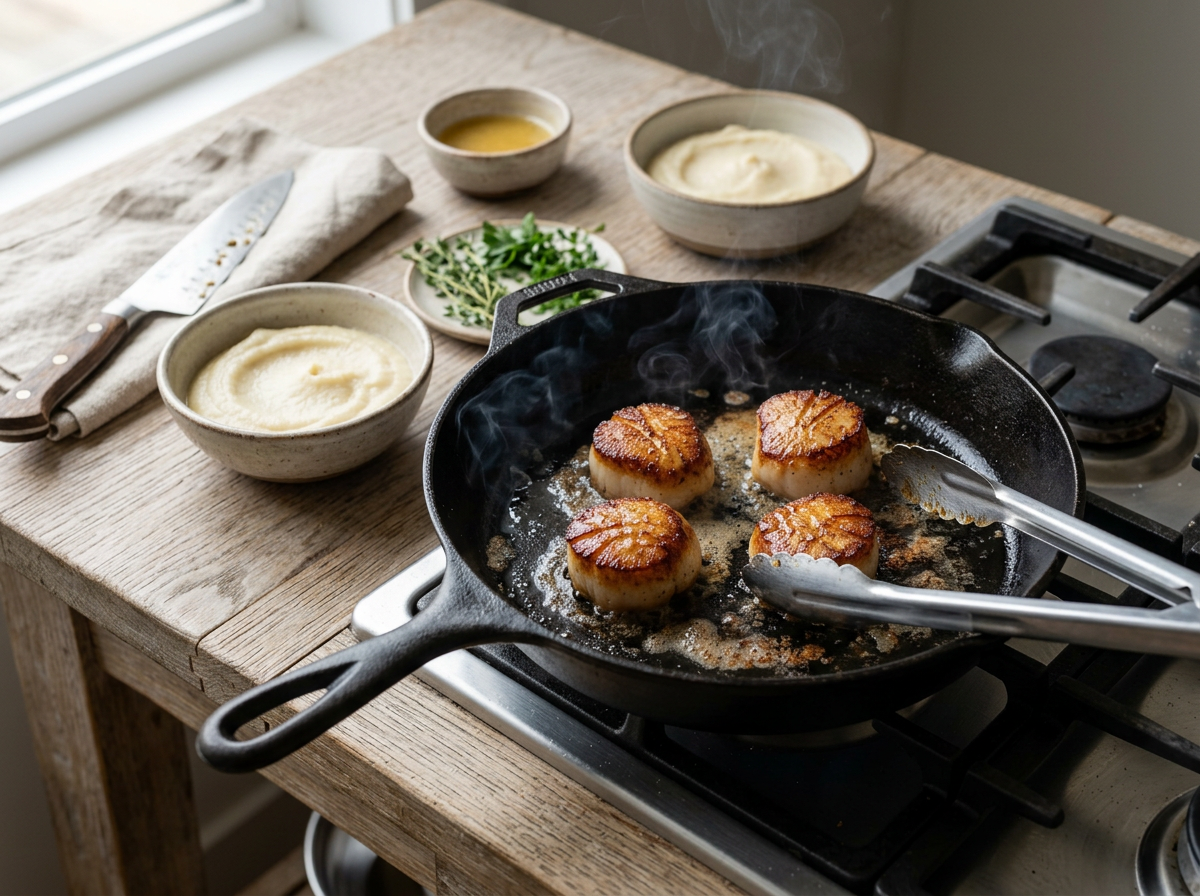
- Heat a 12-inch stainless steel or cast iron skillet over high heat for 2 to 3 minutes until a drop of water evaporates on contact.
- Add the oil and swirl to coat. When the oil begins to shimmer and just starts to smoke, add the scallops seasoned-side down in a single layer, pressing each one gently for 2 seconds to ensure full contact.
- Cook without moving for 90 seconds to 2 minutes until a deep golden-brown crust forms on the bottom. Season the top side with salt and pepper, then flip each scallop.
- Cook for another 60 to 90 seconds until the second side is golden and the scallop feels firm but slightly springy when pressed. Transfer to a plate and do not stack.
- Reduce heat to medium-low. Add the 2 tablespoons of butter to the same pan and swirl until melted and lightly foaming. Add the lemon juice and stir to deglaze, scraping up any browned bits, about 30 seconds.
- Spoon a generous pool of cauliflower puree onto the center of each warm plate.
- Arrange 4 scallops on top of the puree, crust-side up, spaced so the sear is visible.
- Drizzle the lemon-butter pan sauce over the scallops and puree, then finish with chopped fresh parsley. Serve immediately.
Notes
Tips for Success
- Pat scallops completely dry with paper towels, then rest them uncovered on a rack for 10 minutes before searing.
- Heat the skillet until a drop of water evaporates instantly before adding oil – the pan must be very hot.
- Press each scallop gently onto the pan surface for 2 seconds on contact to maximize flat-surface contact.
- Do not touch or move the scallops for the first 90 seconds – disturbing them breaks the developing crust.
- Blend the cauliflower while it’s still hot and add butter in two stages for the smoothest, most cohesive puree.
Variations
- Add 1 tsp white miso to the cauliflower puree for a deeper, slightly savory undertone.
- Swap the lemon-butter pan sauce for a brown butter and caper finish for a saltier, nuttier result.
- Add crispy pancetta or bacon lardons on the plate for texture contrast and a smoky note against the scallop.
Storage and Reheating
Seared scallops don’t store well – they go rubbery when reheated. If you have leftovers, refrigerate them in an airtight container and eat within 24 hours. A cold scallop sliced over a salad the next day is a better fate than reheating.
The cauliflower puree keeps well. Store it separately in an airtight container in the fridge for up to 4 days. Reheat gently in a small saucepan over low heat, stirring in a splash of milk or cream to loosen it back to the right consistency.
The puree also freezes well for up to 2 months. Thaw overnight in the fridge and reheat on the stovetop as above.
Serving Suggestions
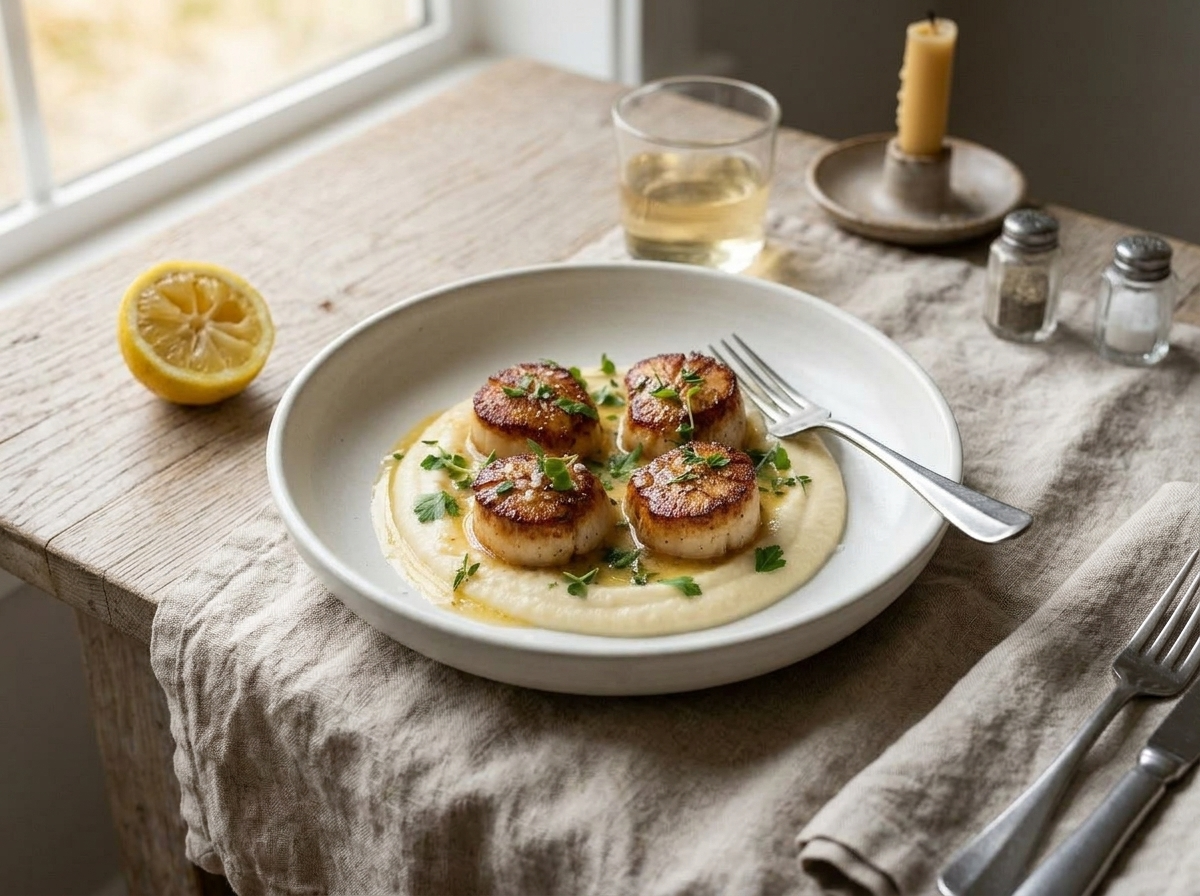
Spoon a wide, flat pool of cauliflower puree onto each warm plate, then place four scallops on top with space between them so the crust stays visible. Drizzle the pan sauce over and finish with a few leaves of fresh flat-leaf parsley or micro herbs if you have them.
For a fuller plate, add a handful of wilted spinach or sauteed peas alongside the puree. Both work with the butter sauce and don’t compete with the scallop.
A glass of unoaked Chardonnay or dry Viognier is the right pairing, and if you want something to set out before dinner, honey thyme baked ricotta fits the same elegant register. The fruit and acidity cut through the butter without overpowering the delicate scallop flavor.
FAQ
Why are my seared scallops not getting a brown crust?
The two most common reasons are moisture and heat. If the scallop surface is damp, it steams before it sears. Make sure the scallops are completely dry and the pan is fully preheated before they go in.
Can I use bay scallops instead of sea scallops for this recipe?
You can, but the result is quite different. Bay scallops are much smaller and cook in about 60 seconds, so the dramatic golden crust that makes this dish visually appealing is harder to achieve. Sea scallops are the right choice here.
Can I make the cauliflower puree a day ahead?
Yes, the puree holds up well made 24 hours in advance. Store it in the fridge, then reheat slowly on the stovetop with a splash of cream, stirring until smooth again before plating.
How do I know when pan seared scallops are cooked through?
A properly cooked sea scallop will be opaque through about three-quarters of its height with a slightly translucent center when you pull it at 2 minutes per side. It should feel firm but still have a slight spring when pressed – not hard.
Is pan seared scallops with cauliflower puree gluten-free?
Yes, this recipe contains no gluten-containing ingredients. Just double-check that your butter and cream are from brands without cross-contamination warnings if you’re cooking for someone with celiac disease.
What’s the difference between dry-pack and wet-pack scallops and does it matter?
Dry-pack scallops have no added water or preservatives, so they sear cleanly and develop a proper crust. Wet-pack scallops are soaked in a phosphate solution that causes them to release liquid in the pan, making it nearly impossible to get a true sear.
About The Author

John
John Watson is the passionate food enthusiast behind MePlusFood.com. With a deep love for exploring culinary delights, he shares honest restaurant reviews, mouthwatering recipes, and culinary adventures. Join John on his flavorful journey to savor the world one bite at a time.