Creamy Roasted Squash Lasagna with Sage Butter Sauce
Jump to Recipe
Roasted squash and sage lasagna swaps the usual meat ragu for butternut squash cubes roasted at 425°F/220°C until caramelized at the edges, layered with a sage bechamel and mozzarella. It bakes at 375°F/190°C until the top is bubbling and golden brown, with an internal temp of at least 165°F/74°C at the center.
I started making this version for a vegetarian Thanksgiving side that ended up doubling as the main dish, and it’s stuck around as a fall staple since. The squash brings natural sweetness that plays against the earthy sage and nutty parmesan.
You’ll roast the squash and build the bechamel at the same time, so neither one holds up the other. One thing I learned the hard way: don’t skip draining the roasted squash on paper towels, or the extra moisture waters down the sauce and the middle turns soupy.
This comes together in about 20 minutes of active prep, plus roasting and baking time, and it holds up well for meal prep through the week.
Why You’ll Love This Recipe
- Roasted squash adds natural sweetness without added sugar
- Sage bechamel coats every layer with earthy flavor
- Assembles ahead for an easier weeknight bake
- Freezes well for meal prep through the fall
Ingredient Notes
- butternut squash: Peel and cube into 2 cm pieces for even roasting. Kabocha or delicata work too, and delicata skips peeling entirely.
- fresh sage: Use fresh leaves for both the bechamel infusion and the crispy garnish. Dried sage turns musty when fried.
- whole milk: Whole milk gives the bechamel body and a silkier finish. 2% works but leaves the sauce noticeably thinner.
- no-boil lasagna noodles: These skip a boiling step and soften from the bechamel’s moisture as it bakes. Regular noodles work too, just boil them until al dente first.
- mozzarella: Shred it off a block for better melt. Pre-shredded bags contain anti-caking starch that can turn rubbery.
- nutmeg: Freshly grated nutmeg makes a real difference in the bechamel. Pre-ground jarred nutmeg loses its punch fast.
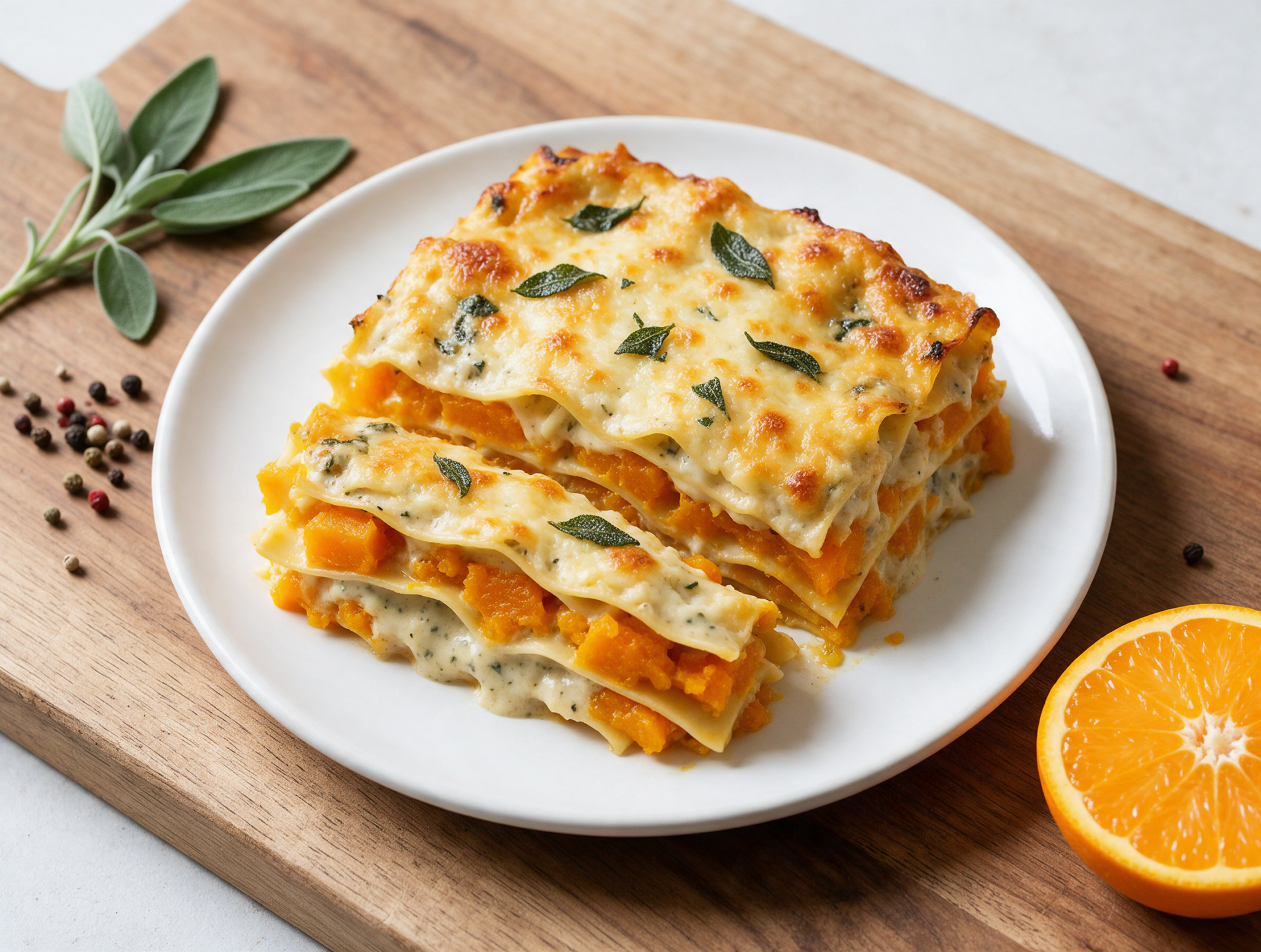
Creamy Roasted Squash Lasagna with Sage Butter Sauce
Ingredients
Method
- Heat the oven to 425°F/220°C. Toss the squash cubes with olive oil, chopped sage, salt, and pepper on a sheet pan 33 x 46 cm / 13 x 18 inch, spreading them in a single layer.
- Roast for 25 to 30 minutes, stirring once halfway, until the edges caramelize and a fork slides in easily. Drain any liquid on paper towels for 5 minutes.
- While the squash roasts, melt the butter in a 3-quart / 2.8 L saucepan over medium heat. Add the garlic and whole sage leaves and cook for 2 minutes until fragrant.
- Whisk in the flour and cook for 1 to 2 minutes, whisking constantly, until it smells toasted and looks pale gold.
- Pour in the warm milk in a slow stream, whisking the whole time to keep it smooth. Simmer for 8 to 10 minutes, whisking often, until the sauce coats the back of a spoon. Stir in the nutmeg, salt, and pepper, then fish out and discard the sage leaves.
- Reduce the oven to 375°F/190°C. Spread a thin layer of bechamel across the bottom of a 23 x 33 cm / 9 x 13 inch baking dish.
- Layer 3 noodles over the sauce, then a third of the roasted squash, a third of the remaining bechamel, and a third of the mozzarella and parmesan. Repeat the layers twice more, finishing with noodles, the last of the bechamel, and the remaining mozzarella and parmesan on top.
- Cover with foil and bake for 25 minutes. Uncover and bake for another 15 to 20 minutes, until the top is bubbling and golden brown and a thermometer at the center reads at least 165°F/74°C.
- While the lasagna rests, melt the butter in a 20 cm / 8-inch skillet over medium heat. Fry the remaining sage leaves for 30 to 60 seconds per side, until crisp and the edges curl. Transfer to a paper towel.
- Let the lasagna rest for 10 minutes before slicing. Top each slice with the crispy sage leaves and a drizzle of the brown butter.
Notes
- Drain roasted squash on paper towels before layering to avoid a watery lasagna.
- Warm the milk before adding it to the roux to prevent lumps.
- Rest the lasagna 10 minutes before cutting so slices hold their shape.
- Freeze unbaked for up to 3 months, tightly wrapped in foil.
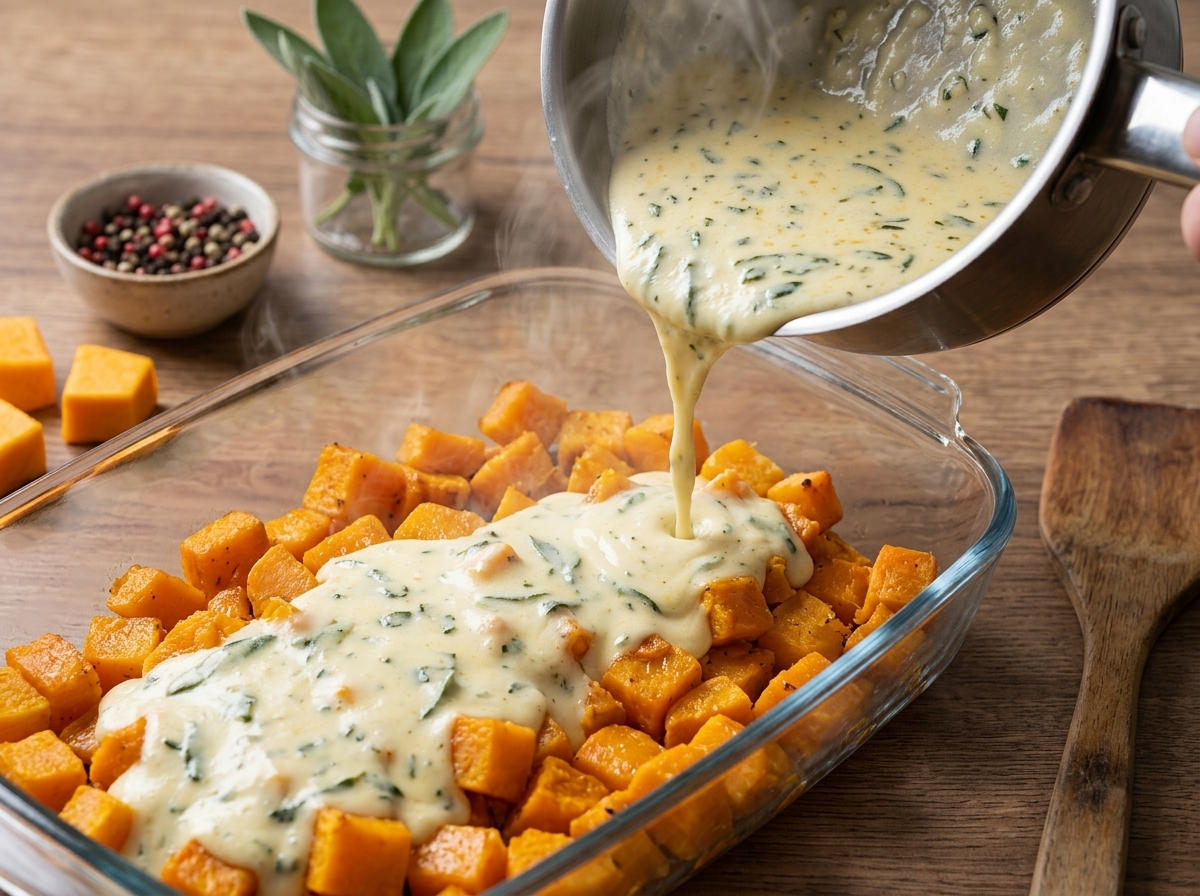
Tips for Success
- Roast the squash in a single layer on the sheet pan so it caramelizes instead of steaming.
- Warm the milk before whisking it into the roux to keep the bechamel from turning lumpy.
- Drain roasted squash on paper towels for 5 minutes before layering to avoid a watery lasagna.
- Rest the baked lasagna for at least 10 minutes before slicing so the layers hold together.
- Fry the garnish sage for 30 to 60 seconds per side only, longer turns the leaves bitter.
Variations
- Add crumbled Italian sausage between the layers for a heartier, meat-forward version of this lasagna.
- Swap butternut squash for kabocha or delicata to change the sweetness and skip peeling with delicata.
- Stir a cup of sauteed spinach or kale into the bechamel for extra color and a vegetable boost.
Storage and Reheating
Refrigerate leftover squash and sage lasagna in an airtight container for 3 to 4 days.
Reheat individual slices in a 350°F/175°C oven, covered with foil, for about 20 minutes, or until the center reaches 165°F/74°C again. A microwave works too, in 2 to 3 minute bursts on a covered plate.
Freeze the baked lasagna tightly wrapped in foil for up to 3 months. Thaw overnight in the fridge before reheating so the middle warms evenly.
Serving Suggestions
Serve roasted squash and sage lasagna with a simple arugula or radicchio salad tossed in lemon vinaigrette. The bitter greens cut through the richness of the bechamel and cheese.
Crusty bread is worth having on the table for mopping up extra sauce. A glass of Pinot Grigio or a light Chianti works well alongside the sweetness of the squash.
For a full fall dinner, add a side of roasted brussels sprouts or a simple sauteed green like chard.

FAQ
How do I know when the roasted squash and sage lasagna is done baking?
The lasagna is done when the top turns golden brown and bubbling around the edges, and a thermometer at the center reads at least 165°F/74°C. Bake covered at 375°F/190°C for 25 minutes, then uncovered for another 15 to 20 minutes until you see that bubbling and golden top.
Can I use ricotta instead of the sage bechamel in this lasagna?
Yes, you can swap in ricotta mixed with an egg and parmesan for a denser layer, though you’ll lose some of the silky texture the bechamel gives. I keep the bechamel because it coats the roasted squash evenly and lets the sage flavor come through in every bite.
Can I assemble this squash and sage lasagna ahead and bake it later?
Yes, assemble the full lasagna up to 2 days ahead and keep it covered in the fridge unbaked. You can also freeze it unbaked for up to 3 months, tightly wrapped, then bake straight from frozen, adding about 15 extra covered minutes at 375°F/190°C.
What goes with roasted squash and sage lasagna for dinner?
A bitter greens salad, like arugula or radicchio with lemon vinaigrette, balances the richness of the cheese and bechamel. Crusty bread for mopping up extra sauce and a glass of Pinot Grigio or light Chianti round out the meal.
Is this butternut squash lasagna gluten free?
No, not as written, since it uses regular lasagna noodles and a flour-based bechamel. Swap in gluten-free lasagna noodles and a 1:1 gluten-free flour blend for the sauce, and double check that your noodles are certified gluten free if that matters to you.
Why does my sage bechamel turn out lumpy in this lasagna?
Lumpy bechamel usually means the milk went into the roux too fast or too cold. Warm the milk first and add it in a slow, steady stream while whisking constantly, and the sauce should turn silky within about 8 to 10 minutes of simmering.
Related recipes
About The Author

John
John Watson is the passionate food enthusiast behind MePlusFood.com. With a deep love for exploring culinary delights, he shares honest restaurant reviews, mouthwatering recipes, and culinary adventures. Join John on his flavorful journey to savor the world one bite at a time.