Savory Cottage Cheese Pancakes with Fresh Herbs
Savory cottage cheese pancakes turn a simple batter into thick, herb-flecked rounds that are lightly tangy and ready for brunch or a protein-rich breakfast.
Expect golden, buttery edges, a tender center, and a gentle cheese melt that lifts like a small soufflé. The batter may look more like dough than liquid; that’s normal. Cook each side 1–2 minutes, then add 1–2 teaspoons of water and cover briefly to steam the centers until set.
This recipe focuses on technique: a dense batter, steady stovetop heat, and a short steam finish. It suits cooks who want weekend comfort with weekday protein—fast mixing, minimal equipment, clear timing in minutes, and choices for blending or hand-mixing, flour swaps, and topping paths.
Flavor leans to fresh herbs and cracked black pepper, with an optional sweet-salty drizzle later. Read on for practical options and precise steps so you get consistent lift, reliable texture, and golden edges every time.
Key Takeaways
- Thick, herb-flecked pancakes with a tender, slightly tangy center.
- Batter may seem dough-like but yields a soufflé-like lift when cooked.
- Cook 1–2 minutes per side, then steam with 1–2 tsp water under a lid.
- Quick mix, steady heat, minimal gear—suitable for weekday and weekend cooking.
- Options: blended vs. hand-mixed batter, simple flour swaps, and topping choices.
What Makes Cottage Cheese Pancakes Worth Making for Breakfast or Brunch
The combination of curds, eggs, and gentle leavening gives each cake a soufflé-like lift and a contrasting crisp edge.
Soufflé-Like Lift and Edge-to-Center Contrast
Moist curds add both protein and steam during cooking. That steam helps the batter rise, while the eggs and baking powder hold the shape.
The result: a browned, buttery rim that snaps slightly and a soft, custardy middle. Expect some deflation as they rest; that is normal for airy batters.
Protein-Forward Comfort that Still Feels Like a Weekend Treat
One serving delivers about 15 grams of protein, so these taste like real morning food rather than a light treat. Protein is a benefit, not the only aim.
Why Light Tang Brightens Fresh Herbs
A mild tang keeps herbs lively and prevents the batter from tasting flat. It also balances fat from butter and makes small amounts of maple syrup work without turning the plate into dessert.
- Curds + eggs = lift and tender texture.
- Crisp edges + soft center = pleasing contrast.
- Gentle heat and minimal flipping protect the soufflé’s rise.
- Butter for flavor; neutral oil when you want steadier browning.
Ingredients that Build the Right Flavor and Texture
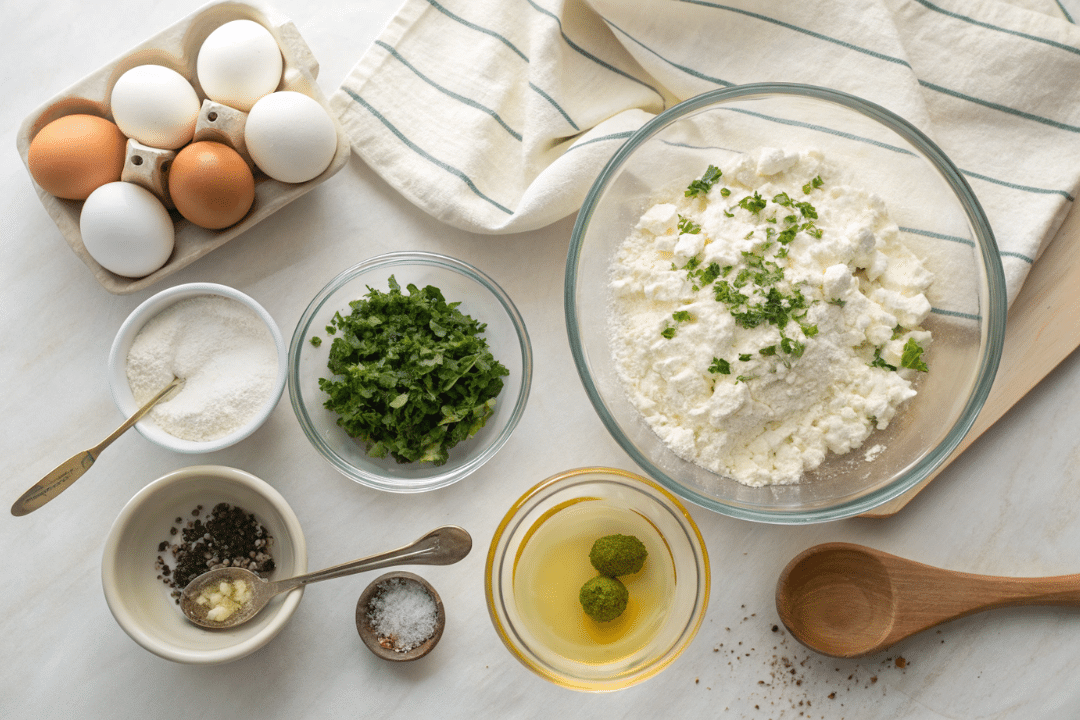
Ingredient choices shape how the final cakes brown, lift, and feel in the mouth. Small changes in dairy, flour, and leavening give predictable results.
Curd Size and Dairy Choice
Use small-curd cottage cheese so the curds blend evenly and avoid dry pockets in a thick batter. Full-fat dairy tends to give better tenderness and browning; low-fat can tighten the crumb and may need a touch more oil.
Flour and Structure
All-purpose flour gives classic structure. Whole wheat adds nuttiness and heft. Oat flour softens the crumb for a gentler texture. Choose based on how dense you want the result.
Leavening, Eggs, Milk, and Seasoning
Measure baking powder carefully: too little yields flat cakes; too much leaves a metallic aftertaste. Eggs bind and add lift when the batter is almost dough-like.
Use milk sparingly to adjust thickness by the spoonful, not too thin for pouring. Treat herbs—chives, dill, parsley, and scallions—as primary flavor ingredients and add cracked black pepper as a backbone. A drop of vanilla extract can round dairy flavors, but is optional for a savory profile.
| Ingredient | Why it matters | Typical amount (per 2 cups of batter) |
|---|---|---|
| Small-curd cottage cheese | Mixes evenly; prevents dry spots | 1 to 1 1/4 cup |
| Flour (AP / whole wheat/oat) | Controls structure and bite | 3/4 to 1 cup |
| Baking powder | Provides lift; balance avoids off-flavors | 1 to 1 1/2 tsp |
| Eggs & Milk | Eggs bind and puff; milk adjusts texture | 1–2 eggs; 2–4 tbsp milk |
How to Make Savory Cottage Cheese Pancake Batter Without Overmixing
Start with a deliberate, one-bowl order so the batter comes together thick and reliably.
One-Bowl Method for a Thick, Dough-Like Pancake Batter
Whisk eggs, a splash of milk, and a bit of cream in the bowl first. Add salt and baking powder so these distribute in the wet mix.
Stir in flour just until it disappears. Fold in curds and chopped herbs; expect a very thick batter that will mound, not pour.
Blended vs Hand-Mixed: Smooth Texture or Melty Curd Pockets
For a smooth interior, pulse the batter briefly in a blender. For melty pockets of curd, fold by hand and stop as soon as you see even distribution.
Dialing in Thickness: When to Add a Splash of Milk or Water
- Target: batter should hold a mound and show herb flecks.
- If it won’t loosen off a spoon, add milk or water by teaspoons until it just drops.
- Thicker batter needs lower heat and a few extra minutes in the pan to cook through.
- Clean mixing order prevents lumps and spreads the leavening.
- Overmixing develops gluten and makes cakes tough; stop early to preserve lift.
- Make-ahead: refrigerate covered up to 24 hours; stir in a splash of milk before cooking to restore texture.
Stovetop Method for Thick Pancakes that Cook Through
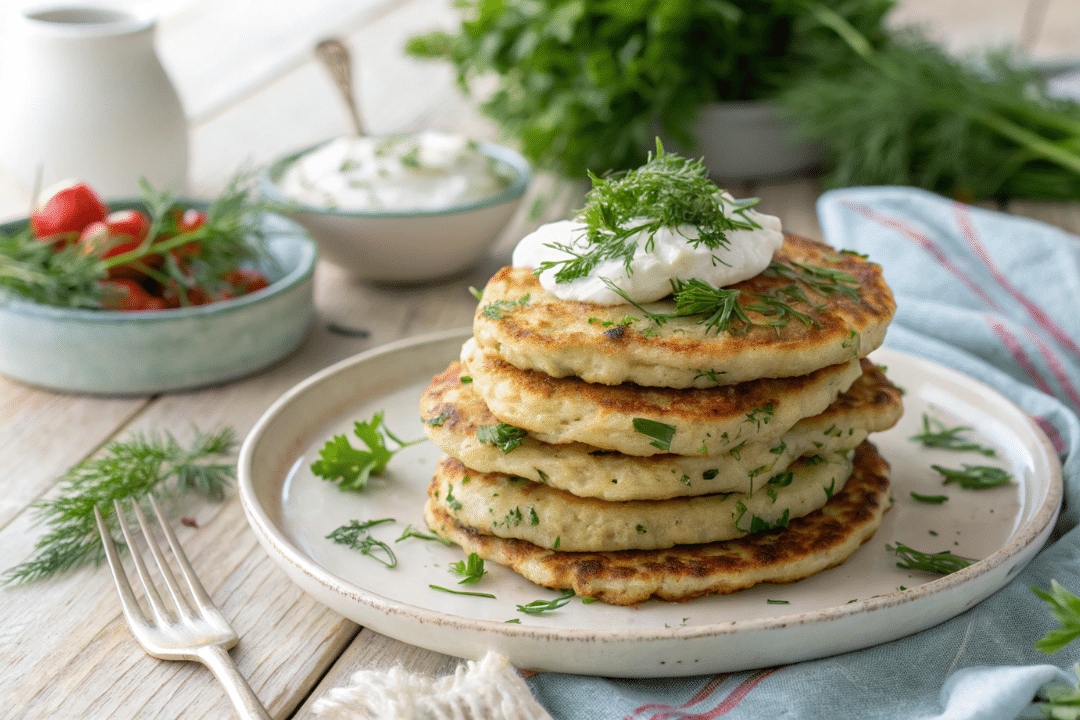
A steady pan and controlled heat make the difference between a raw center and a deep golden edge. Use medium heat to brown slowly and let the thick batter set without burning.
Pan Setup and Why Steady Heat Wins
Use a nonstick skillet so dairy-rich batter releases cleanly. Warm the pan until a thin film of fat shimmers but does not smoke.
Medium heat gives even color and time for the inside to cook. High heat will darken the outside before the center sets.
Portioning: 1/4 Cup Mounds vs 1/3 Cup Scoops
For taller, quicker-setting cakes, use 1/4 cup mounds. They cook through a bit faster and keep a tender center.
Use a 1/3 cup scoop for larger rounds that need a few extra minutes on lower heat to finish without burning.
Flip Cues and the Lift-and-Peek Check
Flip when edges turn matte and small bubbles form. Lift one slightly to check the underside; aim for a deep golden color before turning.
A gentle lift-and-peek prevents tearing and stops guessing. If the center still looks wet, lower the heat and give it another 30–60 seconds.
The Steam Finish and Fat Management
After flipping, add 1–2 teaspoons of water to the pan and cover for 1–2 minutes; trapped steam sets the middle without overbrowning.
Butter adds flavor and crisping; neutral oil reduces burn risk and sticks less. Reapply a bit of oil or butter between batches to keep browning even and prevent sticking.
Fresh-Herb Variations and Savory Topping Ideas
A few simple herb swaps and warm toppings can change the whole flavor profile without extra work. Choose combinations that support the batter’s tang and tender texture.
Herb Pairings that Feel Finished, Not Fussy
Chive and dill add bright, oniony notes that cut through rich dairy. Parsley with scallion gives a clean, green lift. Tarragon and chives add aniseed warmth for a more refined plate.
Chop herbs very finely and fold them in at the end so they don’t wet the batter.
Vegetable Toppings that Keep Moisture in Check
Sauté spinach until the leaves are wilted and nearly dry; squeeze out excess liquid before piling on. For onions, cook slowly until golden and sweet to concentrate flavor without sogginess.
Sear sliced mushrooms in butter or oil until browned; finish with a splash of cream or a pinch of salt to boost umami.
Simple Finishing Touches
- One spoonful of Greek yogurt as a cool, tangy counterpoint.
- A grind of black pepper and a measured drizzle of olive oil for aroma.
- A little butter at the end for sheen and richness; a tiny drizzle of maple syrup for a controlled sweet-salty contrast.
For related pairing ideas, see this recipe for spelt crepes with goat cheese to borrow technique and topping inspiration.
Serving Suggestions that Balance Savory and Classic Pancake Vibes
Decide how bold you want the plate to read before you stack. A small sweet element and a bright side keep the herbs lively and the dish balanced. Serve immediately so edges stay crisp and the center keeps a tender lift.
Maple Syrup or Honey: How a Small Drizzle Sharpens the Herb Flavor
A little maple syrup lifts alliums and dill by adding contrast. Use syrup as an accent, not a soak; a teaspoon or two across a stack brightens without turning the dish into dessert.
Fresh Fruit and Bright Sides that Keep the Plate Feeling Light
Choose berries or citrus segments to cut richness with acid and fresh texture. Stewed fruit works, but keep it reduced so it doesn’t make the cakes soggy.
- Keep syrup minimal: accent the herbs, don’t mask them.
- Pair with berries, orange segments, or a spoonful of lightly stewed fruit.
- Serve green sides—simple salad, arugula, or sliced tomatoes with a pinch of salt—for balance.
- For a fuller meal, add a protein side like smoked salmon or crisped bacon to reinforce the protein theme without heaviness.
| Finish | Why it works | Serve-as |
|---|---|---|
| Light maple drizzle | Sweetness lifts herbs and rounds dairy notes | Accent — 1–2 tsp across the stack |
| Fresh berries/citrus | Acid and brightness cut richness | Fresh side or scattered on top |
| Simple salad or sliced tomatoes | Texture and savory contrast; keeps the plate light | Brunch side to complete the meal |
Conclusion
A reliable finish depends on three things: a thick batter, steady medium heat, and a short steam finish to set the centers.
Choose texture by blending for silky interiors or hand-mixing for melty curd pockets. Watch curd size, pick the right flour (all-purpose flour or a blend), and add milk sparingly to avoid a loose batter.
Cool cooked cakes completely before storing in an airtight container in the fridge. Reheat in a lightly oiled skillet for crisp edges, use a toaster oven for even warmth, or microwave for speed.
For meal prep, layer with wax paper and freeze up to three months; reheat from frozen in a skillet with a touch of oil. Return to the herb and topping ideas to keep this recipe fresh and repeatable.
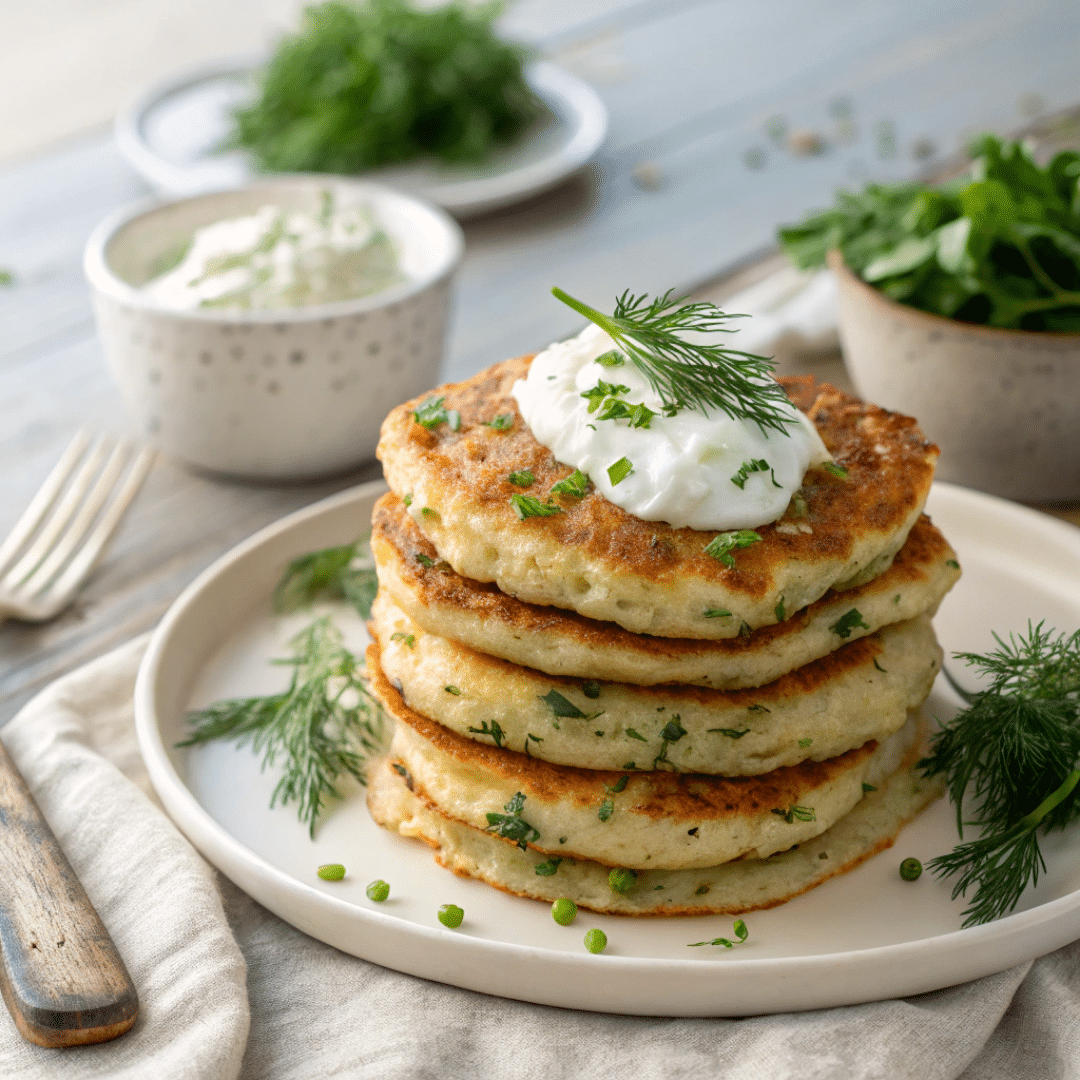
Cottage Cheese Pancakes
Ingredients
Method
- Whisk eggs, milk, salt, and baking powder in a large bowl until combined.
- Stir in flour just until no dry streaks remain; avoid overmixing.
- Fold in cottage cheese and chopped herbs; batter should be thick and mound on a spoon.
- Heat a nonstick skillet over medium heat and add a thin layer of butter or oil.
- Scoop ¼-cup mounds of batter into the pan, spacing well.
- Cook 3–4 minutes until edges turn matte and bottoms are deeply golden.
- Flip gently, add 1–2 tsp water to the pan, cover, and steam 1–2 minutes to set centers.
- Remove lid and cook uncovered 1 more minute if needed.
- Serve immediately while edges are crisp and centers are tender.
Notes
FAQ
What gives these pancakes their soufflé-like lift while keeping a tender center?
How do I keep the batter protein-forward without making it dense?
Should I use small-curd or large-curd dairy, and does fat content matter?
Can I swap all-purpose flour for whole wheat or oat flour?
How do I make the batter without overmixing?
When should I thin the batter with milk or water?
What pan and heat setting work best to cook through without burning the outside?
How large should each pancake be for even cooking?
What are reliable flip cues to avoid undercooking or breaking the pancakes?
How does the steam finish work and when should I use it?
What fat should I cook with: butter or neutral oil?
Which fresh herbs pair best and how much should I add?
What savory toppings complement the herb flavor without making the plate too heavy?
Can I prepare the batter ahead and how should I store it?
Any tips for serving these with fruit or classic pancake sides?
About The Author

John
John Watson is the passionate food enthusiast behind MePlusFood.com. With a deep love for exploring culinary delights, he shares honest restaurant reviews, mouthwatering recipes, and culinary adventures. Join John on his flavorful journey to savor the world one bite at a time.