Slow Cooked Beef Cheek Bourguignon
Jump to Recipe
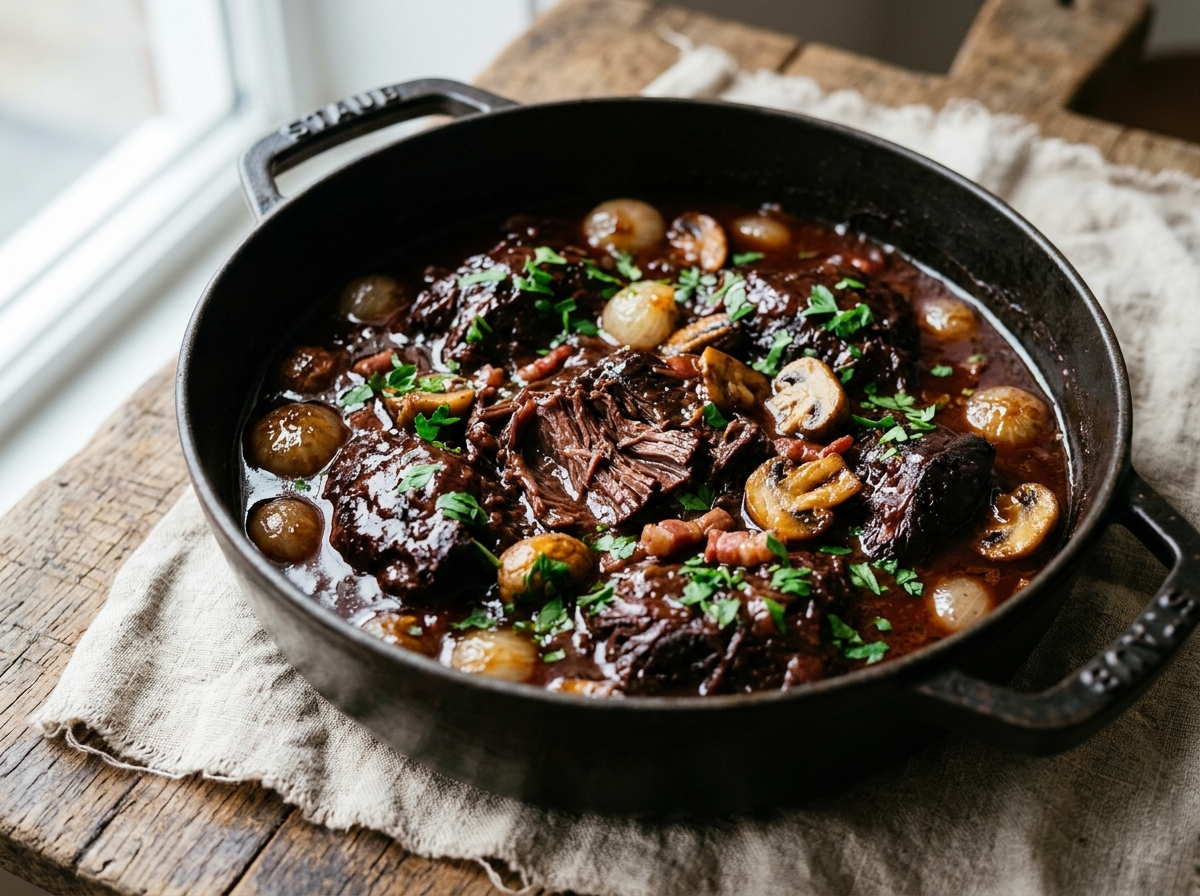
Beef cheeks are not the most glamorous cut at the butcher counter, but they reward patience more than almost any other piece of meat. The high collagen content breaks down over hours, thickening the braising liquid into a sauce that coats every bite, much like what happens in a slow-braised beef cheek braise where the meat becomes fork-tender over four or more hours.
The Bourguignon approach, long-braised in a good Burgundy or similar Pinot Noir with lardons, pearl onions, and mushrooms, suits the cheeks exactly. The flavors build slowly and end up layered in a way that a quick stovetop braise never quite achieves.
I cook this on a Sunday when the oven can run for four to five hours undisturbed. The prep is straightforward: sear the meat, build the base, pour in the wine, and walk away. By dinner the kitchen smells like a proper French bistro and the cheeks pull apart with no effort at all.
This recipe serves four generously. It also freezes well, which makes a double batch worth the extra effort.
Why You’ll Love This Recipe
- Collagen-rich cheeks produce a naturally thick, glossy sauce
- Hands-off cook time – oven does the work for hours
- Tastes deeper and richer reheated the next day
- Freezer-friendly and portions well for meal prep
Ingredient Notes
- beef cheeks: Ask your butcher to trim the thick silverskin from each cheek. If unavailable, bone-in beef short ribs work as a substitute but will need slightly less braising time.
- red wine: Use a Burgundy, Cotes du Rhone, or any dry Pinot Noir you would drink. Avoid cooking wine labeled ‘with added salt’ as it throws off the seasoning balance.
- lardons: Cut from a thick slab of smoked bacon or pancetta into 1 cm cubes. Pre-cut bacon strips can substitute but render faster and produce less fond.
- pearl onions: Fresh pearl onions need blanching and peeling, about 15 minutes of work. Frozen pearl onions skipped straight from the bag save time without affecting the final result.
- cremini mushrooms: Cremini hold their shape better than button mushrooms during a long braise. White button mushrooms are a fine swap, and shiitake caps add an extra layer of umami.
- beef stock: Homemade or a good-quality low-sodium store-bought stock both work. Avoid stock cubes here as they can make the finished sauce taste flat and salty.
- tomato paste: Cook it directly in the fat for 1 to 2 minutes before adding liquid to deepen its flavor and remove any raw, sharp edge.
- bouquet garni: Tie a few sprigs of thyme, a bay leaf, and a small bunch of flat-leaf parsley stems together with kitchen twine. Pull it out before serving.
Slow Cooked Beef Cheek Bourguignon
Ingredients
Method
- Heat the oven to 160 C / 320 F.
- Pat beef cheeks dry with paper towels on all sides, then season generously with salt and pepper.
- Place the Dutch oven over medium-high heat. Add the lardons and cook for 5 to 7 minutes, stirring occasionally, until golden and the fat has rendered. Remove with a slotted spoon and set aside.
- Add the olive oil to the rendered lardon fat in the pot. Sear the beef cheeks in 2 batches, 3 to 4 minutes per side, until deeply browned on all surfaces. Transfer to a plate and set aside.
- Reduce heat to medium. Add the chopped onion, carrots, and celery to the pot. Cook for 5 minutes, stirring, until softened and picking up the browned bits from the base.
- Add the smashed garlic and tomato paste. Stir and cook for 90 seconds until the tomato paste darkens slightly.
- Pour in the red wine, scraping the bottom of the pot to lift any remaining fond. Bring to a simmer and cook for 5 minutes.
- Add the beef stock and bring back to a simmer. Return the seared cheeks and lardons to the pot. Nestle in the bouquet garni. The liquid should come halfway up the cheeks.
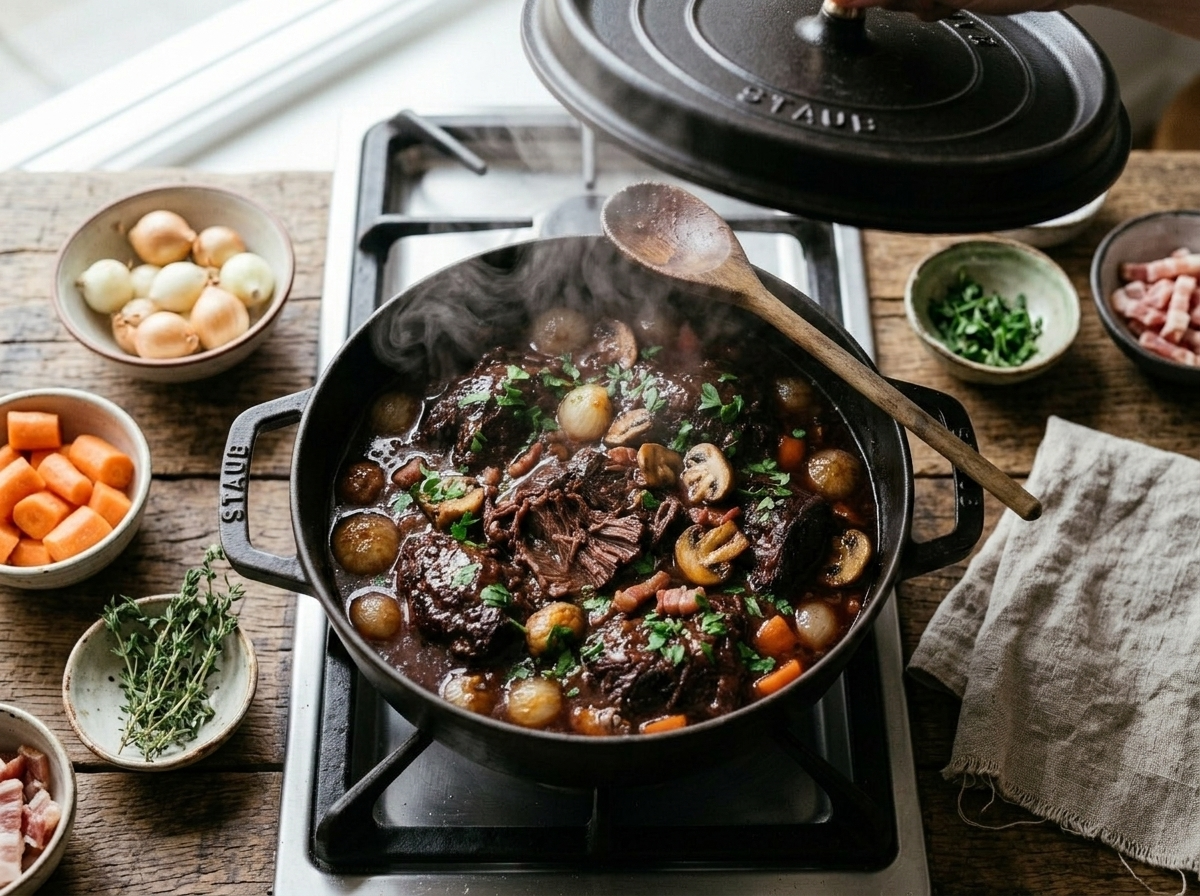
- Cover the Dutch oven with its lid and transfer to the oven. Braise at 160 C / 320 F for 4 to 4.5 hours, turning the cheeks once at the 2-hour mark, until the meat is completely tender and yields easily when pressed with a spoon.
- After 2 hours, skim any fat from the surface using a wide spoon or skimmer and discard. Return the lid and continue braising.
- About 45 minutes before the cheeks are done, melt butter in a skillet over medium-high heat. Add the pearl onions and cook for 5 minutes, stirring, until lightly golden.
- Add the halved cremini mushrooms and cook for a further 5 to 6 minutes until glossy and browned at the edges. Season lightly with salt and pepper. Set aside.
- Add the pearl onions and mushrooms to the braising pot for the final 30 minutes of cooking.
- Remove the pot from the oven. Lift out the beef cheeks and set aside. Discard the bouquet garni and the large vegetable chunks (carrots, celery, onion) using a slotted spoon.
- If the sauce looks thin, place the pot over medium heat and simmer uncovered for 8 to 10 minutes until it coats the back of a spoon. Taste and adjust seasoning.
- Return the cheeks to the sauce and let rest for 10 minutes. Spoon into bowls or onto plates, scatter with chopped parsley, and serve immediately.
Notes
Tips for Success
- Pat beef cheeks completely dry before searing so they brown deeply rather than steam in the pan.
- Sear in batches with space between each piece – crowding the pan drops the temperature and prevents browning.
- Cook tomato paste in the rendered lardon fat for 90 seconds until it darkens slightly before adding wine.
- Skim the fat from the surface of the braising liquid after the first 2 hours using a wide spoon for a cleaner sauce.
- If the sauce looks thin after the cheeks are done, remove the meat and reduce the liquid over medium heat for 8 to 10 minutes until it coats a spoon.
Variations
- Add 2 tablespoons of brandy to the pan after searing the cheeks and flame off the alcohol before adding wine.
- Swap cremini mushrooms for a mix of dried porcini rehydrated in warm water for a more intense, earthy sauce.
- Use a slow cooker on LOW for 8 hours instead of the oven for the same tender result with less attention needed.
Storage and Reheating
Store cooled beef cheek Bourguignon in an airtight container in the refrigerator for up to 4 days. The sauce will set firm when cold because of the gelatin released by the cheeks, which is exactly what you want.
To reheat, transfer portions to a saucepan and warm gently over low heat with a splash of beef stock or water to loosen the sauce. Avoid boiling as it can tighten the meat fibers. A microwave on 60 percent power in 90-second intervals also works well for single portions.
To freeze, portion the cheeks and sauce into freezer-safe containers and freeze for up to 3 months. Thaw overnight in the refrigerator and reheat as above.
Serving Suggestions
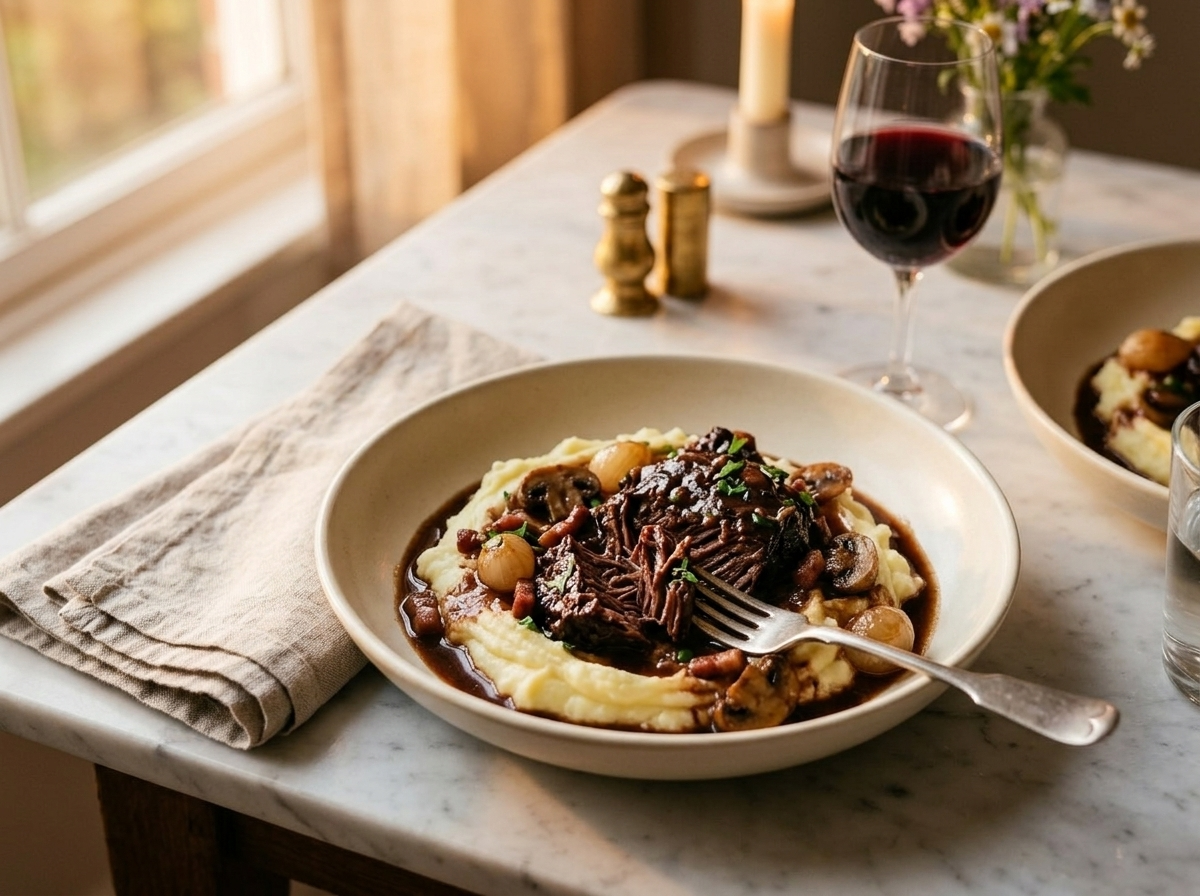
Creamy mashed potato is the most natural pairing here. The sauce pools into the potato and every forkful has a bit of both. I use a ricer for the smoothest result and finish with plenty of butter and warm cream.
Buttered egg noodles or soft polenta also work well and both come together quickly while the braise rests, or go further with a wild mushroom and truffle risotto if you want something richer underneath. Roasted or steamed green beans on the side cut through the richness of the sauce.
For a more composed plate, slice each cheek thickly rather than pulling it apart and serve over a smooth potato puree with a few pearl onions and mushrooms spooned around it. A glass of the same Pinot Noir used in the braise rounds out the meal.
FAQ
Why are my beef cheeks tough after 3 hours of braising?
Beef cheeks need at least 4 hours at a low temperature (around 160 C / 320 F) to fully break down their dense connective tissue. If they’re still firm at 3 hours, cover and return them to the oven for another 45 to 60 minutes and check again.
Can I use a different cut instead of beef cheeks for Bourguignon?
Bone-in beef short ribs or chuck roast cut into large chunks are the closest substitutes because both have enough collagen to produce a thick braising sauce, similar to what makes Korean braised beef short ribs so tender and glossy. Short ribs may be done in 3 to 3.5 hours since they’re smaller, so start checking earlier.
Can I make beef cheek Bourguignon two days ahead for a dinner party?
Yes, and it’s actually better made 1 to 2 days ahead. The flavors knit together as it sits in the refrigerator and the fat solidifies on top, making it easy to lift off before reheating for a cleaner sauce.
What does a properly reduced Bourguignon sauce look like when it’s done?
The sauce should coat the back of a spoon and hold a clean line when you draw your finger through it. It will be deep mahogany in color and have a slight sheen from the rendered collagen.
Is beef cheek Bourguignon gluten-free?
This recipe contains no flour as a thickener, so it can be gluten-free if you confirm your beef stock and lardons are certified gluten-free. Some store-bought stocks contain wheat, so always check the label.
What is the difference between classic Beef Bourguignon and this beef cheek version?
Classic Beef Bourguignon traditionally uses chuck or stewing beef cut into cubes, which can dry out if overcooked. Beef cheeks have far more intramuscular collagen, so they stay moist and produce a thicker, more gelatinous sauce without needing any flour for body.
About The Author

John
John Watson is the passionate food enthusiast behind MePlusFood.com. With a deep love for exploring culinary delights, he shares honest restaurant reviews, mouthwatering recipes, and culinary adventures. Join John on his flavorful journey to savor the world one bite at a time.