Wild Mushroom and Truffle Risotto
Jump to Recipe
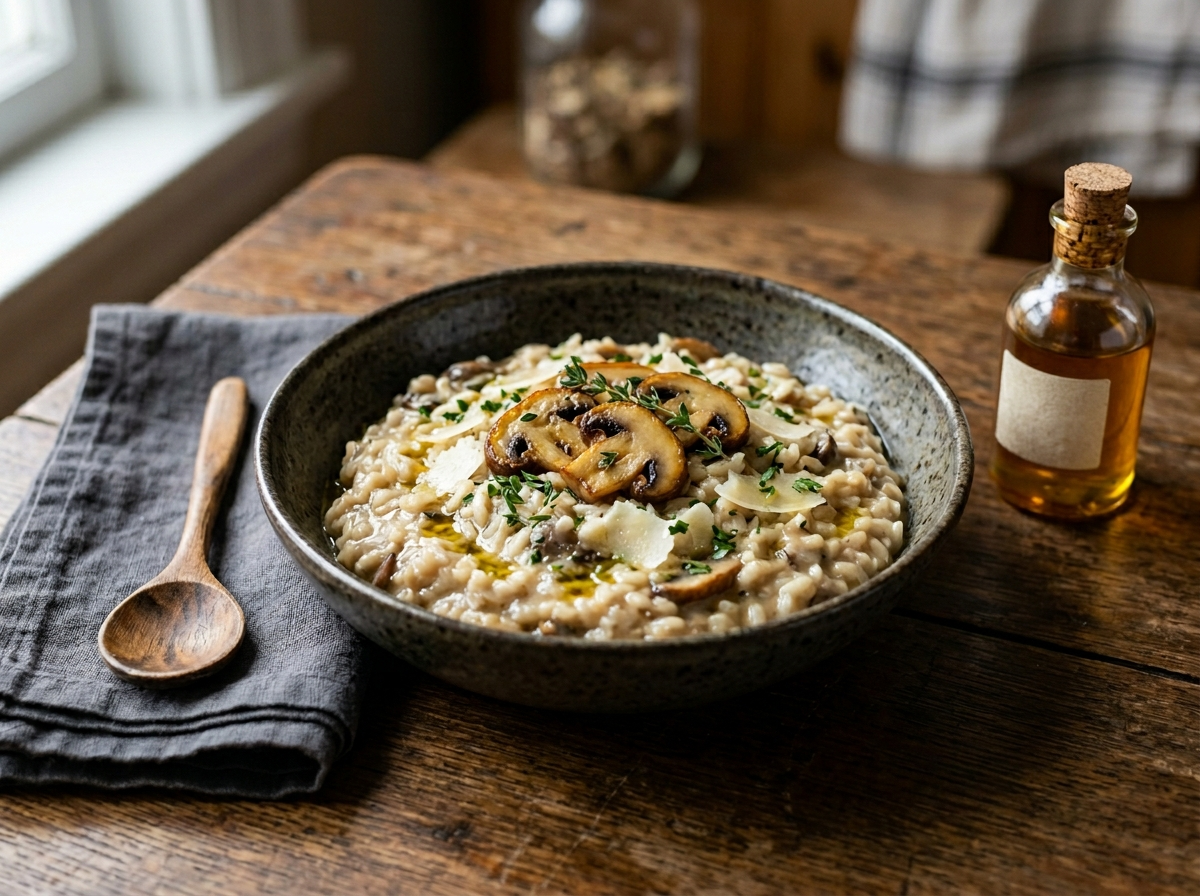
A good mushroom risotto doesn’t need a restaurant kitchen. What it needs is the right combination of mushrooms, warm stock added in stages, and enough patience to stir.
I use both dried porcini and fresh cremini here. The porcini soak in warm water, and that soaking liquid goes straight into the pot as part of the stock. It adds a depth you can’t fake with fresh mushrooms alone.
Truffle oil goes in at the very end, off the heat. Add it during cooking and most of the aroma burns off. Stir it in with the butter and Parmesan, and the scent stays.
This comes together in about 40 minutes from start to finish and eats like a full meal on its own.
Why You’ll Love This Recipe
- Porcini soaking liquid doubles as umami-rich stock
- Truffle oil added off-heat keeps the aroma sharp
- One pot, no oven, ready in 40 minutes
- Vegetarian and satisfying enough as a main
Ingredient Notes
- Arborio rice: Don’t rinse it. The surface starch is what makes risotto creamy. Carnaroli is a fine substitute and holds its texture a little longer if you’re serving in batches.
- Dried porcini mushrooms: Soak them in 250 ml of warm water for at least 15 minutes. Strain the soaking liquid through a fine sieve before adding it to your stock to remove any grit.
- Fresh cremini mushrooms: Button mushrooms work here but give less flavor. For a more pronounced mushroom character, use a mix of cremini and shiitake.
- Dry white wine: A basic Pinot Grigio or Sauvignon Blanc is fine. Avoid anything labeled ‘cooking wine’ as it tends to be salted and off-balance.
- Truffle oil: White truffle oil is more subtle, black is earthier and more assertive. Use white if the mushroom flavor is your focus. Add it off the heat so the volatile aroma doesn’t cook off.
- Parmesan cheese: Grate it yourself. Pre-grated Parmesan often contains anti-caking agents that make the risotto grainy. Pecorino Romano can replace half the Parmesan for a saltier bite.
Wild Mushroom and Truffle Risotto
Ingredients
Method
- Place dried porcini in a small bowl, cover with 250 ml of warm water, and soak for 15 minutes. Lift the mushrooms out, roughly chop them, and strain the soaking liquid through a fine-mesh sieve. Set both aside.
- Melt 30 g butter in a 10-inch skillet over medium-high heat. Add sliced cremini mushrooms in a single layer and cook without stirring for 3 to 4 minutes until deeply golden on one side.
- Stir the mushrooms, add 2 minced garlic cloves and thyme leaves, and cook for 2 more minutes until fragrant. Add the chopped porcini, season lightly with salt, and toss to combine. Remove from heat and set aside.
- In a small saucepan, combine vegetable stock and strained porcini liquid. Bring to a gentle simmer and keep warm over low heat throughout cooking.
- In a 3-quart heavy-bottomed saucepan, heat 2 tbsp olive oil and 30 g butter over medium heat. Add diced shallots and cook for 3 to 4 minutes until soft and translucent but not browned.
- Add 1 minced garlic clove and stir for 30 seconds until fragrant.
- Add Arborio rice and toast for 2 minutes, stirring constantly, until the edges of the grains look slightly translucent and the pan smells nutty.
- Pour in the white wine and stir until fully absorbed, about 1 minute.
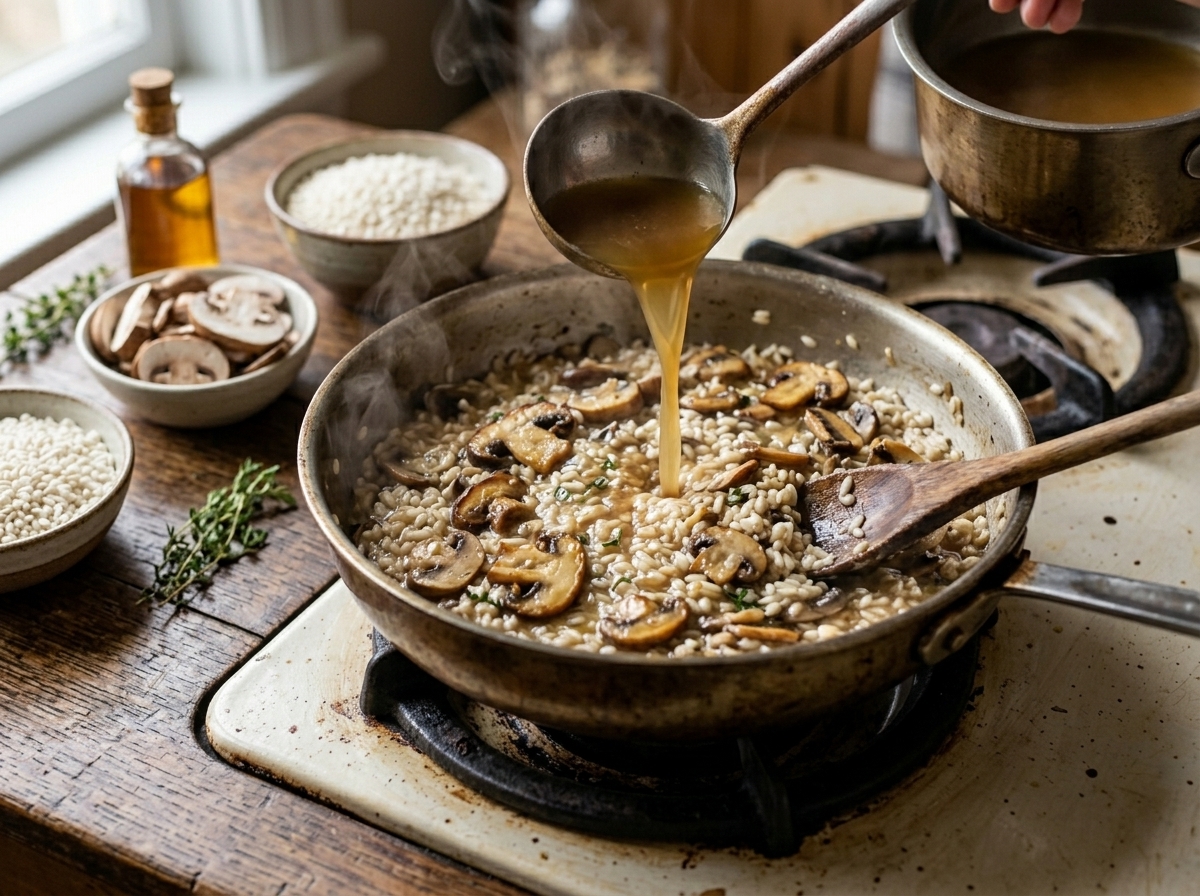
- Add one ladle of warm stock (about 120 ml) and stir gently and consistently until absorbed. Repeat, adding one ladle at a time, allowing each addition to absorb before adding the next. This process takes 18 to 22 minutes total.
- After about 12 minutes of ladling, stir in the sautéed mushroom mixture. Continue adding stock and stirring until the rice is tender with a slight bite at the center and the risotto flows slowly when you shake the pan.
- Stop adding stock when the rice is cooked to your liking. You may not need all the stock.
- Remove the pan from the heat. Add cold cubed butter and grated Parmesan. Stir vigorously for 1 to 2 minutes until the butter melts and the risotto looks glossy.
- Drizzle in the truffle oil and stir once to incorporate. Taste and adjust salt and pepper.
- Spoon immediately into warm bowls. Top with chopped parsley and Parmesan shavings if using. Serve right away.
Notes
Tips for Success
- Keep stock warm in a separate saucepan throughout cooking so each ladle doesn’t drop the temperature of the rice.
- Add the porcini soaking liquid early in the ladling sequence to build flavor from the base up.
- Sauté fresh mushrooms in a separate pan until golden before adding to risotto, so they don’t steam and go limp.
- Pull the pan off the heat before stirring in cold butter and Parmesan, this is the mantecatura step that makes risotto glossy.
- Season only at the end after the Parmesan is in, since both cheese and truffle oil contribute salt.
Variations
- Add 120 g of cooked lobster or crab in the final minute for a seafood version with truffle.
- Stir in 80 g of crumbled gorgonzola with the Parmesan for a stronger, blue-cheese-forward mushroom risotto.
- Fold in 100 g of wilted spinach or cavolo nero just before serving to add color and a slight bitter edge.
Storage and Reheating
Store leftover risotto in an airtight container in the fridge for up to 3 days. Risotto firms up considerably as it cools, which is normal.
To reheat, add 2 to 3 tablespoons of warm stock or water per portion and stir over medium-low heat until it loosens back to a creamy consistency. Don’t microwave it dry or it turns starchy and dense.
Freezing isn’t ideal for risotto. The rice texture becomes mealy after thawing. If you want to prep ahead, cook the risotto to the halfway point, spread it on a tray to cool, then refrigerate and finish to order with fresh hot stock.
Serving Suggestions
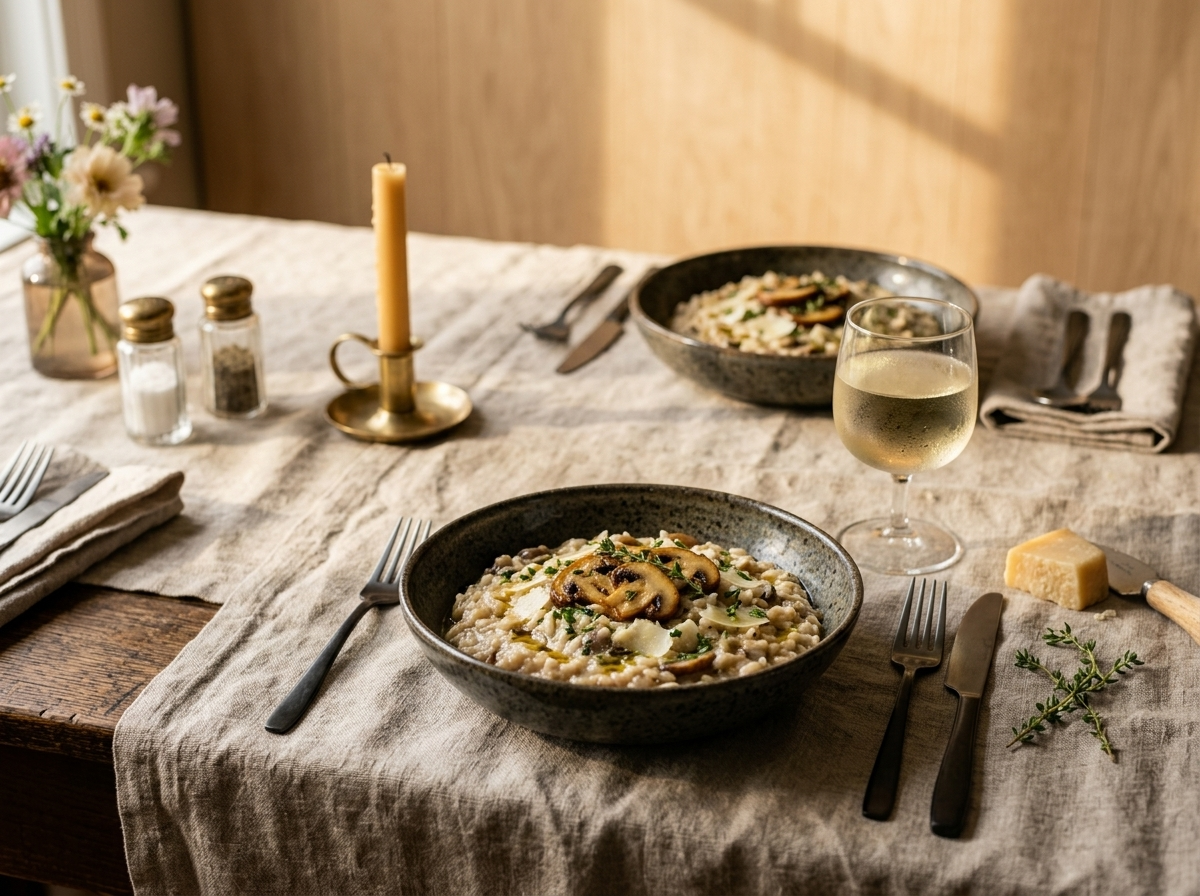
This risotto works as a standalone main with just a wedge of lemon and a few shavings of fresh Parmesan on top, or start the meal with honey thyme baked ricotta and crusty bread. The acidity of the lemon cuts through the richness of the butter and truffle oil.
If you’re serving it as part of a larger dinner, pair it with a simple arugula salad dressed with lemon and olive oil, or lemon roasted cauliflower steaks with nothing more than salt. Anything too heavy or sauced will compete with the truffle.
For wine, a white Burgundy or unoaked Chardonnay plays well against the earthy mushroom base. A light Pinot Noir also works if you prefer red.
FAQ
Why is my mushroom risotto gluey instead of creamy?
Gluey risotto usually means too much starch was released by over-stirring at high heat or cooking too long after the stock was absorbed. Aim for a constant gentle stir over medium heat, and stop cooking while there’s still a slight flow to the rice.
Can I use fresh truffle instead of truffle oil in this risotto?
Yes, and the result is noticeably better. Shave 10 to 15 g of fresh black or white truffle directly over the plated risotto just before serving. Skip the truffle oil entirely if you’re using fresh.
Can I make wild mushroom risotto without wine?
You can skip the wine and replace it with an equal amount of warm stock. The risotto will taste a little flatter in the first few minutes of cooking, so add a small squeeze of lemon juice at the end to restore some acidity.
How do I know when the risotto is done cooking?
Bite a grain. It should be tender but with just a hint of resistance at the very center, not chalky, not mushy. The risotto should spread slowly when you shake the pan, which cooks call all’onda or wave movement.
Is wild mushroom and truffle risotto gluten-free?
The core recipe is gluten-free as long as your stock is certified gluten-free. Some store-bought vegetable stocks contain barley or wheat as a flavoring, so check the label before using.
What is the difference between porcini risotto and wild mushroom risotto?
Porcini risotto relies solely on dried or fresh porcini for its flavor, giving a single, concentrated earthy note. Wild mushroom risotto blends multiple varieties, typically dried porcini for depth and fresh mushrooms like cremini or shiitake for texture and body.
About The Author

John
John Watson is the passionate food enthusiast behind MePlusFood.com. With a deep love for exploring culinary delights, he shares honest restaurant reviews, mouthwatering recipes, and culinary adventures. Join John on his flavorful journey to savor the world one bite at a time.