Slow Roasted Lamb Ragu Pappardelle
Jump to Recipe
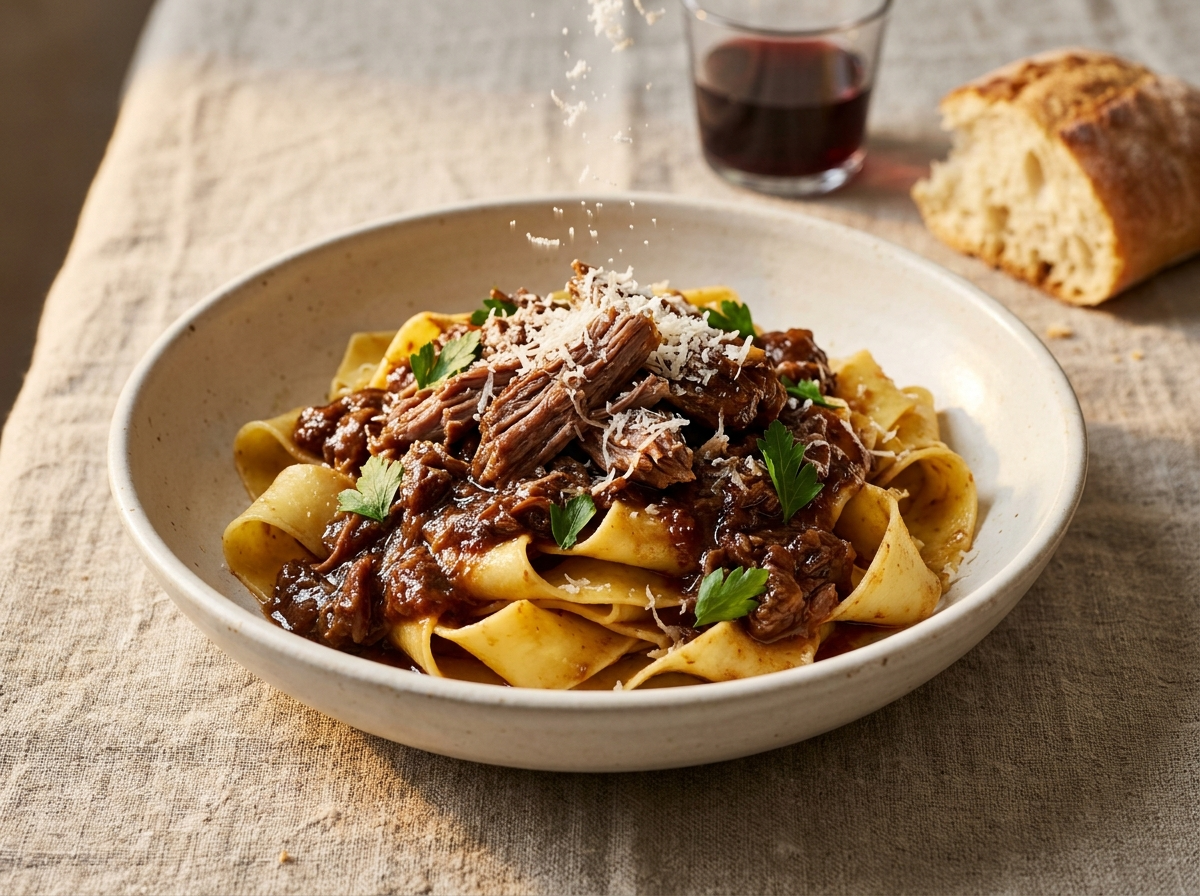
Lamb shoulder is one of those cuts that rewards patience. Fat marbles through the meat, and after three hours at a low temperature, it pulls apart with almost no effort.
The ragu builds in the same Dutch oven – onion, garlic, rosemary, a generous pour of red wine, and crushed tomatoes. By the time the pasta water is boiling, the sauce has had hours to reduce into something sticky and deeply savory.
Pappardelle is the right choice here. The wide, flat ribbons hold up to the shredded meat without disappearing into the sauce. Fresh pappardelle cooks in about two minutes; dried takes closer to eight.
This is a weekend cook. It doesn’t need constant attention, but it does need time. Plan on about three and a half hours from start to plate.
Why You’ll Love This Recipe
- Lamb shoulder shreds into the sauce with zero effort
- One Dutch oven for the ragu from start to finish
- Sauce freezes well for fast weeknight pasta later
- Deep flavor from red wine, rosemary, and long roasting
Ingredient Notes
- Bone-in lamb shoulder: The bone adds gelatin to the sauce as it cooks, which thickens it naturally. Boneless shoulder works but the sauce will be slightly thinner – reduce it a few extra minutes at the end.
- Pappardelle: Fresh pappardelle gives the best texture here. Dried works well too – use a good-quality bronze-die cut pasta that has some grip on its surface.
- Red wine: Use something you’d drink – a Chianti, Montepulciano, or any dry Italian red. Avoid ‘cooking wine’ which adds salt you don’t need.
- Crushed tomatoes: A 28 oz can of whole San Marzano tomatoes crushed by hand gives a slightly chunkier, brighter sauce. Crushed tomatoes from a can are a fine shortcut.
- Rosemary: Two fresh sprigs are enough – rosemary gets stronger the longer it cooks. If you only have dried, use half a teaspoon and remove it before shredding.
- Pecorino Romano: Pecorino has a sharper, saltier edge than Parmesan and pairs well with the gamey lamb. Parmesan works if that’s what you have.
Slow Roasted Lamb Ragu Pappardelle
Ingredients
Method
- Heat the oven to 160 C / 320 F.
- Pat the lamb shoulder completely dry with paper towels. Season on all sides with the kosher salt and black pepper.
- Heat 3 tbsp olive oil in a large Dutch oven over high heat until just smoking. Add the lamb shoulder and sear without moving it for 4 to 5 minutes per side, until deeply browned on all surfaces. Transfer to a plate.
- Reduce the heat to medium. Add the diced onion, celery, and carrot to the same pot. Cook for 6 to 8 minutes, stirring occasionally, until softened and lightly golden.
- Add the sliced garlic and cook for 1 minute until fragrant.
- Add the tomato paste and stir it into the vegetables. Cook for 2 minutes until it darkens slightly and smells rich.
- Pour in the red wine. Scrape the bottom of the pot firmly with a wooden spoon to lift all the caramelized bits. Let it bubble and reduce by half, about 3 to 4 minutes.
- Add the crushed tomatoes, stock, rosemary, thyme, and bay leaves. Stir to combine.
- Nestle the seared lamb shoulder back into the pot, bone side down. The liquid should come about halfway up the meat. Add a splash more stock if needed.
- Bring the liquid to a gentle simmer on the stovetop, then cover with the lid and transfer to the oven.
- Roast for 3 hours, turning the shoulder once at the halfway point, until the meat is pull-apart tender and falls away from the bone with no resistance.
- Remove the pot from the oven. Carefully lift the lamb shoulder onto a cutting board. Discard the rosemary, thyme sprigs, bay leaves, and any loose bones.
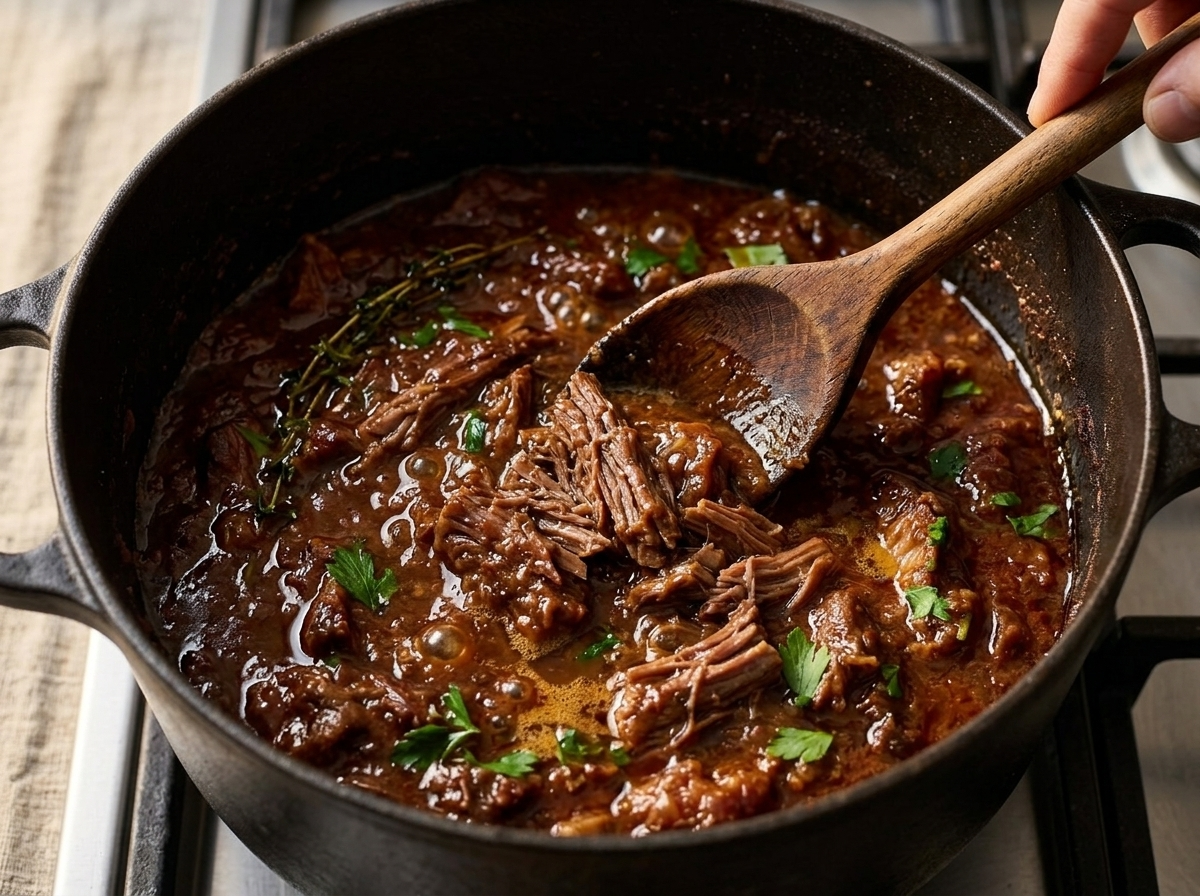
- Using two forks, pull the lamb into coarse shreds. Return all the shredded meat to the braising liquid and stir to combine.
- Place the pot uncovered over medium heat and simmer for 12 to 15 minutes, stirring occasionally, until the ragu thickens and the sauce reduces to a glossy consistency. Taste and adjust salt.
- Bring a large pot of generously salted water to a rolling boil. Cook the pappardelle according to the package instructions until al dente. Reserve 1 cup of pasta water before draining.
- Add the drained pasta directly to the ragu in the Dutch oven. Toss over medium-low heat for 1 to 2 minutes, adding splashes of pasta water to loosen the sauce so it coats every ribbon.
- Remove from heat. Add the 2 tbsp extra-virgin olive oil and half the Pecorino, and toss again until glossy.
- Serve immediately in warm bowls with extra Pecorino grated over the top and a scattering of chopped parsley if using.
Notes
Tips for Success
- Pat the lamb dry before searing so it forms a proper brown crust, not a grey steam.
- Deglaze with the wine while the pan is still hot to lift every caramelized bit from the bottom.
- Keep the oven at 160 C / 320 F – too high and the shoulder tightens before the collagen breaks down.
- Shred the lamb directly into the braising liquid using two forks so every strand soaks up the sauce.
- Reserve 1 cup of pasta water before draining – a splash loosens the ragu if it tightens when tossed.
Variations
- Add a pinch of dried chili flakes and a tablespoon of harissa with the tomatoes for a North African edge.
- Swap half the crushed tomatoes for white wine and chicken stock for a lighter, cream-finished bianco ragu.
- Use rigatoni or pici if pappardelle isn’t available – both hold shredded meat well.
Storage and Reheating
The lamb ragu (without pasta) keeps in an airtight container in the fridge for up to 4 days. The fat will solidify on top overnight – skim it or stir it back in, depending on how rich you want it.
To reheat, warm the ragu in a wide skillet over medium-low heat with a splash of water or stock, then cook fresh pasta to order. Reheating the pasta directly in the sauce for 1 to 2 minutes gives better results than microwave reheating.
The ragu freezes for up to 3 months in portioned containers. Defrost overnight in the fridge, not on the counter, and reheat gently.
Serving Suggestions
A simple bitter green salad – radicchio, endive, or arugula with a sharp red wine vinaigrette – cuts through the richness of the lamb nicely, much like a charred broccoli salad with lemon dressing would. Serve it before the pasta or alongside.
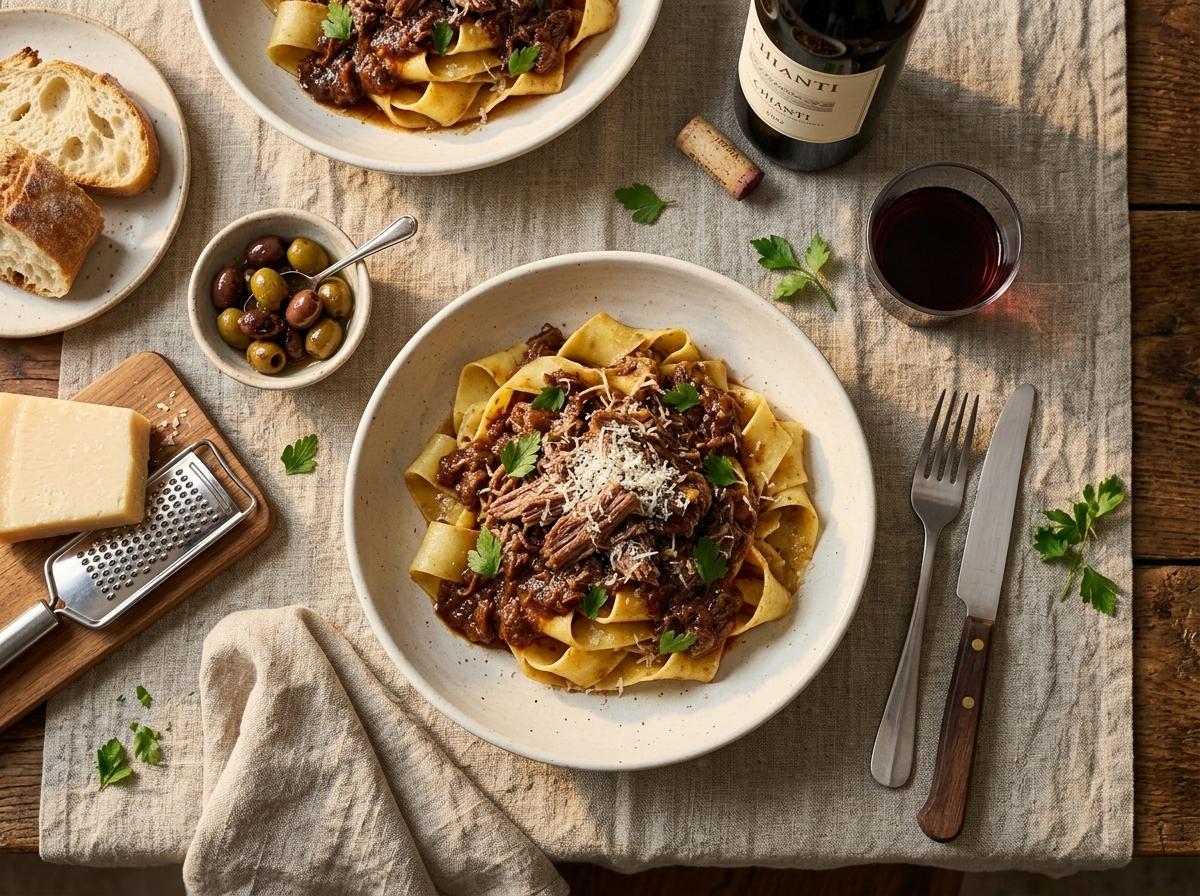
Crusty bread on the side is useful for scooping up any ragu left in the bowl, and a honey thyme baked ricotta spread makes a simple starter before the pasta arrives. A focaccia or a plain ciabatta works. Skip anything too sweet or heavily flavored.
For drinks, the same red wine you used in the braise is the logical pour. A Chianti Classico or a Montepulciano d’Abruzzo both work at the table.
FAQ
Why does my lamb ragu taste gamey even after 3 hours of roasting?
A strong gamey flavor usually means the fell – the thin papery membrane on the outside of the shoulder – wasn’t trimmed before cooking. Ask your butcher to remove it, or score through it yourself before searing. A splash of red wine vinegar in the braise also mellows it.
Can I use lamb leg instead of shoulder for this pappardelle ragu?
Shoulder is the better cut because its higher fat and connective tissue content breaks down into the sauce over long cooking. Leg is leaner and will shred, but the ragu will be drier and less unctuous – not ideal here.
Can I make the lamb ragu two days ahead and reheat it for a dinner party?
Yes, and it actually improves after a day in the fridge as the flavors settle. Store the ragu separately from any cooked pasta, reheat it in a skillet with a little stock, and cook fresh pappardelle right before serving.
How do I know when the lamb shoulder is ready to shred?
The shoulder is done when a fork slides in with no resistance and the meat pulls away from the bone with very little pressure. If it’s fighting you at all, give it another 20 to 30 minutes.
Is slow roasted lamb ragu pappardelle gluten-free?
The ragu itself is naturally gluten-free, but standard pappardelle is made with wheat. Swap in a good gluten-free pasta – Rummo and Garofalo both make wide-ribbon shapes that hold up reasonably well.
What is the difference between lamb ragu and a lamb bolognese?
A traditional bolognese uses finely minced meat cooked quickly in milk and wine, with tomato playing a secondary role. Lamb ragu here uses a whole braised shoulder pulled into chunks or coarse shreds, with a tomato-forward braising liquid – the texture and depth are quite different.
About The Author

John
John Watson is the passionate food enthusiast behind MePlusFood.com. With a deep love for exploring culinary delights, he shares honest restaurant reviews, mouthwatering recipes, and culinary adventures. Join John on his flavorful journey to savor the world one bite at a time.