Smoky Paprika Breakfast Potatoes with Garlic Oil
The scent of warm oil and garlic hits first, then the crisp edges snap under a fork; this is how smoked paprika breakfast potatoes should feel. I favor a two-path method: quick skillet crisping for tight timing or sheet-pan roasting when you want hands-off depth.
Start by steaming or microwaving until the pieces are just tender, then chill them to firm the surface. That step prevents steam from staling browning and lets hot fat make a dry, glossy sheen on each cube.
Use a 12-inch skillet with butter plus olive oil. Briefly infuse the fat with garlic and herbs, then remove the solids to avoid bitterness. Toss the pan every 2–3 minutes and expect 8–10 minutes for final crisping.
Key Takeaways
- Prep: half-inch to one-inch pieces; steam or microwave until almost done, then chill.
- Skillet: 12-inch pan, butter + oil, garlic infused then removed for clear flavor.
- Finish: toss every 2–3 minutes; look for browned corners and a tender center.
- Oven option: roast 400–425°F for ~30 minutes on a single layer to avoid steaming.
- Make-ahead: par-cook and chill overnight; re-crisp in a skillet or air fryer.
What Makes these Potatoes Taste like Diner Home Fries
A diner-style plate starts with a deep, toasty aroma and a crisp edge that gives way to a soft center. The result is deliberate: scent first, then texture.
Smoked Paprika’s Deep, Woodsy Role
Smoked paprika adds woodsy, griddle-like depth that reads like cooking on a hot flat top without meat. That flavor lands as a warm, toasty note that supports salt and herbs rather than overpowering them.
How Paprika Behaves in Heat
Paprika blooms fast in hot fat, releasing oil-soluble color and taste. Add it when the pan is hot, and the fat is shimmering; too early and it will scorch and be bitter.
Garlic Oil Infusion and Timing
Briefly heat butter and olive oil with a smashed garlic clove and herbs to perfume the fat. The aroma arrives before texture does, so pull the solids early to keep the oil clean and bright.
- Smoky-sweet depth from smoked paprika, balanced with black pepper and a touch of cayenne.
- Target cues: browned edges, no wet shine, and a fork-tender center.
- Technique: par-cook then cool to reduce surface moisture so the outside browns quickly in a single layer.
These decisions—spice balance, hot fat, and spacing—create that diner taste and set up choices on potato type and cut size next.
Ingredients that Matter for Crispy Breakfast Potatoes
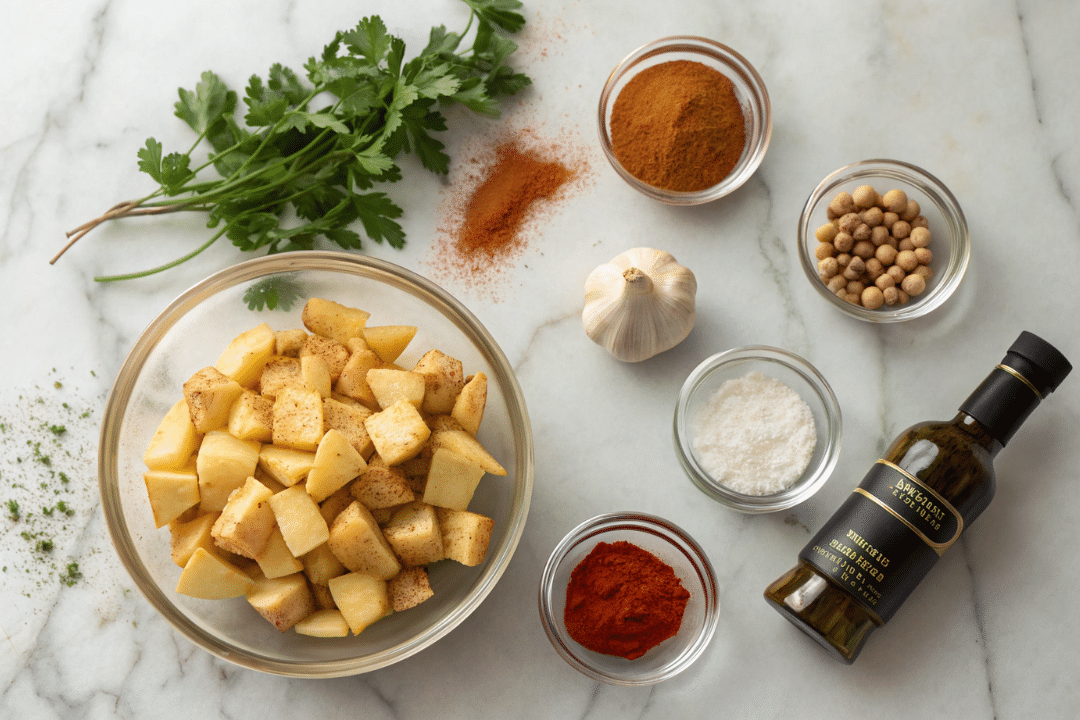
Choose the right tuber and fat, and the outcome shifts from tender to crisp in a single skillet.
I favor three common choices: russet potatoes, red potatoes, and small yellow potatoes. Each behaves differently under high heat, so pick by texture you want.
Best Potatoes to Use
- Russet potatoes — high starch. Peel if you want a fluffy interior and aggressive browning on the edges.
- Red potatoes — waxy, thin skin. Keep the skin for creaminess and intact cubes that won’t fall apart.
- Small yellow potatoes — firm yet buttery inside. They crisp nicely when left unpeeled and give a richer mouthfeel.
Fat: Olive Oil Plus Butter
Combine olive oil and butter. Olive oil raises the smoke threshold, while butter adds nutty browning. Together, they lengthen the safe cooking window and deepen flavor.
Core Spice Lineup and Salt Strategy
Use a base mix of smoked paprika, garlic powder, and onion powder with a pinch of cayenne for heat. Add salt and black pepper in stages—season early, then finish with a final pinch after crisping so flavors stay bright.
Optional Add-Ins and Herb Handling
Sauté diced onion and bell pepper for sweetness. Use fresh herbs like thyme or rosemary to perfume the fat briefly, then remove the sprigs to avoid bitterness. Or sprinkle chopped herbs at the end for a fresh aroma.
| Ingredient | Texture Result | Best Use |
|---|---|---|
| Russet potatoes | Fluffy interior, very crisp edges | Skillet hash with peeling |
| Red potatoes | Creamy center, holds shape | Meals where cubes stay intact |
| Small yellow potatoes | Buttery interior, crisp skin | Pan-roasted sides, minimal peeling |
| Olive oil + butter | Stable heat, browned flavor | Frying and finishing at medium-high heat |
Prep Moves that Save Time and Boost Crunch
Start the work on crisp edges with a clear prep plan, so the heat only finishes the job.
Steam or Microwave First
Par-cooking means you crisp the exterior instead of waiting for raw centers. Steam in a basket for 6–10 minutes, or microwave covered for about 3½–4½ minutes. The knife test matters: a blade should slide in with slight resistance, but the piece must not collapse.
Cool Before You Crisp
After the par-cook, cool at least one hour or chill overnight. Cold pieces dry at the surface and brown faster in hot fat. That brief wait also firms the potato, making dicing cleaner and reducing breakage during the final cook.
Cut Size Guide
Aim for 1/2-inch cubes for quicker browning, or 1/2–1-inch for a meatier bite. Too small and cubes can burn before the center softens; too large and they may steam and stay pale.
- Why pre-cooking matters: you finish texture, not time—hot fat adds color and crispness.
- Doneness cue: knife meets slight resistance; never let the piece fall apart.
- Make-ahead flow: par-cook, cool, dice, refrigerate, then reheat quickly to crisp.
- Toss in a bowl to season gently before the final step to avoid breaking the pieces.
| Cut | Minutes (par-cook) | Result |
|---|---|---|
| 1/2-inch | 3½–4½ | Fast, crisp, even browning |
| 3/4-inch | 6–8 | Balanced exterior and tender center |
| 1-inch | 8–10 | Meaty bite, slower browning |
How to Cook Smoked Paprika Breakfast Potatoes in a Skillet
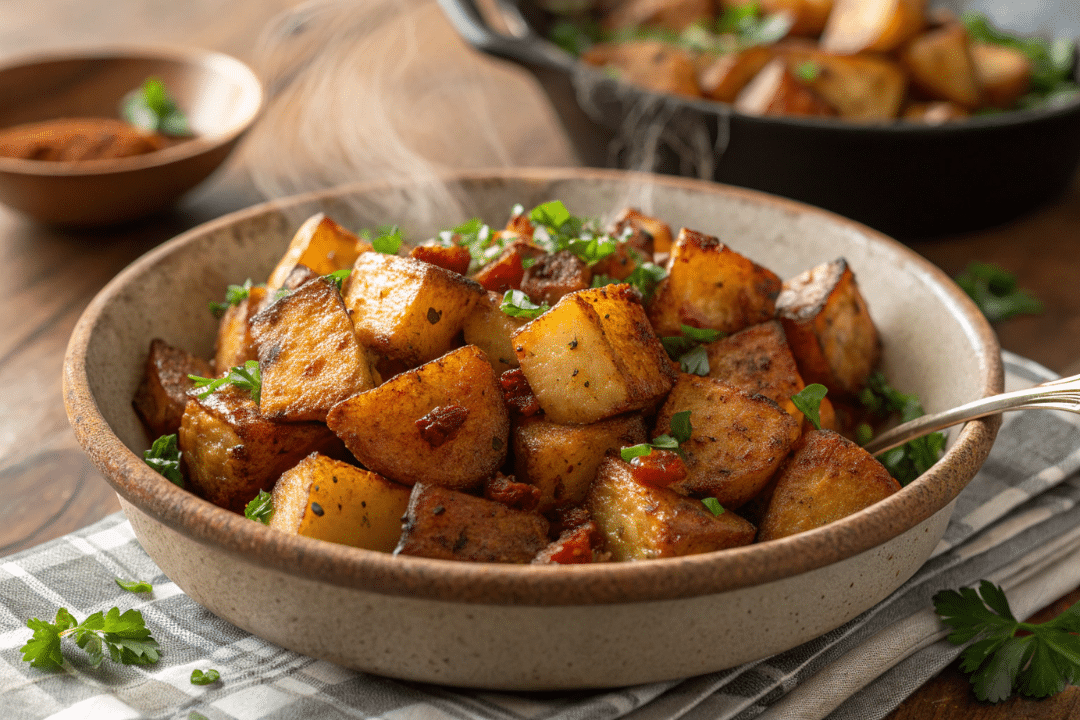
Heat and contact make the difference: a hot skillet, clean oil, and firm cubes create brown, crunchy edges fast.
Preheat a 12-inch skillet over medium-high heat. Add butter and olive oil together so the fat stabilizes and browns without burning.
Infuse and Remove
Add a smashed garlic clove and a sprig of thyme or rosemary. Let them sizzle about one minute until fragrant, then pull the solids so the oil stays bright and clear.
Single-Layer Rule
Arrange the par-cooked pieces in a single layer. Direct contact with hot metal forms a crust; crowding traps steam and softens the exterior.
Seasoning and Timing
Salt early to help flavor penetrate. Add pepper, garlic powder, onion powder, cayenne, and paprika once the fat is hot and stable. Cook about 8–10 minutes total.
Flip Rhythm
Toss or turn every 2–3 minutes. This gives each face time to brown without tearing the surface. Listen for steady sizzling and watch for golden corners.
- Skillet setup: preheat first, then add butter + oil.
- Infusion: 1 minute, then remove garlic and herbs.
- Cook time: 8–10 minutes with flips every 2–3 minutes.
- Troubleshoot: spread into two batches, raise the heat briefly, or stop stirring to let crust form.
Oven and Sheet Pan Option for Hands-Off Brunch Cooking
Set the oven and spread the pieces: that simple move controls whether you get crisp edges or steamed middles. The oven method frees you to finish other dishes and serves a crowd with little fuss.
Roast at 400–425°F for about 30 minutes. Use 425°F to brown faster for smaller batches. Choose 400°F when you have larger pans or mixed sizes; it gives steadier, even color.
- Spread on a roomy sheet so hot air circulates. Crowding traps steam and yields soft results.
- Line with parchment to reduce sticking, but still allow good browning when the heat is high.
- Visual cues: bronzed corners, matte surfaces, and a creamy interior when pierced with a knife.
Optional Skillet Finish
Sauté diced onion, bell pepper, and garlic for 5–8 minutes until sweet and translucent. Toss those vegetables with the roasted potatoes off the heat and finish with chopped herbs.
Why finish this way? The sautéed veg adds sweetness and a softer texture that complements crisp edges. Add them after roasting so they don’t throw moisture back into the pan during browning.
| Oven Temp | Time (minutes) | Best Use |
|---|---|---|
| 425°F | 25–30 | Quick browning for small to medium batches |
| 400°F | 30–35 | Even color for larger pans or mixed sizes |
| 425°F, finished in a skillet | 25 + 5–8 | Hands-off roast, then toss with sautéed onion, pepper, and garlic |
For a tested oven-to-table idea, try a herb-roasted version from Michael Smith as inspiration: Michael Smith’s herb-roasted potatoes. These make an easy side dish for a full brunch spread.
How to Serve, Store, and Reheat Without Losing that Crisp
A hot skillet and quick moves restore crisp edges and bright flavor to cooled pieces. Plan the finish, pair thoughtfully, and handle storage to avoid sogginess.
Best Pairings
The savory, slightly smoky profile balances soft eggs and rich meats. Serve as a side with eggs, bacon, or sausage. They also work well inside breakfast burritos, alongside pancakes, or with hot sauce for contrast.
Storing Leftovers
Cool completely, then seal in an airtight container. Properly stored in the fridge, leftovers keep well for 3–5 days. Two airtight container tips: line the base with paper towel to cut condensation, and leave a little space for cold air to circulate.
Reheat for Crispness
- Skillet: best crust — heat a tablespoon of oil, spread in a single layer, 4–6 minutes over medium-high.
- Air fryer: fastest — 350–375°F for 3–5 minutes, shake once.
- Toaster oven: good for batches — 350°F for 8–10 minutes on a tray.
Avoid the microwave for crisping; it steams the crust and softens edges.
Make-Ahead and Brunch Timing
Par-cook, cool, and refrigerate overnight. In the morning, crisp in a skillet while eggs cook; this saves time and keeps the plates hot. For holiday spreads, roast a large batch, then refresh quickly in a hot pan right before serving.
For creative leftover ideas, see a useful example of repurposing cooked meat at leftover chicken reuse.
Conclusion
When you lock in texture before browning, the final sear becomes fast and reliable. Three levers control the result: pre-cook (steam or microwave), cool the pieces so the surfaces dry, and cook in a single layer over high heat.
Bloom smoked paprika briefly in hot fat and uses a short garlic oil infusion for aroma, then removes solids so the oil stays clear. Watch for bronze edges and a fork-tender center as your texture cues.
Once parts are prepped, the crisping phase takes only a few minutes. Tweak spice levels, add peppers, or swap potato types in small steps to dial the dish your way. This recipe makes for dependable weekday sides or a composed brunch plate.
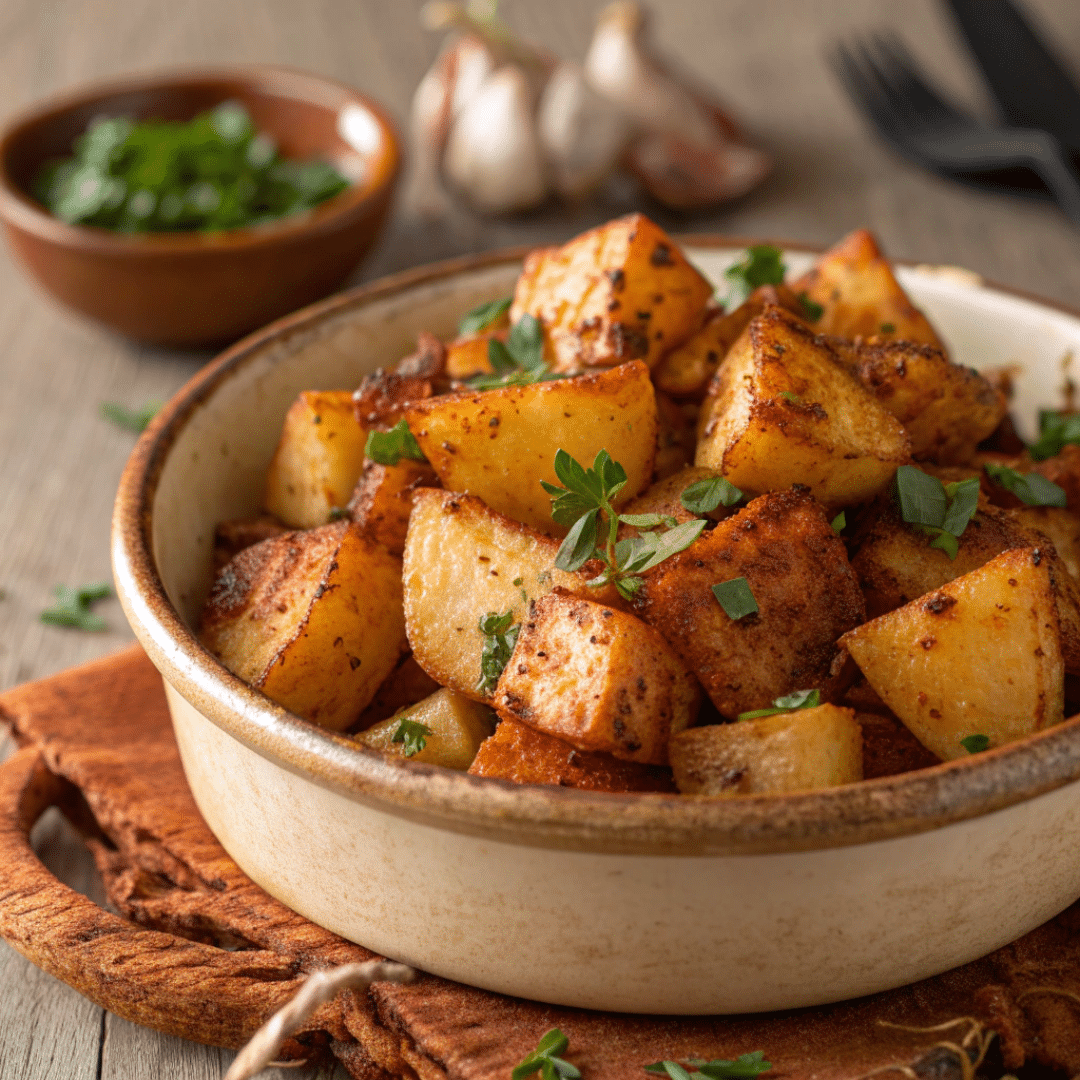
Smoky Paprika Breakfast Potatoes
Ingredients
Method
- Par-cook potatoes by steaming or microwaving 6–10 minutes until just tender; cool completely and cut into ½–1-inch cubes.
- Preheat a large skillet over medium-high heat and add olive oil and butter together.
- Add smashed garlic and herb sprig; cook about 1 minute until fragrant, then remove solids.
- Spread potatoes in a single layer and season with salt, pepper, garlic powder, onion powder, cayenne, and smoked paprika.
- Cook 8–10 minutes, flipping every 2–3 minutes, until edges are deeply golden and crisp.
- Add optional onions or peppers in the last few minutes if using.
- Taste, adjust seasoning, and serve hot immediately.
Notes
FAQ
What gives these potatoes a diner-style, home-fries flavor?
Why use garlic oil instead of adding raw garlic later?
How do I achieve a crispy outside and tender inside?
Which potato variety is best: russet, red, or small yellow?
Should I use only olive oil or mix in butter?
What spice mix yields the best flavor without overpowering the potatoes?
What prep steps save time and improve crunch?
How large should I cut the potatoes for even roasting?
How do I infuse oil properly in a skillet without burning the garlic or herbs?
Why is it important to cook in a single layer in a 12-inch skillet?
When should I add the smoky spice, salt, and pepper during cooking?
How often should I flip or toss the potatoes for even browning?
What can I do if the potatoes aren’t crisping in the skillet?
What oven temperature and timing work best on a sheet pan?
How should I space potatoes on a sheet pan to prevent them from steaming?
Can I finish sheet-pan potatoes in a skillet for extra crisp?
What pairings work best for a morning or brunch plate?
How should I store leftovers so they stay good?
What’s the best method to reheat and restore crunch?
Can I make these ahead for busy mornings or holiday brunches?
About The Author

John
John Watson is the passionate food enthusiast behind MePlusFood.com. With a deep love for exploring culinary delights, he shares honest restaurant reviews, mouthwatering recipes, and culinary adventures. Join John on his flavorful journey to savor the world one bite at a time.