Sweet Potato Breakfast Flatbread: A Tasty Breakfast Idea
I love the sweet potato breakfast flatbread because it solves hurried mornings with cozy flavor and real texture. I mix roasted tuber, spelt or oat flour, a splash of olive oil, baking powder, and a pinch of salt, then pan-fry rounds until they bubble and blister like naan.
This is my fast, reliable recipe when I want warm bread that holds eggs, fruit, or even makes a quick pizza on the weekend. With pre-cooked tuber, the total time is about 25 minutes—15 minutes to prep and 10 minutes to cook a few rounds on a hot skillet.
I prefer roasting the tuber for deeper flavor and less moisture, but I also test a two-ingredient oat version that bakes at 400ºF for 5–10 minutes or puffs at 500ºF on a hot tray. I also try an air fryer at 415ºF for mini pitas when I’m short on time.
Key Takeaways
- One-pan, yeast-free method that yields soft, chewy rounds in about 25 minutes total.
- Use roasted tuber for better flavor and firmer dough; steaming adds too much moisture.
- Spelt gives classic chew; oat flour offers a simple two-ingredient option for baking.
- Watch for bubbles on a hot skillet—that’s your cue, the bread is ready to flip.
- Flexible base for savory toppings, wraps, or a quick weekend pizza.
Why this Sweet Potato Breakfast Flatbread Belongs in Your Morning Rotation
This recipe earns a spot in my rotation because it delivers real flavor with little fuss. It fills that weekday gap between rushed and satisfying.
Roasting the tuber first gives deeper caramel notes and less moisture than steaming. I roast ahead, chill, and mash when I need bread fast.
The one-bowl, yeast-free spelt dough mixes quickly and cooks in a hot pan until it bubbles like naan. If you need gluten-free, a two-ingredient oat version bakes hot and can form a pocket like pita.
- I reach for this flatbread because it gives steady carbs and fiber without extra fat, so I stay full but light.
- It holds fillings—eggs, yogurt, avocado—without tearing when rolled to the right thickness and seared on high heat.
- Make sure the pan is fully preheated; that quick step creates those puffed, blistered spots that feel special.
The bottom line: a practical, tasty way to make mornings better. It’s fast, forgiving, and versatile enough to keep in a weekday rotation.
Ingredients that Make the Texture Work
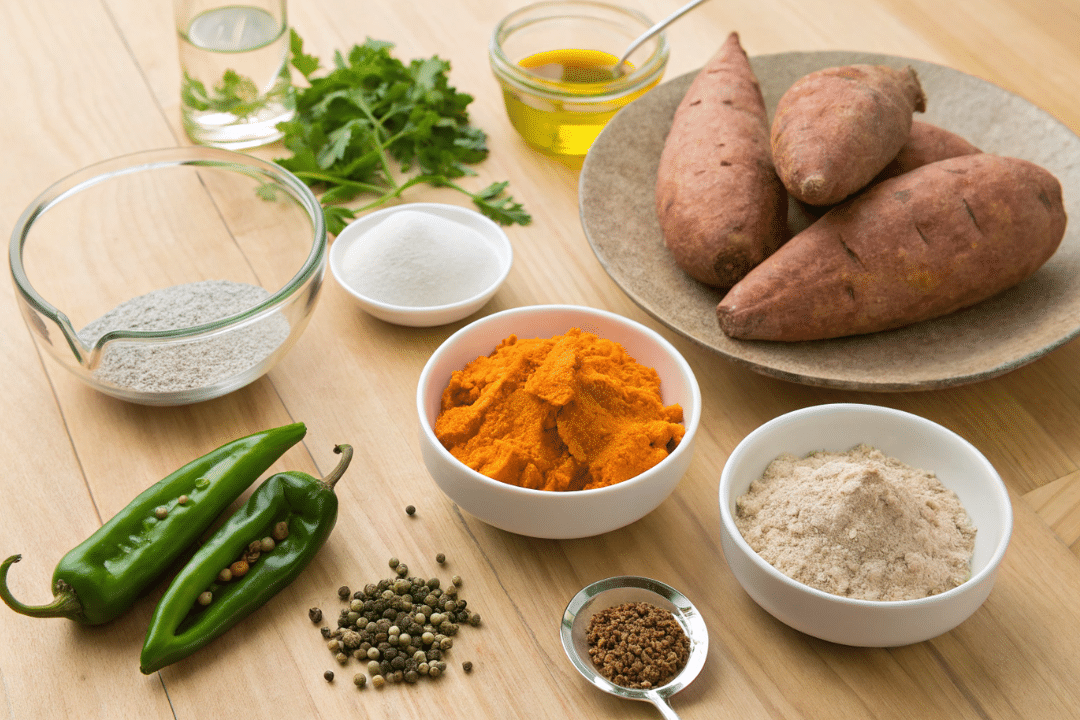
The difference between a gummy round and a pillowy one starts with a few simple ingredients. I focus on moisture control, flour choice, and small additions that change structure and flavor.
Roasted vs. Steamed vs. Microwaved
Roasting at 200°C gives deeper caramel notes and less moisture than steaming. That drier flesh needs less extra flour, so the dough stays plush, not pasty.
Steamed or microwaved versions work in a pinch. Expect to add a tablespoon or two more flour to reach a soft, not sticky, feel.
Flour Choices and How They Behave
Spelt or wheat brings classic chew and flex. My spelt framework: about 130 g roasted sweet potato, 180 ml water, 2 Tbsp olive oil, 350 g spelt flour, 1 tsp baking powder, 1 tsp salt. That reads roughly as 1 cup mashed, ¾ cup water, 2 Tbsp oil, and 2⅓ cups flour.
Oat flour makes a reliable gluten-free dough when baked hot. Coconut flour must pair with tapioca or arrowroot to avoid a dry crumb.
| Flour | Texture | Tip |
|---|---|---|
| Spelt/Wheat | Soft, chewy | Use measured cups/grams; adjust flour if wet |
| Oat | Sturdy when hot | Add gradually until the dough cleans the bowl |
| Coconut + starch | Light but thirsty | Hydrate slowly; rest and reassess |
Leavening, Salt, Oil, and Water
Baking powder gives a quick lift and those airy pockets on a hot surface. Salt brightens the natural vegetal notes so they don’t taste like sugar.
A little oil tenderizes and encourages browning. Water is your tool to fine-tune stickiness—add in tablespoons until the dough feels soft, not sticky.
- Optional: a pinch of garlic powder for aroma.
- Optional: a little sugar can boost browning, but I usually skip it.
- Watch amounts. Consistent grams or cups make this a weekday winner.
Essential Tools and Simple Prep
With a tidy workspace and a couple of basic tools, you can move from mixing to cooking in minutes. I set out a large bowl and the rest on the counter so nothing feels frantic.
I bring a rolling pin and a sheet of parchment to the party. Mix the mash in the bowl, portion the dough, then roll it on parchment to avoid sticking and to keep cleanup quick.
Preheat a heavy pan or an oven tray until it’s very hot. A hot surface gives you those blistered spots fast. For oven puffs, preheat an inverted tray to 500ºF so the underside mimics a stone.
- I use a rolling pin to press lightly, working from the center to the edge to keep the thickness even.
- Flip oat versions by lifting the parchment onto the pan to prevent tearing.
- Stack rolled rounds between parchment sheets when working ahead; they stay soft and ready.
- A bench scraper lifts pieces without stretching the dough and helps portion evenly.
| Tool | Purpose | Quick tip |
|---|---|---|
| Large bowl | Mix and combine ingredients | Use one bowl to cut steps and dishes |
| Rolling pin/pin | Flatten the dough evenly | Roll lightly from the center for even thickness |
| Parchment | Non-stick surface and easy transfer | Slide parchment onto a hot pan to flip without tears |
| Pan / Oven tray | Cook and blister the rounds | Preheat well; a soft sizzle means it’s ready |
Step-by-Step: From Mashed Sweet Potato to Flexible Flatbread
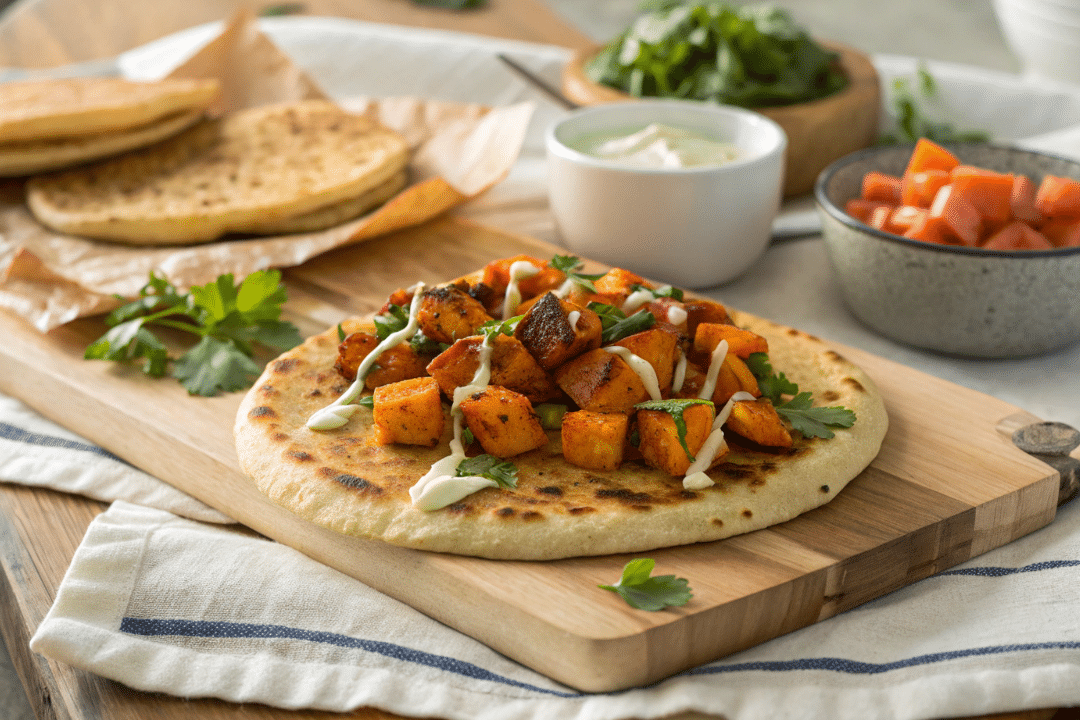
Mash the warm flesh until it’s smooth and mostly lump-free. I do this in a single bowl so the mash stays warm and the next steps feel effortless.
Stir in water and oil, then add flour, baking powder, and salt. Mix just until the dough has no dry streaks and pulls clean from the bowl sides. The feel should be soft, not sticky.
- Divide into eight even pieces. Shape each into a quick ball so rolling is easy, and edges don’t crack.
- Roll to about 4–6 mm for wraps; aim for 6–8 mm (roughly 1/4 inch) for tearable rounds. Use a light pin pressure and rotate between strokes for even thickness.
- Preheat a heavy pan until it sizzles; cook each side ~45 seconds. Look for bubbles and light charring as cues to flip.
If the mash came from steaming, add a dusting more flour and fold gently. Don’t overwork spelt dough — too much mixing tightens gluten and makes the crumb tough.
| Step | Feel/Cue | Fix |
|---|---|---|
| Mashing | Silky, no lumps | Warm mash; mash longer or press through a sieve |
| Mixing | Dough pulls clean from the bowl | Add up to 1 tbsp flour if sticky |
| Rolling | Even thickness, smooth edges | Rotate and use light pin pressure; flour surface or use parchment |
| Cooking | Bubbles, light browning, easy flip | Raise heat slightly if no blistering; shorten cook time if burns |
Choose Your Cooking Method: Pan, Oven, or Air Fryer
Pick the method that matches your schedule and gear. Each gives a distinct texture and a reliable outcome if you follow temperature and timing cues.
Skillet Sear for Naan-Like Bubbles
Preheat a heavy pan until a drop of water dances. Cook each round 45–60 seconds per side on high heat. Bubbles and light charring mean the top is ready to flip.
Brush a little oil after cooking to keep the surface supple when you stack rounds to serve.
Oven-Bake for Hands-Off Batches
For quick baking, set the oven to 400ºF (200ºC). Thin pieces take about 5 minutes; thicker ones need up to 10 minutes. Watch for light golden spots on the top.
For dramatic puffs, crank the oven to 500ºF (260ºC) and preheat an inverted tray. The sudden heat creates steam pockets in 5–7 minutes.
Air Fryer Speed Option for Mini Pitas
Air fry small rounds at 415ºF (210ºC) for about 5 minutes. They balloon into mini pitas perfect for sliders and packed lunches.
Roasted mash browns and flavors better than steamed. If your mash is wet, reduce the thickness or add a few extra minutes.
| Method | Temp | Time/Texture |
|---|---|---|
| Pan | High heat, hot skillet | 45–60 seconds per side — bubbled, blistered top |
| Oven (batch) | 400ºF / 200ºC | 5–10 minutes — even golden top; thinner = faster |
| Oven (pocket) | 500ºF / 260ºC on inverted tray | 5–7 minutes — dramatic puff, pocket forms |
| Air fryer | 415ºF / 210ºC | ≈5 minutes — quick ballooning, ideal for mini pitas |
Sweet Potato Breakfast Flatbread Toppings and Breakfast Pairings
Mornings get interesting when a warm round becomes a canvas for bold, quick toppings. I keep a small stash of spreads and roasted veggies so assembly feels joyful, not fussy.
Savory Ideas: Eggs, Avocado, Garlic Yogurt, and Beans
For savory days, I smear a quick garlic yogurt—grated garlic, salt, lemon—and pile on soft-scrambled eggs and avocado slices. A light drizzle of oil and a pinch of herbs finish it.
Beans are a fast, filling option. Spoon warm spiced chickpeas or pinto beans over the bread with arugula and a squeeze of lemon. Add nigella seeds or chili crisp for texture and heat.
Sweet Twists: Cinnamon Butter, Nut Butter, and Fruit
If I want something sweet, cinnamon butter with a small sprinkle of sugar, sliced banana or berries, and a thimble of maple feels nostalgic and quick. Nut butter plus crisp apple and seeds holds up well on the warm base.
Flatbread Pizza for Brunch Crowds
For a crowd, I turn rounds into quick pizza: tomato puree, melty cheese, and your favorite toppings. Broil just until the cheese blisters and cut into slices for passing plates.
- Hummus, cucumber, and herbs make a colorful mezze—great for a weekend toppings board.
- Leftover roasted veggies tucked in with yogurt and lemon zest refresh both flavors and texture.
- Reheat: microwave with a flick of water, warm on a skillet, or pop in the oven until just warm to revive softness.
Want more creative pairings? Check my collection of fusion ideas here: breakfast fusion recipes.
Variations for Every Kitchen
A few simple swaps let this base become many different recipes in my kitchen. I map clear cues so you get the texture you want, no guesswork.
Two-Ingredient Oat Version
Mix 1 cup mashed sweet potatoes with oat flour, a tablespoon at a time, until the dough is soft, not sticky. Aim for about 4–6 mm when rolling for foldable rounds, or 3 mm for pocket-prone pieces.
Bake at 400ºF for 5–10 minutes for flat rounds. For dramatic pockets, use a 500ºF preheated inverted tray and watch for quick puffing in 5–7 minutes.
Paleo-Leaning Coconut + Starch Blend
Combine coconut flour with tapioca or arrowroot (start 2 Tbsp coconut: 1 Tbsp starch) to balance absorbency. Press the amount so the dough holds together but remains pliable.
Bake at 375ºF for 30–40 minutes, flipping once when edges firm. This yields a tender, slightly crisp potato flatbread that keeps paleo goals in sight.
Whole-Grain Spelt or Classic Wheat Swap
Swap spelt and wheat cup-for-cup and tweak flour by tablespoons to reach the right feel. Whole-grain spelt gives chew; wheat gives a familiar pull.
Turning the Dough Into Pita Pockets
Key: fierce heat and a preheated surface. Roll thinner (≈3 mm), hit the oven hard, and let steam form quickly to split the interior cleanly into pockets.
| Variation | Key mix | Temp / Time | Texture cue |
|---|---|---|---|
| Oat two-ingredient | 1 cup mash + oat flour to work | 400ºF (5–10 min) or 500ºF (5–7 min pockets) | Soft, foldable; puffs at high heat |
| Paleo (coconut + starch) | Coconut flour + tapioca/arrowroot (start 2:1) | 375ºF (30–40 min), flip once | Tender, slightly crisp edges |
| Spelt / Wheat | Swap cup-for-cup; adjust tbsp as needed | Pan or oven per main method | Chewy, classic crumb |
- I note cups and extra flour sprinkles when testing so I can repeat the exact amount next time.
- Try Japanese white potatoes for a crisper crust — they brown and crisp more in the oven.
- Bake one test piece when trying new flours to judge if the dough needs a touch more flour or time.
Troubleshooting and Pro Tips
When dough feels wrong, I reach for simple, tactile fixes that restore texture fast. These notes are short, direct, and built for the skillet and the oven alike.
Adjusting Flour for Moisture and Avoiding Sticky Dough
If your dough is sticky, add flour a tablespoon at a time and knead gently. Aim for a soft ball that releases from your hands without resistance.
Steamed mash often adds extra water. Compensate with a bit more flour or roll a touch thinner so the rounds cook through without staying gummy.
Heat Management: Why a Hot Surface Matters
Hot heat is non-negotiable. A properly preheated pan creates instant bubbles and caramelization; a lukewarm pan gives pale, dense results.
If bread won’t brown, raise the heat slightly or add 15–30 seconds per side. Look for tiny blisters and golden spots as your cue to flip.
Rolling and Transfer Tricks to Prevent Tearing
I always roll between parchment or dust very lightly and use a rolling pin from the center out. This prevents thin edges that tear on transfer.
For fragile doughs—especially gluten-free—lift the parchment and flip the round directly into the pan, then peel the paper away. If a tear appears, patch with a small piece of dough; it blends as the bread puffs.
- Keep a small bowl of flour nearby for quick dusting and micro-adjustments.
- Don’t overmix spelt — stop when no dry streaks remain to avoid a tough crumb.
- Roast your potato when possible for consistent moisture and fewer rescue steps.
| Problem | Quick fix | Feel / Cue |
|---|---|---|
| Sticky dough | Add 1 tbsp flour, knead gently | Softball, not tacky |
| No blistering | Preheat the pan hotter; shorten the thickness | Instant bubbles; light char |
| Tear during transfer | Use parchment flip; patch seam | Smooth edge as it puffs |
Make-Ahead, Storage, Reheating, and Nutrition Notes
I often cook a double batch and rely on smart storage to keep things tasting new. That way, I grab a warm round in minutes and still get the soft texture I want.
Room Temp vs Freezer: How Long Each Lasts
Store cooled rounds in a sealed container at room temperature for 2–3 days for the spelt version and up to 3–4 days for oat versions. For longer life, freeze flatbreads up to 3–4 months.
- Freeze the single layer first, then stack with parchment between pieces to prevent sticking.
- Note cup measures when you batch so your portions stay consistent for the week.
Best ways to Reheat without Drying Out
Oven: preheat to 325–350ºF and warm for a few minutes until just heated through; wrap in foil if your kitchen is dry.
Stovetop: heat over medium-low for quick flexibility; brush a little oil after warming to keep the surface glossy.
Microwave: flick a few drops of water over the bread and cover; heat in short bursts until pliable—this traps steam and prevents hardening.
| Storage | Timeline | Best reheat |
|---|---|---|
| Room temp, sealed container | Spelt: 2–3 days; Oat: 3–4 days | Stovetop or microwave |
| Freezer, layered with parchment | Up to 3–4 months | Oven or stovetop (add minutes if frozen) |
| Warm stack at table | Serve immediately | Keep under towel to retain steam |
Nutrition note: these are veggie-forward and pair well with protein—eggs, beans, or yogurt—so your morning feels balanced. This post focuses on methods that preserve moisture and texture so leftovers taste like they were made minutes ago.
Conclusion
Turn a simple mash and a bowl of flour into something that keeps mornings calm and bright. I mean it — this sweet potato flatbread is a small, reliable victory you can bank on.
Roast the mash to cut variability. Choose spelt for chew, oat for a two-ingredient gluten-free recipe, or coconut plus starch for a paleo-leaning crumb. Cook on a hot pan (about 45 seconds per side), bake at 400ºF for 5–10 minutes, or hit 415ºF in the air fryer for quick pockets.
Keep a cup, a bowl, and parchment near your station. Store extras in a container with layers of paper and reheat gently with a bit of oil. I wrote this post to make the method repeatable — so you can turn potatoes into possibility, one warm round at a time.
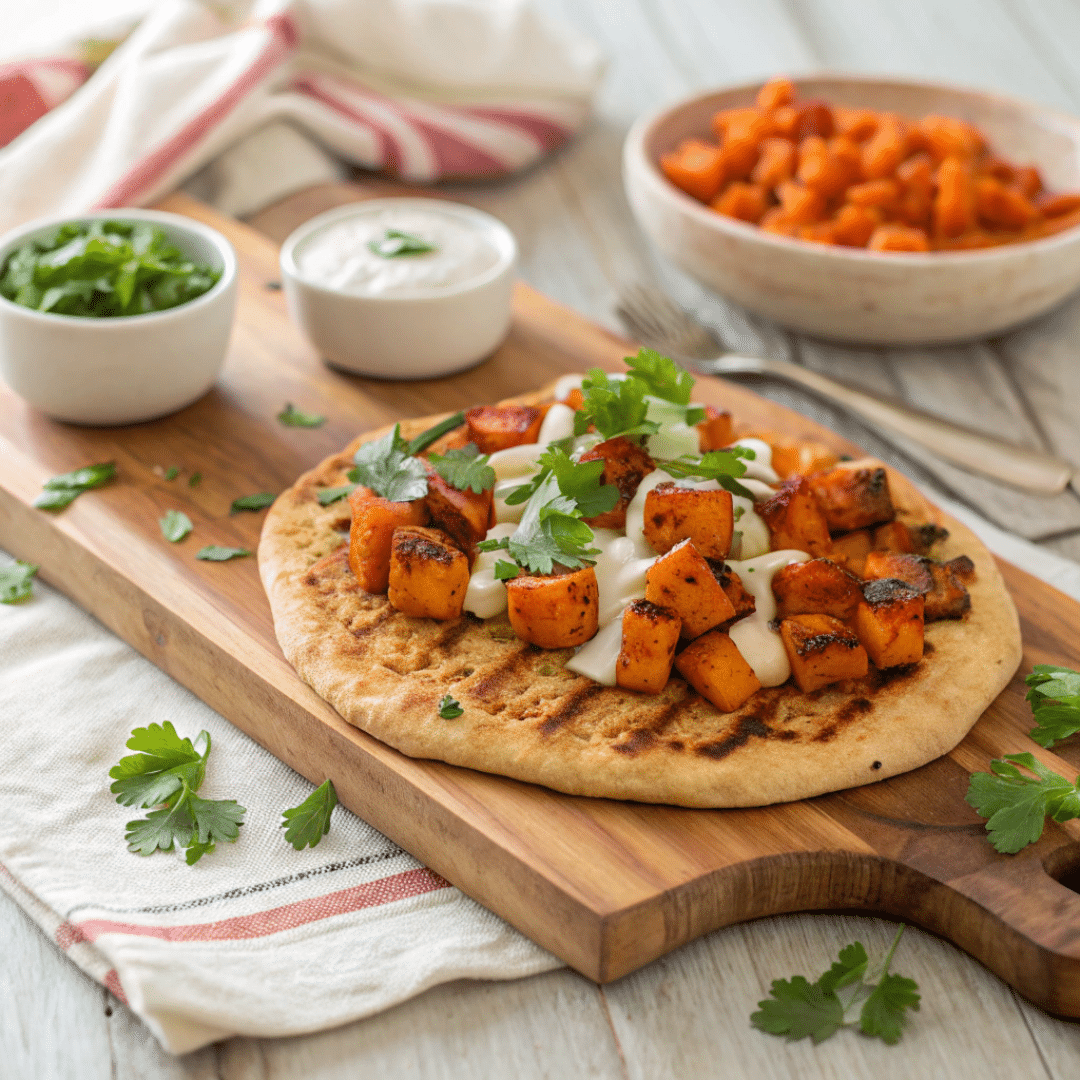
Sweet Potato Breakfast Flatbread
Ingredients
Method
- Roast sweet potato at 200°C until tender, or steam/microwave if in a pinch.
- Mash warm sweet potato until smooth and mostly lump-free.
- Stir in water and olive oil until combined.
- Add flour, baking powder, and salt; mix until dough pulls clean from the bowl sides and feels soft, not sticky.
- Divide dough into 8 even pieces and shape each into a ball.
- Roll each ball to 4–6 mm thickness for wraps or 6–8 mm for tearable rounds, using light pressure and rotating to keep edges even.
- Preheat a heavy skillet, oven tray, or air fryer until very hot.
- Cook each flatbread 45–60 seconds per side on a hot skillet until bubbles form and the surface is lightly charred, or bake at 400°F / 200°C for 5–10 minutes until golden, or 500°F / 260°C on a preheated inverted tray for puffed pockets.
- Brush cooked flatbreads lightly with oil if stacking.
- Top warm flatbreads with savory or sweet toppings as desired.
- Serve immediately while soft and warm.
Notes
FAQ
How long does the dough take to come together?
Can I use roasted, steamed, or microwaved sweet potatoes for the mash?
What flours work best for texture?
Do I need yeast or other leavening?
What tools do I really need?
How thin should I roll each piece?
What’s the best stovetop method?
How do oven and air fryer results differ?
Which toppings pair best for morning meals?
Any quick variations for limited pantry ingredients?
Why does my dough become sticky, and how do I fix it?
How should I store leftovers and reheat without drying them out?
Can I turn the dough into pockets like pita?
Any tips to prevent tearing when transferring rolled rounds?
How much oil should I use in the dough and for cooking?
About The Author

John
John Watson is the passionate food enthusiast behind MePlusFood.com. With a deep love for exploring culinary delights, he shares honest restaurant reviews, mouthwatering recipes, and culinary adventures. Join John on his flavorful journey to savor the world one bite at a time.