Charred Hispi Cabbage with Garlicky Anchovy Butter
Jump to Recipe
Charred hispi cabbage with anchovy butter starts with a hispi (sweetheart) cabbage seared cut-side down in a hot skillet until the edges char and turn black and brittle, then finished in the oven with a garlicky anchovy butter that melts into the leaves. The anchovies cook down to a salty, savory backbone rather than a fishy one, so even people who claim they don’t like anchovies tend to clean their plate.
I make this when I want a vegetable side that eats like a main. The char takes about 5 minutes a batch, and the oven does the rest of the work while I finish everything else on the table.
One thing I learned the hard way: don’t rush the sear. If the pan isn’t hot enough, the cabbage steams instead of chars, and you lose the crisp, blackened edges that make this dish worth making.
Why You’ll Love This Recipe
- Charred edges add smoky bitterness that balances salty butter
- Anchovy butter melts into every leaf as it roasts
- Comes together in about 40 minutes start to finish
- Works as a side dish or a light main
Ingredient Notes
- hispi (sweetheart) cabbage: A pointed, loose-leafed cabbage that’s sweeter and cooks faster than round green cabbage. Savoy cabbage is the closest substitute, just add a few extra minutes in the oven.
- anchovy fillets: Oil-packed fillets dissolve smoothly into the butter. If you only have salt-packed anchovies, rinse and pat dry first.
- unsalted butter: Using unsalted lets you control the salt since the anchovies already bring a lot. If you only have salted butter, skip the added salt on the cabbage.
- garlic: Grate it on a microplane instead of mincing so it melts into the butter without raw, chewy bits.
- chili flakes: Optional, but a small pinch keeps the butter from tasting one-note. Leave it out for a milder version.
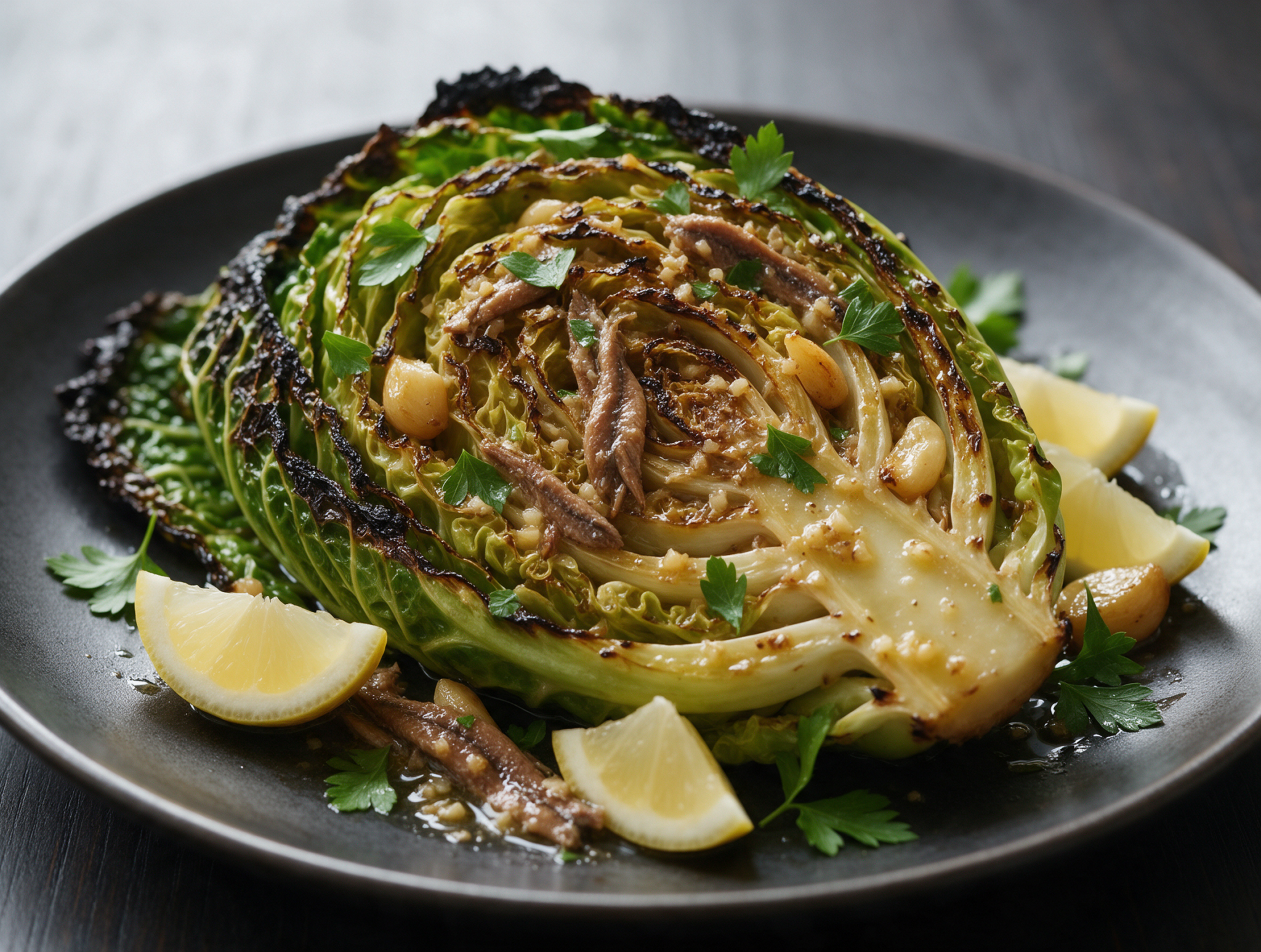
Charred Hispi Cabbage with Garlicky Anchovy Butter
Ingredients
Method
- Melt the butter in a small saucepan over low heat. Add the chopped anchovies, grated garlic, and chili flakes.
- Cook for 2 to 3 minutes, stirring and breaking up the anchovies with a spoon, until they dissolve into the butter and smell nutty rather than fishy.
- Remove from the heat and stir in the lemon zest and half the parsley. Set aside.
- Heat the oven to 200 C / 400 F.
- Halve each cabbage lengthwise through the root so the leaves stay attached. Pat the cut sides dry with a paper towel and season with salt and pepper.
- Heat 1 1/2 tbsp olive oil in a 30 cm / 12-inch oven-safe skillet over medium-high heat. Lay 2 cabbage halves cut side down and sear for 4 to 5 minutes, without moving them, until deeply charred and almost blackened at the edges.
- Transfer the seared halves to a plate, add the remaining oil to the skillet, and repeat with the last 2 halves.
- Return all 4 halves to the skillet, cut side up, and spoon the anchovy butter over each one, letting it pool in the leaves.
- Transfer the skillet to the oven and roast for 15 to 18 minutes, until a knife slides easily into the thickest part of the core.
- Spoon the pan juices back over the cabbage, scatter with the remaining parsley, and serve with lemon wedges.
Notes
- Dry the cabbage halves well before searing, wet leaves steam instead of char.
- Keep the root end intact so each half holds together through roasting.
- Sear in two batches of two so every cut side touches the hot pan directly.
- Taste the anchovy butter before adding extra salt, anchovies already bring plenty.
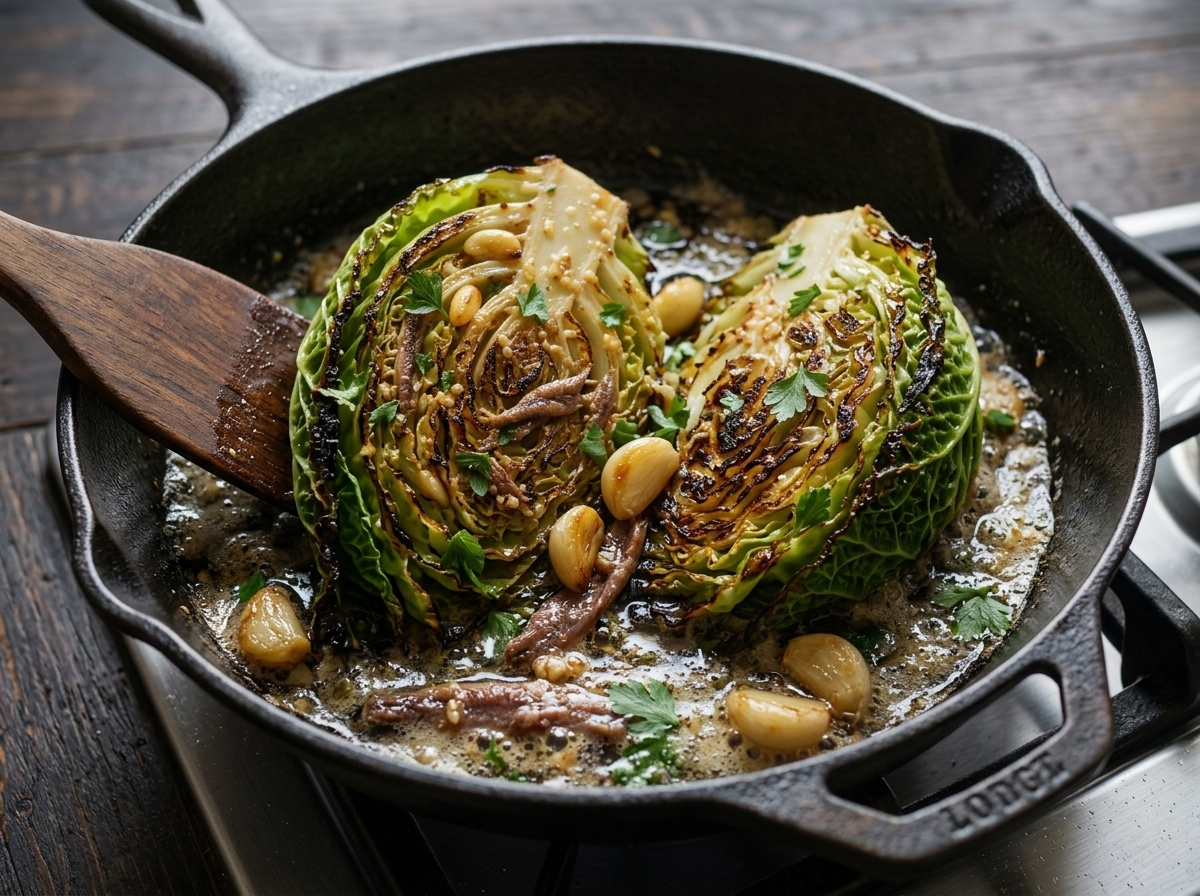
Tips for Success
- Pat the cabbage halves dry before searing so the cut surface chars instead of steaming in the hot skillet.
- Leave the core intact when halving so the leaves stay attached and don’t fall apart during roasting.
- Sear the cabbage halves in two batches of two, crowding the skillet steams the cut side instead of charring it.
- Grate the garlic instead of mincing so it melts smoothly into the butter without raw chunks.
- Save extra anchovy butter to melt over roasted potatoes or grilled fish later in the week.
Variations
- Swap anchovy butter for a Parmesan and lemon butter if you want a milder, vegetarian-friendly version.
- Add a spoonful of capers to the butter for extra brine and a sharper finish.
- Finish with toasted breadcrumbs and grated Parmesan for a crunchy, savory topping.
Storage and Reheating
Charred hispi cabbage keeps in an airtight container in the fridge for 3 to 4 days. The leaves soften slightly but the anchovy butter flavor holds up well.
Reheat cut-side down on a sheet pan in a 190 C / 375 F oven for 8 to 10 minutes, until the edges crisp back up and the center is warm. A 30 cm / 12-inch skillet over medium heat works too, about 4 to 5 minutes cut-side down.
I don’t recommend the microwave here. It steams the cabbage and turns the charred edges limp instead of crisp.
Serving Suggestions
Serve charred hispi cabbage as a side next to roast chicken or a seared steak, letting the pan juices from the meat mingle with the anchovy butter on the plate.
It also works as a light main for two, plated over garlicky white beans or alongside crusty bread to mop up the butter.
For a bigger spread, add it to a mezze table with grilled halloumi, hummus, and marinated olives.
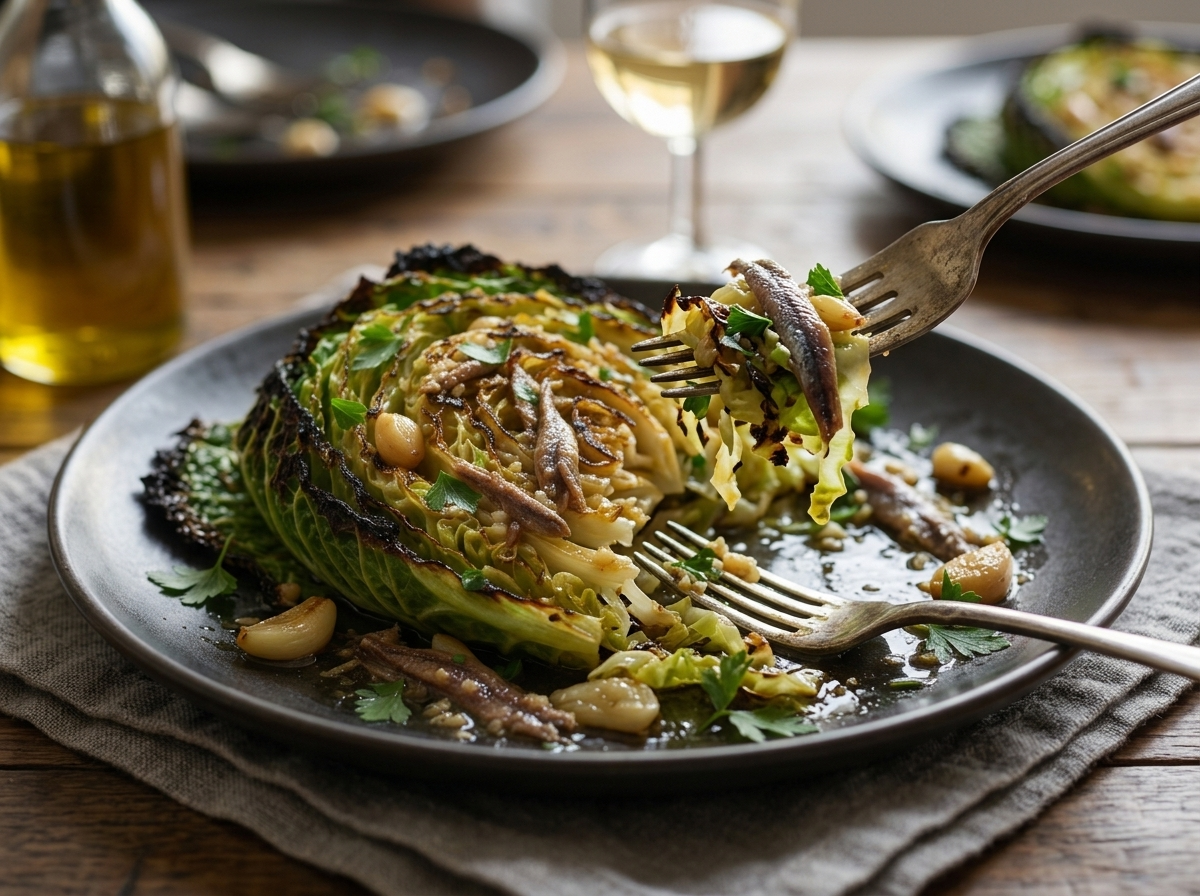
FAQ
How do I know when the charred hispi cabbage is done?
The cabbage is done when a knife slides easily into the thickest part of the core, usually after 15 to 18 minutes in the oven. The cut edges should look deeply charred, almost blackened in spots, while the inner leaves stay tender and pale green. If the core still resists the knife, give it another 3 to 4 minutes.
Can I use savoy cabbage instead of hispi cabbage?
Yes, savoy cabbage works as a substitute for hispi cabbage, though it has thicker, more crinkled leaves. Add 3 to 5 extra minutes in the oven so the core cooks through. Round green cabbage also works but tastes more peppery and holds less char on the flat cut side.
Can I make the anchovy butter ahead of time?
Yes, the anchovy butter keeps in an airtight container in the fridge for up to 5 days. Let it soften at room temperature for 10 minutes before spooning it over the seared cabbage so it melts evenly. You can also roll it into a log and freeze it for up to 2 months.
What goes well with charred hispi cabbage with anchovy butter?
Roast chicken, seared steak, and grilled fish all pair well with charred hispi cabbage, since the smoky char and salty butter cut through richer proteins. For a vegetarian meal, serve it over garlicky white beans or alongside crusty bread to soak up the butter left on the plate.
Is charred hispi cabbage with anchovy butter gluten free?
Yes, this dish is naturally gluten free since it’s just cabbage, butter, anchovies, garlic, and lemon. It isn’t dairy free though, since the anchovy butter is built on real butter. Swap in a dairy-free butter alternative if you need to keep it dairy free.
What’s the difference between hispi cabbage and regular green cabbage?
Hispi cabbage, also called sweetheart or pointed cabbage, has a looser, more pointed head with tender, sweeter leaves than round green cabbage. It cooks faster and chars better on cut surfaces because the leaves are thinner. Round cabbage is denser and holds up better in long braises.
If you enjoyed this, try
About The Author

John
John Watson is the passionate food enthusiast behind MePlusFood.com. With a deep love for exploring culinary delights, he shares honest restaurant reviews, mouthwatering recipes, and culinary adventures. Join John on his flavorful journey to savor the world one bite at a time.