Roasted Tomato Lentil Bolognese with Garlic and Basil
Jump to Recipe
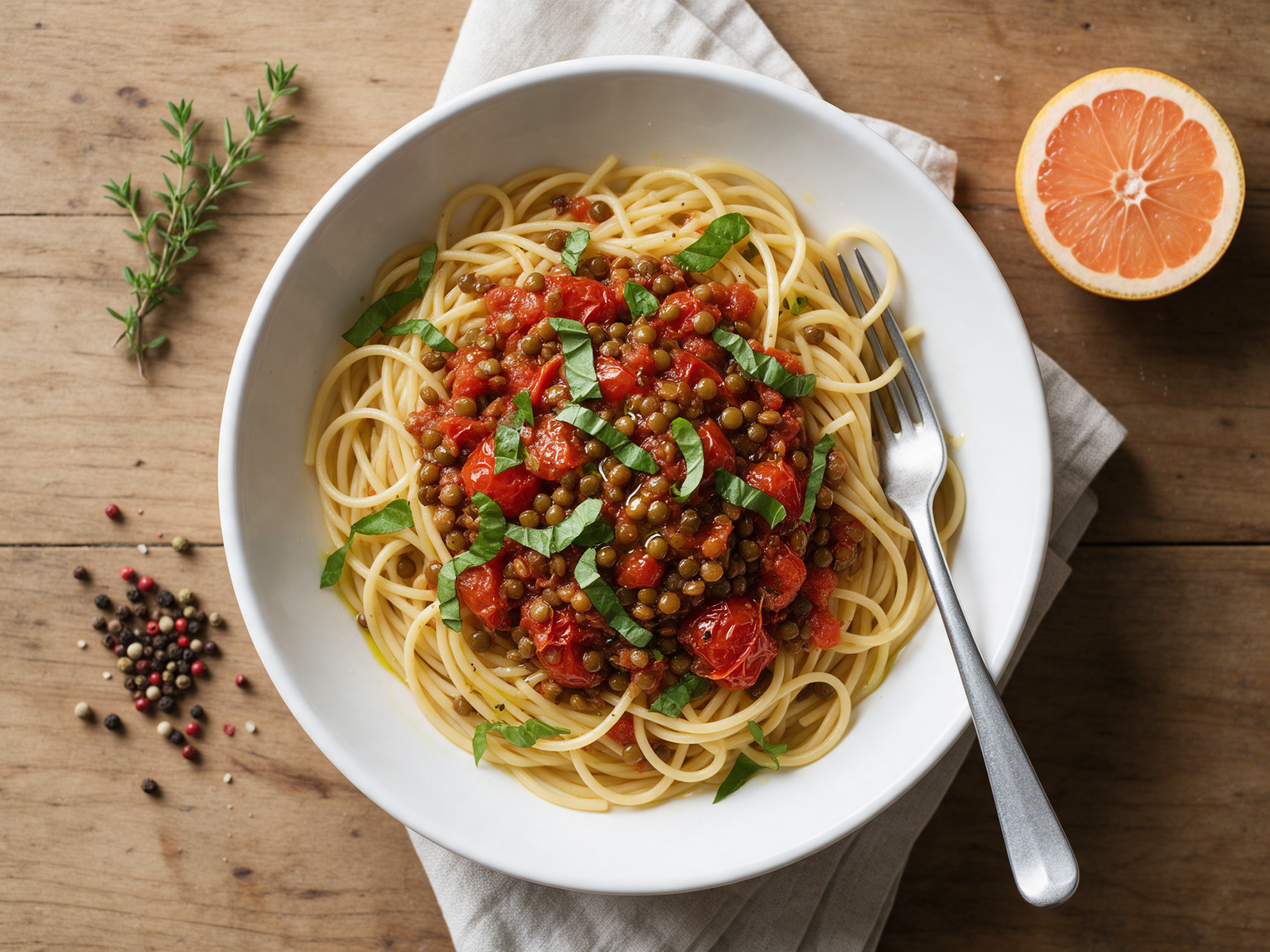
Roasted tomato and lentil bolognese is a vegan pasta sauce made by roasting plum tomatoes, red onion, carrot and garlic at 220 C / 425 F for 35 minutes, then simmering them with green or brown lentils. It comes together in about an hour, and most of that is hands-off.
Roasting does the work a long simmer normally would. The tomato edges blacken, the juices turn syrupy, and the sauce tastes slow-cooked without the two hours.
Use green or brown lentils. I once tried red lentils and ended up with something closer to porridge, because they break down in about 15 minutes.
Pulse the sauce only a few times so it stays chunky. Over pasta it eats like a full meal, and the leftovers hold up well for the week.
Why You’ll Love This Recipe
- Roasting builds slow-cooked depth in 35 minutes of oven time
- Lentils hold their shape and give the sauce a ground-meat bite
- Keeps 4 to 5 days in the fridge, 3 months in the freezer
- Stays vegan, with no cheese or stock cubes required
Ingredient Notes
- green or brown lentils: These hold their shape through a 25-minute simmer. French green (Puy) lentils work too, but skip red or yellow lentils, which collapse into a purée.
- plum tomatoes: Roma or San Marzano have less water and roast to a thicker sauce. Cherry tomatoes work in equal weight and need only 25 to 30 minutes in the oven.
- balsamic vinegar: One tablespoon brightens the sauce at the end. Red wine vinegar works as a swap, but use 2 teaspoons because it’s sharper.
- spaghetti or rigatoni: Rigatoni catches the chunky sauce better. For gluten-free, use brown rice pasta or serve the sauce over polenta.
- water or low-sodium vegetable stock: Stock adds a little more savor, but water works because the roasted vegetables carry most of the flavor. To keep it vegetarian with cheese, use a vegetarian-labeled hard cheese, since traditional Parmesan contains animal rennet.
Roasted Tomato Lentil Bolognese with Garlic and Basil
Ingredients
Method
- Heat the oven to 220 C / 425 F. On a 33 x 46 cm / 13 x 18 inch rimmed sheet pan, toss the tomatoes, onion, carrots and unpeeled garlic with 2 tbsp olive oil and 1/2 tsp salt. Arrange the tomatoes cut side up in a single layer and roast for 35 minutes, until the edges are blackened in spots and the juices look syrupy.
- While the vegetables roast, combine the lentils, water or stock, tomato paste, oregano, bay leaf and 1/2 tsp salt in a 5-quart / 4.7 L Dutch oven. Bring to a boil, reduce to a gentle simmer, and cook for 25 minutes, until the lentils are tender but still hold their shape. Take the pot off the heat, cover it, and leave it until the tomatoes finish roasting.
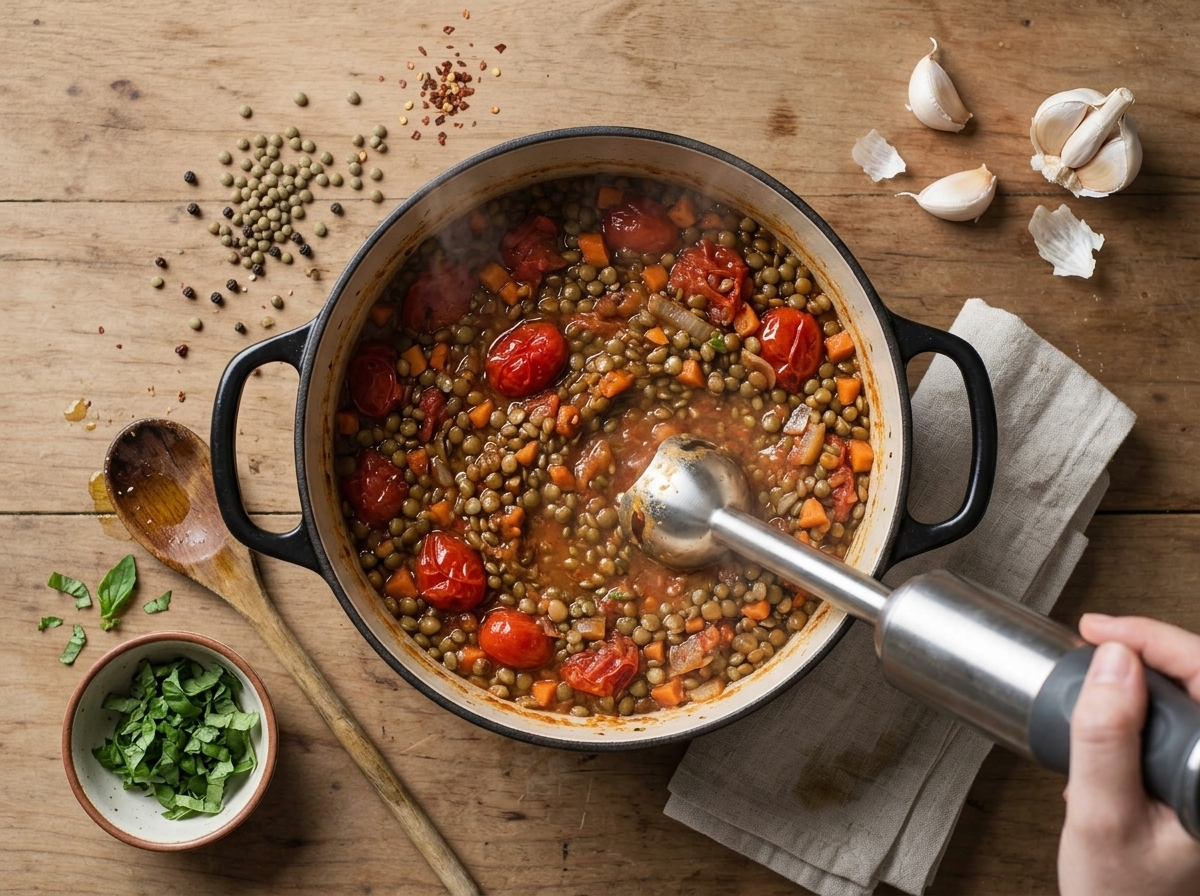
- Squeeze the roasted garlic out of its skins into the Dutch oven, then scrape in the tomatoes, onion, carrots and all the pan juices. Remove the bay leaf. Pulse with an immersion blender five or six times, or mash with a potato masher, until the sauce is chunky with whole lentils still visible. Stir in the balsamic vinegar, red pepper flakes and black pepper, then simmer uncovered over medium-low heat for 10 minutes, stirring often, until the sauce mounds on a spoon. Season with the remaining salt to taste.
- While the sauce simmers, boil the spaghetti or rigatoni in a 6-quart / 5.7 L pot of water with 1 tbsp salt until al dente, usually 10 to 12 minutes. Scoop out 120 ml of pasta water, then drain. Toss the pasta with the sauce in the Dutch oven over low heat for 1 minute, loosening with pasta water as needed. Drizzle with the remaining 1 tbsp olive oil and scatter the torn basil on top.
Notes
- Use green or brown lentils so they hold their shape through the simmer.
- Roast the tomatoes cut side up until the edges blacken in spots for the deepest flavor.
- Pulse the sauce five or six times only, to keep it chunky.
- Store sauce and pasta separately so the noodles don't turn soft.
Tips for Success
- Roast the tomatoes cut side up until the edges blacken in spots, because pale tomatoes make a sharp, thin sauce.
- Check a lentil at 20 minutes and keep simmering until the center is tender with a slight bite, since they soften further in the sauce.
- Pulse the sauce five or six times at most so whole lentils and small tomato chunks stay visible.
- Save 120 ml of pasta water before draining and toss it with the sauce so it clings to the noodles.
- Season at the end, after the sauce has reduced, because the salt concentrates as the liquid evaporates.
Variations
- Add 250 g of quartered cremini mushrooms to the roasting pan for a more savory, umami-forward sauce.
- Stir 1 tbsp of white miso into the lentil pot with the tomato paste for extra savory depth.
- Spoon the sauce over creamy polenta instead of pasta for a gluten-free dinner that eats like a full meal.
Storage and Reheating
Roasted tomato and lentil bolognese keeps in an airtight container in the fridge for 4 to 5 days and in the freezer for up to 3 months. Let it cool for about 30 minutes, refrigerate within 2 hours, and store it separately from the pasta so the noodles don’t go soft.
Reheat the sauce in a 3-quart / 2.8 L saucepan over medium-low heat for 5 to 8 minutes, stirring often, with 2 to 3 tbsp of water. The lentils keep absorbing liquid as the sauce sits, so it will be tighter than when you made it. In a microwave, cover the bowl and heat for 2 to 3 minutes, stirring halfway.
For frozen sauce, thaw it overnight in the fridge first. You can also roast the vegetables a day ahead and refrigerate them, then add them to the simmered lentils for a faster weeknight dinner.
Serving Suggestions
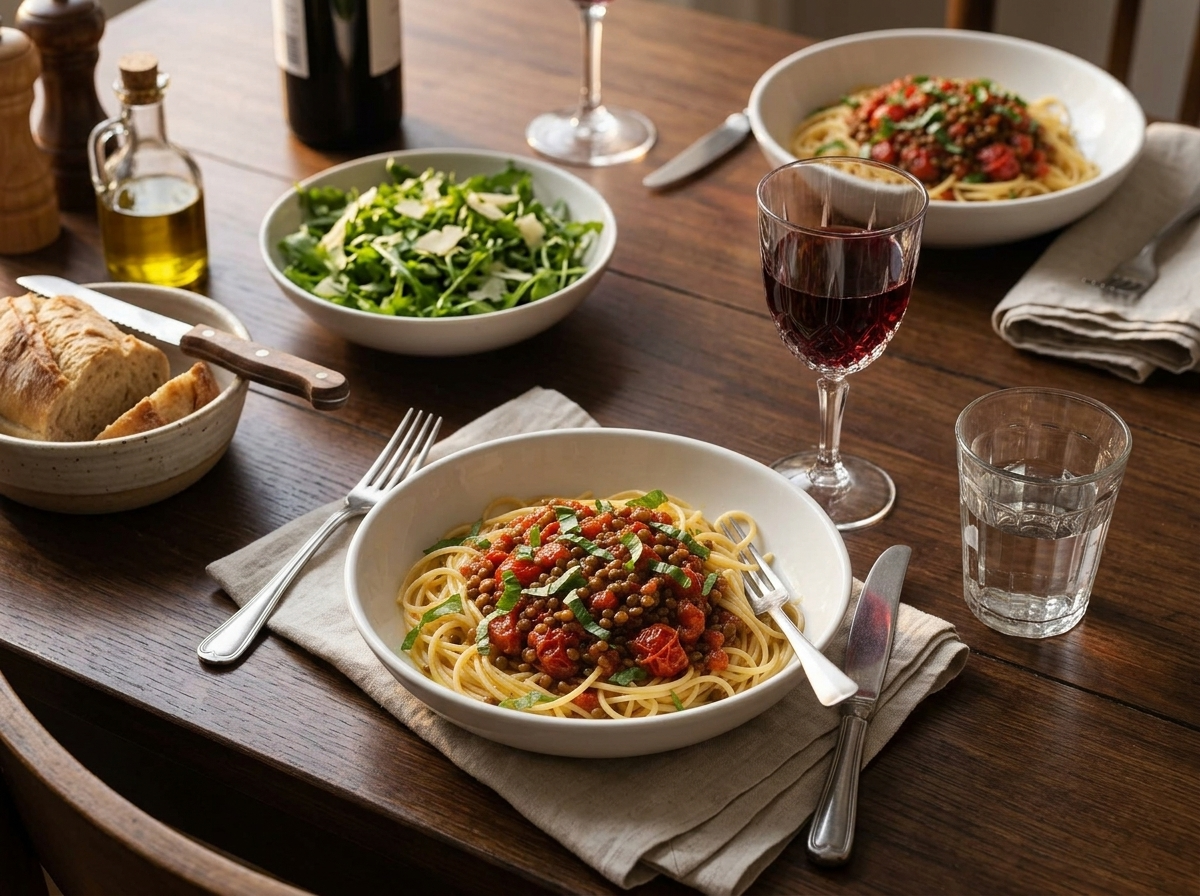
Roasted tomato and lentil bolognese is served over 340 g of spaghetti or rigatoni for four generous bowls. Toss the pasta with the sauce in the pot for a minute so the noodles pick up the flavor, then finish with torn basil and a drizzle of olive oil.
A sharp green salad, such as arugula with lemon and olive oil, balances the sweetness of the roasted tomatoes. Crusty bread or garlic toast covers the last of the sauce in the bowl.
The sauce also works over creamy polenta, baked potatoes, or roasted spaghetti squash. Leftovers spooned onto olive-oil toast make a quick lunch.
FAQ
Why is my lentil bolognese watery?
A watery lentil bolognese usually needs another 5 to 10 minutes of simmering, uncovered, with frequent stirring. The sauce is ready when a spoon dragged across the bottom leaves a path that holds for a second. If it still looks thin, stir in 1 tbsp of tomato paste and cook 2 minutes more.
Can I use red lentils instead of green lentils in this bolognese?
Red lentils work only if you accept a smoother, softer sauce. They break down in about 15 minutes, so the bolognese ends up closer to a thick purée than a chunky ragù. For the intended bite, stick with green or brown lentils, which stay intact through the 25-minute simmer.
Can you freeze roasted tomato and lentil bolognese?
Yes, the sauce freezes well for up to 3 months. Cool it completely, then freeze it flat in zip bags or in 2-cup containers, without pasta. Thaw it overnight in the fridge and reheat with a splash of water, since the lentils keep absorbing liquid and the sauce tightens.
What goes well with roasted tomato and lentil bolognese besides pasta?
Creamy polenta, baked potatoes and roasted spaghetti squash all hold up under this sauce. Crusty bread and a sharp green salad, such as arugula with lemon, balance the sweetness of the roasted tomatoes. I also spoon leftovers over toasted bread with olive oil for a quick lunch.
Is roasted tomato and lentil bolognese gluten free?
The sauce is gluten free as written, but the spaghetti or rigatoni is not. Swap in gluten-free pasta or serve the sauce over polenta, and check the label on your vegetable stock, since some brands add wheat. Tomato paste and balsamic vinegar are normally safe, but it’s worth a glance at the labels.
What is the difference between lentil bolognese and traditional ragù alla Bolognese?
Traditional ragù alla Bolognese is a meat sauce built on beef or pork, soffritto, often milk and wine, simmered for 2 to 3 hours. This version replaces the meat with lentils and gets its depth from oven-roasted tomatoes instead of a long simmer. The texture is similar, but the flavor is brighter and sweeter.
Loved this? Try these next
About The Author

John
John Watson is the passionate food enthusiast behind MePlusFood.com. With a deep love for exploring culinary delights, he shares honest restaurant reviews, mouthwatering recipes, and culinary adventures. Join John on his flavorful journey to savor the world one bite at a time.