Spiced Goat Curry with Roti
Jump to Recipe
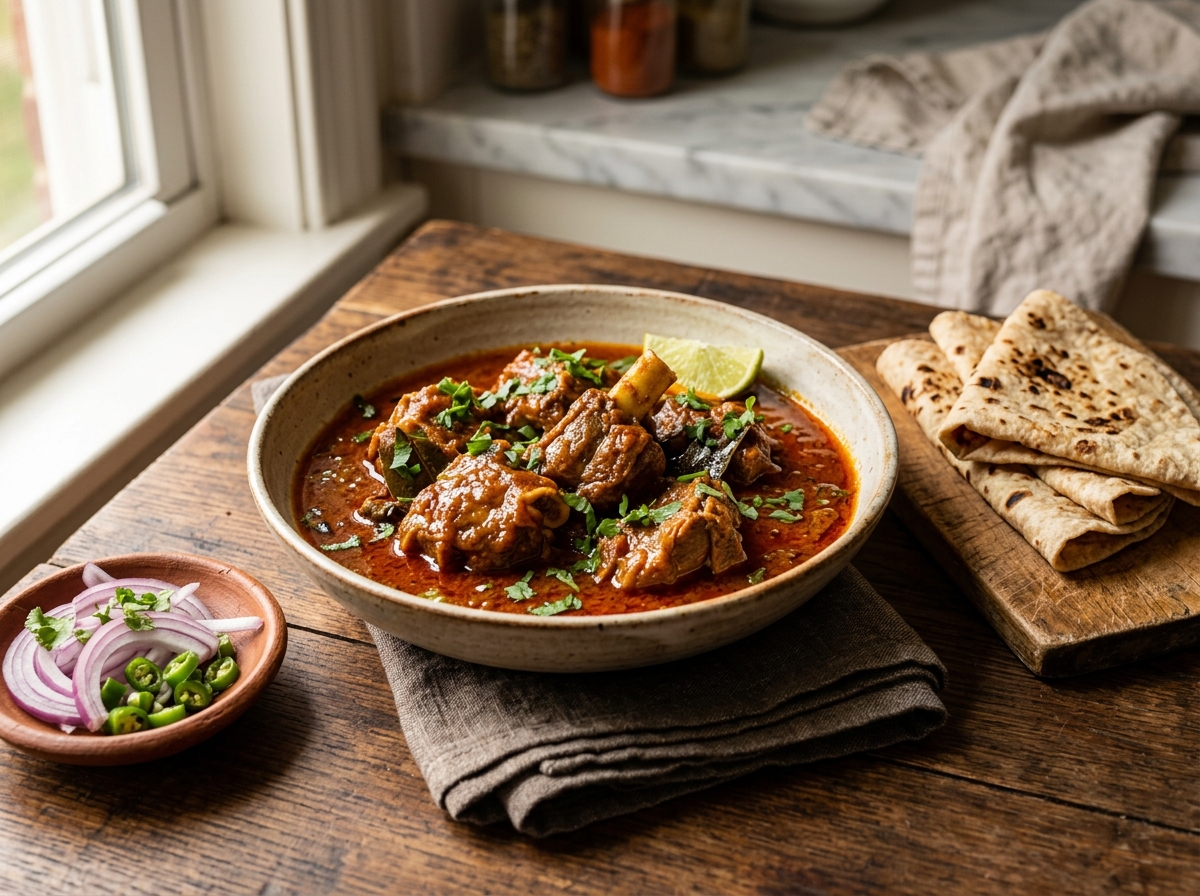
Goat curry rewards patience. The longer those bone-in pieces simmer in a base of caramelized onions, whole spices, and tomato, the more the meat relaxes and the sauce tightens into something with real depth.
I favor bone-in shoulder or leg cuts here. The marrow seeps out during cooking and adds a richness that boneless goat just can’t match. If your butcher cuts the pieces small, around 5 to 6 cm, the meat cooks more evenly and soaks up flavor faster.
The roti comes together quickly while the curry finishes. It’s a simple unleavened dough, rolled thin and cooked dry on a hot cast-iron pan until it puffs and chars in spots. That slight char is what you want, it adds contrast to the soft, saucy curry.
This recipe makes enough for four generous plates and holds well in the fridge for three days, making it a solid option for cooking ahead.
Why You’ll Love This Recipe
- Bone-in goat builds a richer, marrow-deepened sauce
- Whole spices deliver aroma that ground blends can’t match
- Roti comes together in under 20 minutes alongside the curry
- Tastes better the next day, ideal for batch cooking
Ingredient Notes
- Bone-in goat shoulder or leg: Cut into 5 to 6 cm pieces for even cooking. Bone-in is strongly preferred here as the marrow enriches the sauce, but bone-in lamb works as a substitute.
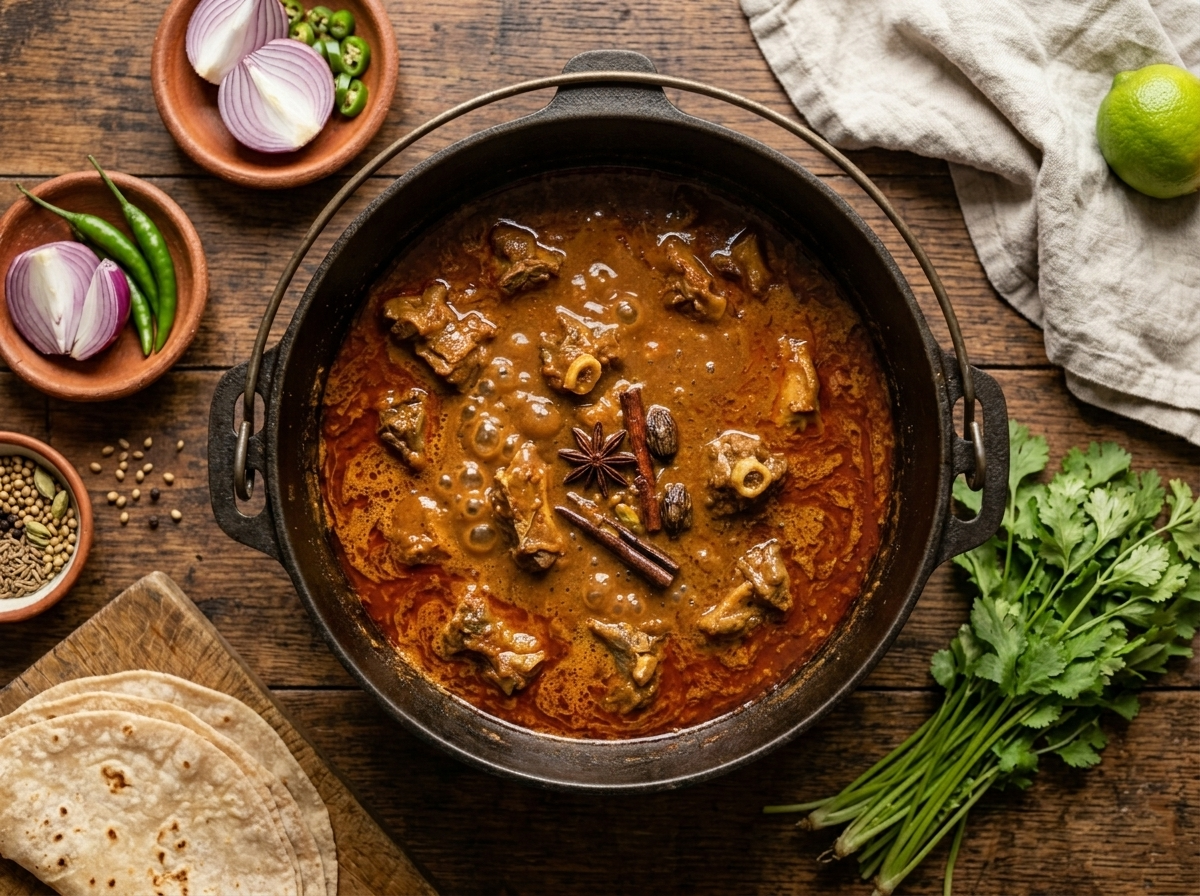
- Whole spices (cardamom, cloves, cinnamon, bay leaves): These go into hot oil before anything else, so their oils bloom directly. If you only have ground versions, stir them in with the onions instead and reduce quantities by half.
- Kashmiri chili powder: Adds a deep red color with moderate heat. Substitute with half sweet paprika and half cayenne to approximate both the color and heat level.
- Greek yogurt: Stirred in after the tomatoes to tenderize the meat and add creaminess to the sauce. Use full-fat for the best result. Dairy-free coconut yogurt also works.
- Whole wheat flour (atta): Traditional atta flour gives roti its soft, slightly nutty texture. Regular whole wheat flour is a practical substitute, though the roti will be a touch denser.
- Fresh ginger and garlic: Grated or pounded to a rough paste together. Pre-made ginger-garlic paste from a jar saves time and works fine, use about 2 tbsp total.
Spiced Goat Curry with Roti
Ingredients
Method
- Combine atta flour and salt in a mixing bowl. Add the oil and rub it through the flour with your fingertips for 30 seconds.
- Pour in warm water gradually, mixing with your hand until a soft, non-sticky dough forms. You may need 1 to 2 tbsp more or less water depending on the flour.
- Knead the dough on a lightly floured surface for 5 minutes until smooth. Cover with a damp cloth and rest for 20 minutes while you start the curry.
- Heat 2 tbsp oil in a large Dutch oven over high heat. Brown the goat pieces in two batches, about 3 minutes per side, until deep golden on the outside. Transfer to a plate.
- Reduce heat to medium. Add the remaining 1 tbsp oil and tip in cardamom, cloves, cinnamon stick, and bay leaves. Stir for 60 seconds until fragrant.
- Add the sliced onions and a pinch of salt. Cook over medium-low heat for 15 minutes, stirring occasionally, until onions are deep golden and jammy.
- Stir in the grated ginger and garlic and cook for 2 minutes until the raw smell disappears.
- Add Kashmiri chili powder, ground cumin, ground coriander, and turmeric. Stir for 1 minute until the spices coat the onions and turn fragrant.
- Add the chopped tomatoes and cook for 8 minutes over medium heat, breaking them down with the spoon until the mixture is thick and the oil separates at the edges.
- Remove the pot from direct heat briefly. Stir in the yogurt one tablespoon at a time until fully incorporated.
- Return the browned goat pieces to the pot along with any resting juices. Add 300 ml water and 1 tsp salt. Stir to coat the meat in the sauce.
- Bring to a gentle boil, then reduce to a low simmer. Cover with a lid and cook for 60 minutes, stirring every 15 minutes.
- Remove the lid and simmer for a further 15 to 20 minutes until the sauce has reduced, the oil has risen to the surface, and the goat is fork-tender at the bone.
- Stir in garam masala, taste, and adjust salt. Scatter over fresh cilantro.
- Divide the rested dough into 8 equal balls, about 45 g each. On a lightly floured surface, roll each ball into a thin round, about 20 cm diameter and 2 mm thick.
- Heat a dry cast-iron skillet or tawa over high heat until very hot. Place one roti in the pan and cook for 60 to 90 seconds until bubbles form and the underside shows pale brown spots.
- Flip and cook for another 60 seconds until the second side has golden spots. If you have a gas burner, hold the roti briefly over the flame with tongs for 5 seconds to puff it fully.
- Stack cooked roti under a clean cloth to keep them soft and warm. Repeat with remaining dough balls.
Notes
Tips for Success
- Pat the goat pieces dry before browning so they sear rather than steam in the pan.
- Bloom the whole spices in oil for 60 seconds until fragrant before adding onions, this is non-negotiable.
- Cook onions low and slow for at least 15 minutes until they turn deep golden, not just translucent.
- Add yogurt one tablespoon at a time off direct heat to prevent it splitting in the hot curry base.
- Rest the roti dough for at least 20 minutes before rolling so gluten relaxes and the flatbread stays pliable, much like the technique behind a warm spiced lentil flatbread cooked on the same skillet.
Variations
- Swap goat for bone-in lamb shoulder pieces for a slightly milder, sweeter curry.
- Add two diced potatoes with the tomatoes for a more filling, stew-style curry.
- Stir in a handful of baby spinach in the final 2 minutes for a green finish and added iron.
Storage and Reheating
Store leftover curry in an airtight container in the fridge for up to 3 days. The sauce thickens as it sits, so add 2 to 3 tbsp of water when reheating over medium-low heat.
To freeze, cool completely and pack into portions. It keeps well for up to 3 months. Thaw overnight in the fridge before reheating slowly on the stovetop.
Store roti wrapped in a clean cloth or in a zip-lock bag at room temperature for up to 1 day. Reheat on a dry pan for 30 seconds per side or wrap in a damp paper towel and microwave for 20 seconds.
Serving Suggestions
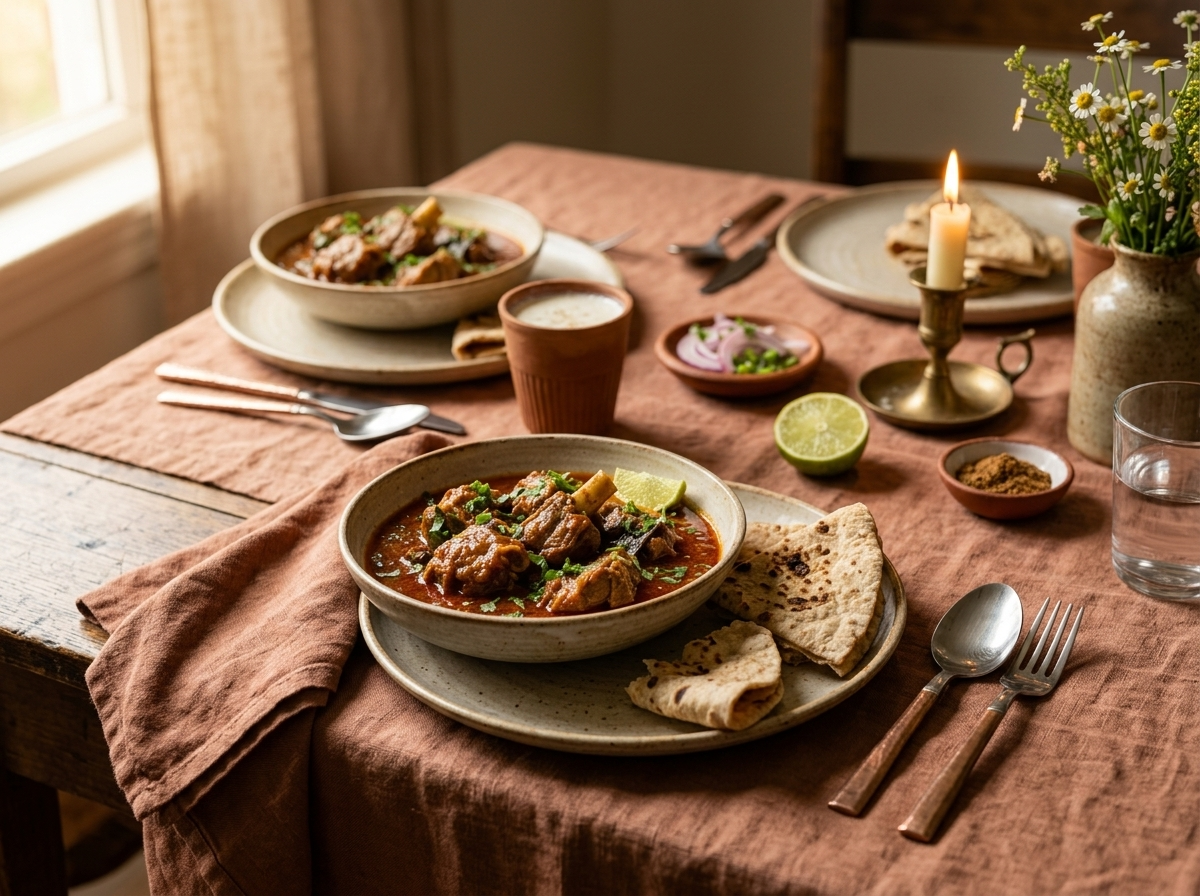
Serve the curry directly from the pot with roti stacked on the side in a cloth-lined basket to keep them warm and pliable. A small bowl of sliced raw onion, fresh cilantro, and a wedge of lime alongside gives the table a restaurant-style spread without much effort.
For a more substantial spread, pair with steamed basmati rice as well. Some guests prefer rice for scooping, others like roti for wrapping around the meat pieces. Both work.
A cooling raita made from plain yogurt, grated cucumber, and a pinch of cumin cuts through the heat of the curry and rounds out the meal, or try a smoky roasted carrot yogurt plate alongside for something more substantial.
FAQ
Why is my goat curry sauce thin instead of thick and glossy?
The sauce likely needs more time uncovered to reduce. After adding the tomatoes and yogurt, simmer with the lid off for the last 15 to 20 minutes. Stir occasionally to prevent sticking as it tightens.
Can I use boneless goat instead of bone-in for this curry?
You can, but the sauce will be noticeably less rich. If using boneless, reduce total cook time by about 20 minutes and check tenderness at the 40-minute mark.
Can I make the goat curry the day before and reheat it?
Yes, and it actually improves overnight as the spices meld further. Reheat gently over medium-low with a splash of water and cook the roti fresh the next day.
What goes well with spiced goat curry besides roti?
Steamed basmati rice, cucumber raita, and a spiced carrot almond pilaf on the side all work well alongside the curry. Pickled mango (aam ka achar) on the side adds a sharp, fermented contrast.
Is this goat curry gluten-free if I skip the roti?
Yes, the curry itself contains no gluten. Serve with steamed rice instead of roti and check that your spice blends are certified gluten-free if you have celiac concerns.
What is the difference between goat curry and mutton curry?
In South Asian cooking, mutton typically refers to mature goat or sheep, while goat curry usually uses younger goat meat which is leaner and slightly milder. Cooking times overlap closely, though true mutton from older animals may need 20 to 30 extra minutes to become tender.
About The Author

John
John Watson is the passionate food enthusiast behind MePlusFood.com. With a deep love for exploring culinary delights, he shares honest restaurant reviews, mouthwatering recipes, and culinary adventures. Join John on his flavorful journey to savor the world one bite at a time.