Saffron Seafood Paella with Chorizo
Jump to Recipe
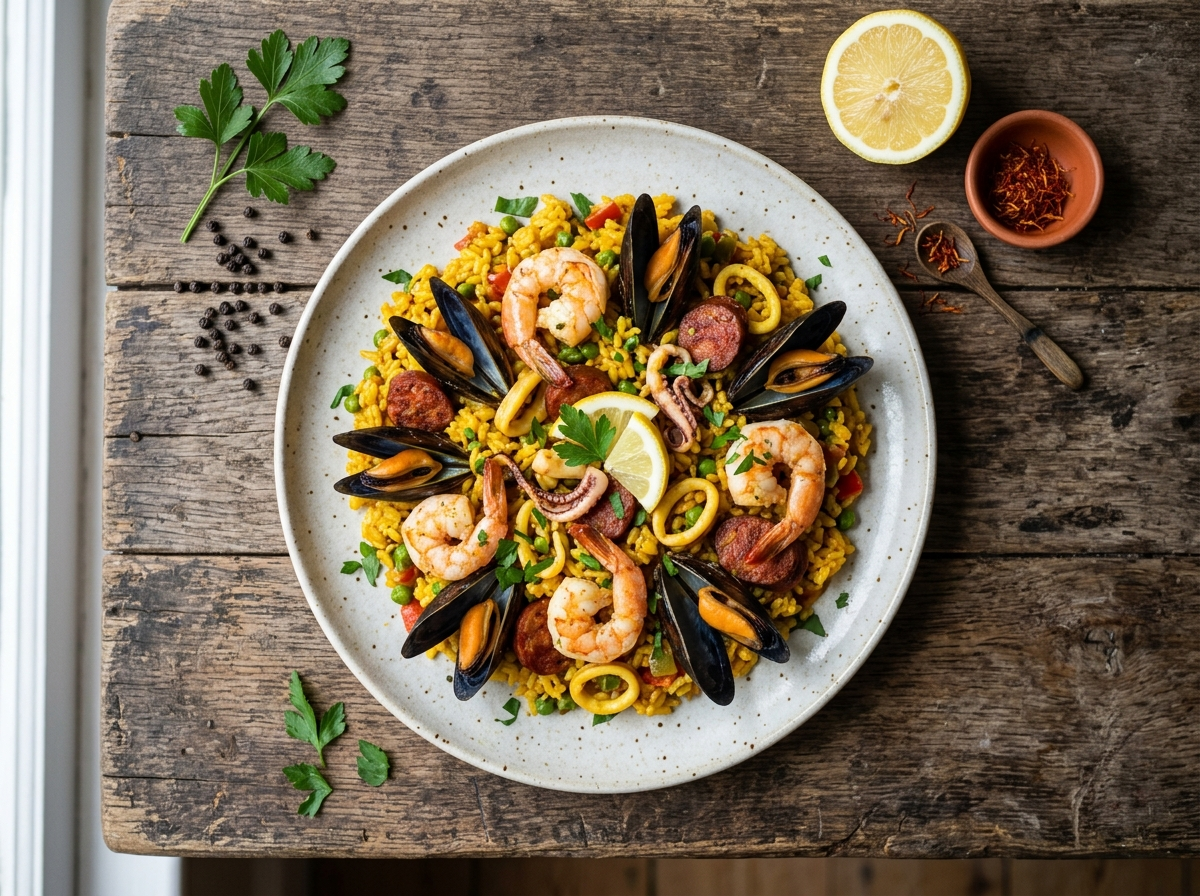
Paella lives or dies on the rice. Not the shrimp, not the sausage – the thin layer of short-grain rice that drinks up saffron broth and develops a crisp, caramelized crust on the bottom called socarrat. Get that right and everything else falls into place.
Chorizo adds smokiness and fat that the seafood alone can’t provide. It also stains the oil orange, which tints every grain of rice before a drop of liquid touches the pan.
This version uses shrimp, mussels, and squid alongside the cured sausage. You don’t need a specialist paella pan – a wide, shallow skillet at least 12 inches across works fine.
The whole cook takes about 40 minutes from cold pan to table. No lid, no stirring once the rice goes in.
Why You’ll Love This Recipe
- Crisp socarrat crust forms naturally with zero extra effort
- One pan means minimal cleanup after a proper dinner
- Saffron and chorizo fat build deep, layered flavor fast
- Scales easily from four servings to eight for a crowd
Ingredient Notes
- saffron: Use a pinch – about 0.3 g – steeped in warm water for 10 minutes before adding. Saffron powder dissolves faster but threads deliver better color; skip turmeric substitutes if you can.
- bomba rice: Bomba or Calasparra rice absorbs three times its volume without going mushy. Arborio works in a pinch but the grains split sooner, so reduce liquid by about 10%.
- Spanish chorizo: Use cured, sliceable Spanish chorizo, not raw Mexican-style chorizo. The cured kind holds its shape and renders slowly into the oil without crumbling.
- mussels: Buy live mussels the day you cook. Discard any that stay open after a firm tap. Clams are a direct swap at the same weight.
- large shrimp: Shell-on shrimp add flavor to the stock as they cook. Peeled shrimp are fine but add a splash more fish stock to compensate.
- squid rings: Pre-cut squid rings save prep time. Calamari tubes sliced into 1 cm rings cook identically. Octopus can substitute but needs a separate 45-minute pre-cook.
- smoked paprika: Spanish pimentón de la Vera is worth seeking out – sweet or bittersweet. Regular smoked paprika works but lacks the same depth.
- fish stock: Good fish stock carries the dish. A quality store-bought version is fine. Chicken stock can substitute but loses the marine backbone.
Saffron Seafood Paella with Chorizo
Ingredients
Method
- Combine saffron threads with 60 ml warm water in a small heatproof bowl. Set aside for at least 10 minutes until the water turns deep amber.
- Heat olive oil in a 30 cm paella pan or wide shallow skillet over medium-high heat.
- Add chorizo slices and cook for 3 to 4 minutes, turning once, until the edges crisp and the oil turns orange. Transfer chorizo to a plate with a slotted spoon, leaving the fat in the pan.
- Add diced onion and red bell pepper to the pan. Cook for 5 minutes, stirring occasionally, until softened and lightly golden at the edges.
- Add minced garlic and smoked paprika. Stir for 60 seconds until fragrant.
- Add crushed tomatoes and cook for 3 minutes, stirring, until the mixture darkens slightly and most moisture has evaporated.
- Add the dry bomba rice to the pan. Stir to coat every grain in the tomato and oil mixture for 1 minute.
- Pour in the white wine and let it bubble for 1 minute until nearly absorbed.
- Add the warmed fish stock and the saffron broth including the threads. Season with salt and pepper. Stir once to distribute evenly, then do not stir again.
- Return chorizo to the pan, distributing evenly over the rice. Bring to a brisk simmer and cook uncovered over medium heat for 10 minutes.
- Nestle squid rings and shrimp into the rice, pressing gently so they sit at rice level. Cook for 4 minutes.
- Arrange mussels hinge-side down around the pan. Cook for a further 6 to 8 minutes until mussels have opened and shrimp are pink and opaque throughout. Discard any mussels that remain closed.
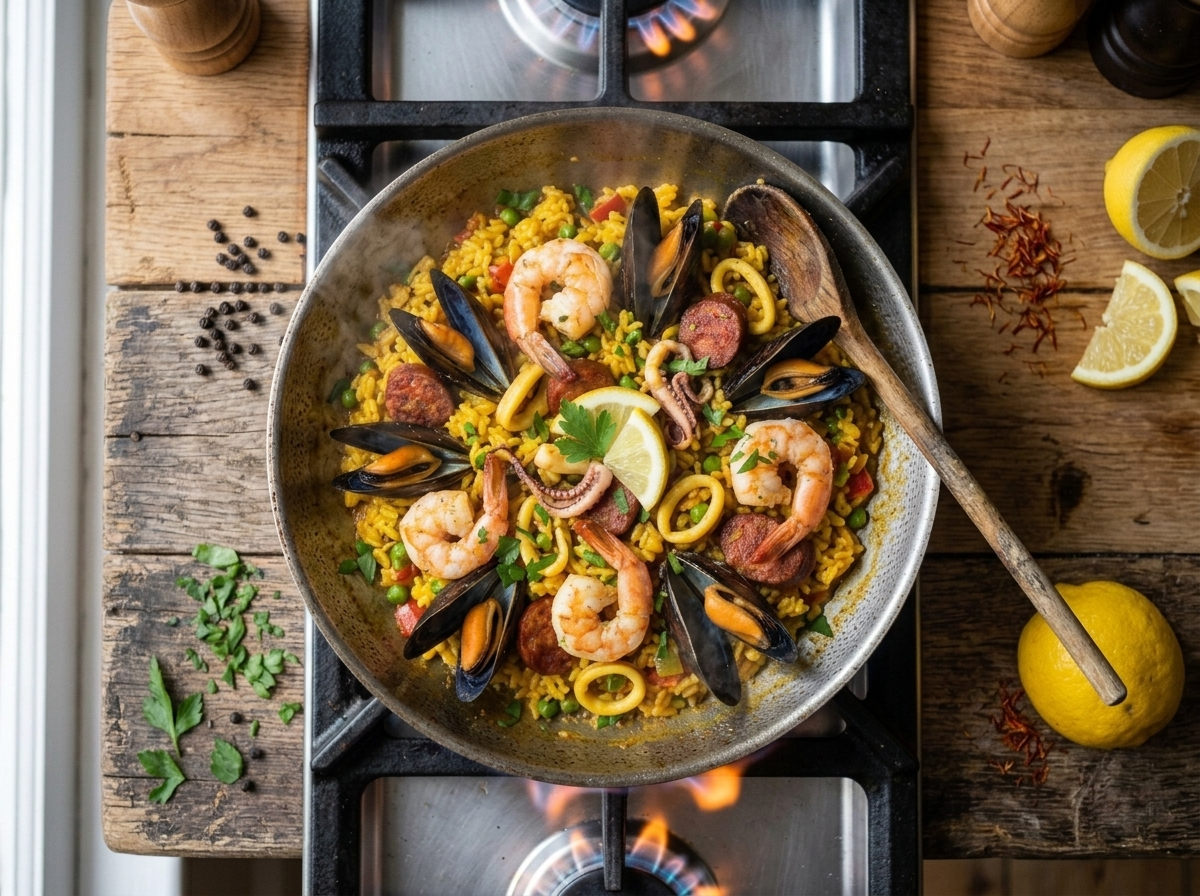
- In the final 2 minutes, raise heat to medium-high briefly. Listen for a dry crackling sound - that's the socarrat forming. Pull from heat the moment you smell a faint toasted, caramelized crust (not burning).
- Remove the pan from heat. Rest uncovered for 5 minutes so the crust firms without steaming.
- Scatter chopped parsley over the top and arrange lemon wedges around the edge. Bring the pan directly to the table.
Notes
Tips for Success
- Steep saffron threads in 60 ml warm water for at least 10 minutes before adding to unlock full color.
- Spread rice in an even single layer and do not stir once the stock goes in – agitation releases starch and kills the crust.
- Listen for a dry crackling sound in the last 2 minutes to confirm socarrat is forming without burning.
- Add mussels hinge-side down so they open upright and hold their juices inside the shell.
- Rest the finished paella uncovered for 5 minutes before serving so the crust firms without steaming itself soft.
Variations
- All-seafood version: omit chorizo and add 150 g clams plus a splash of dry white wine for brininess.
- Chicken and chorizo paella: replace all seafood with 400 g bone-in chicken thighs, browned first in the same pan.
- Vegetarian saffron rice: skip meat and seafood, add roasted red peppers, artichoke hearts, and smoked almonds.
Storage and Reheating
Store leftover paella in an airtight container in the refrigerator for up to 2 days. Keep mussels and shrimp stored with the rice rather than separated – they stay moist in the saffron liquid.
To reheat, spread the rice in a wide skillet over medium heat with 2 to 3 tbsp water or stock. Cover loosely with foil for 4 to 5 minutes until heated through. Avoid the microwave if you can – it turns the rice gummy and steams the seafood rubbery.
Freezing is not recommended for this dish. Mussels and shrimp lose their texture badly after a freeze-thaw cycle, and the socarrat crust will not survive reheating from frozen.
Serving Suggestions
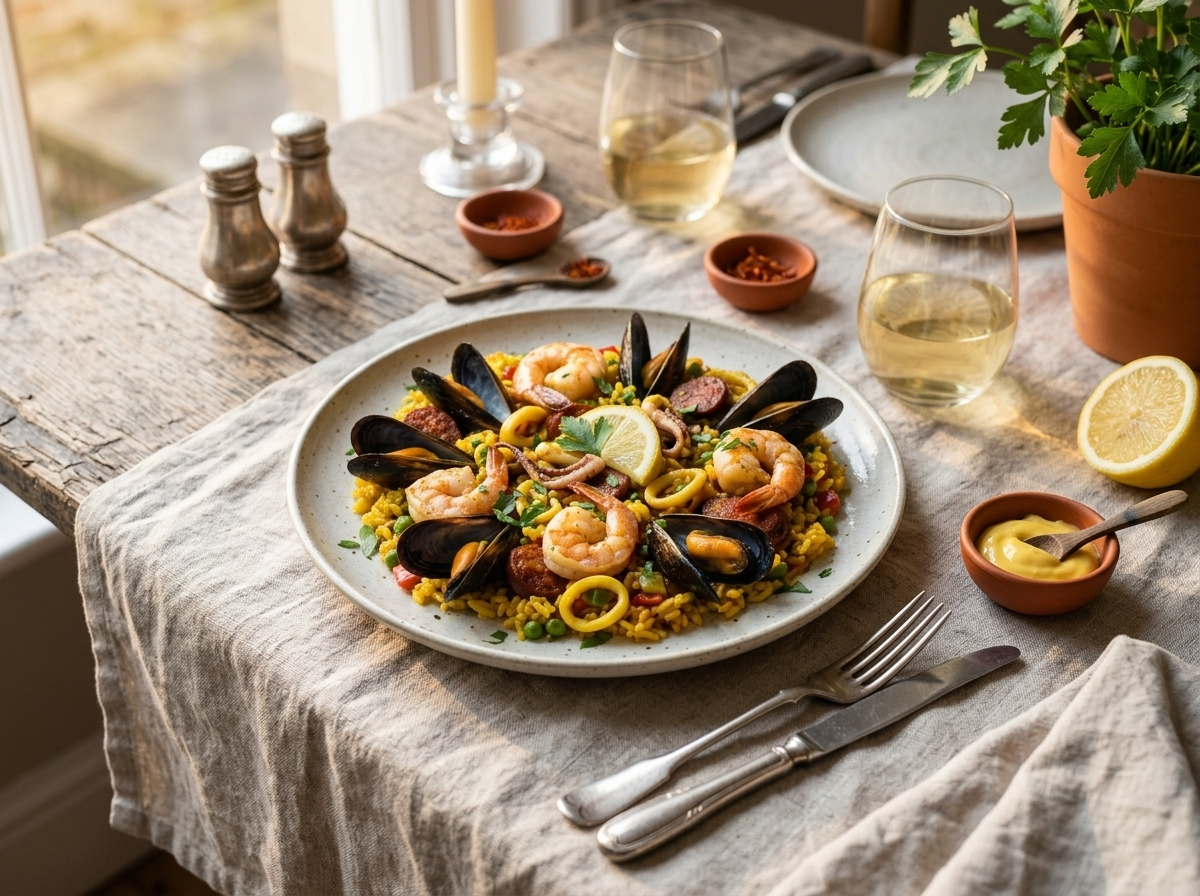
Serve directly from the pan at the table with lemon wedges and a small bowl of aioli on the side. The pan itself is the presentation – no need to plate individually unless you’re portioning for a buffet.
A simple green salad dressed with sherry vinegar and olive oil is the most natural companion. The acidity cuts through the rich saffron fat without competing with the seafood.
A cold, dry Albariño or a light Verdejo pairs cleanly with the briny mussels and smoked chorizo. If you’re skipping wine, sparkling water with a squeeze of lemon keeps the palate clean between bites.
FAQ
Why is my paella rice mushy instead of firm with a crust?
The two most common causes are stirring after adding the stock, and using too much liquid. Bomba rice needs exactly a 1-to-3 ratio of rice to stock, and once it goes in, it should not be touched until done.
Can I use regular long-grain rice instead of bomba for this saffron paella?
You can, but long-grain rice absorbs liquid differently and cooks faster, so reduce stock by about 20% and watch the pan closely from the 15-minute mark. The socarrat crust is harder to achieve and the texture will be looser.
Can I prep the saffron seafood paella ahead for a dinner party?
You can cook the sofrito and slice the chorizo up to 24 hours ahead. Add the rice and seafood only when guests are 30 minutes from eating – paella does not hold well once fully cooked and the crust softens quickly.
What goes well with seafood paella besides a green salad?
Pan con tomate – bread rubbed with ripe tomato and olive oil – is the most traditional accompaniment in Spain. Patatas bravas or a plate of marinated olives also work well as a starter before the paella arrives at the table.
Is saffron seafood paella gluten-free?
The core recipe is gluten-free as written – rice, seafood, saffron, and stock contain no gluten. Check your chorizo label carefully though, as some cured sausages use wheat-based fillers or share production lines with gluten-containing products.
What is the difference between seafood paella and paella Valenciana?
Paella Valenciana, the original from Valencia, uses chicken, rabbit, and green beans – no seafood at all. Seafood paella is a coastal adaptation that became popular along Spain’s Mediterranean coast and is now the version most recognized outside Spain.
If you enjoyed this, try
About The Author

John
John Watson is the passionate food enthusiast behind MePlusFood.com. With a deep love for exploring culinary delights, he shares honest restaurant reviews, mouthwatering recipes, and culinary adventures. Join John on his flavorful journey to savor the world one bite at a time.