Pan Fried Gnudi with Sage Butter
Jump to Recipe
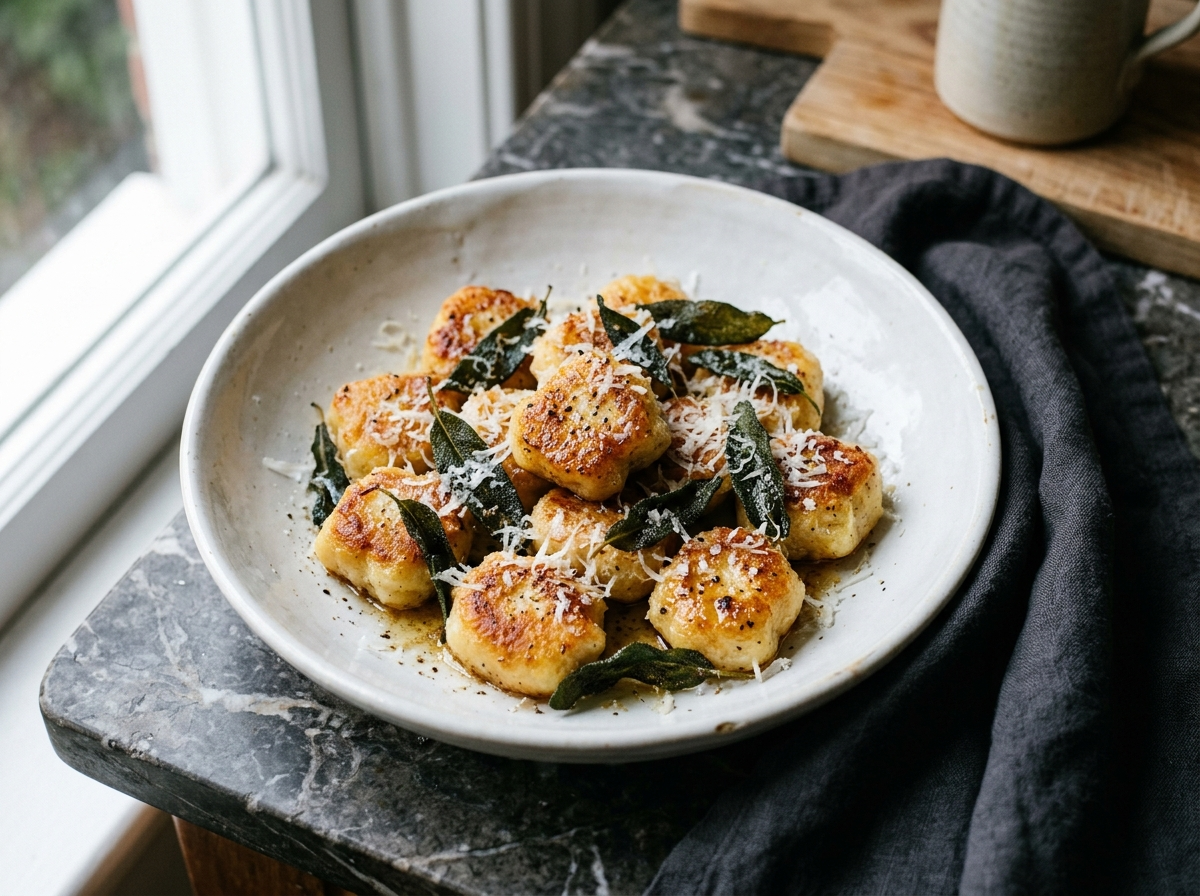
Gnudi are ricotta dumplings, essentially gnocchi without the potato. They’re lighter, creamier, and far quicker to mix together than most pasta doughs.
The name means ‘naked’ in Italian, referring to a ravioli filling served without the pasta wrapper. That filling, ricotta bound with egg and just enough flour, holds its shape when chilled and develops a proper crust when fried.
Pan frying is the move here. Boiled gnudi are soft all the way through, which is fine, but a few minutes in a hot pan builds a thin, golden shell that holds the dumpling together and adds real texture contrast.
Sage butter comes together in under two minutes and does double duty as both cooking fat and sauce. The butter browns while the sage goes crisp, and both coat the gnudi as they finish cooking — the same technique behind brown butter sage pumpkin gnocchi.
Why You’ll Love This Recipe
- Crispy golden crust with a pillowy ricotta center
- Browned sage butter doubles as the sauce
- Faster to mix than gnocchi, no potato required
- Comes together on one stovetop in 40 minutes
Ingredient Notes
- whole milk ricotta: Drain it in a fine-mesh sieve for at least 20 minutes before mixing. Wet ricotta makes the dough slack and the gnudi fall apart in the pan. Part-skim ricotta works in a pinch but gives a slightly grainier texture.
- 00 flour: 00 flour gives the gnudi a delicate crumb and keeps the coating thin. Plain all-purpose flour is a workable substitute and produces a slightly chewier shell.
- Parmesan: Finely grated Parmigiano-Reggiano melts cleanly into the dough. Pecorino Romano can replace up to half the quantity for a sharper, saltier result.
- egg yolk: One yolk adds richness and binding without making the dough heavy. A whole egg introduces too much liquid and softens the structure.
- fresh sage leaves: Fresh sage crisps in browned butter and turns slightly nutty. Dried sage turns dusty and bitter in this application, so skip it if fresh isn’t available and use a few sprigs of fresh thyme instead.
- unsalted butter: Unsalted gives you control over the final salt level. Use European-style butter if you have it, the higher fat content helps it brown more evenly without burning.
Pan Fried Gnudi with Sage Butter
Ingredients
Method
- Drain the ricotta in a fine-mesh sieve set over a bowl for at least 20 minutes. Press gently with a spoon to remove excess moisture.
- In a large mixing bowl, combine the drained ricotta, grated Parmesan, egg yolk, 00 flour, salt, pepper, and nutmeg. Mix with a fork until a soft, slightly sticky dough forms. Do not overwork it.
- Dust a rimmed baking sheet generously with flour. Using a tablespoon or small scoop, portion the dough into roughly walnut-sized balls, about 25 g each. Roll gently between floured palms to form a smooth ball.
- Place the shaped gnudi on the floured baking sheet. Refrigerate uncovered for at least 15 minutes to firm up.
- Heat the olive oil in a 12-inch heavy skillet over medium-high heat until shimmering.
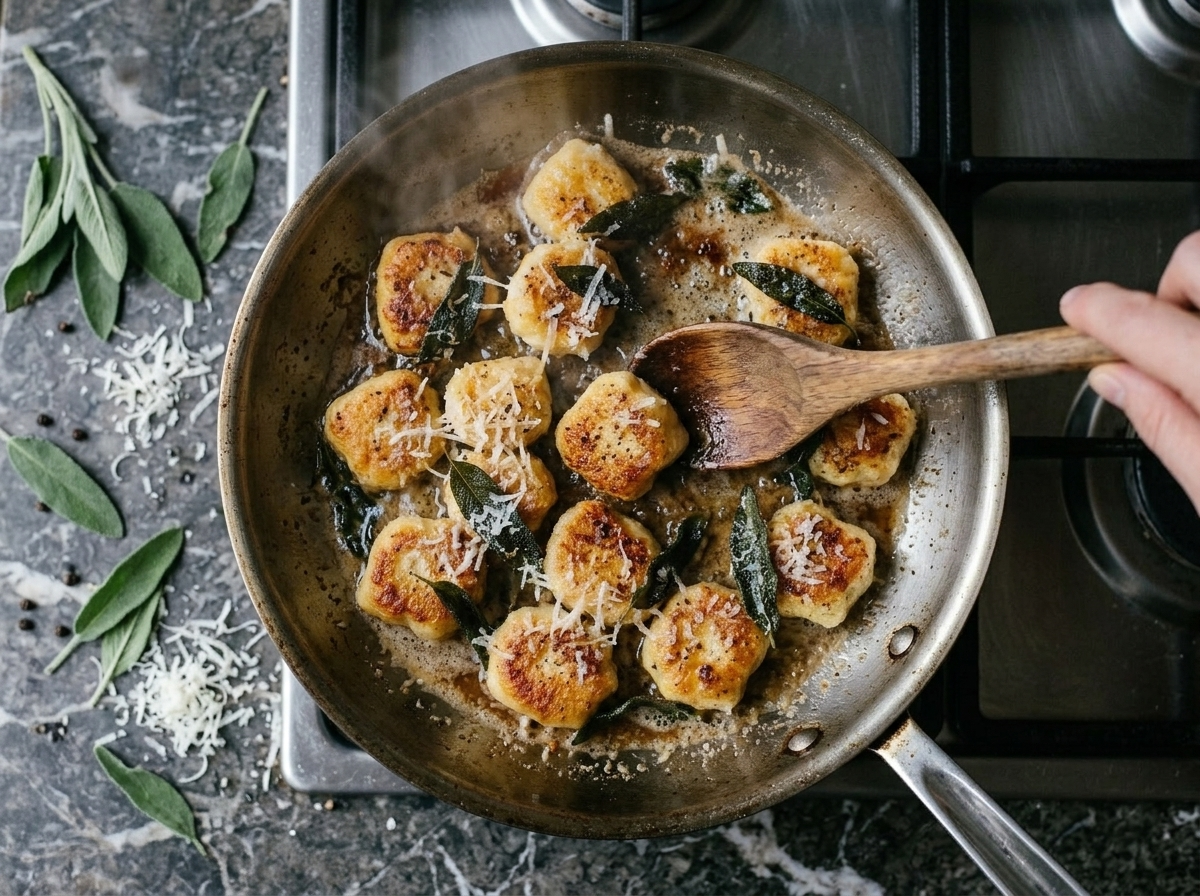
- Add the gnudi in a single layer, leaving space between each one. Do not crowd the pan, work in two batches if needed. Let them cook undisturbed for 2 to 3 minutes until a golden crust forms on the underside.
- Turn each gnudi carefully using a spoon or tongs. Cook for another 2 minutes on the second side until golden, then roll briefly to color any remaining sides, about 1 minute more.
- Transfer fried gnudi to a plate and repeat with the second batch if needed.
- Reduce heat to medium. Add the butter to the same skillet and let it melt, swirling occasionally.
- Once the butter foams and begins to smell nutty, add the sage leaves. They will sizzle and crisp in 30 to 45 seconds. Watch closely, the butter should turn pale amber but not dark brown.
- Return all gnudi to the pan and spoon the sage butter over them for about 30 seconds until coated and heated through.
- Plate immediately, dividing gnudi between four bowls. Spoon the remaining sage butter and crispy leaves over the top. Finish with a pinch of flaky salt and extra Parmesan if using.
Notes
Tips for Success
- Drain ricotta in a sieve for 20 minutes before mixing to prevent a wet, collapsing dough.
- Chill shaped gnudi on a floured tray for at least 15 minutes before frying so they hold their form.
- Use a wide, heavy skillet and resist moving the gnudi for the first 2 minutes to build a proper crust.
- Add butter and sage only after the gnudi are golden, so the butter browns without burning from prolonged heat.
- Roll gnudi no larger than a walnut so the inside heats through before the outside over-browns.
Variations
- Swap sage butter for a quick tomato sauce with chili flakes and a splash of pasta water.
- Add 2 tablespoons of finely chopped spinach to the ricotta mix for a green, slightly earthier gnudi.
- Finish with crumbled toasted hazelnuts and a drizzle of honey over the sage butter for a sweet-savory plate.
Storage and Reheating
Cooked gnudi keep in an airtight container in the fridge for up to 2 days. The crust softens overnight, which is unavoidable, but they still taste good.
To reheat, place them back in a dry nonstick skillet over medium heat for 2 to 3 minutes per side until warmed through and the crust firms back up. Avoid the microwave, it turns the exterior gummy.
Uncooked, shaped gnudi can be frozen on a tray for 1 hour, then transferred to a bag and kept for up to 6 weeks. Fry straight from frozen over medium-low heat, adding 3 to 4 extra minutes to the cook time.
Serving Suggestions
Pan fried gnudi work as a main course with a simple green salad on the side, something with acidity like an arugula and lemon salad to cut through the butter.
For a more substantial plate, spoon a thin layer of fresh tomato sauce or crushed San Marzanos into the bowl first, then set the gnudi on top with the sage butter drizzled over, much like the way sauce anchors a bowl of wild mushroom and truffle risotto. The tomato acidity balances the richness well.
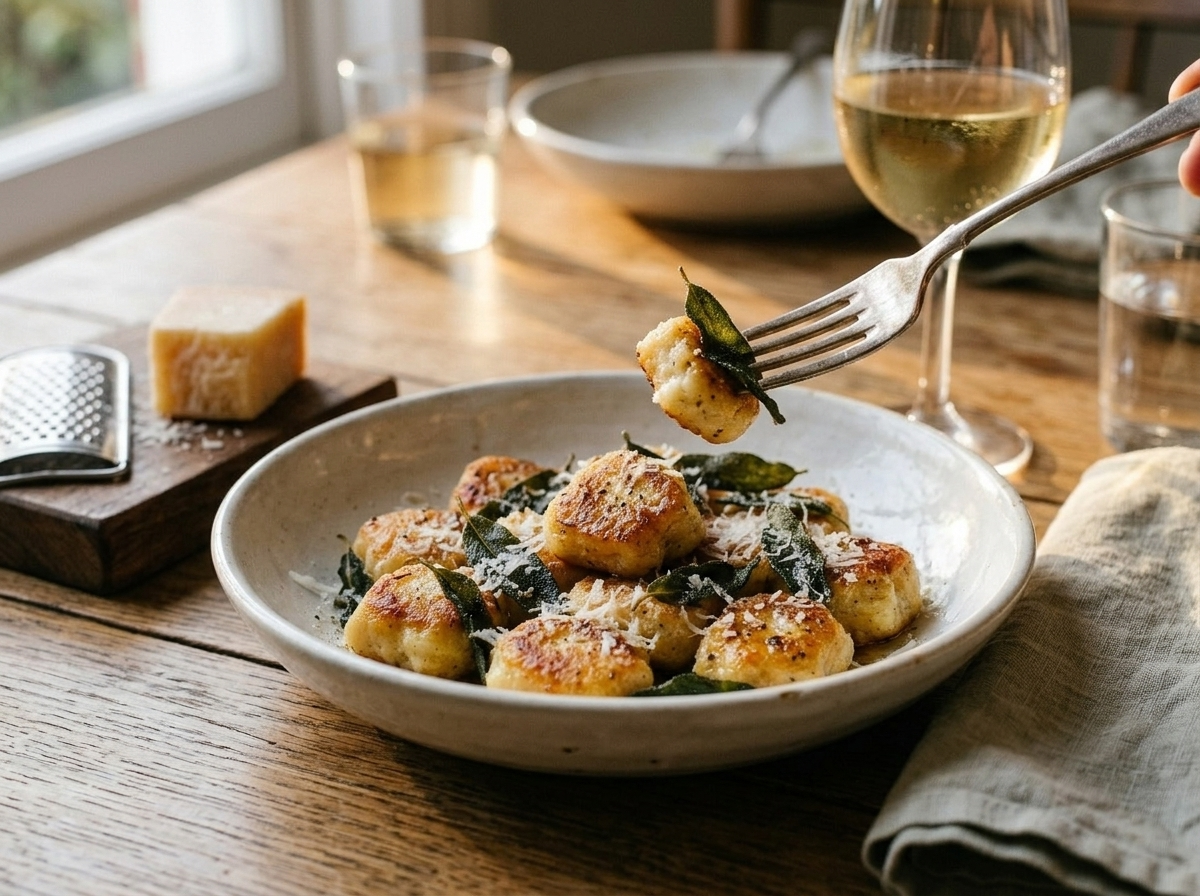
They also pair well with a glass of dry white wine, a crisp Pinot Grigio or unoaked Chardonnay. Keep the rest of the meal light so the gnudi stay the focus.
FAQ
Why are my gnudi falling apart in the pan?
The most common cause is too much moisture in the ricotta. Drain it in a fine-mesh sieve for at least 20 minutes and squeeze gently in a clean cloth before mixing. Chilling the shaped gnudi for 15 minutes before frying also helps them hold together when they hit the hot pan.
Can I use frozen spinach in gnudi instead of plain ricotta?
Yes, thawed and squeezed-dry frozen spinach can replace up to a third of the ricotta by weight for a green gnudi. Squeeze it very thoroughly, any residual water will loosen the dough and make frying harder.
How do I know when the sage is done in the butter without burning it?
The sage is ready when the leaves turn flat, crisp, and slightly darker green, about 30 to 45 seconds in foamy butter. Pull the pan off the heat the moment the butter smells nutty and turns pale amber, it continues cooking from residual heat.
Can I make gnudi dough the night before and fry them the next day?
Yes, shape the gnudi, place them on a lightly floured tray, cover with plastic wrap, and refrigerate overnight. The rest actually improves texture, firming up the dough so the crust forms faster in the pan.
Are pan fried gnudi gluten-free?
Not as written, the recipe uses 00 flour in both the dough and the coating. You can substitute a fine rice flour or a 1-to-1 gluten-free blend, but the texture of the crust will be slightly grainier and the dough more fragile.
What is the difference between gnudi and gnocchi?
Gnocchi are potato-based with flour worked into a dough, while gnudi are mostly ricotta with just enough flour to bind and coat them. Gnudi are lighter and more delicate, and they don’t require boiling potatoes or ricing any starch.
You might also like
About The Author

John
John Watson is the passionate food enthusiast behind MePlusFood.com. With a deep love for exploring culinary delights, he shares honest restaurant reviews, mouthwatering recipes, and culinary adventures. Join John on his flavorful journey to savor the world one bite at a time.