Beef Short Rib Pho
Jump to Recipe
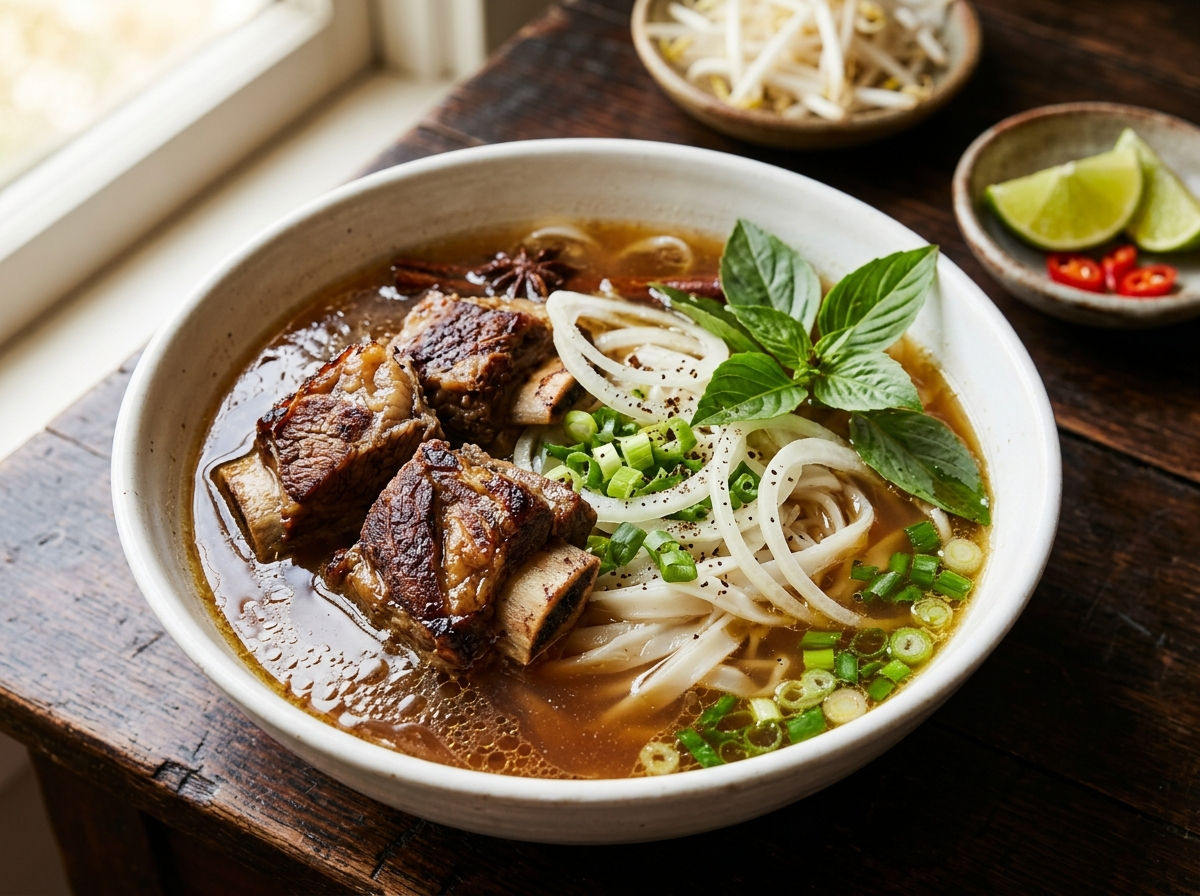
Pho made with beef short ribs has a noticeably richer broth than the standard brisket version. The bones release collagen as they cook, which gives the soup a slightly glossy, full-bodied consistency that coats the noodles.
Charring the onion and ginger directly over a flame before they go into the pot is the step that separates a flat broth from one with real depth. That blistered surface adds smokiness without overpowering the spices.
The spice blend, whole star anise, cinnamon, cloves, and cardamom, toasted briefly in a dry pan, is what gives this homemade noodle soup broth its distinctly real character the moment it hits the stock. Don’t skip toasting.
This takes around 4 hours from start to finish, but most of that is hands-off simmering time. The payoff is a broth you’d order at a Vietnamese restaurant.
Why You’ll Love This Recipe
- Short ribs build a richer, glossier broth than brisket
- Charred aromatics add real smoky depth to the soup
- Whole spices give the broth authentic pho fragrance
- Hands-off simmering time means low active effort
Ingredient Notes
- Beef short ribs: Bone-in English-cut short ribs work best here. The bones release collagen that thickens the broth naturally. Flanken-cut ribs can substitute but produce a slightly thinner result.
- Beef marrow bones: Adding a couple of marrow bones alongside the ribs deepens the broth further. Ask your butcher to cut them into 3-inch sections. If unavailable, increase the short ribs by 500 g.
- Star anise: Use whole pods, not ground. Four to five pods is the standard amount for 3 liters of broth. Too many tips the flavor toward licorice.
- Cinnamon stick: Vietnamese cassia cinnamon is slightly stronger than Ceylon cinnamon. Either works, but use a shorter stick of cassia to avoid overpowering the broth.
- Fish sauce: This is the primary seasoning for the broth. I use Three Crabs or Tiparos brand. Add it gradually at the end and taste as you go.
- Rock sugar: A small piece of yellow rock sugar rounds out the broth’s savory edge. You can substitute 1 tsp of regular white sugar in a pinch.
- Flat rice noodles (banh pho): Use medium-width dried banh pho noodles, about 5 mm wide. Soak them in cold water for 30 minutes before cooking. Fresh rice noodles can be used directly without soaking.
- White onion: Half a large white onion, charred cut-side down, is standard in pho broth. Yellow onion works as a substitute with a slightly sweeter result.
Beef Short Rib Pho
Ingredients
Method
- Place the short ribs and marrow bones in a large stockpot. Cover with cold water and bring to a boil over high heat.
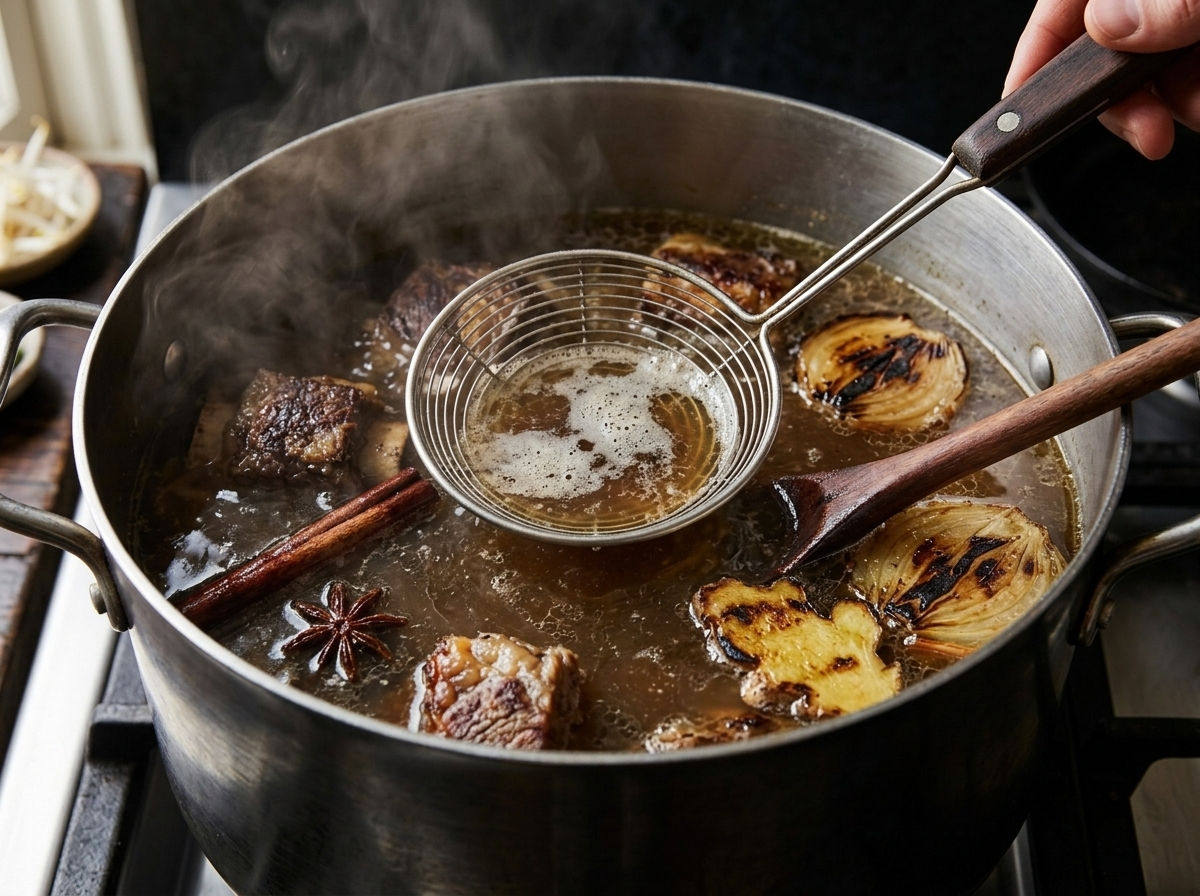
- Boil hard for 5 minutes until grey foam rises to the surface, then drain through a colander.
- Rinse the ribs and bones under cold running water until the water runs clear. Wipe out the pot.
- Hold the onion halves and ginger pieces directly over a gas flame with tongs, or place them cut-side up under a high broiler.
- Char until deeply blistered and blackened in spots, about 5 to 6 minutes per side. The edges should look scorched, not just browned.
- Set aside. Do not peel.
- Combine the star anise, cinnamon stick, cloves, black cardamom, coriander seeds, and fennel seeds in a dry skillet over medium heat.
- Toast, shaking the pan frequently, for 2 to 3 minutes until very fragrant.
- Transfer to a square of cheesecloth and tie closed with kitchen twine to make a spice sachet.
- Return the cleaned short ribs and marrow bones to the pot. Add 3.5 liters of cold water.
- Add the charred onion, charred ginger, and spice sachet. Bring to a boil over high heat, then reduce to a bare simmer.
- Skim any foam or fat from the surface every 30 minutes for the first 2 hours.
- Simmer uncovered for 3 to 3.5 hours total, until the short rib meat is tender and pulling away from the bone.
- Remove the short rib pieces with tongs and set aside on a plate to cool slightly.
- Discard the spice sachet, onion, and ginger. Remove and discard the marrow bones or scoop out the marrow to stir into the broth.
- Add rock sugar and fish sauce to the broth. Taste and adjust with more fish sauce or a pinch of salt until the broth is savory and faintly sweet.
- Let the broth sit off the heat for 10 minutes, then skim the fat layer from the surface.
- Soak the dried rice noodles in cold water for 30 minutes until pliable, then drain.
- Cook the soaked noodles in a large pot of boiling unsalted water for 30 to 60 seconds until just tender. Drain and divide among 4 deep bowls.
- Pull the short rib meat off the bones in large chunks and place over the noodles in each bowl.
- Return the broth to a full simmer. Ladle about 350 to 400 ml of hot broth over each bowl of noodles and meat.
- Top each bowl with sliced white onion, green onions, and cilantro.
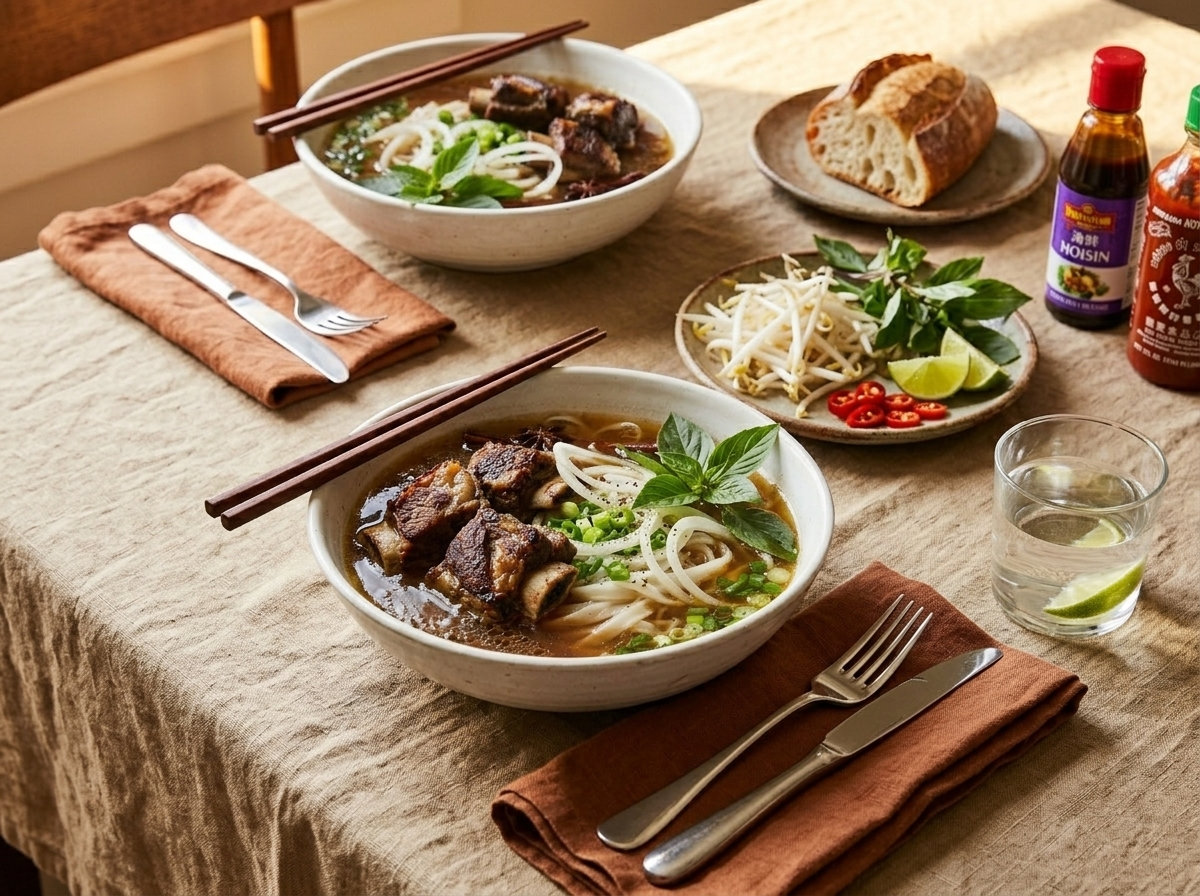
- Serve immediately with bean sprouts, Thai basil, sliced chiles, lime wedges, hoisin, and sriracha on the side for each person to add as they like.
Notes
Tips for Success
- Blanch the short ribs in boiling water for 5 minutes, then rinse before simmering to remove excess blood and impurities.
- Char the onion and ginger directly over a gas flame or under the broiler until deeply blistered, about 5 minutes per side.
- Toast the whole spices in a dry skillet over medium heat for 2 minutes until fragrant before tying them in a cheesecloth sachet.
- Skim the broth every 30 minutes during the first 2 hours to keep it clear rather than cloudy.
- Season the broth with fish sauce only after removing the spice sachet, tasting in small increments to avoid over-salting.
Variations
- Use oxtail in place of short ribs for a deeper, more gelatinous broth with similar richness.
- Add a split beef tendon to the pot in the last 2 hours for a traditional pho texture contrast.
- Make it spicier by simmering 2 dried Thai chiles with the spice sachet and garnishing with chili oil.
Storage and Reheating
Store the broth and the short rib meat separately from the noodles. The broth keeps in an airtight container in the refrigerator for up to 5 days. The cooked short rib meat keeps refrigerated for 4 days.
For longer storage, the broth freezes well for up to 3 months. Freeze in 1-liter portions so you can defrost only what you need. Do not freeze the noodles or fresh garnishes.
Reheat the broth on the stovetop over medium heat until it reaches a full simmer before ladling over freshly cooked noodles. Microwaving the broth works in a pinch but risks uneven heating.
Serving Suggestions
Set out the garnishes in small bowls so everyone can customize their bowl. The standard spread includes bean sprouts, Thai basil, sliced fresh chiles, lime wedges, hoisin sauce, and sriracha.
Thinly sliced raw eye of round can be laid over the noodles just before the hot broth is poured on top. The heat of the broth cooks the beef to medium-rare in about 30 seconds, which is the classic pho presentation.
A side of quay, Vietnamese crullers, is the traditional accompaniment for dipping into the broth. If you can’t find them, a simple French baguette works and is historically appropriate given Vietnam’s French culinary influence.
FAQ
Why is my beef short rib pho broth cloudy instead of clear?
Cloudiness usually means the ribs weren’t blanched and rinsed before simmering, or the broth was boiled too hard. Always blanch the short ribs first and keep the broth at a gentle simmer, not a rolling boil. Skimming the surface every 30 minutes during the first two hours also helps.
Can I use beef chuck instead of short ribs for pho?
Chuck will work in a pinch but produces a leaner, less gelatinous broth since it has fewer bones, and for the same reason adding split beef femur bones to compensate is worth considering. For the characteristic richness of short rib pho, you’d want to add a couple of marrow bones to compensate. Short ribs are worth sourcing if you can.
Can I make the beef short rib pho broth in a slow cooker or Instant Pot?
A slow cooker on low for 8 to 10 hours produces a good broth, though it won’t be quite as clear as the stovetop version. The Instant Pot on high pressure for 90 minutes cuts the time significantly but can make the broth slightly cloudy. Either way, still blanch the ribs first and char the aromatics.
How long does beef short rib pho broth keep in the freezer?
The broth freezes well for up to 3 months in airtight containers. Freeze it without the noodles or garnishes, which don’t hold up. Thaw overnight in the refrigerator and bring to a full simmer before serving.
Is beef short rib pho gluten-free?
The broth itself and rice noodles are gluten-free, but hoisin sauce typically contains wheat. Use a certified gluten-free hoisin, such as the one from Kikkoman or Lee Kum Kee’s GF line, and double-check your fish sauce label. The rest of the standard garnishes are naturally gluten-free.
What is the difference between short rib pho and traditional pho bo?
Traditional pho bo usually uses brisket and knuckle bones, which gives a lighter, more delicate broth. Short rib pho has a heavier, collagen-rich body because the rib bones release more gelatin during the long simmer. The spice profile is the same; it’s the cut that changes the texture of both the broth and the meat.
If you enjoyed this, try
About The Author

John
John Watson is the passionate food enthusiast behind MePlusFood.com. With a deep love for exploring culinary delights, he shares honest restaurant reviews, mouthwatering recipes, and culinary adventures. Join John on his flavorful journey to savor the world one bite at a time.