Black Garlic Ramen with Soft Egg
Jump to Recipe
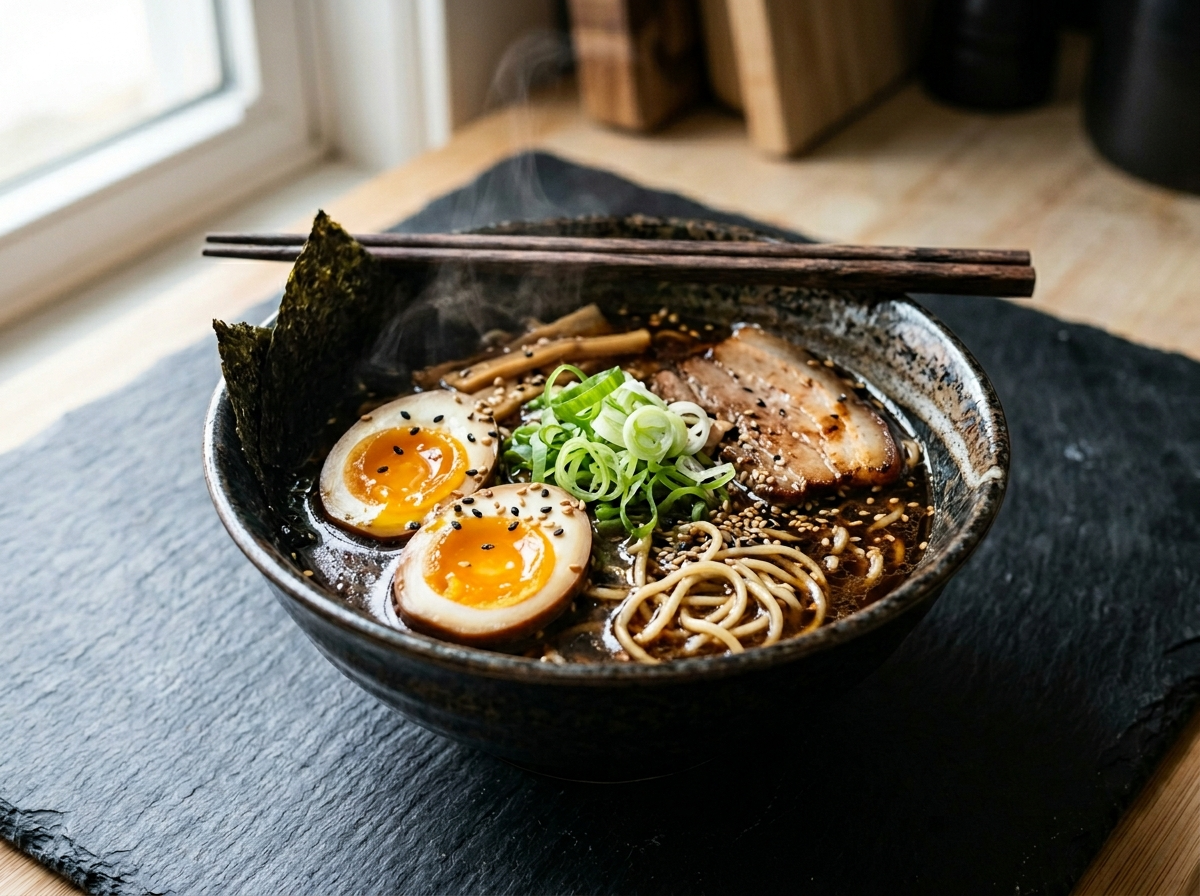
Black garlic is regular garlic that’s been slow-fermented until the cloves turn deep brown and almost syrupy. The flavor is milder than raw garlic but far more complex, with a hint of molasses and aged balsamic.
Stirring a small amount of blended black garlic into the broth right before serving is how most Japanese ramen shops build their tare – the concentrated seasoning paste that gives each bowl its signature flavor. You don’t need to simmer it for hours.
The soft egg is the other non-negotiable here. A six-minute boil plus a 30-minute soy marinade turns a plain egg into something with a custardy center and a savory shell. It’s worth the extra step.
This bowl comes together in about 40 minutes and eats like a full meal.
Why You’ll Love This Recipe
- Black garlic tare builds deep flavor without long simmering
- Jammy soy-marinated eggs add protein and richness
- Comes together in one medium saucepan, minimal cleanup
- Broth base adapts easily to chicken, pork, or vegetable stock
Ingredient Notes
- Black garlic: Look for whole black garlic heads at Asian grocery stores or online. A 40 g head gives you roughly 8 to 10 cloves. There’s no direct substitute, but a small amount of white miso paste blended with roasted garlic gets close in a pinch.
- Dashi stock: Instant dashi powder dissolved in hot water works well and is far quicker than making kombu and bonito stock from scratch. For a vegetarian version, use kombu dashi only.
- Ramen noodles: Fresh or dried alkaline wheat noodles are ideal. If you can’t find ramen-specific noodles, dried spaghetti cooked al dente and rinsed is a serviceable backup, though the texture is softer.
- Soy sauce: Use regular Japanese soy sauce (shoyu) rather than dark Chinese soy for the tare and egg marinade. Dark soy will make the broth muddy and overly sweet. Tamari works if you need a gluten-free option.
- Mirin: Real mirin (hon mirin) has a gentler sweetness than mirin-style condiment. If you only have the condiment version, reduce the quantity by about a third.
- Soft-boiled eggs: Six minutes in boiling water gives a just-set white and a jammy, slightly runny center. If you prefer a firmer yolk, go seven minutes. Peel carefully under cold running water.
Black Garlic Ramen with Soft Egg
Ingredients
Method
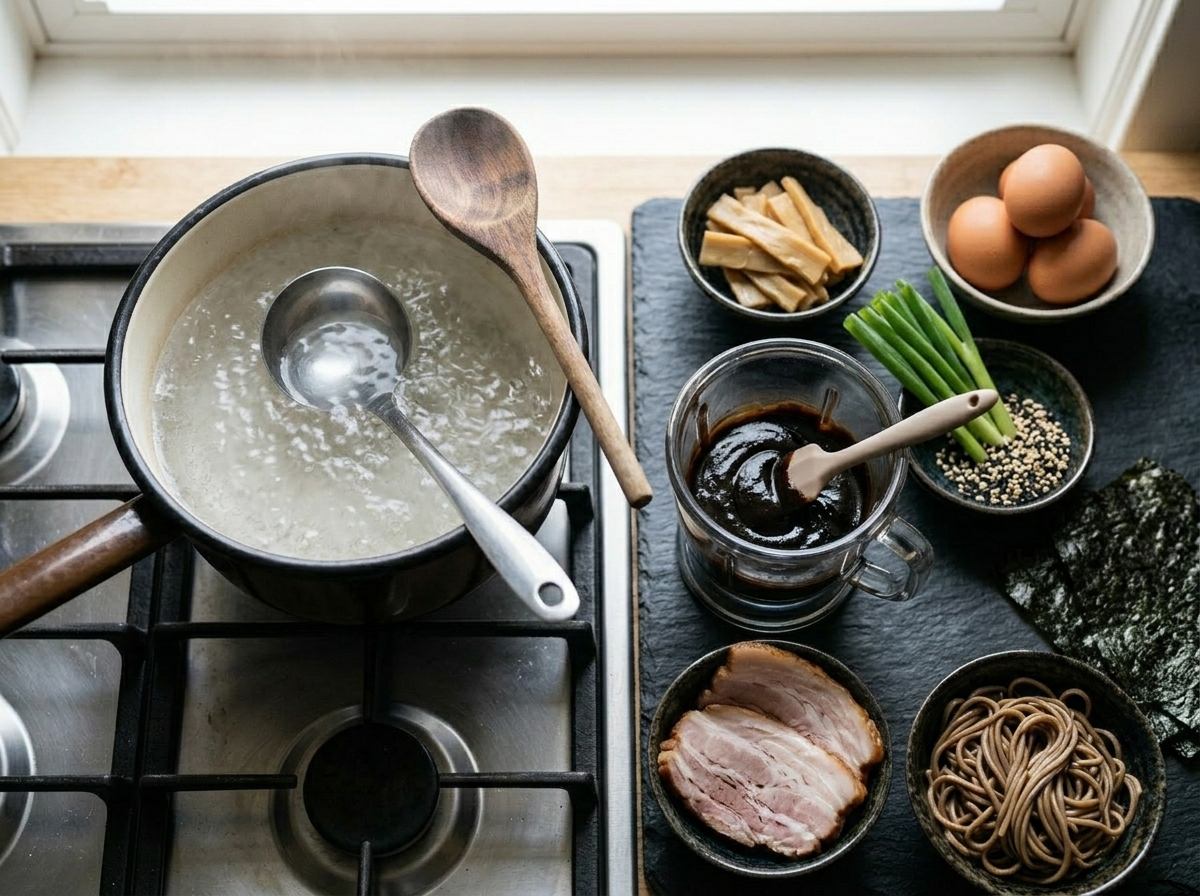
- Combine the black garlic cloves, sesame oil, soy sauce, and mirin in a small blender or use an immersion blender. Blend until smooth and paste-like, about 30 seconds. Set aside.
- Bring a small saucepan of water to a rolling boil. Lower the eggs in gently with a slotted spoon and cook for exactly 6 minutes.
- Transfer eggs immediately to an ice bath and cool for 5 minutes. Peel carefully under cold running water.
- Mix soy sauce, mirin, and water in a small bowl or zip-lock bag. Add the peeled eggs and marinate at room temperature for 30 minutes, or refrigerate for up to 1 hour, turning occasionally so the color is even.
- Heat the neutral oil in a medium saucepan over medium heat. Add the white parts of the scallions and cook for 2 minutes until softened and lightly golden.
- Pour in the dashi stock and chicken or vegetable stock. Add the soy sauce, sake, and grated ginger. Bring to a gentle simmer and cook for 10 minutes.
- Remove from heat. Stir in the black garlic tare one tablespoon at a time, tasting as you go. Start with 2 tablespoons, then adjust to your preferred depth. The broth should be savory, slightly sweet, and have a faint molasses note.
- Bring a large stockpot of unsalted water to a boil. Cook the ramen noodles according to package instructions, usually 2 to 3 minutes for fresh and 4 to 5 minutes for dried, until tender but still springy.
- Drain through a fine-mesh sieve and divide evenly among 4 warmed bowls.
- Ladle the hot black garlic broth over the noodles in each bowl.
- Halve the marinated eggs lengthwise and place one egg (two halves) on top of each bowl, cut side up so the jammy yolk is visible.
- Top with sliced green scallion tops, bean sprouts, a sheet of nori tucked against the side of the bowl, a pinch of sesame seeds, and a small shake of shichimi togarashi if using. Serve immediately.
Notes
Tips for Success
- Blend black garlic cloves with a splash of sesame oil until smooth before adding to the broth, this prevents bitter raw spots.
- Keep the egg marinade to 30 to 60 minutes only – longer than 2 hours makes the white rubbery and overly salty.
- Warm your serving bowls with hot water for 2 minutes before ladling in the broth, ramen cools fast.
- Add the black garlic tare off the heat so the fermented notes don’t cook out and lose their complexity.
- Taste the broth for salt after adding the tare – black garlic is milder than expected and the soy may need a small top-up.
Variations
- Swap dashi for rich tonkotsu-style pork bone broth and add chashu pork belly slices for a heavier bowl.
- Use kombu dashi and omit the eggs for a fully vegan build – add crispy tofu and pickled daikon instead.
- Stir one tablespoon of white sesame paste into the tare for a creamy, tantanmen-style black garlic broth.
Storage and Reheating
Store broth and noodles separately. Broth keeps in the fridge for up to 4 days in a sealed container. Noodles stored in broth will absorb liquid and go soft – keep them in a separate container, lightly oiled, for up to 2 days.
Marinated eggs keep refrigerated for up to 3 days in their marinade. After 3 days the whites tighten noticeably.
To reheat, bring the broth to a gentle simmer in a medium saucepan. Drop the noodles in for 30 seconds to warm through, then pour into bowls. Don’t microwave the noodles in the broth or they’ll overcook.
Serving Suggestions
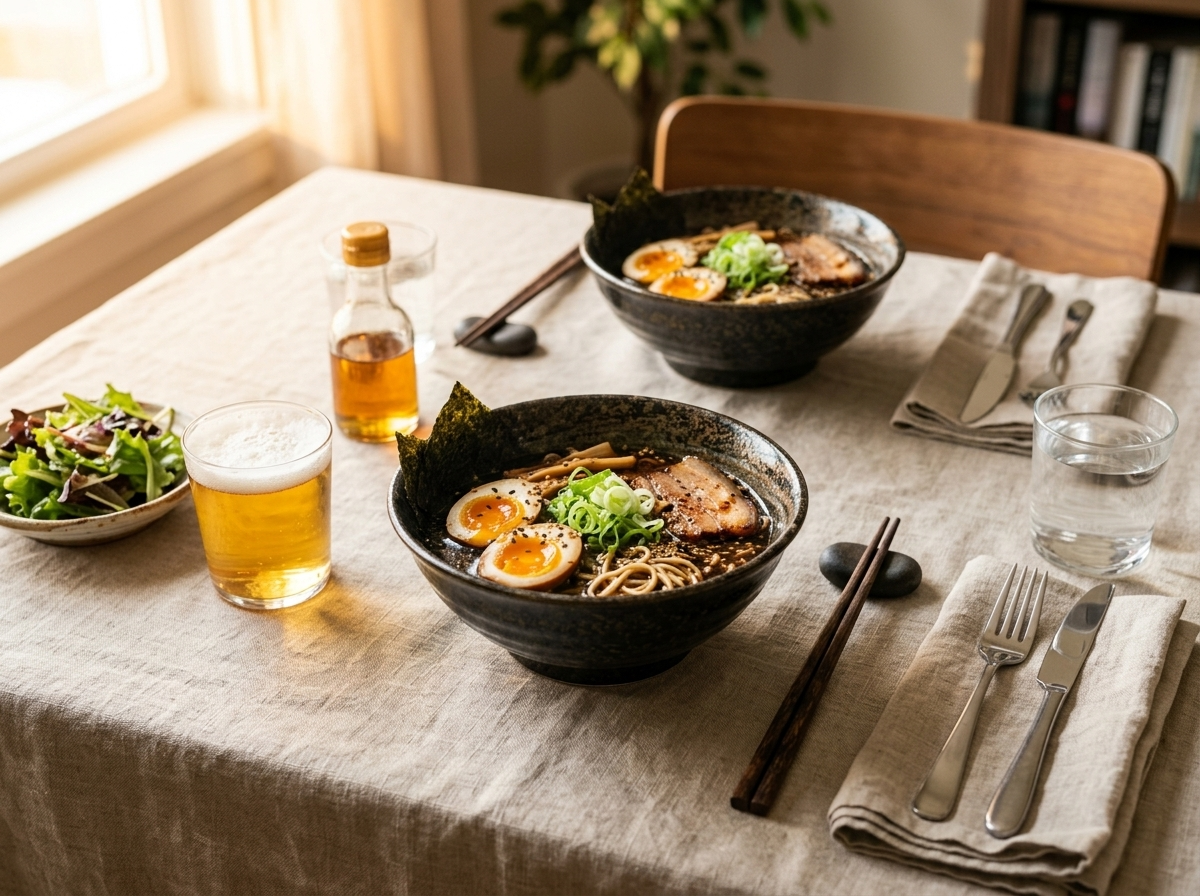
Top each bowl with sliced scallions, a sheet of nori, a few drops of toasted sesame oil, and a pinch of shichimi togarashi if you want heat. Bean sprouts or blanched bok choy add crunch and a clean vegetable note.
For a more filling bowl, add two or three slices of chashu pork belly or a few pieces of crispy tofu. A small pile of corn kernels and a pat of butter on top is a Hokkaido-style addition that works well with black garlic.
Serve immediately after assembling. Ramen waits for no one – the noodles keep absorbing the broth, so bowls should go from pot to table in under two minutes.
FAQ
Why does my black garlic ramen broth taste flat even after adding the tare?
Black garlic tare needs a salt-acid balance to shine. Try adding a small splash of rice vinegar and an extra teaspoon of soy sauce, then taste again. Flat broth usually means it needs more salt or a touch more umami from a second small clove of black garlic.
Can I use white garlic instead of black garlic in this ramen?
You can, but the flavor profile shifts significantly. Raw white garlic is sharp and pungent where black garlic is mellow and slightly sweet. If you substitute, roast the white garlic first and use about half the quantity to avoid overpowering the broth.
Can I freeze the black garlic broth and reheat it later?
Yes, the broth freezes well for up to 2 months in airtight containers. Freeze the tare separately from the stock base if possible, then combine when reheating for fresher flavor. Don’t freeze cooked noodles or marinated eggs.
How do I know when the soft egg is properly set for ramen?
Six minutes in actively boiling water gives you a white that’s fully set but a yolk that’s still jammy and slightly orange in the center. When you slice the egg in half, the yolk should hold its shape but look glossy, not chalky.
What pairs well alongside a bowl of black garlic ramen?
Gyoza or pan-fried dumplings are the most natural pairing and contrast well with the rich broth, or try a miso carrot noodle salad on the side for a lighter Japanese-leaning spread. A small side of pickled cucumber or quick-pickled daikon cuts through the savoriness. Cold Japanese lager or green tea both work as drinks.
Is this black garlic ramen gluten-free?
Not as written – standard ramen noodles contain wheat and regular soy sauce contains gluten. To make it gluten-free, use rice noodles or certified gluten-free ramen, and swap the soy sauce for tamari. Check your dashi powder label too, some brands add wheat starch.
About The Author

John
John Watson is the passionate food enthusiast behind MePlusFood.com. With a deep love for exploring culinary delights, he shares honest restaurant reviews, mouthwatering recipes, and culinary adventures. Join John on his flavorful journey to savor the world one bite at a time.