Slow Roasted Pork Shoulder Ragu
Jump to Recipe
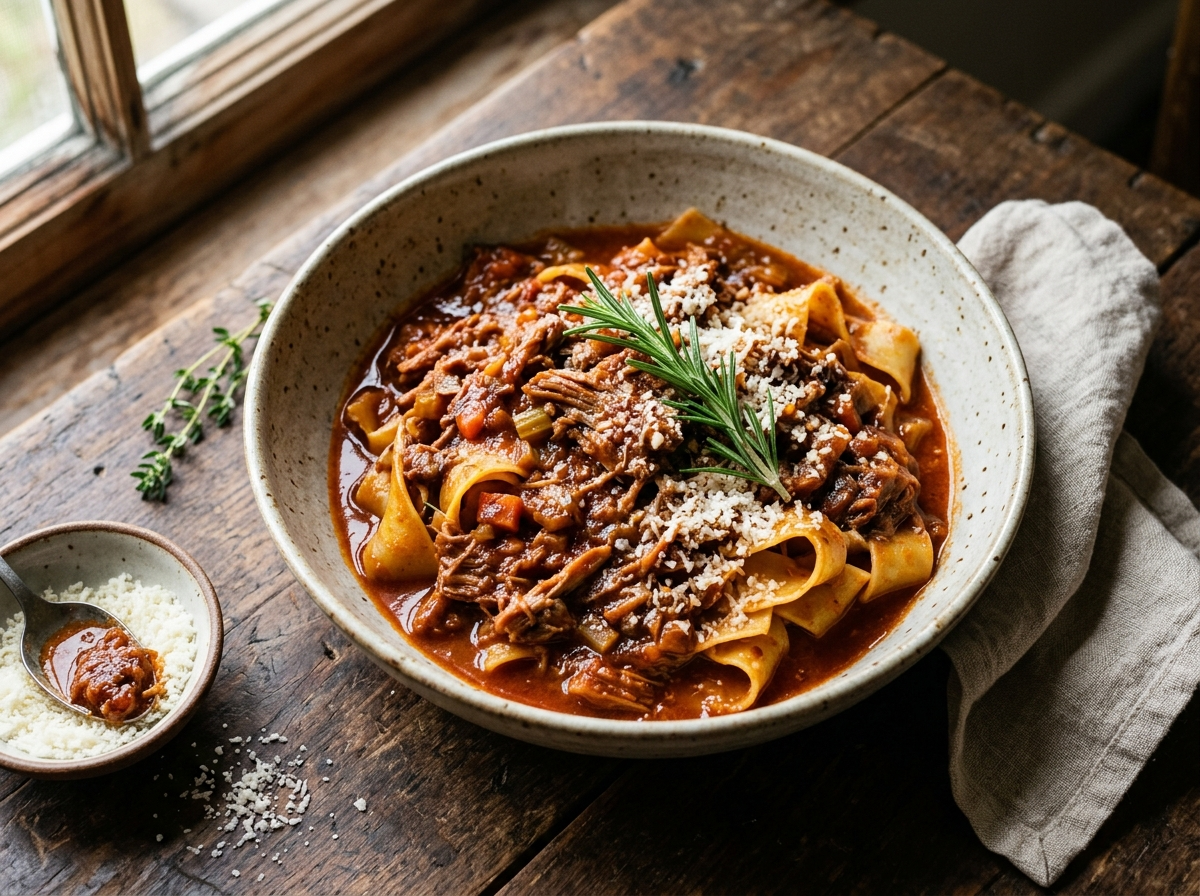
Pork shoulder is one of those cuts that rewards patience. The high fat-to-muscle ratio means it softens slowly, releasing collagen into the braising liquid until the whole pot turns glossy and rich.
This ragu starts with a hard sear on the pork, then a slow oven braise with crushed tomatoes, red wine, and a handful of aromatics. After three to four hours, the meat pulls apart with a fork and the sauce has reduced to something thick and deeply savory.
It’s a weekend cook, no question. But the payoff is a pot of ragu that serves six to eight people, holds well in the fridge for four days, and freezes without losing anything.
I serve it over pappardelle most often, as you would with a slow roasted lamb ragu, though polenta and crusty bread both work. Start it in the morning and dinner takes care of itself.
Why You’ll Love This Recipe
- Mostly hands-off – the oven does the heavy lifting
- One Dutch oven, minimal cleanup after a big meal
- Freezes flat in portions for fast weeknight dinners
- Pork shoulder is budget-friendly and feeds a crowd
Ingredient Notes
- Pork shoulder (bone-in): Bone-in gives you more flavor in the braising liquid as collagen releases from the joint. Boneless works fine – just expect slightly less body in the final sauce.
- Crushed San Marzano tomatoes: San Marzanos are less acidic and break down smoother than standard crushed tomatoes. Any good-quality crushed tomato works, but avoid diced – they stay chunky.
- Dry red wine: Use something you’d drink – a Chianti, Sangiovese, or basic Cabernet. Cooking wine adds a metallic edge to a sauce this long-simmered.
- Soffritto (onion, carrot, celery): This base builds sweetness and body into the sauce. Don’t rush the softening step – eight to ten minutes over medium heat makes a real difference.
- Fresh rosemary and thyme: Woody herbs hold up through a long braise. Dried rosemary and thyme work at half the quantity if fresh isn’t available.
- Tomato paste: Two tablespoons cooked directly in the fat for a minute or two adds concentrated umami and deepens the color. Don’t skip this step.
Slow Roasted Pork Shoulder Ragu
Ingredients
Method
- Heat the oven to 150 C / 300 F.
- Season the pork shoulder all over with 2 tsp salt and 1 tsp black pepper, pressing it into the fat cap.
- Heat 3 tbsp olive oil in a large Dutch oven over medium-high heat until shimmering. Sear the pork fat-side down for 5 minutes until deep golden brown, then turn and sear all remaining sides, about 3 to 4 minutes per side. Transfer to a plate.
- Reduce heat to medium. Add onion, carrot, and celery to the same pot. Cook, stirring occasionally, for 8 to 10 minutes until softened and starting to color at the edges.
- Add the sliced garlic and cook for 1 minute until fragrant.
- Push the vegetables to the sides and add the tomato paste to the center of the pot. Cook the paste for 90 seconds, stirring, until it darkens slightly from bright red to brick red.
- Pour in the red wine and scrape every browned bit from the bottom of the pot with a wooden spoon. Let it bubble for 2 minutes until reduced by roughly half.
- Add the crushed tomatoes, stock, rosemary, thyme, and bay leaves. Stir to combine.
- Nestle the seared pork shoulder back into the pot, fat-side up. The liquid should come about halfway up the meat. Bring to a gentle simmer.
- Cover tightly with the lid and transfer to the oven. Roast for 3 hours, then remove the lid and continue roasting for 30 to 45 minutes until the meat is completely tender when pressed with a spoon and the sauce has deepened in color.
- Check internal temperature - the thickest part should read at least 90 C / 195 F for full collagen breakdown.
- Remove the rosemary, thyme sprigs, and bay leaves from the pot. Discard the bone if using bone-in.
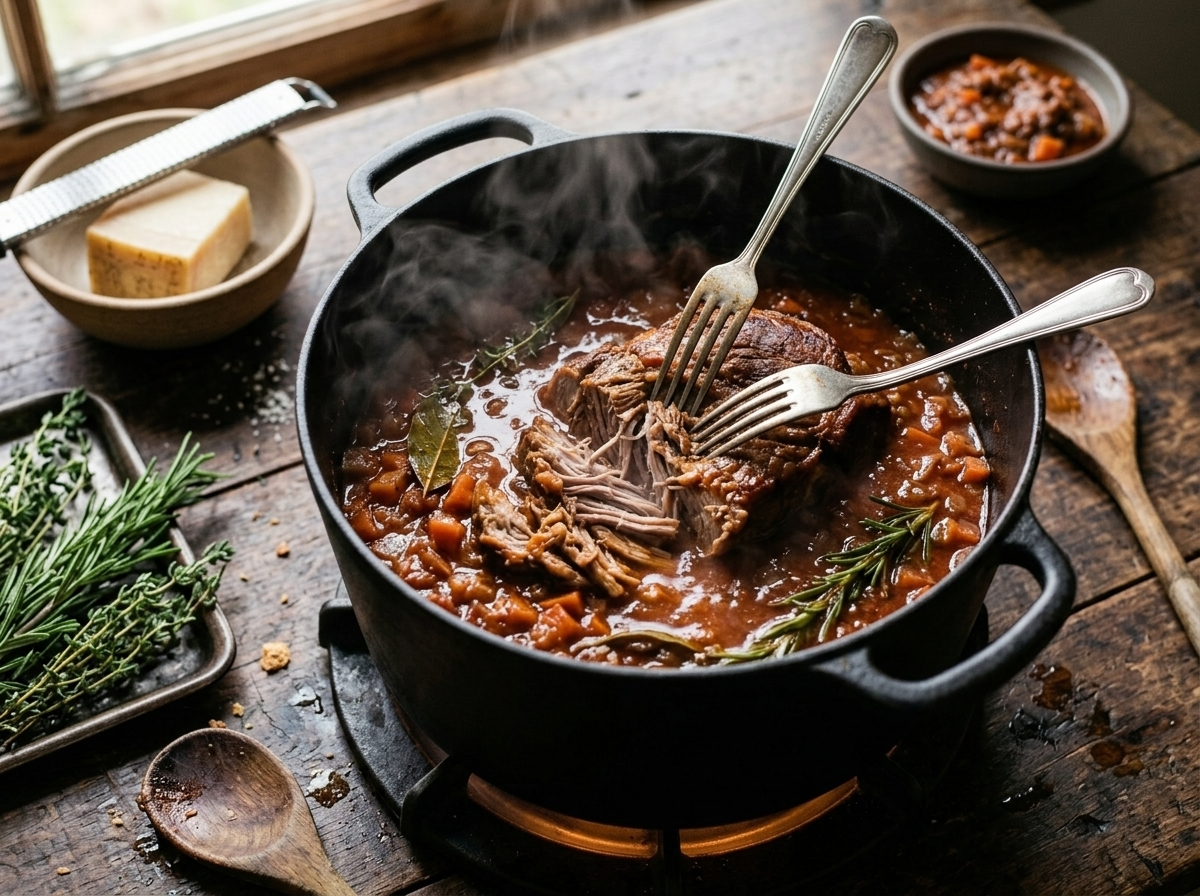
- Use two forks to shred the pork directly in the pot, pulling it into uneven chunks and strands. Stir everything together so the meat is coated in the sauce.
- Taste and adjust salt. Rest uncovered for 15 minutes before serving - the sauce thickens noticeably.
Notes
Tips for Success
- Pat the pork completely dry before searing – surface moisture causes steaming instead of browning.
- Deglaze the pot with wine and scrape every brown bit off the bottom before adding tomatoes.
- Keep the oven at 150 C / 300 F – any hotter and the pork tightens instead of falling apart.
- Shred the pork directly in the pot and stir back through the sauce so every strand gets coated, the same technique used when pulling slow-roasted pork belly into its finishing glaze.
- Rest the finished ragu uncovered for 15 minutes before serving – it thickens noticeably as it cools slightly.
Variations
- Stir in 100 g chopped nduja with the soffritto for a spiced, smoky version with more heat.
- Swap red wine for equal parts white wine and fennel seed for a lighter, anise-forward sauce.
- Add one cinnamon stick and a pinch of allspice with the tomatoes for a Greek-style braised pork ragu.
Storage and Reheating
Refrigerate the ragu in an airtight container for up to 4 days. The fat will solidify on top overnight – lift it off or stir it back in when reheating, depending on how rich you want the sauce.
For freezing, cool completely and portion into zip-lock bags or airtight containers. Lay flat to freeze. It keeps for up to 3 months and defrosts overnight in the fridge.
Reheat gently in a wide saucepan over medium-low heat with a splash of water or stock to loosen the sauce. Stir occasionally until heated through, about 8 to 10 minutes. Avoid boiling – it can tighten the meat fibers.
Serving Suggestions
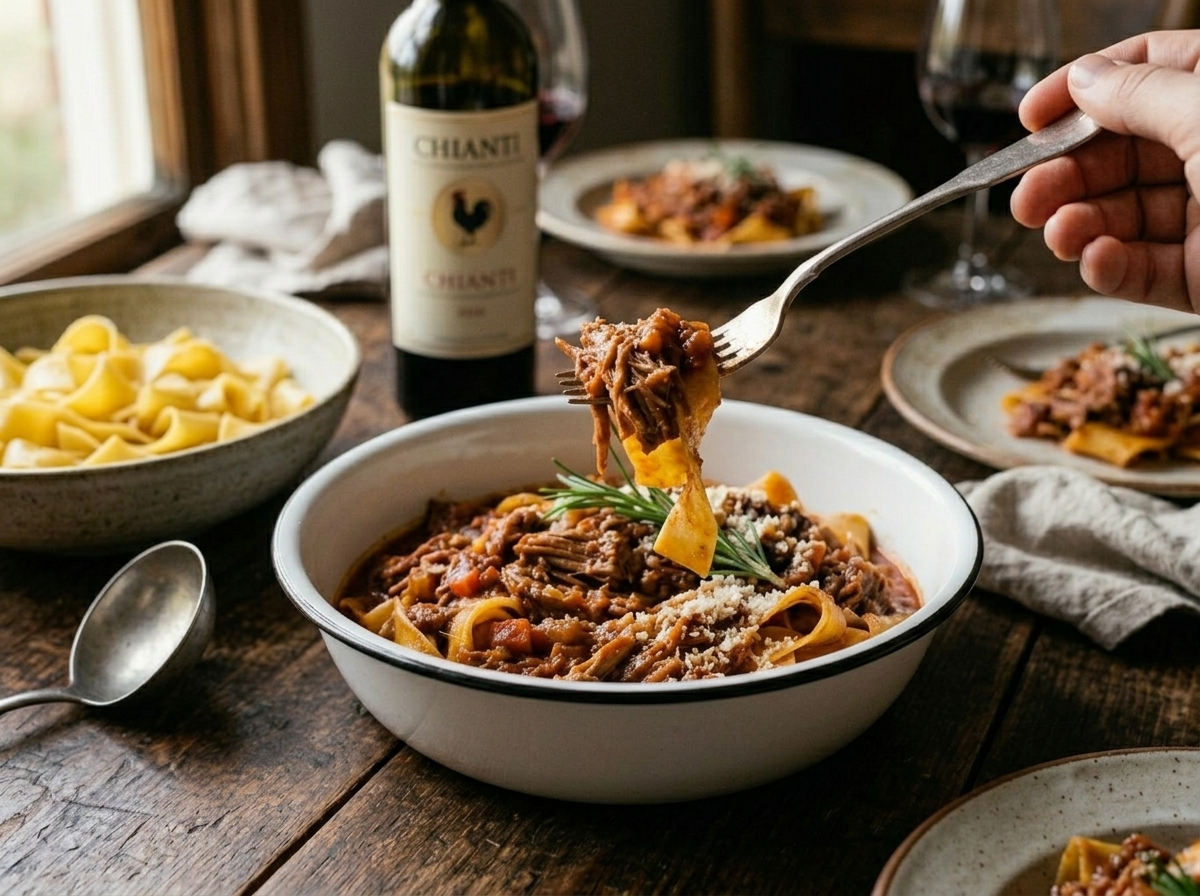
Pappardelle is the classic match – the wide, flat noodles catch the chunky sauce well. Rigatoni and penne rigate both work if that’s what you have. Cook the pasta al dente and finish it in the ragu pan with a ladle of pasta water so the sauce clings.
Polenta is the other strong option, much like serving a rich, creamy risotto base beneath a deeply flavored braise. A loose, butter-finished polenta under a generous heap of ragu with grated Pecorino on top is a proper cold-weather plate.
For something lighter, spoon the ragu over grilled or toasted sourdough and top with ricotta. It also works as a filling for baked pasta or lasagna if you have leftovers going into day three.
FAQ
Why is my pork shoulder ragu watery instead of thick?
The lid was likely on too tight during the braise, which traps steam and prevents reduction. In the last 30 to 45 minutes, remove the lid or leave it slightly ajar so the liquid can concentrate. You can also shred the pork, remove it temporarily, and simmer the sauce uncovered on the stovetop for 10 to 15 minutes.
Can I use pork leg instead of pork shoulder for this ragu?
Pork leg is leaner and doesn’t have the same fat-to-collagen ratio as shoulder, so it tends to dry out over a long braise. Shoulder is the right cut here. If you only have leg, reduce the cook time by about 45 minutes and check for doneness earlier.
Can I make this pork shoulder ragu in a slow cooker?
Yes – sear the pork and soffritto in a skillet first, then transfer everything to the slow cooker. Cook on low for 8 hours or high for 5 hours. The sauce will need a 15 to 20 minute reduction on the stovetop afterward since slow cookers don’t allow evaporation.
What pasta shape works best with a chunky pork ragu like this?
Pappardelle is the most traditional pairing because the wide ribbons hold up to the weight of shredded pork. Rigatoni is a close second – the ridges and hollow center trap the sauce. Avoid thin pasta like spaghetti or angel hair, which gets overwhelmed by the texture.
Is slow roasted pork shoulder ragu gluten-free?
The ragu itself contains no gluten – pork, tomatoes, wine, and aromatics are all naturally gluten-free. Just verify your stock and canned tomatoes have no added starch or wheat. Serve over gluten-free pasta or polenta to keep the whole dish gluten-free.
How is pork shoulder ragu different from a Bolognese?
Bolognese uses finely ground beef (sometimes with pork and veal) and is typically finished with milk or cream, giving it a lighter, finer texture. Pork shoulder ragu is a braise – a large cut cooked whole and then shredded – which produces chunkier, more rustic texture and a deeper, wine-forward sauce.
More from the kitchen
About The Author

John
John Watson is the passionate food enthusiast behind MePlusFood.com. With a deep love for exploring culinary delights, he shares honest restaurant reviews, mouthwatering recipes, and culinary adventures. Join John on his flavorful journey to savor the world one bite at a time.