Sea Bass with Ginger Scallion Oil: Crispy Skin, Fast
Jump to Recipe
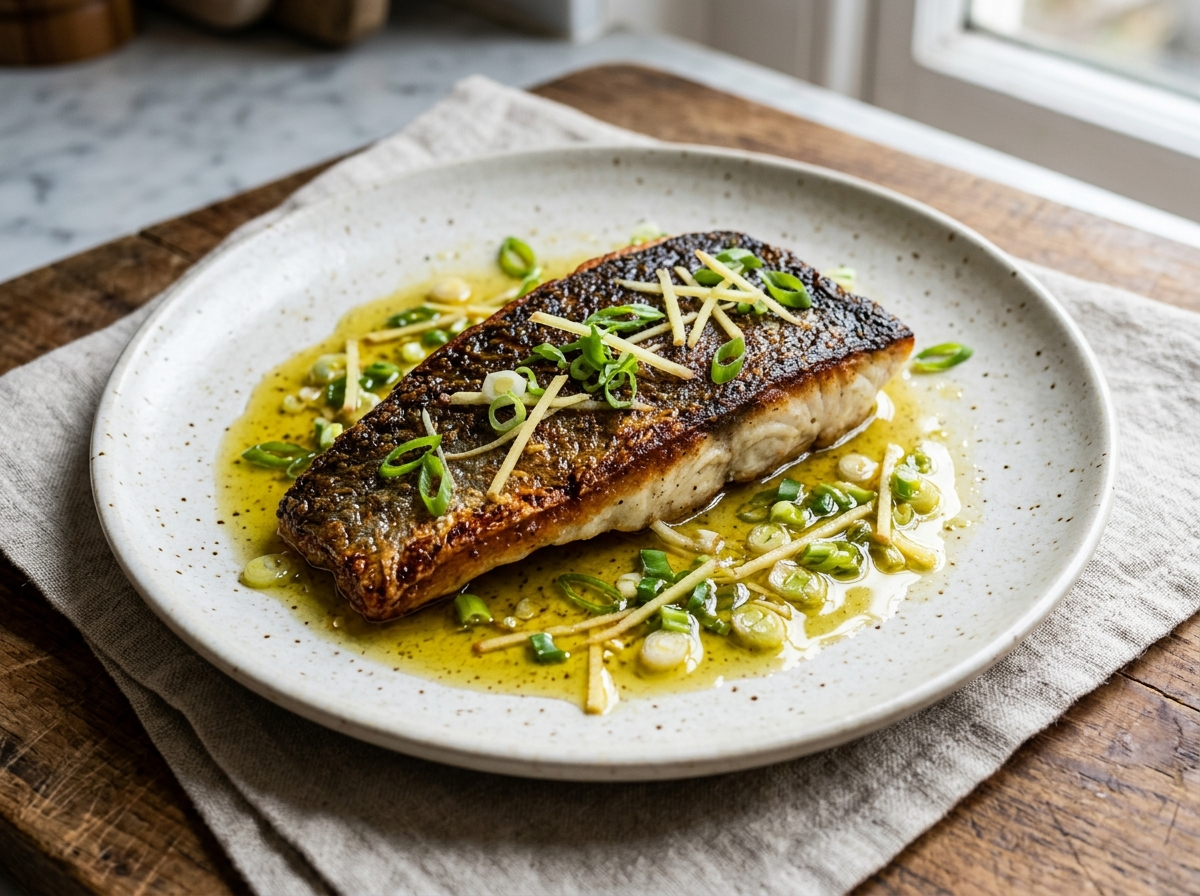
Crispy sea bass with ginger scallion oil is a pan-seared fillet, in the same spirit as our seared tuna with wasabi avocado cream, with skin cooked in a dry hot skillet until it turns brittle and shatters, then finished with a hot pour of oil steeped in ginger and scallion. The whole dish comes together in about 30 minutes, most of it hands-off while the oil steeps.
The trick to crackling skin is moisture control. Pat the fillets dry with paper towels twice, season only the flesh side, and don’t touch the pan until the skin actually releases on its own, usually around 4 minutes.
Skip the pan too early and you’ll tear the skin instead of lifting a crisp sheet off cleanly. That’s the one failure mode I see most, impatience with the first flip.
The ginger scallion oil takes minutes but does the heavy lifting on flavor. Hot oil poured over raw ginger and scallion cooks them just enough to soften the bite while keeping the aroma sharp.
Why You’ll Love This Recipe
- Skin turns glassy and crisp in one dry skillet
- Ginger scallion oil takes 5 minutes, no simmering required
- One pan, minimal cleanup for a weeknight dinner
- Naturally low-carb and high-protein without any breading
Ingredient Notes
- Sea bass fillets: Look for skin-on fillets of even thickness. Branzino or striped bass work as a swap without changing the timing much.
- Fresh ginger: Julienne it fine so it cooks through when the hot oil hits it. Ground ginger won’t work here.
- Scallions: Keep whites and greens separate. Whites go in with the raw ginger, greens get stirred in after for color and bite.
- Neutral oil: Grapeseed or avocado oil handles high heat without smoking. Olive oil scorches before the skin crisps.
- Soy sauce: Regular soy sauce works fine. Swap in tamari if you need the dish gluten free.
- Toasted sesame oil: Adds a nutty background note in a small amount. Raw sesame oil tastes flatter and won’t do the same job.
Sea Bass with Ginger Scallion Oil: Crispy Skin, Fast
Ingredients
Method
- Pat sea bass fillets dry with paper towels, then pat again right before cooking. Season the flesh side with salt and white pepper, leaving the skin bare.
- Put the julienned ginger and scallion whites in a heatproof bowl.
- Heat the 1/3 cup neutral oil in a small saucepan until shimmering, about 375 F / 190 C, then pour it over the ginger and scallion whites. It should sizzle loudly for a few seconds.
- Stir in the soy sauce, sesame oil, sugar and scallion greens. Set aside to steep while you cook the fish.
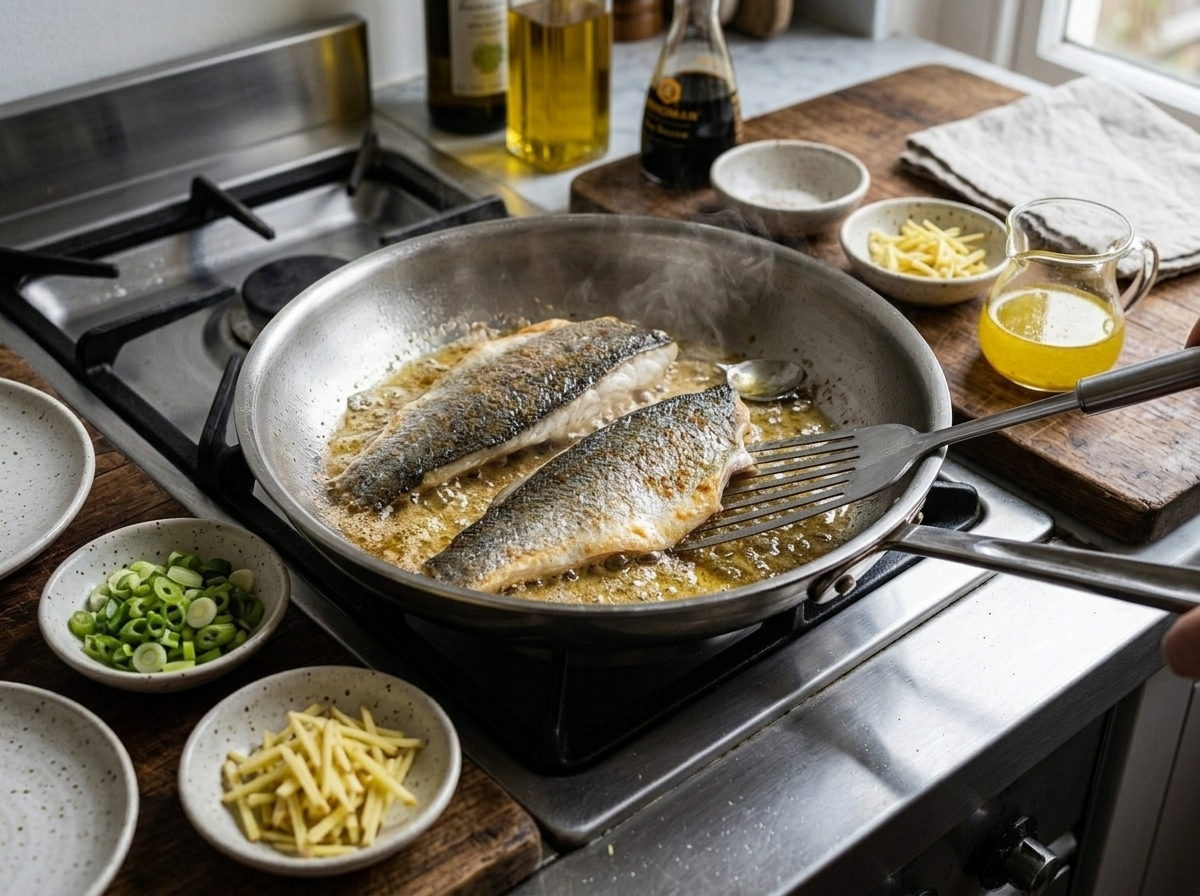
- Heat 2 tbsp neutral oil in a 10-inch skillet over medium-high heat until it shimmers.
- Lay the fillets skin-side down, pressing flat with a fish spatula for 30 seconds so the skin doesn't curl.
- Cook undisturbed for 4 to 5 minutes until the skin is crisp and releases cleanly from the pan.
- Flip and cook flesh-side down for 2 to 3 minutes, until the fish is opaque throughout, flakes easily with a fork, and reaches 145 F / 63 C at the thickest point.
- Rest the fish for 2 minutes, then plate skin-side up and spoon the warm ginger scallion oil over each fillet.
Notes
- Score skin lightly if fillets curl during searing.
- Don't crowd the pan, sear in batches if needed.
- Reserve extra ginger scallion oil for noodles or steamed vegetables.
- Rest fish 2 minutes off heat before saucing to keep juices in.
Tips for Success
- Pat the sea bass fillets bone-dry with paper towels twice before seasoning to help the skin crisp instead of steam, the same trick that works for the grilled mackerel with gooseberry sauce.
- Use a stainless or heavy nonstick skillet and wait until a drop of water sizzles before adding the fish.
- Press the fillets flat with a fish spatula for the first 30 seconds so the skin doesn’t curl or bubble up.
- Heat the oil for the ginger scallion mix until it shimmers, around 375 F / 190 C, before pouring it over the ginger.
- Check doneness with an instant-read thermometer at the thickest point rather than guessing by color alone.
Variations
- Swap sea bass for branzino or striped bass fillets of similar thickness, keeping the same sear time.
- Add a spoon of chili crisp to the finished oil for a spicier, smokier ginger scallion sauce.
- Steam the fillets instead of searing for a softer texture, then still finish with the hot ginger scallion oil.
Storage and Reheating
Store cooked sea bass in an airtight container in the fridge for up to 2 days. Keep the ginger scallion oil in a separate sealed jar for up to 5 days, it actually mellows nicely as it sits.
Reheat the fish in a 300 F / 150 C oven for 8 to 10 minutes, just until warmed through. Skip the microwave, it turns the crisp skin soft and a little rubbery.
Warm the oil gently in a small pan or for a few seconds in the microwave before spooning it back over the reheated fillets.
Serving Suggestions
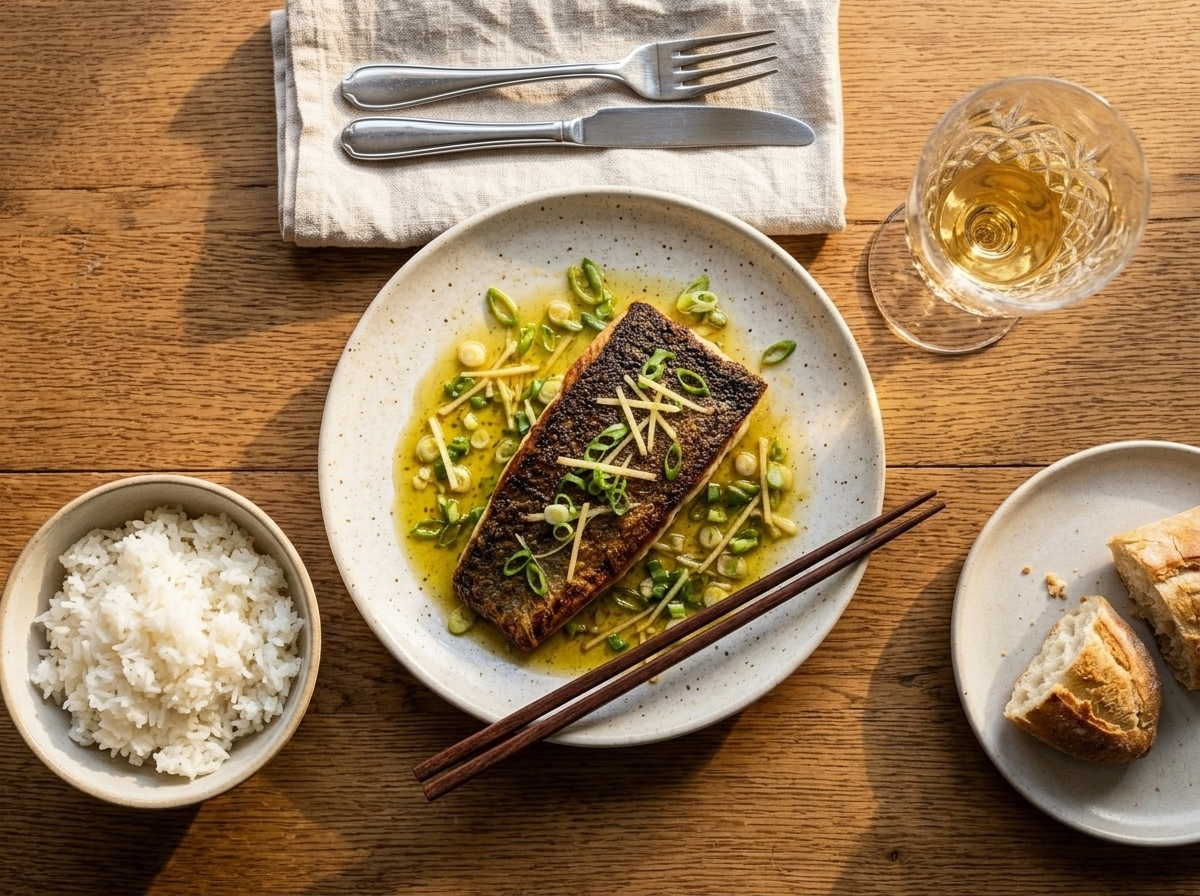
Steamed jasmine rice is the natural base here since it soaks up the extra oil pooling on the plate. Blistered bok choy or snap peas add crunch alongside the soft fish.
A quick cucumber salad with rice vinegar cuts the richness of the oil. For a heartier plate, spoon the leftover ginger scallion oil over garlic noodles as a side.
FAQ
Why isn’t my sea bass skin getting crispy?
Wet skin is the most common cause. Pat the fillets dry twice, once when you season and again right before they hit the pan, and make sure the oil is shimmering before adding the fish. A pan that’s not hot enough steams the skin instead of crisping it, so wait for that sizzle first.
Can I use salmon or branzino instead of sea bass for this recipe?
Branzino works well since it has similar thickness and skin texture, and striped bass is another good stand-in. Salmon, like the fillets in our maple soy glazed salmon bowl, works too but its thicker skin needs an extra minute or two per side. Keep the same dry-pan method and pull the fish once it hits 145 F / 63 C and flakes easily.
Can I make the ginger scallion oil ahead of time?
Yes, the oil keeps in the fridge for up to 5 days in a sealed jar. The ginger and scallion mellow a bit as they sit, which some cooks prefer. Bring it to room temperature or warm it gently before spooning over the hot fish so it doesn’t cool the fillet down.
What goes well with crispy sea bass and ginger scallion oil?
Steamed jasmine rice is the classic base since it soaks up the extra oil well. Blistered bok choy or snap peas add crunch, and a cucumber salad with rice vinegar cuts the richness. For a heartier plate, add a side of garlic noodles.
Is crispy sea bass with ginger scallion oil gluten free?
Not as written, because regular soy sauce contains wheat. Swap in tamari or a certified gluten-free soy sauce and the dish becomes gluten free without changing the flavor. Everything else, the sea bass, ginger, scallion and oil, is naturally gluten free.
What’s the difference between this ginger scallion oil and the sauce used for scallion oil noodles?
They’re close cousins. Scallion oil noodle sauce usually skips the fresh ginger and leans more on dark soy and sugar for a sweeter, deeper color, while this version keeps ginger front and center and stays lighter in color. Both use the same hot-oil-over-aromatics technique.
Loved this? Try these next
About The Author

John
John Watson is the passionate food enthusiast behind MePlusFood.com. With a deep love for exploring culinary delights, he shares honest restaurant reviews, mouthwatering recipes, and culinary adventures. Join John on his flavorful journey to savor the world one bite at a time.