Saffron Mussel and Fennel Stew
Jump to Recipe
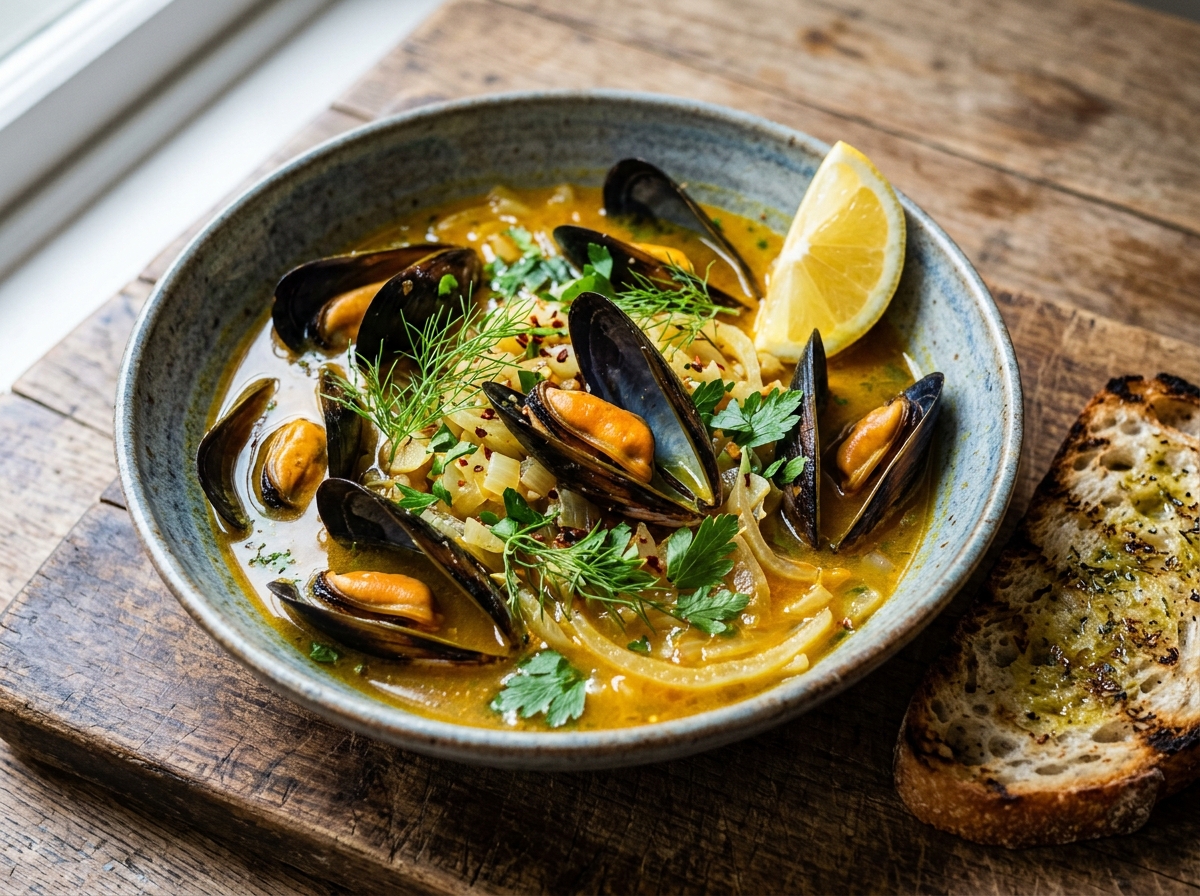
Mussels cook fast, which makes them one of the most practical proteins for a weeknight pot. The real work here is the broth: fennel, shallots, garlic, saffron, and white wine layered together before the mussels go in.
Saffron sounds fussy, but a small pinch steeped in warm water for 10 minutes does everything. It shifts the broth from pale to deep gold and adds a faint floral note that pairs well with the anise character of the fennel.
This stew eats like a full meal. The broth is rich enough to soak into bread, and the mussels provide real substance without heaviness. I add a splash of cream at the end to round out the acidity from the wine.
Clean, discard any mussels that don’t close before cooking and any that don’t open after. That’s the only non-negotiable step in this recipe.
Why You’ll Love This Recipe
- One pot, minimal cleanup, full restaurant-quality broth
- Mussels cook in under 5 minutes inside the pot
- Saffron and fennel broth is fragrant without being heavy
- Naturally gluten-free and dairy-free without the cream splash
Ingredient Notes
- Mussels: Buy live mussels the day you cook them and store in a bowl covered with a damp cloth. Discard any with cracked shells or any that stay open when tapped.
- Saffron: A small pinch, about 20 threads, is enough for 4 servings. Steep in 3 tablespoons of warm water for at least 10 minutes before adding to the pot.
- Fennel bulb: Slice thin so it softens fully in the cooking time. Save the feathery fronds for garnish – they add a fresh anise note at the table.
- Dry white wine: Use something you’d drink, like a Pinot Grigio or Muscadet. Avoid anything labeled ‘cooking wine’ – the salt content throws off the seasoning.
- Heavy cream: Optional, but a 2-tablespoon splash added just before serving rounds the acidity. Leave it out to keep the dish dairy-free.
- Shallots: Shallots melt into the base more cleanly than onion and keep the broth from going cloudy. One medium onion works if that’s what you have.
Saffron Mussel and Fennel Stew
Ingredients
Method
- Combine saffron threads and 3 tablespoons of warm (not boiling) water in a small bowl. Let steep for at least 10 minutes - the water should turn deep orange.
- Rinse mussels under cold running water. Scrub off any barnacles with a stiff brush and pull off any beards by tugging sharply toward the hinge. Discard any mussels with cracked shells or any that don't close when tapped firmly.
- Heat olive oil and butter in a wide Dutch oven over medium heat until the butter foams and subsides.
- Add shallots and fennel with a pinch of salt. Cook, stirring occasionally, for 8 minutes until both are soft and the fennel edges are just starting to turn golden.
- Add garlic and stir for 90 seconds until fragrant but not browned.
- Pour in the white wine and let it bubble and reduce by half, about 3 minutes.
- Add fish stock, crushed tomatoes, and the saffron-steeped water (threads and all). Stir to combine, bring to a gentle simmer, and cook uncovered for 5 minutes to let the flavors come together.
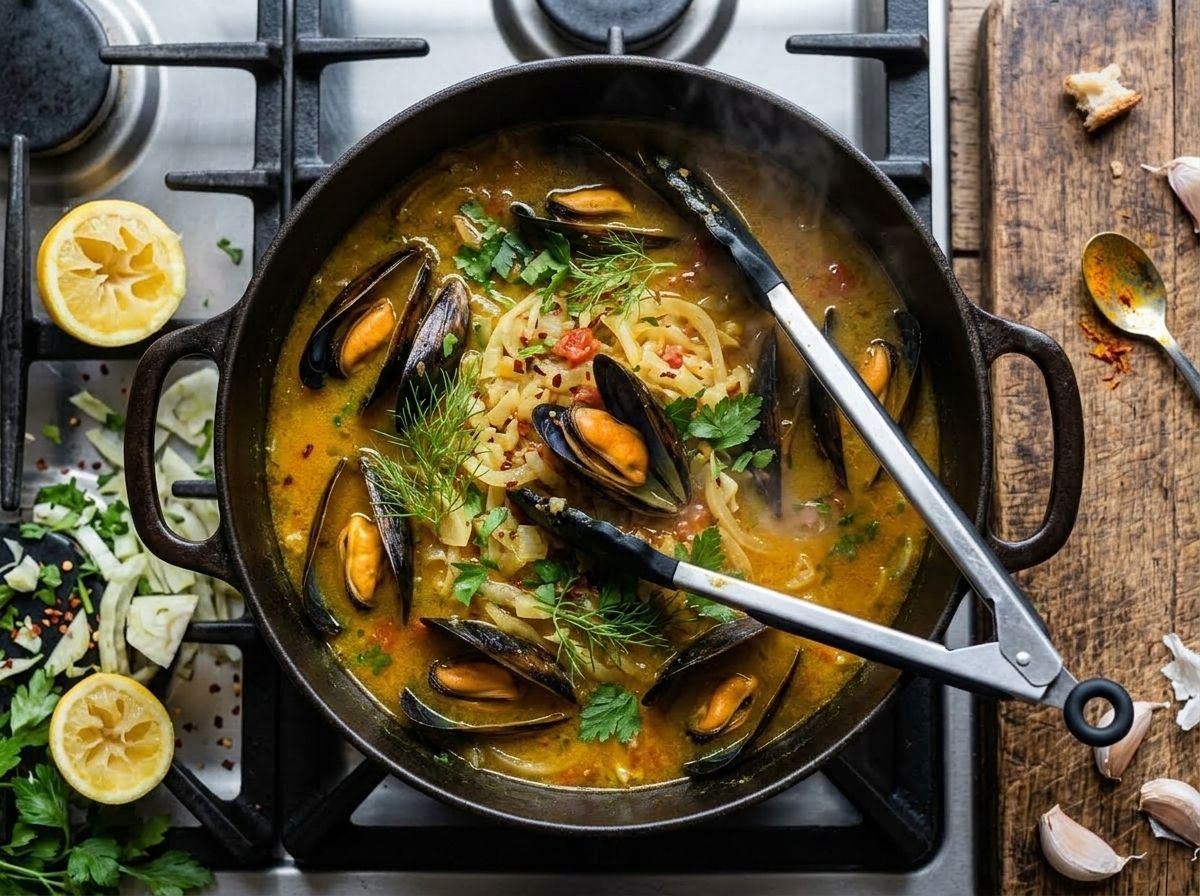
- Increase heat to medium-high so the broth is actively simmering. Add all the cleaned mussels in a single layer as much as possible. Cover the pot immediately with a tight-fitting lid.
- Cook for 4 to 6 minutes, lifting the lid at the 4-minute mark to check. Remove opened mussels with tongs to a warm bowl and replace the lid. Continue cooking until remaining mussels open, up to 7 minutes total. Discard any that haven't opened.
- Remove the pot from heat. If using cream, stir it in now off the heat. Taste the broth and adjust salt - keep in mind the mussels have added brine.
- Return all mussels to the pot or divide into deep bowls. Ladle broth and fennel over the top. Scatter parsley and reserved fennel fronds over each bowl. Serve with lemon wedges alongside.
Notes
Tips for Success
- Steep saffron threads in warm water for 10 full minutes before adding to extract full color and aroma.
- Slice fennel no thicker than 3 mm so it softens completely in the 8-minute sauté window.
- Add mussels only when the broth is actively simmering, then cover immediately to trap steam.
- Check the pot at 4 minutes and pull opened mussels so they don’t overcook while stragglers finish.
- Season the broth before adding mussels – mussels release brine as they cook, so adjust salt only at the end.
Variations
- Add 1 teaspoon smoked paprika and a pinch of cayenne for a Spanish-style broth with heat.
- Swap mussels for a mix of clams and shrimp – adjust cooking time down by 1 minute for the shrimp.
- Stir in a 400 g can of crushed tomatoes with the wine for a tomato-saffron base closer to a bouillabaisse.
Storage and Reheating
Store leftover stew in an airtight container in the fridge for up to 2 days. Keep the mussels in their shells – removing them speeds up drying.
Reheat gently in a covered saucepan over medium-low heat until the broth is steaming, about 4 minutes. Do not boil or the mussel meat turns rubbery.
This stew does not freeze well. The mussel texture breaks down on freezing, and the saffron broth separates on thawing.
Serving Suggestions
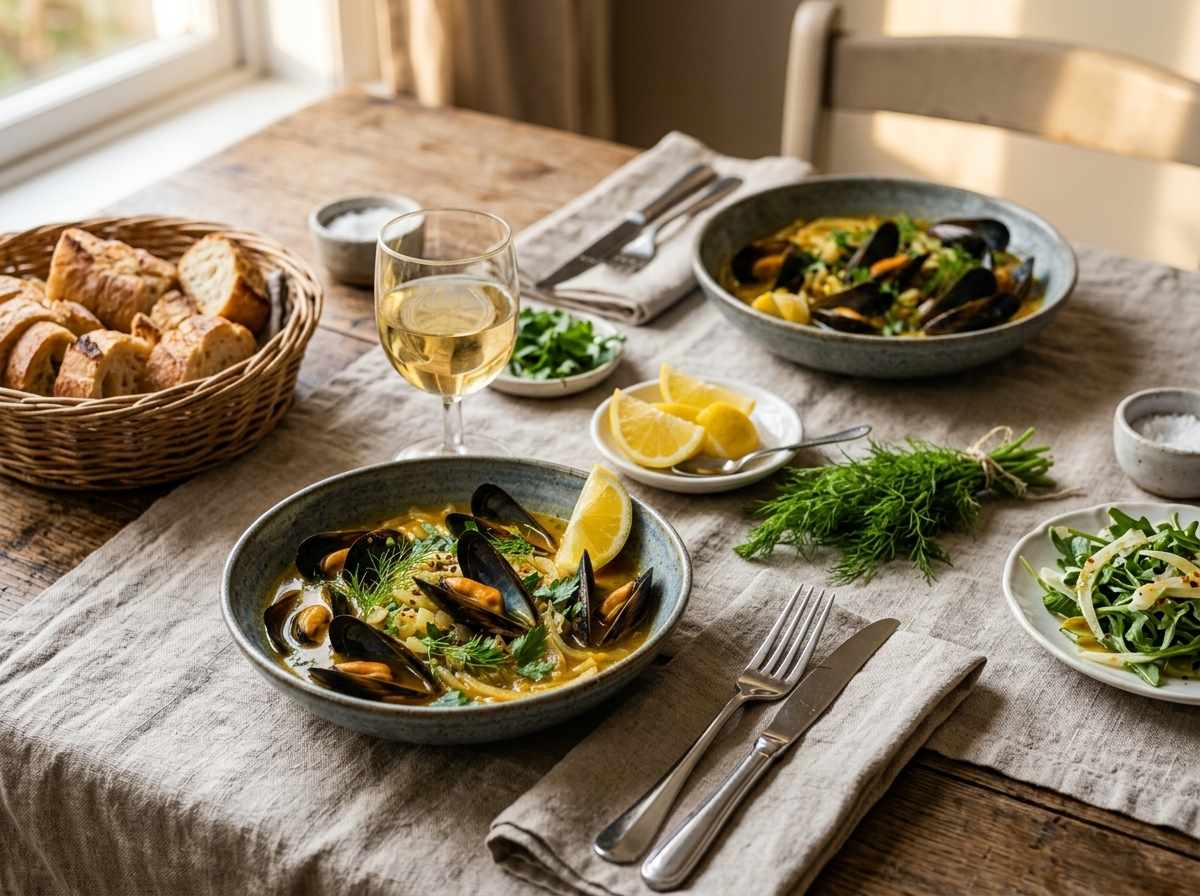
A thick slice of grilled sourdough or a baguette is the natural pairing – the bread absorbs the saffron broth so none of it goes to waste. Rub the bread with a halved garlic clove before grilling if you want extra flavor.
A simple green salad with a sharp lemon vinaigrette works well alongside, cutting through the richness of the broth. Keep the salad undressed until the last minute so it stays crisp against the warm stew.
For a more substantial spread, serve the stew over a shallow mound of soft polenta or alongside steamed new potatoes. Both absorb the broth well and turn the dish into a heartier meal for colder evenings.
FAQ
Why is my saffron mussel stew broth pale instead of golden?
The saffron needs time to steep before it releases its pigment. If you add the threads directly to the pot without pre-steeping in warm water, the color stays faint. Steep for at least 10 minutes in about 3 tablespoons of warm water before adding.
Can I use frozen mussels instead of fresh in this stew?
You can use pre-cooked frozen mussels on the half shell, but they need much less time – add them in the last 2 minutes just to heat through. The broth won’t pick up as much natural brine, so taste and adjust salt accordingly.
How do I know when the mussels are done cooking in the pot?
A mussel is cooked when its shell has opened wide. Start checking at 4 minutes after covering the pot, and remove opened mussels with tongs while any stubborn ones finish. Discard any that refuse to open after 7 minutes.
What can I use instead of fennel bulb in this saffron stew?
Thinly sliced celery is the closest substitute – it has a mild savory note but lacks the anise flavor fennel brings. A teaspoon of fennel seeds toasted in the pan with the shallots adds the aromatic element back if you can’t find the bulb.
Is saffron mussel and fennel stew gluten-free?
Yes, the stew itself contains no gluten-containing ingredients. Just check your white wine and any stock you use, as some brands add agents that contain gluten. Serve with gluten-free bread or polenta to keep the whole meal gluten-free.
What white wine works best for a saffron and mussel broth?
A dry, crisp white like Muscadet, Pinot Grigio, or Vermentino works best – they add acidity without overpowering the saffron. Avoid oaky Chardonnay, which competes with the fennel and makes the broth taste heavy.
About The Author

John
John Watson is the passionate food enthusiast behind MePlusFood.com. With a deep love for exploring culinary delights, he shares honest restaurant reviews, mouthwatering recipes, and culinary adventures. Join John on his flavorful journey to savor the world one bite at a time.