Sticky Oven-Baked Honey Garlic Glazed Spare Ribs
Jump to Recipe
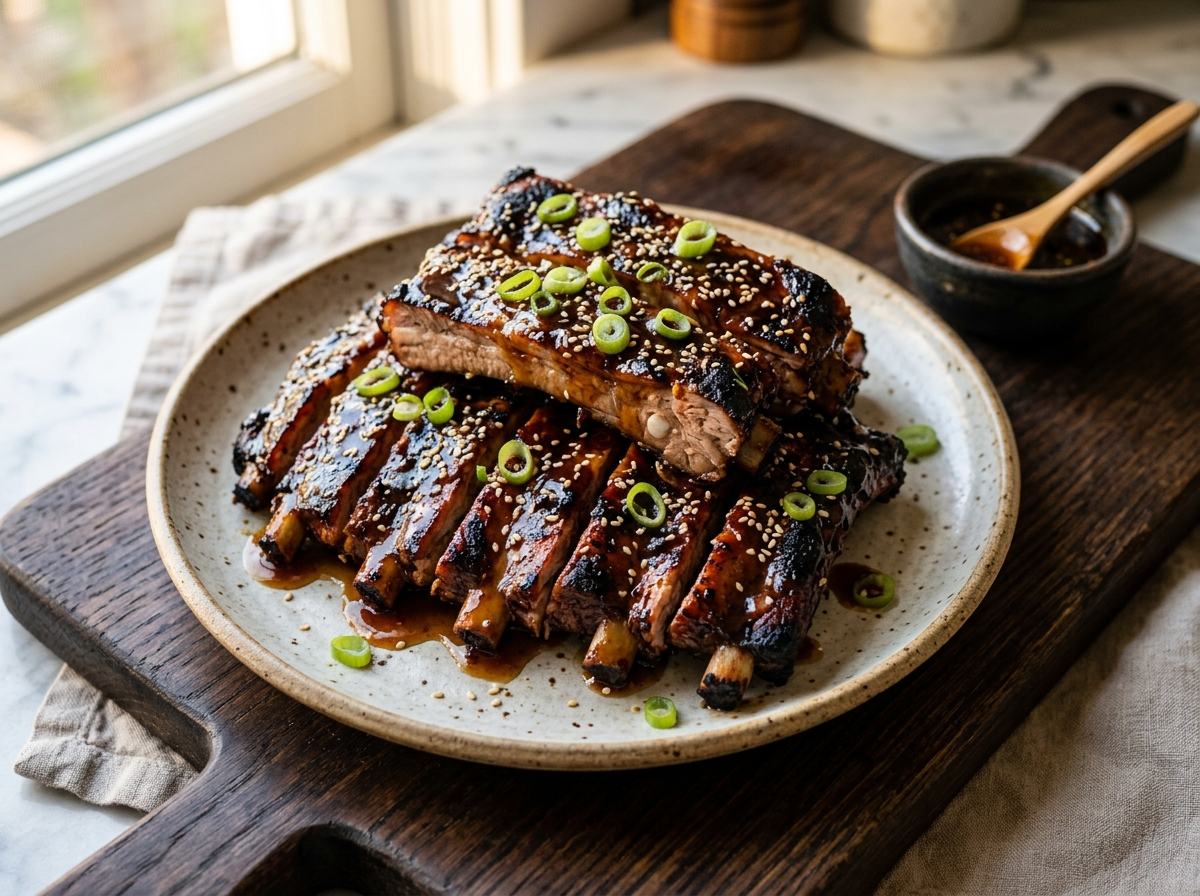
Honey garlic glazed spare ribs get their sticky, caramelized crust from braising the rack low and slow, then brushing on a honey soy garlic sauce and finishing under high heat until the edges char.
The braise does the heavy lifting here. Two hours covered in foil breaks down the connective tissue in spare ribs until the meat pulls back from the bone, and you don’t need a smoker or a grill to get there.
I glaze in two coats instead of one. The first layer soaks into the meat as it starts to caramelize, and the second goes on right before the ribs come out so the glaze stays glossy instead of burning.
One thing that trips people up: pulling the ribs too early. If the meat hasn’t pulled back at least a quarter inch from the bone ends after 2 hours, give it another 15 to 20 minutes covered before you glaze.
Why You’ll Love This Recipe
- No smoker or grill needed, just an oven and a baking sheet
- Two-coat glaze keeps the edges glossy instead of burnt
- Braise time does most of the work while you’re free
- Leftovers reheat well and taste just as sticky
Ingredient Notes
- Spare ribs: Ask the butcher to remove the membrane, or pull it off yourself with a paper towel for grip. Baby back ribs work too but cook faster.
- Honey: Gives the glaze its stickiness and helps it caramelize under high heat. Maple syrup works in a pinch but tastes noticeably different.
- Soy sauce: Adds the salty backbone to balance the honey. Use tamari for a gluten-free version, same amount.
- Fresh ginger: Grate it fine so it melts into the glaze rather than leaving stringy bits. Ground ginger works at half the amount if that’s what you have.
- Ketchup: Rounds out the glaze with a little tang and helps it thicken faster. Tomato paste plus a splash of vinegar is a fine substitute.
Sticky Oven-Baked Honey Garlic Glazed Spare Ribs
Ingredients
Method
- Heat oven to 150 C / 300 F. Line a rimmed baking sheet with foil.
- Pat ribs dry, remove the membrane from the bone side if still attached, and season both sides with salt, pepper, and garlic powder.
- Place ribs bone-side down on the sheet, cover tightly with a second sheet of foil, and bake for 2 hours until the meat has pulled back from the bone ends and a paring knife slides in with little resistance.
- While the ribs bake, whisk honey, soy sauce, minced garlic, grated ginger, rice vinegar, ketchup, and sesame oil in a small saucepan.
- Bring to a simmer over medium heat and cook 5 to 6 minutes, stirring, until it thickens slightly and coats the back of a spoon.
- Remove ribs from the oven, uncover, and raise oven temperature to 220 C / 425 F.
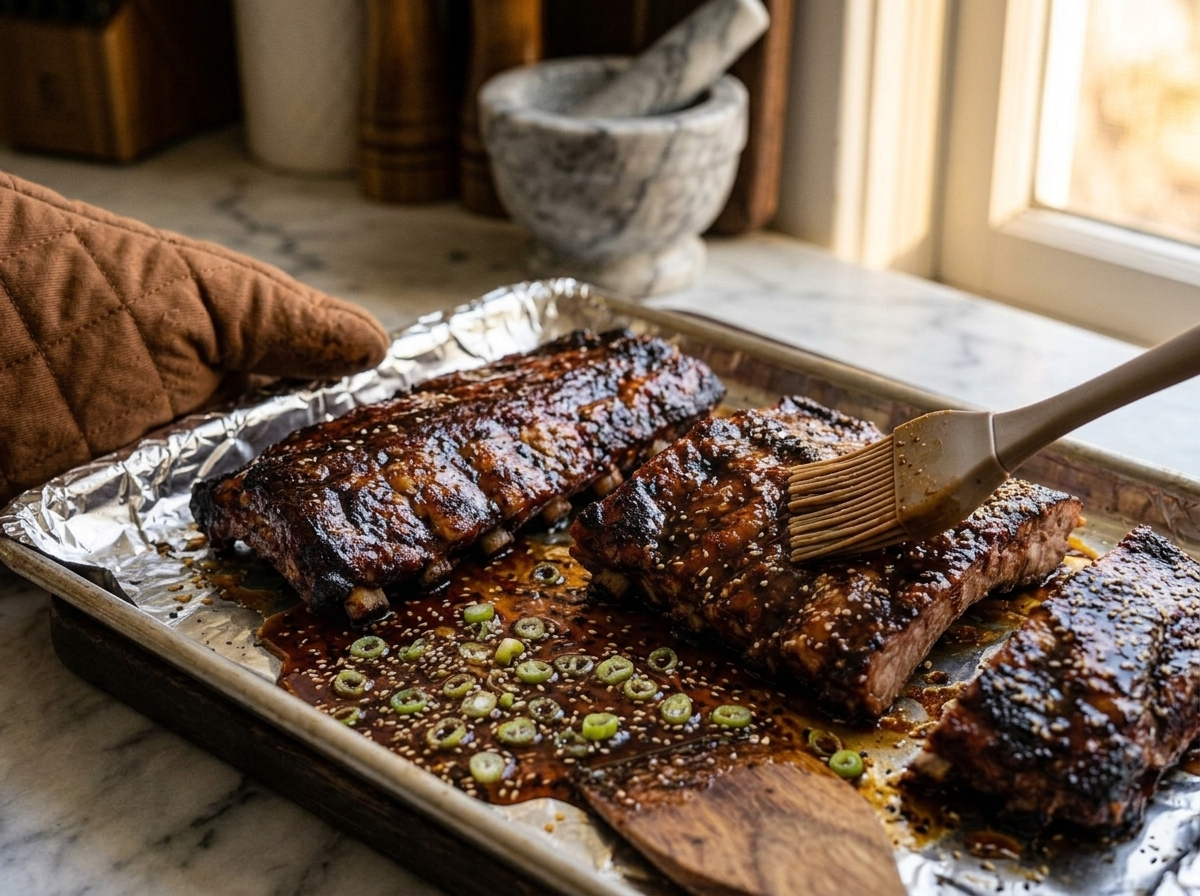
- Brush ribs generously with half the glaze, return to the oven uncovered, and cook 10 minutes.
- Flip, brush with remaining glaze, and cook 8 to 10 minutes more until the edges are sticky and charred in spots and internal temp reads 90 C / 195 F.
- Rest 5 minutes, slice between the bones, and spoon any extra glaze from the pan over the top before serving.
Notes
- Remove the membrane from the ribs for better glaze absorption.
- Do not skip the covered braise, it's what makes the meat tender.
- Simmer glaze until it thickens slightly before brushing onto ribs.
- Use low-sodium soy sauce to control the saltiness of the glaze.
Tips for Success
- Remove the thin membrane from the back of the ribs before seasoning, or the glaze can’t penetrate and the meat turns chewy.
- Pat the ribs completely dry before rubbing with salt and garlic powder so the seasoning sticks instead of sliding off.
- Simmer the glaze until it coats the back of a spoon, about 5 to 6 minutes, so it clings to the ribs.
- Brush the glaze in two coats, once before broiling and again halfway through, to build stickiness without burning the sugar.
- Check for doneness by looking at the bone ends. If they’ve pulled back a quarter inch and internal temp reads 90 C / 195 F, they’re ready.
Variations
- Add 1/2 tsp Chinese five-spice powder to the glaze for a warmer, more aromatic version closer to char siu.
- Swap half the honey for gochujang and cut the soy sauce slightly for a spicy-sweet Korean-style glaze.
- Finish the glazed ribs on a hot grill for 3 to 4 minutes per side instead of broiling for extra char.
Storage and Reheating
Honey garlic glazed spare ribs keep well in the fridge for up to 4 days in an airtight container. Let them cool to room temperature first so the glaze doesn’t sweat and turn watery.
To reheat, cover with foil and warm in a 160 C / 325 F oven for 15 to 20 minutes, then uncover for the last 5 minutes to re-crisp the glaze. Microwaving works in a pinch, though the edges won’t stay as sticky.
Freeze cooked ribs for up to 2 months. Thaw overnight in the fridge before reheating in the oven, not the microwave, so the meat doesn’t turn stringy.
Serving Suggestions
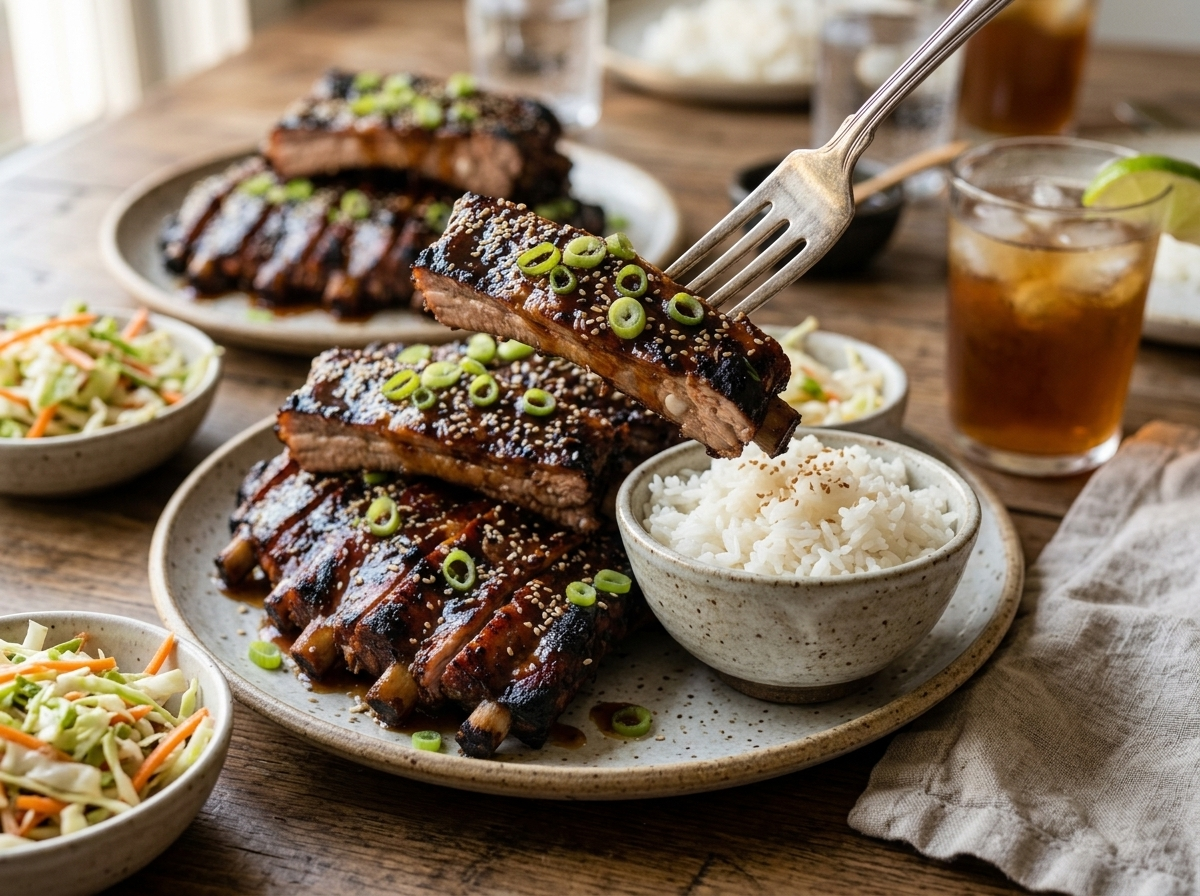
Honey garlic glazed spare ribs eat like a full meal with something crunchy on the side to cut the sweetness. I go for a simple apple slaw with rice vinegar and scallions, or steamed jasmine rice to soak up the extra glaze.
Grilled corn or roasted bok choy round out the plate without competing with the sauce. For a casual spread, add pickled cucumbers and a cold beer.
Leftover ribs also work pulled off the bone and tossed into fried rice or a beef bulgogi rice bowl the next day.
FAQ
Why are my honey garlic spare ribs tough instead of falling off the bone?
Tough ribs usually mean they came out too early. Spare ribs need to braise covered until they hit around 90 C / 195 F internally and the meat pulls back from the bone ends, which takes about 2 hours at 150 C / 300 F. If they’re still tight to the bone, cover and bake 15 to 20 minutes more.
Can I use baby back ribs instead of spare ribs for this honey garlic glaze?
Yes, baby back ribs work with the same glaze, but they’re leaner and cook faster. Check them at 1.5 hours covered instead of 2, since they can dry out if left in as long as spare ribs. The glazing and broiling step stays exactly the same.
Can I make the honey garlic glaze ahead and store it?
Yes, the glaze keeps in a sealed jar in the fridge for up to a week. Make it while the ribs braise or several days earlier, then rewarm it slightly so it brushes on smoothly instead of sitting thick and cold on the meat.
What goes well with honey garlic glazed spare ribs at a weeknight dinner?
Steamed rice or a crunchy slaw balances the sweetness of the glaze best. Grilled corn, roasted bok choy, or pickled cucumbers work too if you want something with acid to cut through the honey. Keep sides simple since the ribs carry most of the flavor.
Is this honey garlic spare ribs recipe gluten free?
Not as written, since regular soy sauce contains wheat. Swap it for tamari or a certified gluten-free soy sauce in the same amount, and the rest of the glaze stays exactly the same, no other changes needed.
What’s the difference between honey garlic ribs and Chinese char siu ribs?
Honey garlic ribs lean sweeter and simpler, built mostly on honey, soy sauce, and garlic without the five-spice, hoisin, and fermented bean curd that give char siu its deep color and funkier flavor. Char siu also usually gets a longer marinade before cooking rather than a glaze brushed on near the end.
Related recipes
About The Author

John
John Watson is the passionate food enthusiast behind MePlusFood.com. With a deep love for exploring culinary delights, he shares honest restaurant reviews, mouthwatering recipes, and culinary adventures. Join John on his flavorful journey to savor the world one bite at a time.