Easy Baked Blueberry Lemon Dutch Baby in One Skillet
Jump to Recipe
Blueberry lemon Dutch baby is a baked skillet pancake made from a thin egg-and-milk batter that puffs up the sides of a hot buttered pan in 18 to 20 minutes. Lemon zest in the batter and a cup of blueberries on top keep it bright instead of heavy.
I bake it in a 26 cm / 10-inch cast-iron skillet at 220 C / 425 F, and the pan goes into the oven empty while it heats. That hot metal is what crisps the edges and sends them climbing.
Keep the oven door shut for the first 18 minutes. Open it early and the steam escapes, so you end up with a flat, eggy pancake instead of a tall, custardy one.
It comes together in about 35 minutes, and the hands-on work is about 10 of those. The puff starts settling about 5 minutes after it leaves the oven, so slice it at the table.
Why You’ll Love This Recipe
- Blender batter, one skillet, and about 35 minutes start to finish
- Lemon zest keeps the eggy batter bright instead of heavy
- Crisp, deep golden edges with a soft, custardy center
- Frozen blueberries work, so it’s doable outside berry season
Ingredient Notes
- Eggs: Use room-temperature eggs so the batter doesn’t cool the hot pan. If yours are cold, set them in a bowl of warm tap water for 5 minutes before blending.
- Whole milk: I use whole milk for the richest custard. 2% works fine, while oat milk gives a slightly lower puff.
- All-purpose flour: Weigh it, since a scooped cup can run 20 g heavy and make the center dense. White whole wheat flour can replace up to half the amount.
- Blueberries: Fresh or frozen both work in the same 150 g amount. Use frozen berries straight from the freezer and swap in raspberries or sliced strawberries if you prefer.
- Lemon: One large lemon covers both the zest in the batter and the juice at the end. Zest it first, because a juiced lemon is hard to zest.
- Unsalted butter: Unsalted lets you control the salt. Salted butter works if you cut the salt in the batter to a pinch.
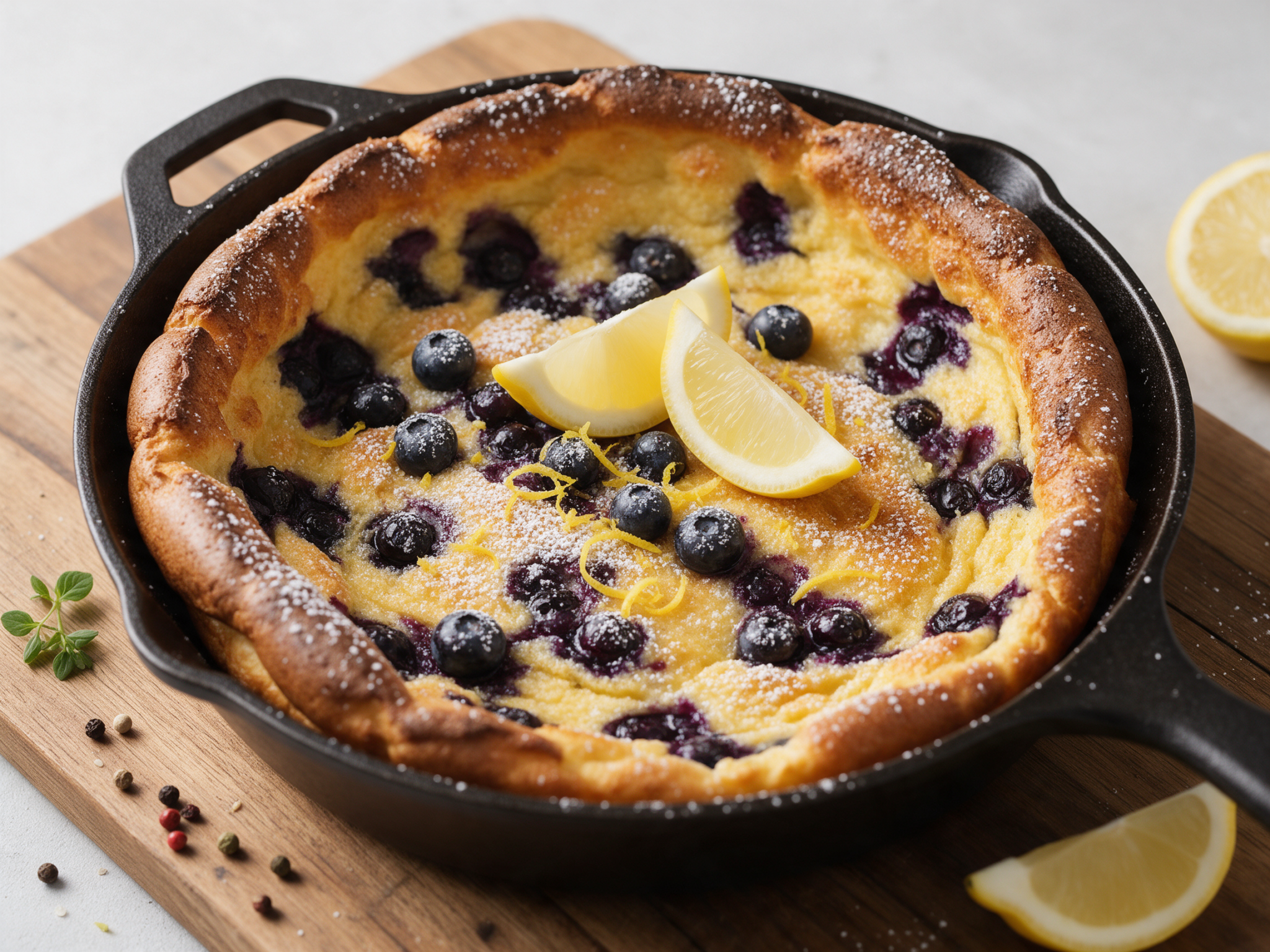
Easy Baked Blueberry Lemon Dutch Baby in One Skillet
Ingredients
Method
- Place a 26 cm / 10-inch cast-iron skillet on the middle oven rack and heat the oven to 220 C / 425 F. Leave the empty pan in for the full 15 minutes while you make the batter.
- Zest the lemon into a blender, then add the eggs, milk, flour, sugar, salt, and vanilla. Blend for 20 to 30 seconds until smooth with no flour pockets, then set the jar aside.
- Wearing oven mitts, pull the hot skillet out and add the butter. Swirl for 20 to 30 seconds until it melts and foams, coating the bottom and sides.
- Pour the batter into the center of the sizzling butter right away, scatter the blueberries over the top, and slide the skillet back into the oven.
- Bake for 18 to 20 minutes without opening the door, until the edges climb the sides and turn deep golden brown and the center is set and puffed.
- Squeeze 1 tbsp lemon juice over the top and dust with the powdered sugar. Cut into 4 wedges and serve from the skillet within 5 minutes, before the puff settles, leaving an oven mitt on the hot handle.
Notes
- Use a 26 cm / 10-inch oven-safe skillet, since a larger pan gives a thinner, crisper result.
- Keep the oven door shut for the first 18 minutes of baking.
- Zest the lemon before juicing it, because a juiced lemon is hard to zest.
- Serve within 5 minutes, since the puff settles as it cools.
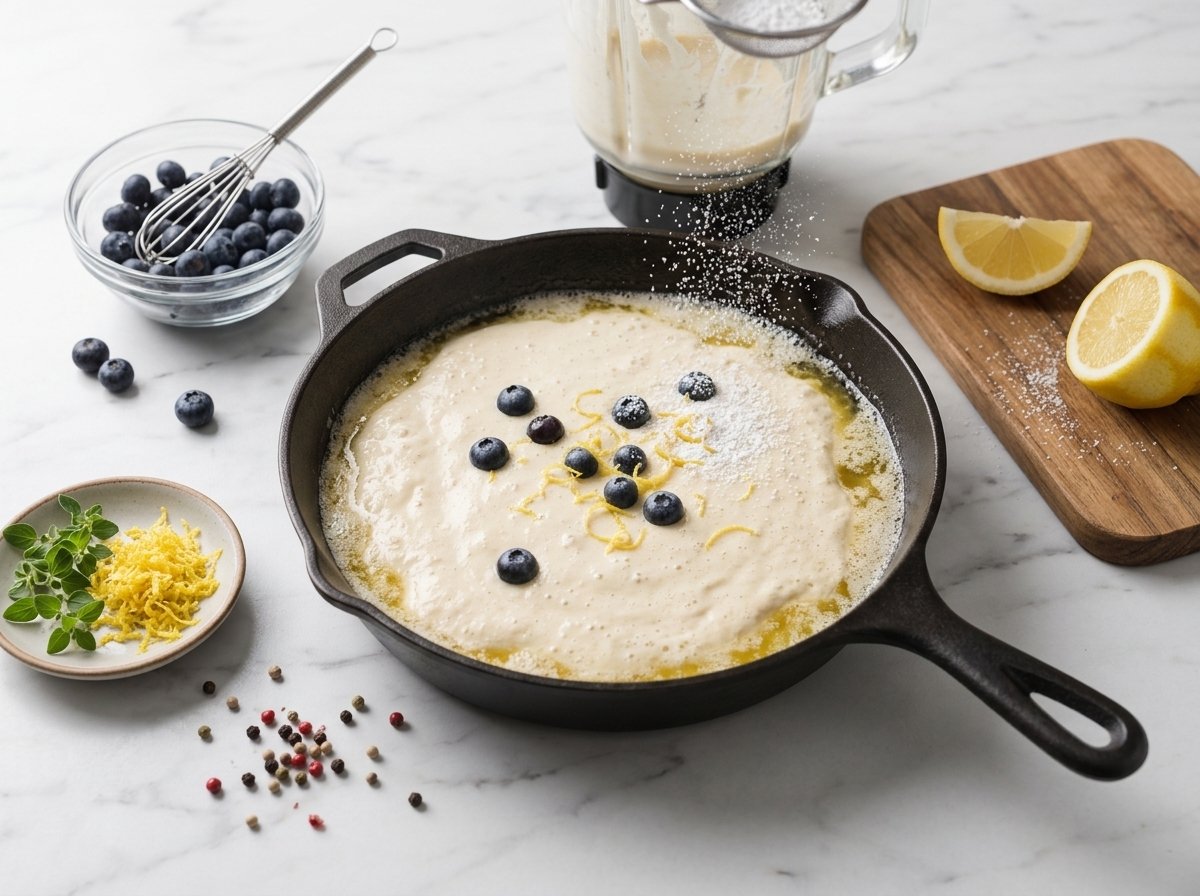
Tips for Success
- Preheat the empty skillet in the oven for the full 15 minutes, since batter that hits hot, buttered metal sets and climbs at once.
- Blend the batter for 20 to 30 seconds until smooth, then pour it right away while the butter is still sizzling.
- Use room-temperature eggs and milk so the batter doesn’t cool the pan and slow the rise.
- Scatter the blueberries over the batter after pouring, not before, so they sit on top and soften into jam instead of sinking.
- Slice and serve within 5 minutes of pulling the skillet from the oven, before the puffed walls settle.
Variations
- Swap the blueberries for halved strawberries or raspberries and keep the lemon zest, using the same 150 g so the center still sets.
- Add 1/2 tsp ground cardamom or a pinch of nutmeg to the batter for a warmer, bakery-style flavor.
- Skip the powdered sugar and serve with plain Greek yogurt and a drizzle of honey for a tangier plate.
Storage and Reheating
Baked Dutch baby is best eaten within 5 minutes of leaving the oven, because the puffed walls settle and the crisp rim softens as steam escapes. I don’t reheat it, since the custardy center turns rubbery.
Leftover wedges keep 2 days in an airtight container in the refrigerator. Chill them within 2 hours of baking and eat them cold or at room temperature with yogurt.
For make-ahead, blend the batter up to 24 hours before and refrigerate it in a covered jar. Whisk it, let it sit on the counter while the oven preheats, then bake in the hot skillet as written. I don’t freeze the baked pancake.
Serving Suggestions
Serve blueberry lemon Dutch baby straight from the skillet at the table. Cut it into 4 wedges, dust with 1 tbsp powdered sugar, and squeeze a lemon wedge over each portion. Set the hot skillet on a trivet.
For a fuller plate, add a spoonful of plain Greek yogurt or a side of soft-scrambled eggs. It eats like a full brunch with either, and the tang balances the sweet berries.
Hot coffee or sparkling water with lemon suits it. The same batter without the vanilla, sugar, and berries makes a savory version with herbs and sharp cheddar.
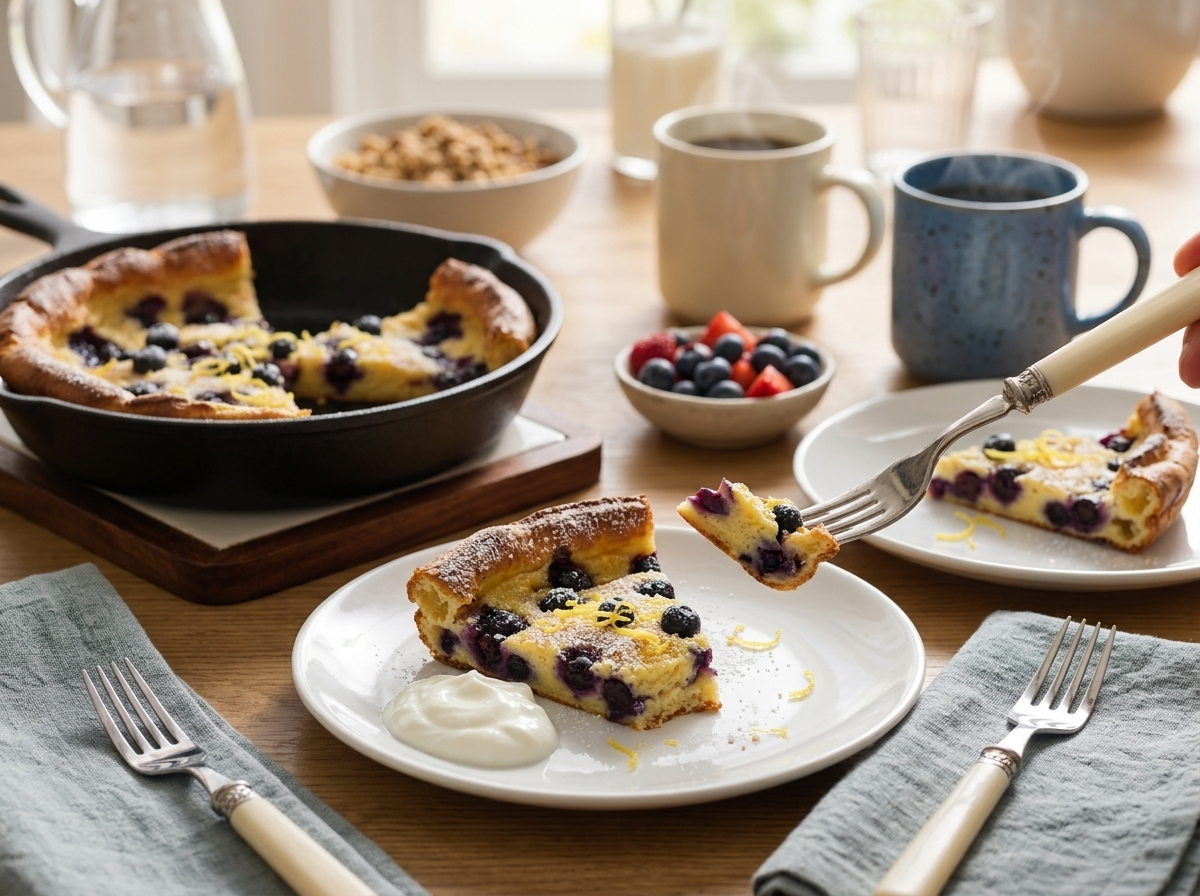
FAQ
Why didn’t my Dutch baby puff up around the edges?
A flat Dutch baby usually means the skillet or oven wasn’t hot enough when the batter went in, or the oven door was opened early. Preheat the empty skillet at 220 C / 425 F for the full 15 minutes, pour into sizzling butter, and keep the door shut for 18 minutes. Cold eggs and milk also dampen the rise.
Can I use frozen blueberries in a Dutch baby?
Yes, use frozen blueberries straight from the freezer in the same 150 g amount. Thawed berries bleed purple juice across the surface and leave wet spots. Frozen ones cool the surface slightly, so expect the bake to run closer to 20 minutes than 18.
Can I make Dutch baby batter the night before?
Yes, blend the batter up to 24 hours ahead and refrigerate it in a covered jar. Shake or whisk it and set it on the counter while the oven preheats so it isn’t fridge-cold. Always bake in a freshly heated skillet, since the baked Dutch baby itself doesn’t keep its puff.
What goes well with a blueberry lemon Dutch baby for brunch?
Plain Greek yogurt and soft-scrambled eggs balance the sweetness and make it eat like a full brunch. A pot of coffee or a charred asparagus salad with a sharp vinaigrette also works. Skip heavy syrup, since the lemon and berries already carry the flavor.
Is a Dutch baby gluten free, and can I make it dairy free?
No, the recipe uses 95 g of all-purpose flour, so it contains gluten. A 1:1 gluten-free flour blend works and gives a slightly denser puff. For dairy free, use refined coconut oil in place of butter and unsweetened oat milk, though the batter puffs slightly lower.
What is the difference between a Dutch baby and a regular pancake?
A Dutch baby has no baking powder and bakes in a 220 C / 425 F oven, so it rises from steam and eggs alone. A regular pancake uses a leavened, thicker batter cooked on the stovetop. The result is a crisp rim and custardy center instead of a uniform fluffy stack.
If you enjoyed this, try
About The Author

John
John Watson is the passionate food enthusiast behind MePlusFood.com. With a deep love for exploring culinary delights, he shares honest restaurant reviews, mouthwatering recipes, and culinary adventures. Join John on his flavorful journey to savor the world one bite at a time.