Beef Rendang with Steamed Jasmine Rice
Jump to Recipe
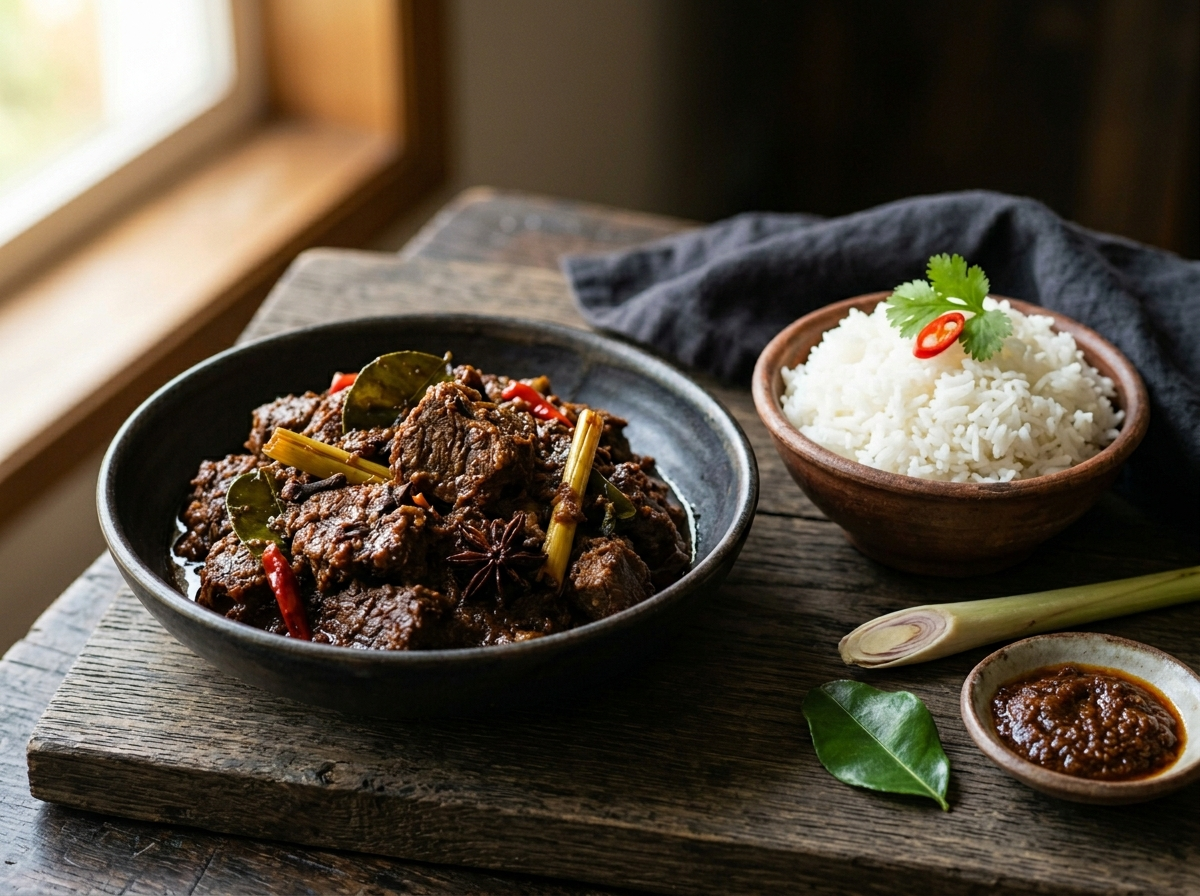
Beef rendang is a dry braise, not a curry. The coconut milk doesn’t stay liquid, it cooks down completely until the beef absorbs the fat and the paste fries in its own richness, leaving a dark, caramelized coating on every piece.
It takes time, roughly 3 to 4 hours on a low flame, but almost none of that is active work. You stir occasionally, let the liquid reduce, and the kitchen fills with lemongrass, galangal, and toasted coconut — aromatics that also define dishes like this lemongrass coconut chicken curry.
I use beef chuck here because it holds together through the long cook without going stringy. The jasmine rice isn’t just a base, it balances the intense spice with something clean and neutral.
Make this on a weekend when you have the afternoon. The leftovers the next day are noticeably better.
Why You’ll Love This Recipe
- Beef turns fork-tender with a deeply spiced, caramelized crust
- Flavors deepen overnight, making it ideal for batch cooking
- One pot does all the work after the initial blending
- Freezes well for up to three months without losing texture
Ingredient Notes
- Beef chuck: Cut into 2-inch cubes. Chuck has enough fat and connective tissue to stay tender through a 3-4 hour braise without drying out. Brisket works as a substitute.
- Coconut milk: Use full-fat canned coconut milk. Light coconut milk won’t reduce properly, and you’ll lose the unctuous coating that defines rendang.
- Kerisik (toasted coconut): Dry-toast desiccated coconut in a pan until golden brown, then grind or crush it. It thickens the sauce and adds a nutty, slightly sweet depth. Don’t skip it.
- Lemongrass: Use the bottom 6 inches of fresh stalks, bruised. Dried lemongrass doesn’t release enough oil, but lemongrass paste from a tube works in a pinch, about 1 tsp per stalk.
- Galangal: Fresher and sharper than ginger, with a piney, citrusy bite. Substitute with ginger if galangal isn’t available, but use 20 percent less as ginger is more pungent.
- Kaffir lime leaves: Tear the leaves to release the oils before adding. Frozen leaves work well. Skip the zest substitute, dried leaves lose too much flavor.
- Jasmine rice: Rinse until the water runs clear to remove excess starch, giving you separate, fluffy grains rather than a sticky clump.
- Dried red chilies: Soak in hot water for 10 minutes before blending. Adjust quantity for heat, 8 chilies gives a moderate warmth that most people handle comfortably.
Beef Rendang with Steamed Jasmine Rice
Ingredients
Method
- Drain the soaked dried chilies and add them to a blender with the shallots, garlic, galangal, ginger, sliced lemongrass, and turmeric. Blend until you have a smooth, thick paste, adding 2-3 tablespoons of water only if the blender struggles.
- Heat the oil in a heavy-bottomed Dutch oven or wok over medium heat. Add the paste and cook, stirring frequently, for 6-8 minutes until it deepens in color, smells fragrant, and the oil begins to separate around the edges.
- Add the beef chuck cubes to the pot. Stir to coat each piece in the spice paste and cook for 3-4 minutes until the outside of the beef loses its raw pink color.
- Pour in the coconut milk. Add the torn kaffir lime leaves, bruised lemongrass stalks, sugar, tamarind paste if using, and 1 tsp of salt. Stir to combine.
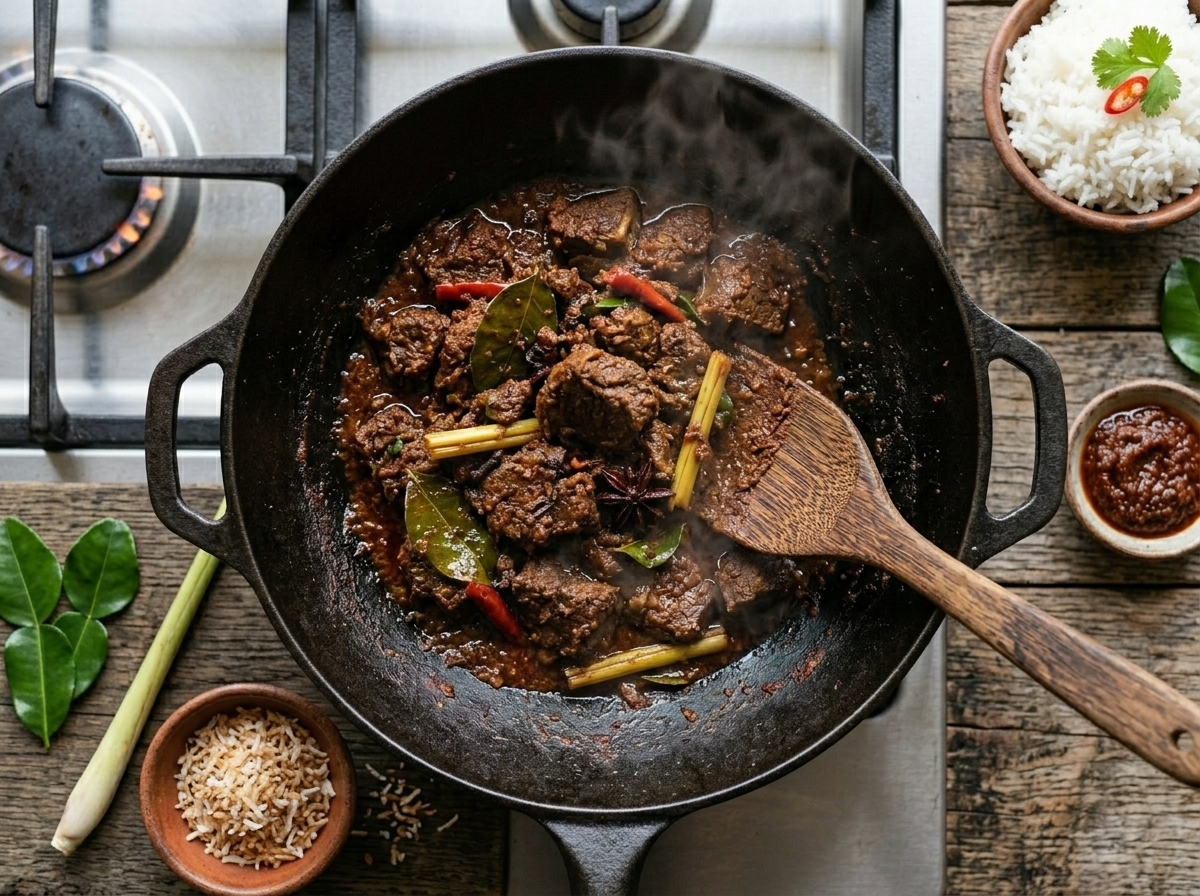
- Bring the mixture to a gentle simmer over medium heat. Do not boil hard. Cook uncovered, stirring every 20-30 minutes, for 2 to 2.5 hours until the coconut milk has reduced by roughly two-thirds and the beef is tender when pierced.
- Add the toasted ground coconut (kerisik) to the pot. Stir it in thoroughly.
- Reduce heat to medium-low. Continue cooking, stirring every 10-15 minutes, for another 45-60 minutes. The liquid will continue to evaporate and the paste will begin to coat the beef and fry in the remaining fat. The rendang is ready when the mixture looks dark, dry, and glossy, with no pooling liquid.
- Taste and adjust salt. Remove the bruised lemongrass stalks. Remove from heat and rest for 15 minutes before serving.
- Combine rinsed jasmine rice, water, and salt in a medium saucepan. Bring to a boil over high heat.
- Once boiling, reduce heat to the lowest setting, cover with a tight-fitting lid, and cook for 12 minutes. Do not lift the lid.
- Remove from heat and let sit, still covered, for 10 minutes. Fluff gently with a fork before serving.
Notes
Tips for Success
- Brown the spice paste in oil for 5-6 minutes before adding beef, until it darkens and smells fragrant.
- Cut beef into uniform 2-inch cubes so every piece finishes cooking at the same time.
- Keep the heat at medium-low once all coconut milk is in, a rapid boil will toughen the beef.
- Stir every 20-30 minutes in the final hour as moisture drops, preventing the paste from scorching.
- Rest the finished rendang for 15 minutes off the heat before serving, the paste redistributes and clings better.
Variations
- Swap beef chuck for bone-in lamb shoulder, same cook time, richer fat content and a slightly gamier finish.
- Use jackfruit instead of beef for a plant-based version, cook for 90 minutes until jackfruit shreds and absorbs the paste.
- Add 2 tablespoons of tamarind paste with the coconut milk for a tangier, slightly sour rendang, common in West Sumatra.
Storage and Reheating
Cool rendang completely before storing. Refrigerate in an airtight container for up to 5 days. The fat will solidify on top, which is normal and helps preserve flavor.
To freeze, portion into zip-lock bags or containers and freeze for up to 3 months. Thaw overnight in the refrigerator before reheating.
Reheat gently in a heavy-bottomed pan over low heat with 2-3 tablespoons of water, stirring occasionally. Avoid the microwave if you can, it heats unevenly and can dry out the beef.
Serving Suggestions
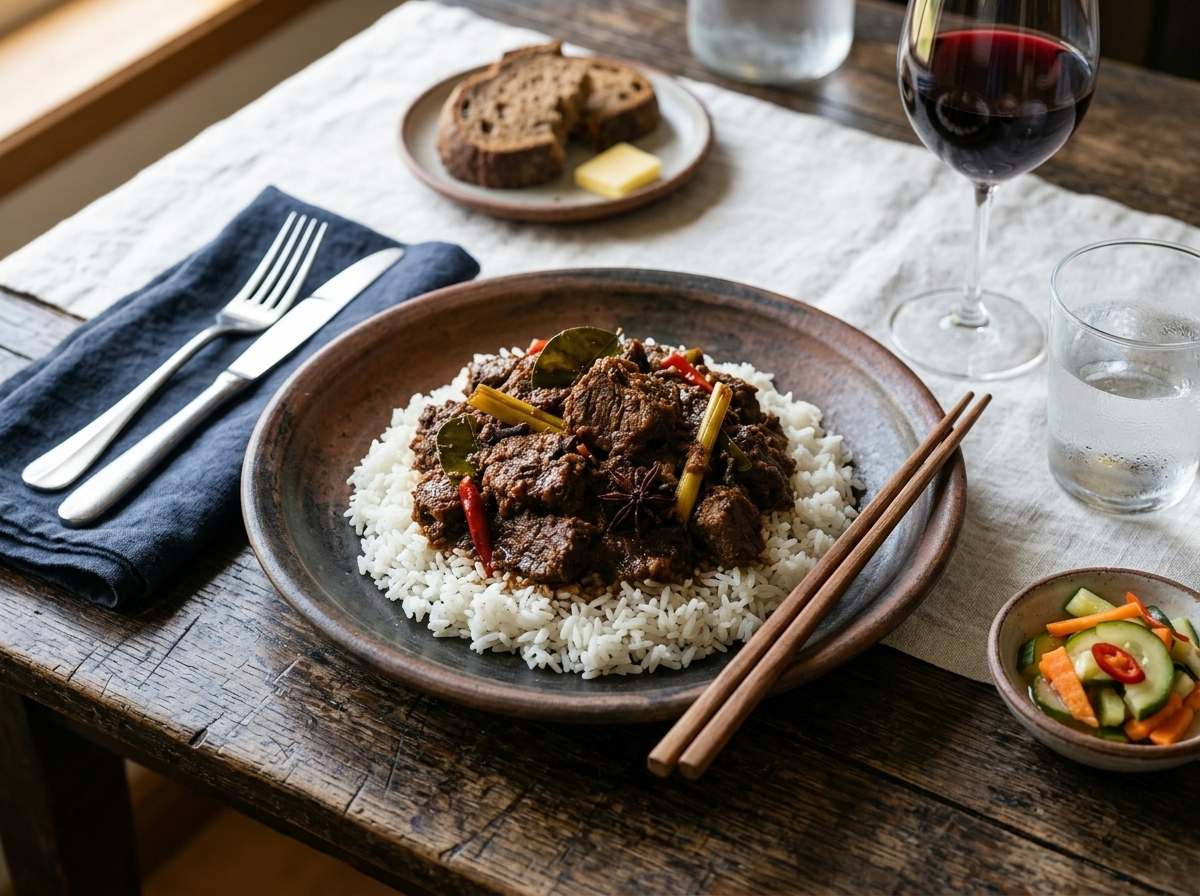
Steamed jasmine rice is the natural partner here. The clean, slightly floral grain pulls the heat without competing with the spice. Cook it using the absorption method for the cleanest result.
A simple cucumber salad dressed with rice vinegar and a pinch of sugar cuts through the richness on the side. Acar (pickled vegetables) does the same job if you have it.
For a more complete spread, add a fried egg on top of the rice and a side of blanched water spinach with garlic. That’s a full Malaysian warung plate right there.
FAQ
Why is my beef rendang still soupy instead of dry and dark?
It needs more time on the heat. Rendang only develops its thick, paste-coated texture when virtually all the coconut milk has evaporated and the beef begins to fry in the remaining fat. Turn the heat to medium and keep stirring every 10-15 minutes in the final stage until the liquid is gone and the meat looks dark and glossy.
Can I use coconut cream instead of coconut milk in rendang?
Yes, but reduce the quantity by about 20 percent since coconut cream is thicker and richer. It will shorten the cooking time slightly and give you a denser, more intensely coconut-flavored finish.
Can I make beef rendang in a slow cooker and finish it on the stove?
Cook it on low in the slow cooker for 8 hours until the beef is tender, then transfer everything to a wide pan and reduce the liquid over medium heat until the paste clings to the meat. You still need that final stove step for authentic texture.
What is the difference between beef rendang and a Malaysian curry?
Rendang is a dry braise where all the liquid cooks off and the spiced coconut paste coats the meat, while Malaysian curries like kari lemak keep a liquid sauce, more in the style of a slow-simmered spiced goat curry. Rendang also uses kerisik, toasted ground coconut, which you won’t find in most curries.
Is beef rendang gluten-free?
Yes, this rendang is naturally gluten-free as written, as long as you use a gluten-free soy sauce or skip it entirely. Check any store-bought rendang paste, some brands add wheat-based thickeners.
What cut of beef works best if chuck is not available for rendang?
Brisket or beef short rib both work well because of their fat-to-muscle ratio. Avoid lean cuts like sirloin or round, they turn dry and grainy during the long, high-heat reduction phase.
About The Author

John
John Watson is the passionate food enthusiast behind MePlusFood.com. With a deep love for exploring culinary delights, he shares honest restaurant reviews, mouthwatering recipes, and culinary adventures. Join John on his flavorful journey to savor the world one bite at a time.