Slow Braised Lamb Neck with Polenta
Jump to Recipe
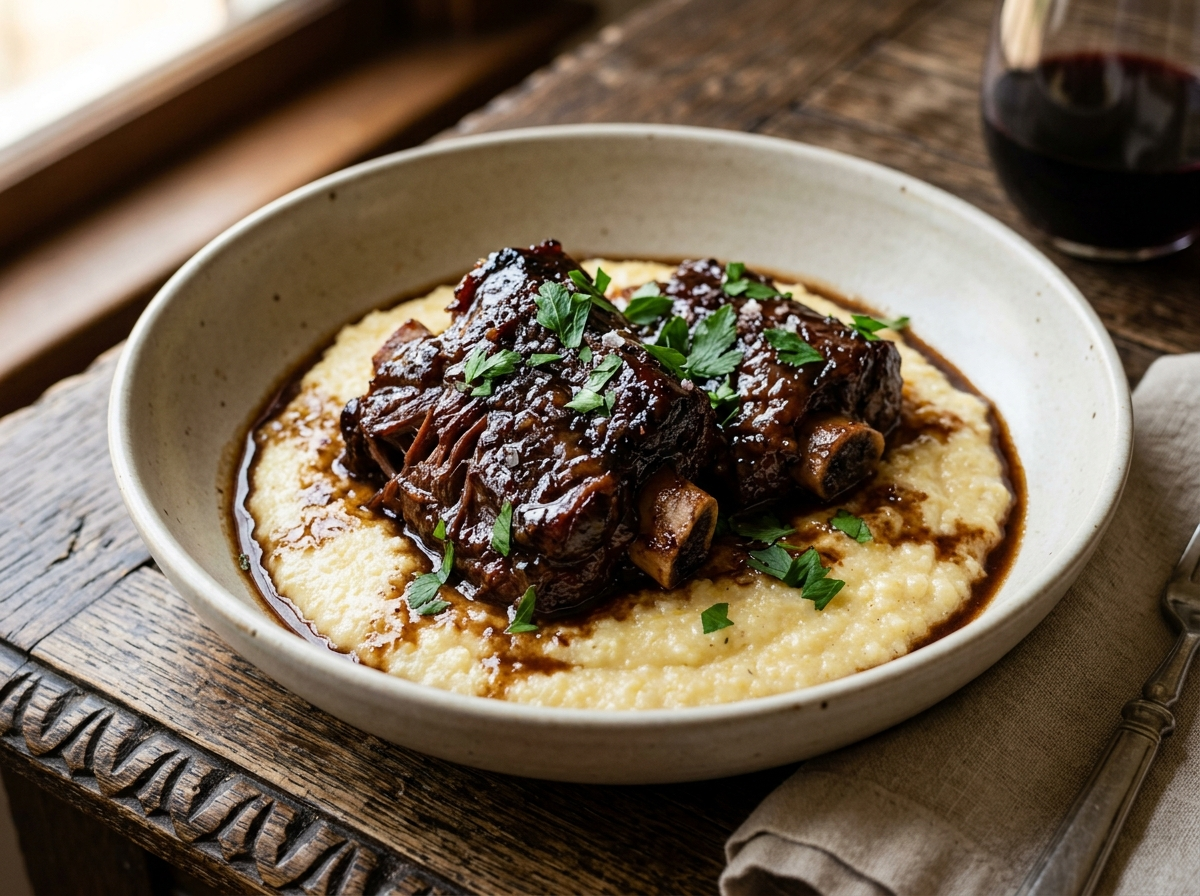
Lamb neck doesn’t get the attention it deserves, though cuts like pomegranate glazed lamb chops have helped put the whole animal back on the table. It’s cheaper than the leg, more flavorful than the shoulder, and after three hours in a covered Dutch oven it pulls apart with a fork. The bones release gelatin into the braising liquid, and that liquid becomes the sauce with almost no extra work.
The polenta here is cooked low and slow with whole milk and a knob of butter. It should be loose enough to pour – think porridge consistency, not sliceable. The braising juices pool into it and the whole thing eats like a full meal.
This is a weekend dish. Prep takes about 20 minutes, but the oven does the rest. I’ve made it for four people and scaled it up to eight without changing a single technique.
Why You’ll Love This Recipe
- Collagen-rich neck cut self-bastes into a glossy sauce
- Minimal hands-on time after the first sear
- Polenta comes together in 30 minutes alongside the braise
- Leftovers reheat better than the original serving
Ingredient Notes
- Lamb neck: Ask your butcher for cross-cut neck slices about 4 cm thick. Bone-in pieces give better flavor and body to the braising liquid. Lamb shoulder chops work as a substitute but braise 30 minutes less.
- Dry red wine: Use something you’d actually drink – a Shiraz or Grenache works well here. If you prefer alcohol-free, replace with extra stock and a tablespoon of red wine vinegar for acidity.
- Lamb or beef stock: Homemade gives noticeably more body, but a good-quality store-bought beef stock is fine. Avoid ready-made broths labeled ‘low sodium’ – they often lack depth for a long braise.
- Coarse polenta: Stone-ground coarse polenta takes 35-40 minutes of stirring but has better texture than instant. Instant polenta is a workable shortcut – follow pack timing and add extra butter.
- Whole milk: Cooking polenta half milk, half stock (or water) gives a richer result than water alone. Oat milk works for a dairy-free version, though the flavor is slightly sweeter.
- Parmesan: Stir it in off the heat so it melts smoothly rather than clumping. Pecorino Romano is a sharper alternative that pairs well with the lamb’s earthiness.
Slow Braised Lamb Neck with Polenta
Ingredients
Method
- Heat the oven to 160 C / 320 F.
- Pat lamb neck slices dry with paper towels, then season all over with salt and pepper.
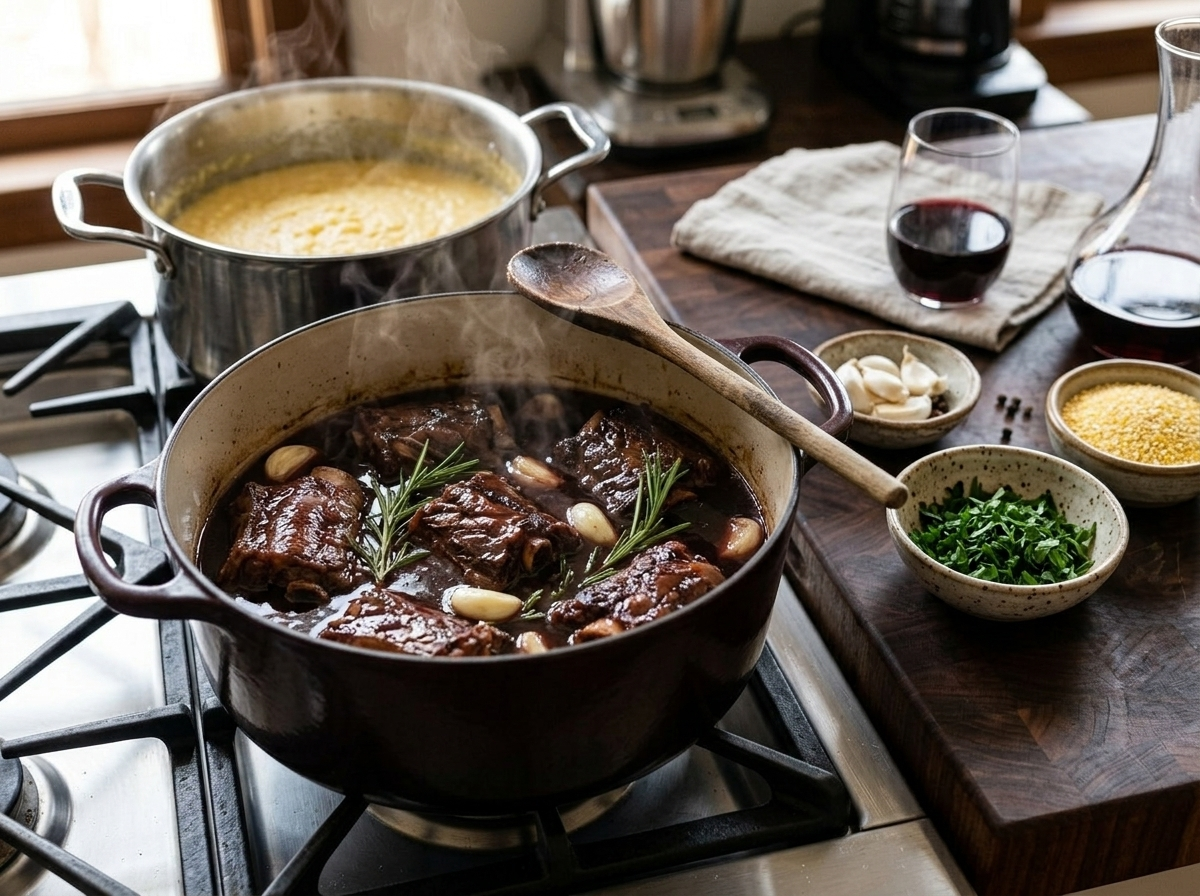
- Heat olive oil in a 5-quart Dutch oven over high heat until just smoking. Sear lamb in two batches, 3 minutes per side, until a deep brown crust forms. Transfer to a plate.
- Lower heat to medium. Add onion, celery, and carrot to the same pot. Cook for 5 minutes, stirring occasionally, until softened and lightly golden at the edges.
- Add garlic and tomato paste. Stir for 1-2 minutes until the paste darkens slightly and smells fragrant.
- Pour in the red wine. Scrape the bottom of the pot with a wooden spoon to lift all the browned bits. Let it bubble for 2 minutes to cook off the raw alcohol.
- Add stock, rosemary, thyme, and bay leaves. Return lamb pieces to the pot, nestling them into the liquid. The liquid should come about halfway up the sides of the meat.
- Bring to a gentle simmer, then cover with the lid and transfer to the oven.
- Braise for 2.5 hours covered. Remove the lid and braise for a further 30 minutes so the surface caramelizes and the liquid reduces slightly.
- Check the lamb - it should be fork-tender and starting to pull from the bone. If not, cover and return for another 30 minutes.
- About 45 minutes before the braise is done, combine milk and water (or stock) in a large heavy-based saucepan. Bring to a gentle simmer over medium heat.
- Add salt, then pour in polenta in a thin, steady stream while whisking constantly.
- Reduce heat to low. Cook for 35-40 minutes, stirring every 3-4 minutes with a wooden spoon, until polenta is thick, creamy, and pulls away from the sides of the pot as you stir.
- Remove from heat. Stir in butter and Parmesan until melted and smooth. Taste and adjust salt. Keep warm with a lid on.
- Remove lamb from the pot and set aside to rest for 10 minutes.
- Strain the braising liquid through a fine-mesh sieve into a small saucepan, pressing on the solids to extract all the juice. Discard the spent vegetables and herbs.
- Simmer the strained liquid over medium heat for 5-8 minutes until it reduces to a glossy, coating sauce.
- Spoon polenta into wide shallow bowls. Place 2 pieces of lamb neck on top. Spoon sauce generously over the meat.
- Scatter chopped parsley over each bowl and finish with a drizzle of extra virgin olive oil.
Notes
Tips for Success
- Pat lamb neck slices completely dry before searing – surface moisture kills browning.
- Sear in batches with space between pieces; crowding steams the meat instead of browning it.
- Deglaze the pot before adding stock – those browned bits on the bottom carry half the flavor.
- Check liquid level at the 2-hour mark; it should cover the bottom third of the meat at minimum.
- Whisk polenta constantly for the first 5 minutes to prevent lumps forming at the base of the pot.
Variations
- Swap polenta for white bean puree – simmer drained cannellini with garlic, stock, and olive oil until thick.
- Add a strip of orange peel and a star anise to the braise for a subtle North African spice note.
- Use bone-in lamb shanks instead of neck – increase braising time to 3.5 hours at the same temperature.
Storage and Reheating
Store cooled lamb and polenta separately in sealed containers in the fridge for up to 4 days. The braising juices will set to a firm jelly when cold – that’s the gelatin doing its job, and it reheats into sauce perfectly.
To reheat the lamb, place it in a small covered baking dish with a splash of water or stock and warm at 160 C / 320 F for 20-25 minutes until heated through. Stir the polenta over low heat with a few tablespoons of milk or water to loosen it back to a pourable consistency.
Both components freeze well for up to 3 months. Freeze the lamb submerged in its juices for best results – it protects the texture and keeps the meat moist.
Serving Suggestions
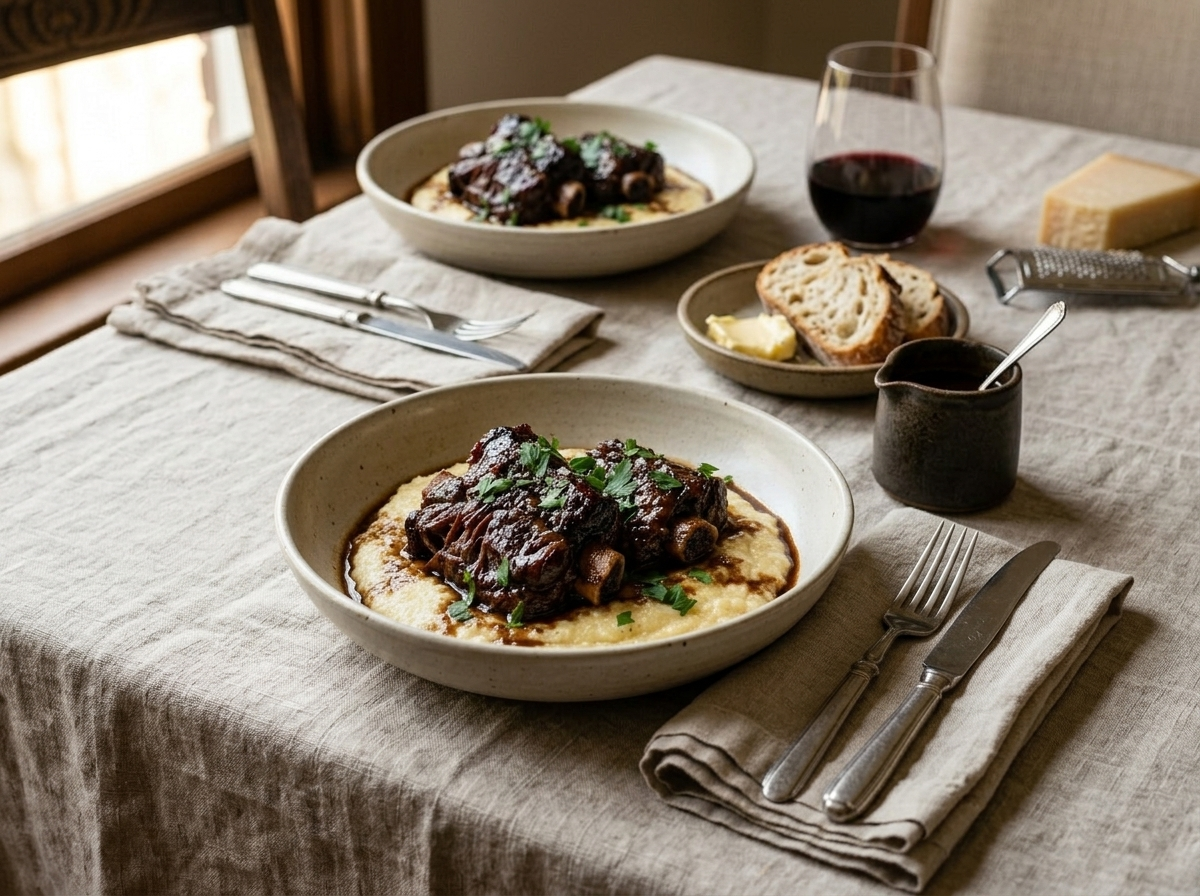
Spoon a generous pool of polenta into wide shallow bowls and lay one or two pieces of lamb neck on top. Strain the braising liquid into a small saucepan, reduce it for 5 minutes until glossy, and spoon it over the meat. A handful of fresh flat-leaf parsley or gremolata on top cuts through the richness.
A bitter green alongside balances the dish well – braised radicchio, sauteed cavolo nero, or even a simple watercress salad dressed with lemon all work, echoing the sharp herb salads that cut through rich fat in dishes like roasted bone marrow with parsley. You want something with a bit of edge to counter the fat in the lamb.
For a larger gathering, set out the polenta in a wide serving dish and arrange the lamb pieces on top at the table. Bring the reduced sauce in a jug on the side. It holds temperature well for 15 minutes if you warm the dish first.
FAQ
Why is my braised lamb neck tough after 2 hours?
Lamb neck needs at least 3 hours at 160 C / 320 F to fully break down the collagen. If it’s still resistant at the 2-hour mark, cover it back up and give it another 45-60 minutes – it will yield.
Can I use instant polenta instead of coarse-ground for this braise?
Yes, instant polenta works fine and cuts the cooking time to about 5 minutes. The texture is slightly softer and less toothsome, but it still holds the braising juices well.
Can I braise the lamb neck the day before and reheat it?
Day-old braised lamb neck is actually better – the meat absorbs more of the sauce overnight in the fridge. Reheat covered in a 160 C / 320 F oven for 20 minutes, or gently in a saucepan over low heat.
What red wine pairs well with slow braised lamb neck and polenta?
A medium-bodied Syrah or a Cotes du Rhone complements the earthy, fatty flavor of the neck cut. Avoid anything too tannic – it can make the braising sauce taste harsh after a long reduction.
Is slow braised lamb neck gluten-free?
This recipe uses no flour or wheat-based ingredients, so it’s naturally gluten-free. Just double-check your stock – some commercial brands add wheat starch as a thickener.
What’s the difference between braising lamb neck and lamb shanks?
Neck has more connective tissue and fat marbled through it, which makes the braising liquid richer and more gelatinous than shank, similar to how slow-braised beef short ribs develop deep gelatin from collagen-heavy cuts. Shanks are a cleaner, leaner cut and present more neatly on the plate.
About The Author

John
John Watson is the passionate food enthusiast behind MePlusFood.com. With a deep love for exploring culinary delights, he shares honest restaurant reviews, mouthwatering recipes, and culinary adventures. Join John on his flavorful journey to savor the world one bite at a time.