Korean Fried Chicken with Gochujang Glaze
Jump to Recipe
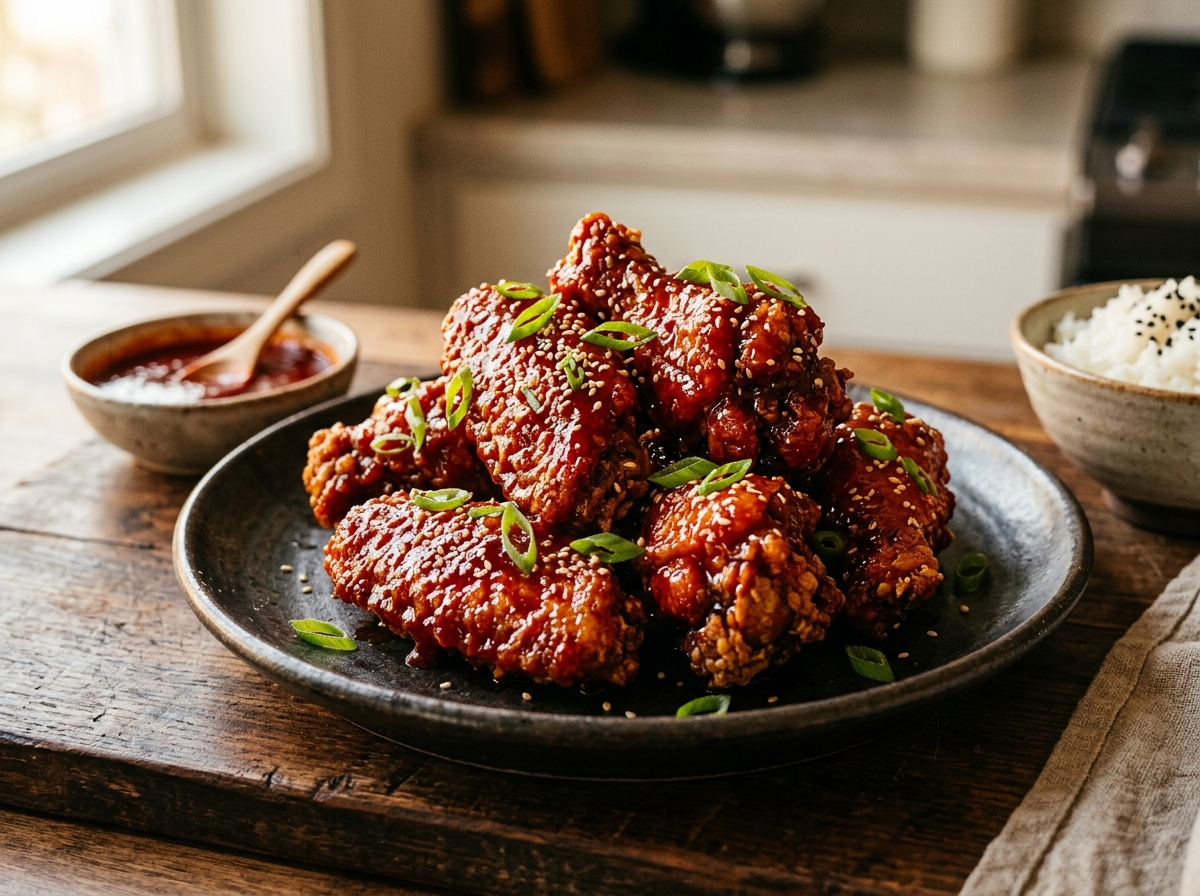
Korean fried chicken gets its signature crunch from a two-stage fry. The first fry cooks the meat through at a lower temperature. The second fry at higher heat drives out residual moisture and locks in a glass-like exterior that doesn’t collapse when you sauce it.
The gochujang glaze is sharp, sweet, and slightly funky from the fermented paste. It’s not a simple hot sauce swap. Gochujang brings depth that fresh chiles or sriracha glazed chicken don’t replicate, and the starch in the paste helps the glaze thicken fast.
This recipe uses bone-in chicken pieces for juicier meat, though boneless thighs work if you want easier eating. The coating is a mix of potato starch and flour, which gives a lighter, more shattering texture than flour alone.
It comes together in about 40 minutes and feeds four comfortably as a main.
Why You’ll Love This Recipe
- Potato starch coating stays crispy under the glaze
- Gochujang glaze ready in under 5 minutes
- Works with bone-in pieces or boneless thighs
- No buttermilk soak or overnight marinating needed
Ingredient Notes
- Gochujang: Use a mid-heat brand like Bibigo or Haechandle. The paste varies a lot in spice level between brands, so taste before adding the full amount. Sambal oelek works as a substitute but lacks the fermented depth.
- Potato starch: This is what creates the shatteringly light crust. Cornstarch is the closest substitute and gives a similar result, though slightly denser.
- Chicken pieces: Bone-in drumsticks and thighs stay juicier through the double fry. Boneless thighs cut into 2-inch chunks also work well and cook faster.
- Sesame oil: Add to the glaze off heat only – high temperatures kill the aroma. Toasted sesame oil has far more flavor than plain.
- Rice vinegar: Balances the sweetness of the honey and the saltiness of the soy. Apple cider vinegar can stand in at a 1:1 ratio.
- Honey: Thins the glaze slightly and adds caramel-like sweetness. Brown sugar dissolved in a splash of water is a workable swap.
Korean Fried Chicken with Gochujang Glaze
Ingredients
Method
- Combine potato starch, flour, garlic powder, onion powder, salt, and pepper in a wide bowl. Whisk until evenly mixed.
- Beat the eggs in a separate bowl. Dip each piece of chicken in the egg, let the excess drip off, then press firmly into the starch-flour mix, coating all sides.
- Set dredged pieces on a wire rack and rest for 5 minutes so the coating bonds to the surface.
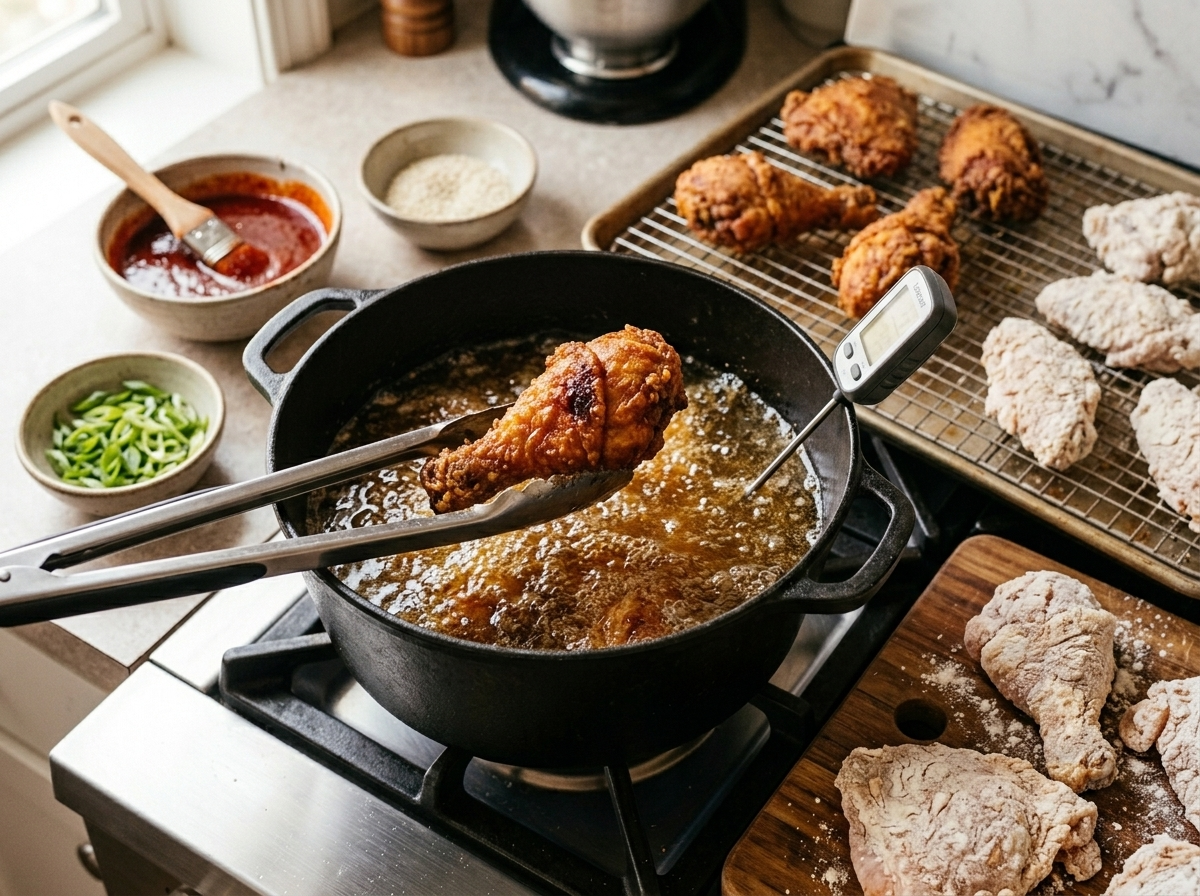
- Pour oil into a deep heavy-bottomed pot and heat to 160 C / 320 F over medium-high heat. Use an instant-read thermometer to confirm.
- Fry chicken in batches of 3 to 4 pieces for 7 to 8 minutes, turning once halfway, until the coating is set and pale golden. The chicken should reach an internal temperature of 74 C / 165 F.
- Lift pieces onto the wire rack. Do not stack. Let the oil return to 160 C between batches.
- Combine gochujang, soy sauce, honey, rice vinegar, minced garlic, grated ginger, and water in a small saucepan over medium heat.
- Stir continuously for 3 to 4 minutes until the glaze thickens slightly and becomes glossy. Remove from heat and stir in the sesame oil. Set aside.
- Raise the oil temperature to 190 C / 375 F. Fry the chicken again in batches for 3 to 4 minutes until the exterior is deep golden and audibly crisp when tapped.
- Transfer back to the wire rack and wait 60 seconds before glazing.
- Place all fried chicken pieces in a large mixing bowl. Pour the warm glaze over and toss quickly to coat every piece evenly.
- Transfer to a serving plate. Scatter sesame seeds and sliced scallions over the top. Serve immediately.
Notes
Tips for Success
- Pat the chicken completely dry before dredging – surface moisture steams the coating and prevents crisping.
- Hold the first-fried pieces on a wire rack, not paper towels, to prevent steam from softening the crust.
- Bring oil back to 190 C / 375 F between batches before the second fry – a thermometer is not optional here.
- Toss the chicken in the glaze only seconds before serving to keep the exterior from softening.
- Let the glaze cool for 60 seconds off heat before tossing so it thickens and coats rather than runs off.
Variations
- Honey butter version: replace gochujang glaze with browned butter, honey, and a pinch of flaky salt.
- Soy garlic glaze: skip gochujang, double the garlic, add extra soy and a splash of mirin for a milder coating.
- Air fryer adaptation: spray dredged pieces with oil, cook at 200 C for 20 minutes, flipping halfway, then glaze.
Storage and Reheating
Store leftover chicken and glaze separately if possible. Glazed pieces keep in an airtight container in the fridge for up to 3 days, though the crust softens considerably once chilled.
To reheat, place pieces on a wire rack set over a sheet pan and bake at 200 C / 390 F for 10 to 12 minutes. This draws out moisture and restores some of the crunch. A microwave will make the coating chewy and is not recommended.
The chicken also freezes well before glazing. Freeze after the first fry on a flat tray, then transfer to a bag for up to 2 months. Thaw overnight in the fridge and run the second fry fresh.
Serving Suggestions
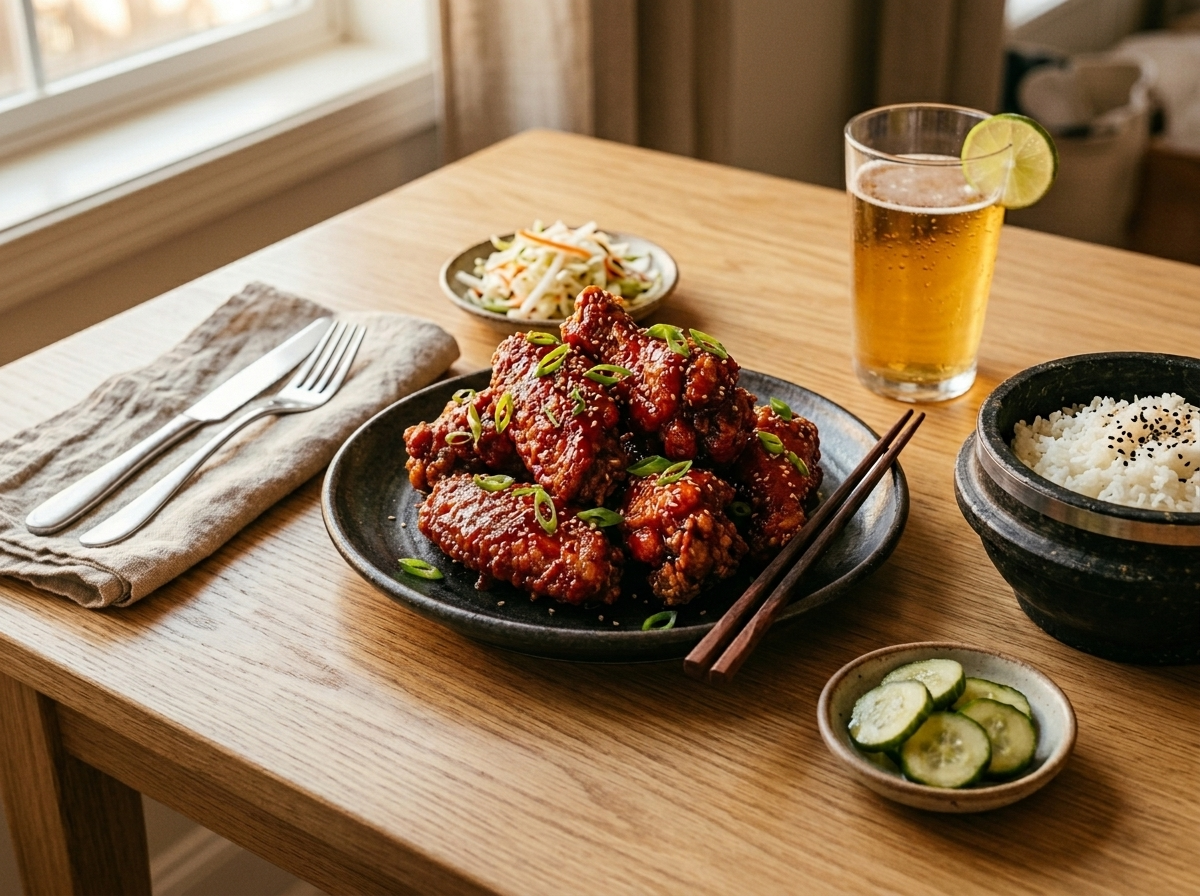
Serve the chicken over steamed short-grain rice with quick-pickled daikon or cucumber on the side. The acidity cuts through the richness of the glaze and resets the palate between pieces.
For a sharing plate, pile the pieces on a wooden board with a small bowl of extra glaze for dipping, sliced scallions, sesame seeds, and shredded cabbage dressed lightly with rice vinegar and sesame oil.
Cold Korean beer or a crisp lager pairs naturally with the heat of the gochujang. If you want a non-alcoholic match, a slightly sweet barley tea or a sparkling citrus drink works well against the spice.
FAQ
Why is my Korean fried chicken coating falling off during the second fry?
The most common cause is too much moisture on the chicken surface before dredging. Pat each piece thoroughly dry with paper towels, and let the dredged pieces rest on a rack for 5 minutes before the first fry so the starch coating can hydrate slightly and adhere.
Can I use gochugaru instead of gochujang in the glaze?
Gochugaru is a dry flake, not a paste, so it won’t give you the same thick, sticky glaze. If you only have gochugaru, mix 1 tbsp with a tablespoon of miso paste for a glaze and a teaspoon of rice vinegar to approximate the texture and fermented flavor.
Can I fry the chicken ahead of time and add the glaze later?
Yes, and this is actually a smart approach for parties. Do the first fry up to 4 hours ahead and hold the pieces at room temperature. Run the second fry and toss in the glaze right before serving.
What sides go well with gochujang glazed fried chicken at a dinner table?
Quick-pickled vegetables like daikon or cucumber are the classic pairing because the acidity balances the sweet heat of the glaze. Steamed rice, shredded cabbage slaw, or japchae noodles round out the plate well.
Is Korean fried chicken gluten-free?
Not as written. The dredge contains all-purpose flour, and most gochujang brands contain wheat. To make it gluten-free, swap the flour for extra potato starch and use a certified gluten-free gochujang like the one from Mother-in-Law’s Kimchi.
What is the difference between Korean fried chicken and Japanese karaage?
Karaage is typically marinated in soy and ginger before frying and has a thinner, more delicate coating. Korean fried chicken uses a thicker starch-forward dredge and is almost always double-fried, then coated in a sauce after frying rather than before.
Loved this? Try these next
About The Author

John
John Watson is the passionate food enthusiast behind MePlusFood.com. With a deep love for exploring culinary delights, he shares honest restaurant reviews, mouthwatering recipes, and culinary adventures. Join John on his flavorful journey to savor the world one bite at a time.