Miso Carrot Noodle Salad with Sesame Ginger Dressing
Jump to Recipe
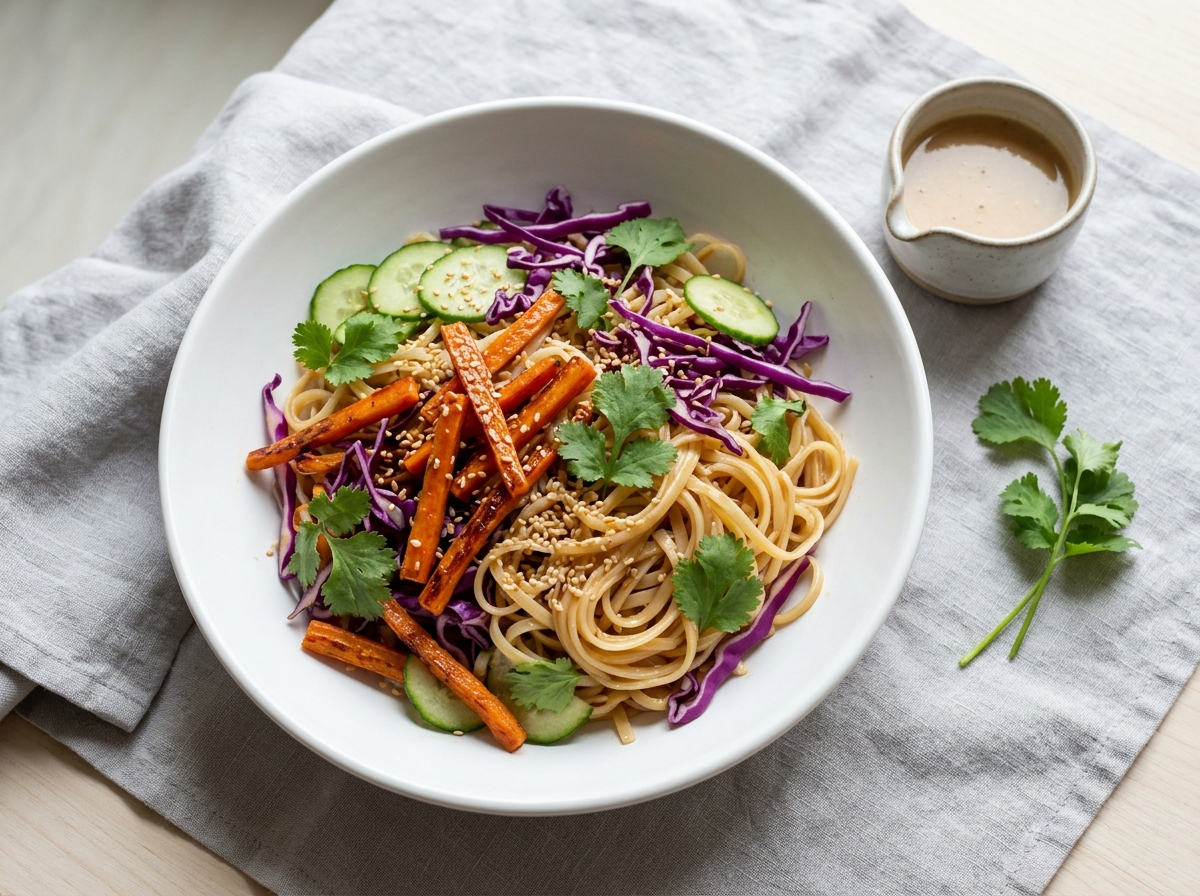
This salad holds up better than most noodle dishes because the dressing is built around white miso, not oil alone. The miso clings to rice noodles and coats every shred of carrot without turning watery after an hour in the fridge.
Roasting the carrots at high heat concentrates their natural sweetness and gives them a slightly caramelized edge, the same principle behind a roasted carrot coriander bisque. That contrast against cool noodles and crisp cucumber is what makes this worth eating at room temperature or cold.
The dressing takes about five minutes to whisk together: white miso, rice vinegar, sesame oil, ginger, and a little maple syrup. No blender needed.
It works as a light main or a side next to grilled tofu or chicken. I make a double batch of the dressing on Sundays and use it through the week.
Why You’ll Love This Recipe
- Dressing stays glossy, not soggy, after refrigerating
- Roasted carrots add caramelized depth to every bite
- Completely vegan with no substitutions needed
- Doubles easily for weekly meal prep
Ingredient Notes
- white miso paste: White (shiro) miso is mild and slightly sweet, which balances the vinegar without overpowering the carrots. Yellow miso works too but tastes saltier, so reduce it by about a teaspoon.
- rice noodles: Medium-width rice noodles (around 3 mm) hold the dressing well and don’t clump as fast as thin vermicelli. Soba noodles are a solid swap and add a nutty flavor.
- carrots: Standard large carrots work fine. Cut them into thin matchsticks or use a julienne peeler for faster prep. Rainbow carrots add color but behave the same way in the oven.
- toasted sesame oil: Use toasted, not plain, sesame oil. The roasted nutty aroma is half the dressing’s character. A little goes a long way, so don’t exceed the amount listed.
- fresh ginger: Fresh ginger gives the dressing a sharper, brighter heat than ground. Grate it on a microplane for the smoothest result. Ground ginger can substitute at one-third the quantity.
- rice vinegar: Unseasoned rice vinegar keeps the acidity clean. If you only have seasoned rice vinegar, skip the maple syrup in the dressing since it already contains sugar.
Miso Carrot Noodle Salad with Sesame Ginger Dressing
Ingredients
Method
- Heat the oven to 220 C / 425 F. Line a large baking sheet with parchment paper.
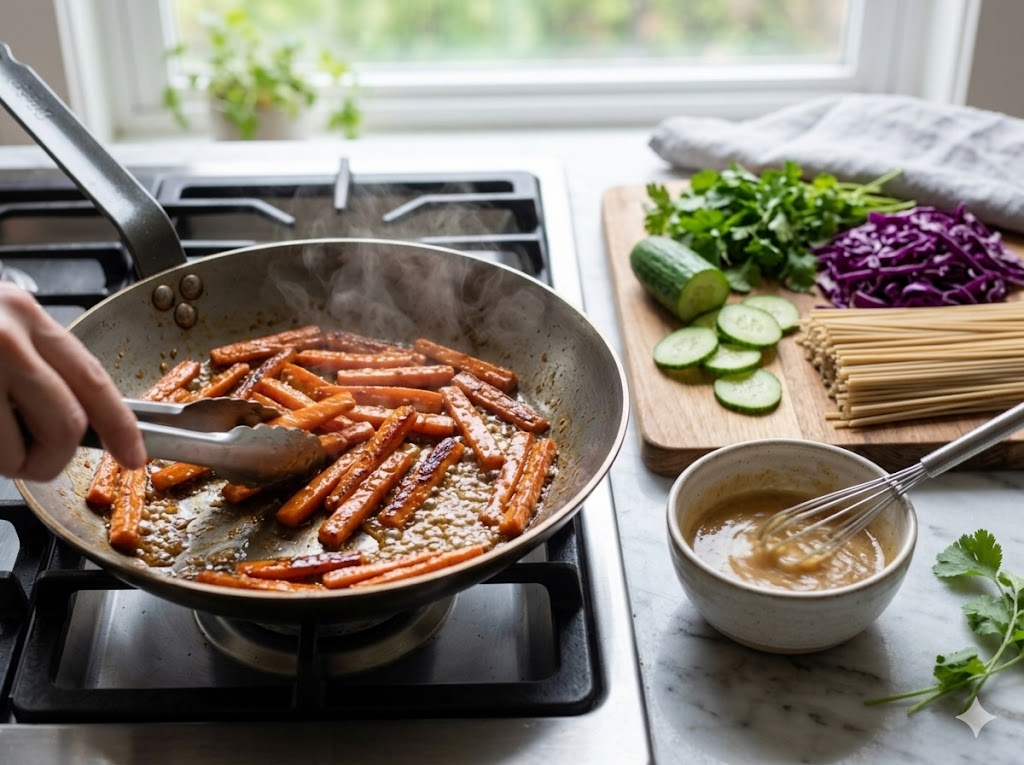
- Spread the julienned carrots on the baking sheet in a single layer. Drizzle with olive oil, sprinkle with salt, and toss to coat.
- Roast for 20 to 25 minutes, turning once halfway, until the edges are lightly caramelized and the carrots are tender but not soft. Set aside to cool.
- Bring a large pot of water to a boil. Add the rice noodles and cook according to package instructions, usually 4 to 6 minutes, until just tender.
- Drain and rinse immediately under cold running water until the noodles are completely cool. Shake off excess water and transfer to a large mixing bowl.
- In a small bowl, whisk together the white miso paste and rice vinegar until the miso is fully dissolved with no lumps.
- Add the sesame oil, neutral oil, grated ginger, garlic, maple syrup, and soy sauce. Whisk until smooth. Add water one tablespoon at a time until the dressing is pourable but still coats a spoon.
- Taste and adjust: more vinegar for brightness, more miso for depth, more maple syrup to balance the salt.
- Add the shredded cabbage, cucumber, scallions, and roasted carrots to the bowl with the noodles.
- Pour about three-quarters of the dressing over the salad and toss well until everything is evenly coated. Add more dressing to taste.
- Transfer to a serving bowl or individual plates. Scatter cilantro and toasted sesame seeds over the top and serve at room temperature.
Notes
Tips for Success
- Roast carrots in a single layer with space between pieces so they caramelize rather than steam.
- Rinse cooked rice noodles under cold water immediately to stop cooking and prevent clumping.
- Whisk miso with vinegar first to fully dissolve it before adding the oils.
- Dress the salad just before serving if eating immediately, or toss with half the dressing for storage.
- Toast sesame seeds in a dry skillet for 2 minutes until golden before scattering over the finished salad.
Variations
- Add shredded rotisserie chicken or crispy baked tofu for extra protein.
- Swap rice noodles for soba and add edamame and shredded kale for a heartier bowl.
- Stir a teaspoon of chili crisp into the dressing for a spicy version with more heat.
Storage and Reheating
Store the salad and remaining dressing separately in airtight containers in the fridge for up to 3 days. The noodles will absorb dressing overnight, so keeping them apart helps with texture.
This salad is best eaten cold or at room temperature, not reheated. If the noodles have clumped in the fridge, toss them with a splash of warm water to loosen before re-dressing.
The miso sesame dressing keeps separately for up to 10 days refrigerated. It thickens when cold, so whisk briefly or let it sit at room temperature for a few minutes before using.
Serving Suggestions
This salad eats like a full meal on its own, especially with a soft-boiled egg or a few slices of pan-fried tofu laid on top. A side of edamame with flaky salt rounds it out without adding much prep.
For a spread, it pairs well with a simple miso soup or alongside sticky honey miso chicken with a soy glaze. The sesame ginger dressing also doubles as a dipping sauce for spring rolls or steamed dumplings on the side.
If you’re serving this for guests, plate it in a wide shallow bowl, scatter toasted sesame seeds and thinly sliced scallions on top, and finish with a few drops of chili oil for color.
FAQ
Why are my rice noodles clumping together in the miso carrot salad?
Rice noodles clump when they sit undressed after cooking. Rinse them under cold running water immediately after draining, then toss with a small drizzle of sesame oil if you’re not dressing them right away.
Can I use red miso instead of white miso in the dressing?
You can, but red miso is significantly saltier and more intense, which can overpower the carrots and ginger much like it would in a charred cabbage white miso bowl. If that’s all you have, use half the amount and taste before adding more.
How far ahead can I roast the carrots for this salad?
The carrots can be roasted up to 2 days ahead and stored in the fridge. They lose a little of their caramelized edge when cold, but a quick 5-minute reheat in a dry skillet brings it back.
Is miso carrot noodle salad gluten free?
It can be. Use certified gluten-free rice noodles and check your miso label, since some miso pastes are made with barley or other grains. Most white miso sold in the US is rice-based and gluten free.
What protein goes well with miso carrot noodle salad?
Crispy baked tofu, pan-seared salmon, or a soft-boiled egg all work without competing with the sesame ginger dressing. Shredded poached chicken is a lighter option that blends into the noodles well.
What is the difference between this miso noodle salad and a cold sesame noodle dish?
Cold sesame noodles use tahini or peanut butter as the base, which makes the dressing thicker and richer. This miso dressing uses fermented miso paste with rice vinegar, so it’s lighter and more tangy, with the carrots as the main vegetable rather than cucumber alone.
About The Author

John
John Watson is the passionate food enthusiast behind MePlusFood.com. With a deep love for exploring culinary delights, he shares honest restaurant reviews, mouthwatering recipes, and culinary adventures. Join John on his flavorful journey to savor the world one bite at a time.