Black Sesame Breakfast Porridge with Honey
A warm bowl of black sesame breakfast porridge wakes the senses with a deep roasted aroma and glossy, spoonable texture.
This Korean-style juk brings a gentle, nutty sweetness without feeling heavy. I aim for a silky, not stodgy, finish you can savor on cold mornings.
You will learn how to pick rice for creaminess, grind the seeds for maximum flavor, and control heat so the base never scorches. I explain why honey belongs at the end to keep flavor bright.
Expect practical cues for doneness and notes on scaling and storage for easy weekday meals. Optional tweaks, like using sweet rice powder or varied garnishes, appear after the core method.
Key Takeaways
- Texture goal: silky, spoonable, with an optional pudding-style thickness.
- Technique focus: constant stirring and careful heat control to prevent burning.
- Finish with honey at the end for clear, bright sweetness.
- Use freshly ground black sesame seeds for the richest aroma.
- Recipe scales and stores well for several weekday servings.
Why Black Sesame Porridge Hits Different on Cold Mornings
When winter bites, a spoonful of warm juk soothes the stomach and clears the head. In Korea, cold months make hot bowls central to daily life. This is not a trend; juk is a long-standing part of Korean food history and household routines.
Juk feeds families because it stretches rice with water while staying sustainable. The result is gentle on digestion—soft grains that sit lightly in the belly. People turn to jook when sick or after surgery for steady energy and easy digestion.
Korean Tradition and Practical Comfort
- Juk appears across meals: breakfast, appetizers, and recovery dishes in korean food culture.
- Historically, porridge stretched limited grain supplies and kept families full through the year.
- The “hot belly” factor: warm, silky texture calms the stomach and aids digestion.
What the Seeds Bring
The signature flavor is roasted, slightly bitter, and almost cocoa-like when toasted well. Seeds add minerals—copper, magnesium, calcium—and fiber; many find the mix both nourishing and healthy.
The next section explains how ingredient choices—types of rice and how you grind the seeds—control the porridge’s depth of flavor and glossy texture. For a related creamy dessert note, see this panna cotta variation: black sesame panna cotta.
Ingredients that Make the Flavor Rich and the Texture Silky

Choosing the right seeds and rice sets the tone for flavor and texture. Be deliberate about each ingredient and what it contributes.
Toasted Versus Regular Seeds
Toasting changes aroma and color. Toasted black sesame develops a deeper, roast-forward note and darker tint. Regular sesame seeds are milder and can yield a lighter, nuttier finish.
Use toasted black sesame when you want a pronounced roasted flavor. Use regular seeds if you prefer a gentler, less intense bowl.
Rice Choices and Blended Texture
Short-grain rice gives body and creaminess. Sticky rice adds extra gloss and chew. Sweet rice powder is a quick option; try 1 cup sweet rice powder to 5 cups water for a spoonable base.
| Type | Effect | When to use |
|---|---|---|
| Short grain | Plump, creamy body | Everyday silky bowls |
| Sticky rice | Glossy, slightly chewy | For pudding-style texture |
| Sweet rice powder | Fast, smooth | When time matters |
How you blend matters. Puree fully for a silky texture. Leave coarse bits if you want gentle grain and bite.
Sweetness, Seasoning, and Garnish Logic
Honey shines when added after cooking. Sugar dissolves cleanly during the simmer. Add kosher salt at the end; early salting can thin and weaken the base.
- Pine nuts: buttery crunch and contrast.
- Walnuts: warm depth and chew.
- Almonds: crisp snap.
- Jujubes: chewy, fruity sweetness.
Keep it minimalist, or build a layered bowl with nuts, jujubes, and a drizzle of honey for texture contrast. Both are a great way to finish the dish.
Prep that Sets You Up for Smooth, Glossy Porridge
Small, deliberate steps before you heat the pot, decide whether the texture is glossy or grainy. Follow a clean workflow and you cut down cooking time and reduce grit.
Rinse, Soak, Drain
Rinse rice under cold running water until the water runs clear. This removes surface starch that can make the final bowl pasty.
Soak the rice at least 1 hour; overnight works if you have the time. One hour is the best tradeoff for morning cooks who want tenderness without long wait.
Drain before blending and set aside the measured water you will use. Having cups water ready keeps ratios consistent during cooking.
Grinding and Blending
Place the drained rice in the blender with the recommended cup of water and pulse. For a silky base, puree until smooth; for a bit of bite, stop when you have fine granules. Aim for a uniform blended rice slurry.
Work on the sesame mixture in stages. Start with less water, blend smooth, then add water gradually. A high-speed blender speeds this up, but a standard blender will do with short rests between pulses.
Strain or don’t strain
Strain only if you see husk bits or the slurry looks coarse. If the mixture is uniform and glossy and a spoon drags through the slurry smoothly, skip the sieve and move to cooking.
How to Cook Black Sesame Breakfast Porridge Without Scorching the Bottom of the Pot
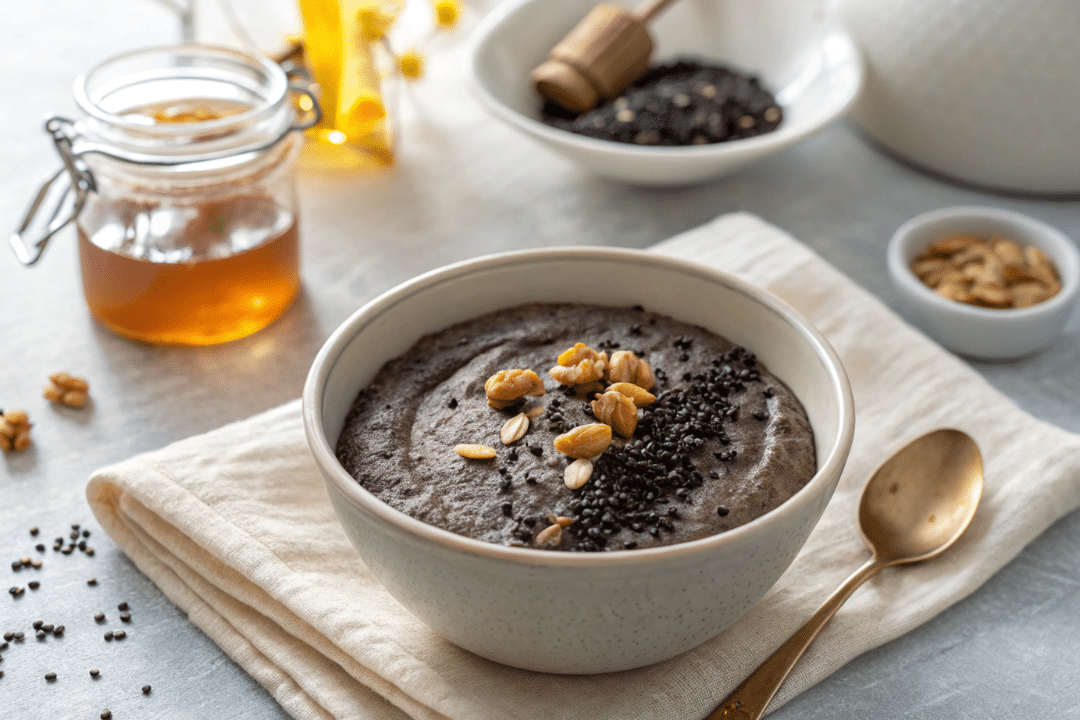
Control of temperature, stirring, and small water additions decides whether the pot stays clean and the texture stays smooth. Use clear cues, not guesswork, and you’ll avoid bitter scorch while finishing in a predictable time.
Heat Curve: Medium-High to Low, and Why it Matters
Start over medium-high to bring the mix to a gentle boil while you whisk. This wakes the rice starch and disperses sesame oils evenly.
Once bubbling, drop to low and let the mixture simmer for 10–15 minutes. A heavy pot helps by holding steady heat and reducing hot spots that burn toasted seeds.
Keep Stirring to Prevent Sticking and Clumping
Keep stirring is a method: scrape the bottom, reach corners, and whisk out clumps as they form. Use a whisk to break small lumps before they set.
The burnt bottom pot taste is acrid and bitter; with toasted sesame it becomes very noticeable. Regular scraping avoids that flavor.
Water Ratios, Timing Cues, and When to Add Water
Use 5 cups of water for a pudding-thick finish; 6 cups for a smooth, spoonable texture. If it tightens too fast, add water in small amounts, not all at once.
Doneness is visible and tactile: rice granules feel tender, the surface looks glossy, and the mixture coats a spoon. Expect 10–15 minutes of simmering time.
Season at the End
Add salt only after cooking. Early salting can break down rice and thin the base. Season at the table to suit tastes and avoid over-salting the full batch.
| Water | Texture | Best for |
|---|---|---|
| 5 cups | Thick, spoon-standing | Pudding-style bowls |
| 5.5 cups | Medium-thick, creamy | Everyday servings |
| 6 cups | Thin, smooth, pourable | Light morning bowls |
For a related creamy dessert technique, see this panna cotta variation: panna cotta variation.
Serving it the Korean Way (Plus Modern Breakfast Twists)
A thoughtful finish turns a good bowl into a memorable one. Taste first, then adjust the sweetness, saltiness, and texture at the table.
Honey at the End for a Floral Finish, not a Cooked-in Sweetness
Add honey after the pot cools slightly. Stirring it in at the end keeps the floral notes bright and prevents a flat, cooked taste.
Serve honey on the side if people prefer variable sweetness. A light drizzle preserves clarity; more gives dessert-like richness.
Balancing Flavors with Sides and Toppings
Contrast is key. Offer a small salty bite — kimchi or pickled greens — to cut the nutty base and add lift. This is a classic Korean food move.
- Pine nuts for buttery crunch.
- Walnuts for warm depth; almonds for crisp snap.
- Jujubes or goji berries for chewing and coloring.
For a modern twist, use sweet rice in the base for extra gloss or scatter dried berries on top. Reheat gently with a splash of water and stir until silky again.
Taste and adjust at serving. Seed toast level varies by brand, so start light with salt and honey and build to taste; it’s a great way to make each bowl your own.
Conclusion
Wrap the technique into a few repeatable steps so each batch turns out the way you expect. Soak the rice, grind the seeds until smooth, and bring the mix to a gentle simmer. Keep the heat low and stir while it cooks for 10–15 minutes to prevent sticking.
Control texture by how fine you blend and how much water you add. Avoid salting early — add salt only at the end. Finish with honey for a clear floral note and taste as you go; seed intensity varies, so adjust accordingly.
This recipe stores well in the fridge for about a week and freezes for months. Reheat gently with a splash of water and stir until silky, and you’ll have a reliable, comforting bowl anytime.

Black Sesame Breakfast Porridge with Honey
Ingredients
Method
- Rinse rice under cold water until water runs clear; soak at least 1 hour, then drain.
- In a blender, combine drained rice with 1 cup water and pulse until smooth. Gradually add remaining water and blend to a uniform slurry.
- Place the rice-sesame mixture in a heavy-bottomed pot over medium-high heat. Whisk constantly until it begins to bubble.
- Reduce heat to low and simmer 10–15 minutes, stirring frequently to prevent sticking or lumps. Add small amounts of water if it thickens too quickly.
- Taste and add a pinch of salt at the end. Stir in 2–3 tsp honey just before serving.
- Serve warm with optional toppings: nuts, jujubes, or a light extra drizzle of honey.
Notes
FAQ
Why is this Black Sesame Breakfast Porridge a good choice on cold mornings?
What is juk and why is it common in Korean kitchens?
How do toasted seeds change the flavor compared with regular sesame seeds?
Which rice should I use for the smoothest, creamiest texture?
How should I sweeten and salt the porridge for best balance?
Do I need to grind the seeds? What’s the best method?
Is straining necessary?
How can I avoid scorching the bottom of the pot?
What water-to-rice ratio should I use for different textures?
How long does the porridge need to cook once it simmers?
Why should I season at the end rather than the start?
What toppings or garnishes work well?
Can I store leftovers and reheat without losing texture?
About The Author

John
John Watson is the passionate food enthusiast behind MePlusFood.com. With a deep love for exploring culinary delights, he shares honest restaurant reviews, mouthwatering recipes, and culinary adventures. Join John on his flavorful journey to savor the world one bite at a time.