Buckwheat Crepes with Orange Zest & Almond Cream
The scent of browned butter and bright citrus hits first, promising thin buckwheat crepes with orange zest that fold soft and glossy. I focus on texture: a batter that spreads thin, a pan kept just hot enough, and a syrup that emulsifies rather than separates.
Expect to make delicate, flexible pancakes filled with almond cream and finished in a syrupy butter-citrus glaze. The approach borrows the showy logic of crêpes Suzette but leans into deeper nutty flavor and simple, repeatable technique.
You’ll learn the key controls that decide success: batter viscosity, pan heat, the quick swirl when adding the sauce, and how to coax an emulsion instead of a split sauce. This method fits a standard U.S. skillet and includes clear swaps for alcohol-free or dairy-free options so the structure stays intact.
Key Takeaways
- You will make thin, flexible crepes scented with citrus and filled with almond cream.
- Goal: batter that spreads and a sauce that emulsifies, not separates.
- Technique is learnable using a standard U.S. skillet and simple timing cues.
- Recipe borrows crêpes Suzette logic but emphasizes a nuttier flour for depth.
- Make-ahead steps let you cook earlier and assemble quickly for serving.
- Clear alcohol-free and dairy-free options preserve texture and flavor.
What Makes Buckwheat Flour Crepes Taste Richer Than Wheat
A darker, nuttier flour changes a simple pancake into something deeper and more savory. The grain offers toasted, almost cocoa-like notes that sit low on the palate. Those tones benefit from bright citrus perfume.
Bolder Flavor Met by Bright Aroma
Using orange zest rather than juice keeps the peel oils intact. The oils read as fresh fruit in each bite and lift the flour’s faint bitterness without watering the batter.
Choosing Flour in the U.S.
Look for finely milled buckwheat flour sold by Anthony’s or Bouchard for a smoother, less assertive profile. Very dark American-style flours taste more assertive; balance them with vanilla and a touch of sugar.
Gluten-Free, More Fiber and Protein
Because this grain contains no gluten, eggs, and a short rest helps bind and relax the batter for flexibility. It also brings a bit more fiber and protein than typical wheat, so slices feel heartier even when thin.
- Flavor: nutty, dark, faint cocoa-like bitterness.
- Aroma: peel oils (zest) give perfume without diluting the texture.
- Buy: finely milled, lighter-style brands for a milder bite.
| Flour Type | Flavor | Best Use |
|---|---|---|
| Light European | Delicate, less bitter | Thin, flexible pancakes; milder fillings |
| Dark American | Robust, toasty, assertive | Bold fillings; balance with vanilla and sugar |
| Wheat (all-purpose) | Neutral, sweet | Classic thin pancakes; softer texture |
The same flour choice that changes bitterness also shifts batter thickness and handling. In the next section, I’ll link those flavor choices to exact ingredient ratios and mixing cues.
Buckwheat Crepes with Orange Zest: Ingredients that Control Flavor and Texture
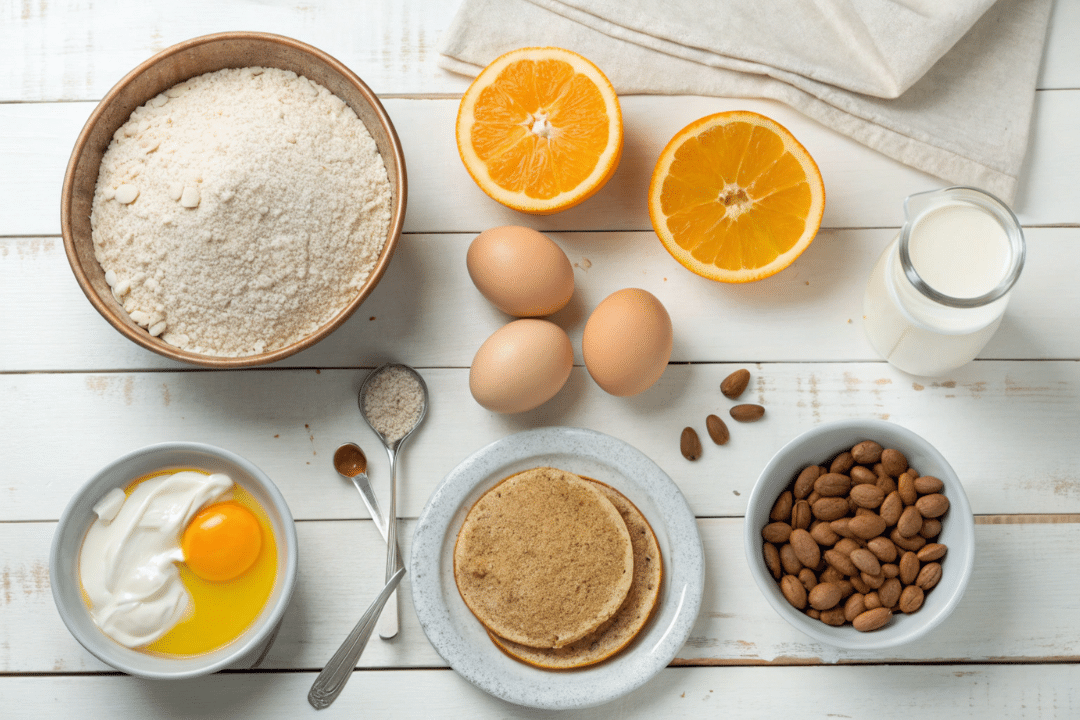
Good results begin at the ingredient table: every choice alters texture and taste.
Crepe Batter Essentials
Core ingredients and their jobs:
- Flour — provides structure and that nutty base.
- Eggs — bind and add elasticity so thin pancakes hold together.
- Milk — sets fluidity; use whole for richness or plant milk for dairy-free results.
- Salt — sharpens flavor contrast.
- Vanilla — rounds and softens sharper notes.
Texture Target and Mixing
The batter should pour easily and coat the pan in a thin film. Whisk dry items in one bowl and wet in another, then combine gradually. Sieve if lumps remain.
Aroma: Zest Versus Juice
Zest delivers concentrated peel oils and strong perfume. Juice adds acidity and extra liquid, which can thin the batter. Zest only the colored outer layer; avoid the white pith.
Sweets, Butter, and Almond Cream
Sugar helps sauces thicken and shine as they simmer. Butter supports browning and a glossy mouthfeel in both batter and syrup. For almond cream, add a pinch of salt so it reads clean and not flat; avoid bitter almond notes.
Smart Substitutions and Measures
Use almond or oat milk, or blend lighter flour into the base to soften the bite. Prefer alcohol-free orange extract to boost scent without extra liquid. Level cup and tablespoon measures for repeatable results.
These choices only succeed when pan heat and a steady swirl match the ratios above. For a related batter idea, see the buckwheat and banana skillet recipe.
Technique that Delivers Thin, Flexible Crepes Every Time
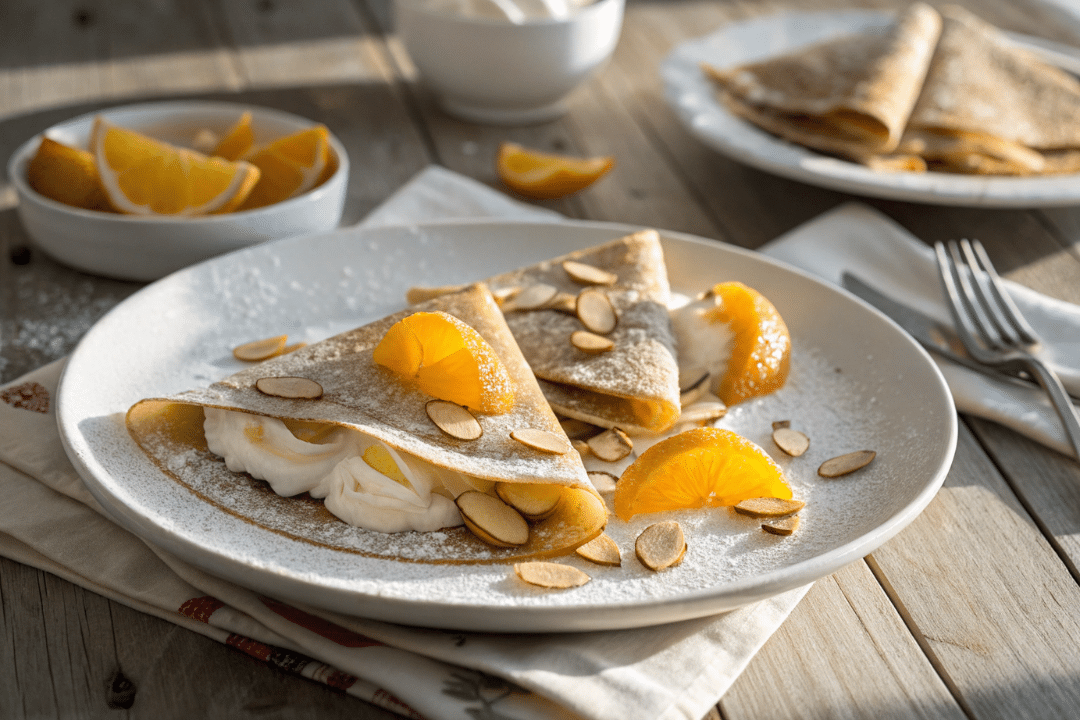
Start by tuning your pan and batter; the right rhythm makes thin pancakes effortless. A clear routine prevents stress at the stove and cuts wasted minutes. Below are practical cues and fixes for a typical U.S. stovetop.
Mixing Without Overworking
Whisk the dry ingredients, then stir in the liquids until just combined. Use gentle strokes; avoid vigorous whipping that traps air.
Overworking shows as a batter that springs back and tears on the pan. If that happens, let it rest for ten minutes—the air will relax, and the mix will smooth.
Fast Lump Fix and When to Sieve
If the batter has small lumps, push it through a fine sieve into a bowl. Do this before resting when lumps are obvious; skip the sieve if the mix smooths after ten minutes.
Pan and Heat Cues
Preheat a crepe pan or nonstick skillet on medium for a few minutes. Test readiness with a drop of water: it should dance across the surface, not vanish instantly or explode into steam.
| Action | Visual Cue | Adjustment |
|---|---|---|
| First preheat | Water drop dances | Medium heat; wait 2–3 minutes |
| Too fast browning | Edge chars in 30–40 seconds | Lower the heat one notch |
| Too slow setting | Batter pools, no color in 60 s | Raise the heat slightly |
Pour, Swirl, and Flip Timing
Lift the skillet off the heat to pour, then set it back while you swirl. That pause gives you seconds to spread a thin film before the batter sets.
Flip when the edges look dry, the surface loses shine, and the crepe releases cleanly—typically 30–45 seconds. Cook the second side 10–20 seconds more; it needs less time.
Stacking and Storage
Layer finished pancakes with parchment paper between each sheet to prevent sticking. Refrigerate for up to 3 days or freeze stacked in a sealed bag for 1 month.
To rewarm, steam briefly in a skillet over low heat or wrap in a damp towel and microwave in short bursts so they stay supple.
Orange-Scented Finish and Almond Cream Assembly that Looks Restaurant-Worthy
Make a bright, buttery glaze in a small pan, then assemble and fold so each serving looks deliberate and neat.
Build the Butter-and-Citrus Sauce
Melt butter gently over low heat to avoid greasy separation. Add sugar, a splash of juice, a pinch of salt, and a little peel oil for aroma. Simmer while whisking for about 8–10 minutes until the mixture emulsifies and turns glossy.
Emulsification means the butter and juice bind into a unified, shiny sauce instead of leaving pools of fat. The right cue is a thick sheen that coats a spoon and runs slowly off the back.
Filling, Folding, and Plating Order
Work in this order to keep items warm: warm the pan, pour a thin ribbon of sauce, return a pancake, spoon sauce over both sides, then add almond cream and fold.
| Fold | Look | Best for |
|---|---|---|
| Wrap | Fully enclosed | Maximum filling |
| Triangle | Clean edges | Individual plates |
| Handkerchief | Classic drape | Elegant top presentation |
Timing, Flambé Option, and Safety
Handle a couple of servings at a time so each plate arrives hot. Hold finished pancakes briefly on a warm tray while saucing the next batch.
For a Grand Marnier-style flambé: clear the area, use measured alcohol, light with a long-handled lighter, and keep a lid nearby to smother flame. For an alcohol-free boost, stir a few drops of extract off heat into the sauce.
Conclusion
Confidence at the stove—measured heat, a quick test, and calm timing—makes good crepes repeatable even for busy weeknights.
The flavor balance is simple: nutty buckwheat provides depth while peel oils lift the profile; that contrast is what keeps the filling bright and not cloying.
Two fast fixes save a session: sieve the mix if lumps persist, and lower or raise the heat after the first test pancake so the next ones set correctly.
Serve by cooking the stack, warming the sauce, spooning almond cream, folding neatly, and finishing each plate with a citrus gloss.
Try small variations in future recipes—swap citrus, tweak sweetness, or use different nut creams—and plan make-ahead steps: stack with parchment and rewarm gently.
One calm pan session teaches more than new tools. Practice the cues, not the gear, and results will follow.
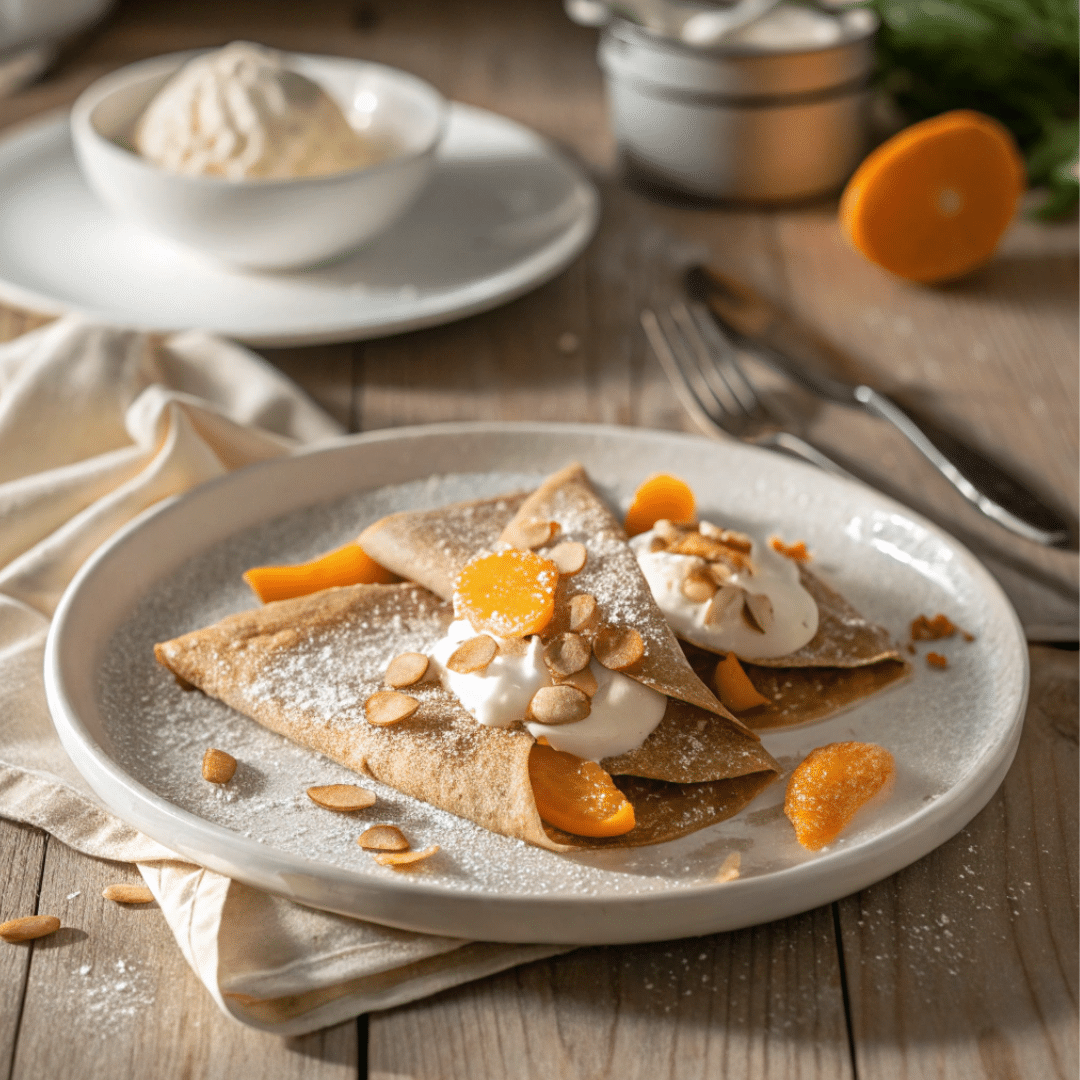
Buckwheat Crepes with Orange Zest & Almond Cream
Ingredients
Method
- Whisk buckwheat flour, sugar, and salt in a bowl.
- In a separate bowl, whisk eggs, milk, melted butter, vanilla, and orange zest.
- Gradually whisk wet ingredients into dry until smooth and pourable.
- Rest batter 10 minutes to relax structure and improve flexibility.
- Heat a nonstick pan over medium and lightly butter the surface.
- Pour batter, swirl thinly, and cook 30–45 seconds until edges release.
- Flip and cook second side 10–20 seconds; repeat with remaining batter.
- Whisk almond cream ingredients until smooth and lightly thickened.
- Fill crepes with almond cream, fold, and drizzle with warm orange butter if using.
Notes
FAQ
What gives these buckwheat crepes a richer flavor than standard wheat batter?
How should I make the batter to avoid toughness and overmixing?
Can I replace milk or butter for a dairy-free version?
How do I capture orange aroma without making the crepes soggy from juice?
What pan and heat settings work best to get thin, evenly cooked rounds?
My batter has lumps — how can I fix it fast?
When should I flip the crepe and how long does each side take?
How do I assemble and store crepes with an almond cream filling?
What’s the simplest way to make an orange-scented buttery sauce?
Are there good quick substitutions for almond cream if I don’t have almonds?
Is it safe to flambé with Grand Marnier-style liqueur at the table?
How much batter should I pour for one crepe and how thin should it be?
About The Author

John
John Watson is the passionate food enthusiast behind MePlusFood.com. With a deep love for exploring culinary delights, he shares honest restaurant reviews, mouthwatering recipes, and culinary adventures. Join John on his flavorful journey to savor the world one bite at a time.