Roasted Plum Yogurt Bowl with Cardamom
The first bite gives jammy plums, warm cardamom, and a bright hit of orange zest against cool, tangy yogurt. This recipe moves fast: preheat the oven, roast the fruit about 15 minutes, then whip the dairy and assemble in one bowl.
Rub brown sugar, cardamom, orange zest, and salt together by hand to bloom the oils and coat the fruit. Whipping full-fat Greek yogurt with a splash of heavy cream makes soft, airy peaks that balance the pan juices and honey.
This bowl works for busy summer mornings and for cooks who like to know why each step matters. Swap walnuts for pecans, or use maple syrup instead of honey, and still finish with crisp nuts and a spoonful of pan syrup for contrast.
Key Takeaways
- Roast fruit first for concentrated flavor and a tender texture.
- Whip yogurt with a little cream for light, soft peaks.
- Hand-rub spices and sugar to release citrus and cardamom aroma.
- Assemble in one bowl for a quick, balanced meal in minutes.
- Ingredient swaps (nuts, honey or maple) keep the bowl flexible.
Why Roasted Plums Make Yogurt Taste Like Dessert (but Eat Like Breakfast)
Apply heat and the fruit changes: acidity softens, sugars focus, and juices thicken into a spoonable sauce. That shift is why a simple oven step turns a bowl into something dessert-like while keeping it everyday practical.
What Heat Does to Plums
Roasting concentrates flavor. Heat breaks down cell walls so sugar and juice pool in the pan. You’ll see browned edges and slightly wrinkled skin at the rim—visual cues of doneness.
The Flavor Trio: Cardamom, Vanilla, and Salt
- Cardamom adds warm, citrusy notes that lift the fruit.
- Vanilla rounds and softens sharp acidity.
- A pinch of salt brightens sweetness and balances the bowl.
Texture Matters: Creamy Base Plus Crunchy Nuts
Greek yogurt gives tart creaminess that offsets the syrupy fruit. A sprinkle of toasted walnuts or pecans adds the crunch that keeps each spoonful interesting.
- Brown sugar or honey helps form a light pan syrup to spoon on top.
- Roasting saves time — fruit can stand in for jam with little fuss.
Ingredients that Nail a Roasted Plum Yogurt Breakfast Bowl
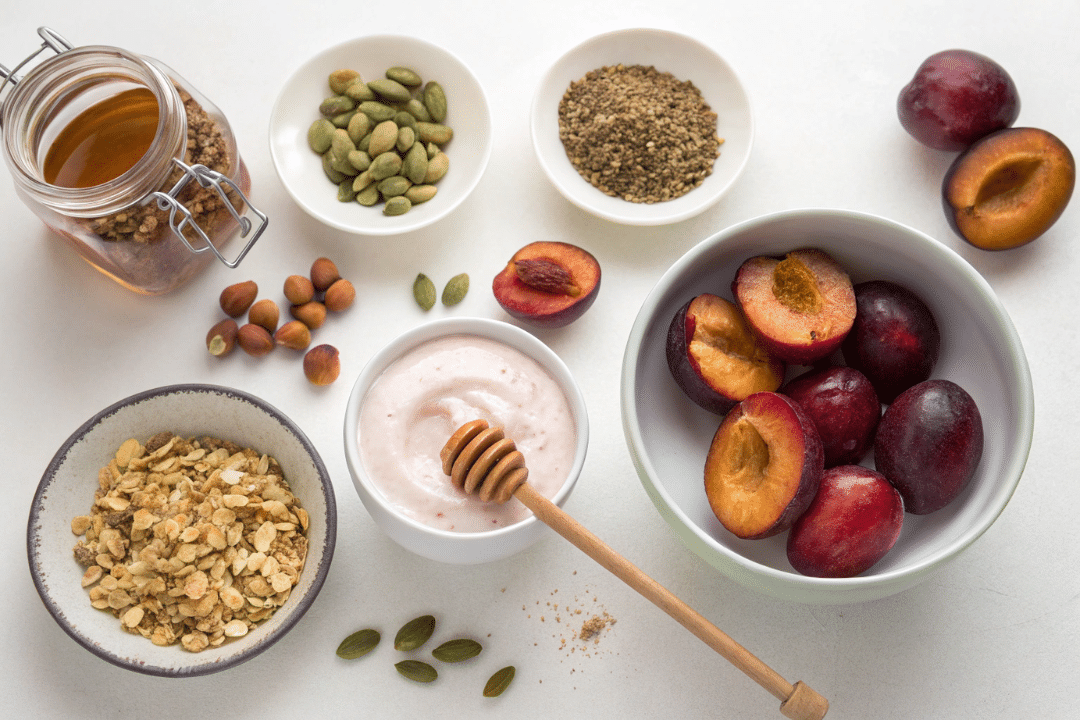
Choose fruit that yields just a touch when pressed. That gives easy pitting and keeps pieces from collapsing in the oven.
Pick the Right Fruit
Use ripe plums with a slight give—think avocado firmness. Red and black varieties at US markets roast reliably and keep shape.
Avoid fruit that feels mushy. You want flesh that softens and releases syrup but still holds a half or quarter piece on the spoon.
Sweeteners and Spice Options
Brown sugar brings caramel notes. Honey adds floral lift. Maple syrup gives a toasty depth.
For spices, ground cardamom adds citrusy warmth. Cinnamon gives a familiar, cozy profile. Rub orange zest into brown sugar with cardamom and salt for even flavor.
Best Yogurt Base
Full-fat greek yogurt is the creamiest choice. Skyr will feel denser and stand up to syrup.
A bit of heavy cream whipped into the greek yogurt makes it airier without turning the bowl into dessert fluff.
| Ingredient | Effect | Use when |
|---|---|---|
| Full-fat greek yogurt | Silky, balanced tang | Want creaminess and smooth texture |
| Skyr | Thicker, spoonable body | Prefer a dense base that holds fruit |
| Brown sugar / honey / maple syrup | Caramel / floral / toasty sweetness | Choose by flavor depth desired |
| Cardamom or cinnamon | Citrusy warmth or familiar spice | Cardamom for brightness; cinnamon for comfort |
Store leftovers in an airtight container up to 3 days. Expect the texture to soften; stir before serving in a small bowl.
How to Make a Roasted Plum Yogurt Bowl with Cardamom in Minutes
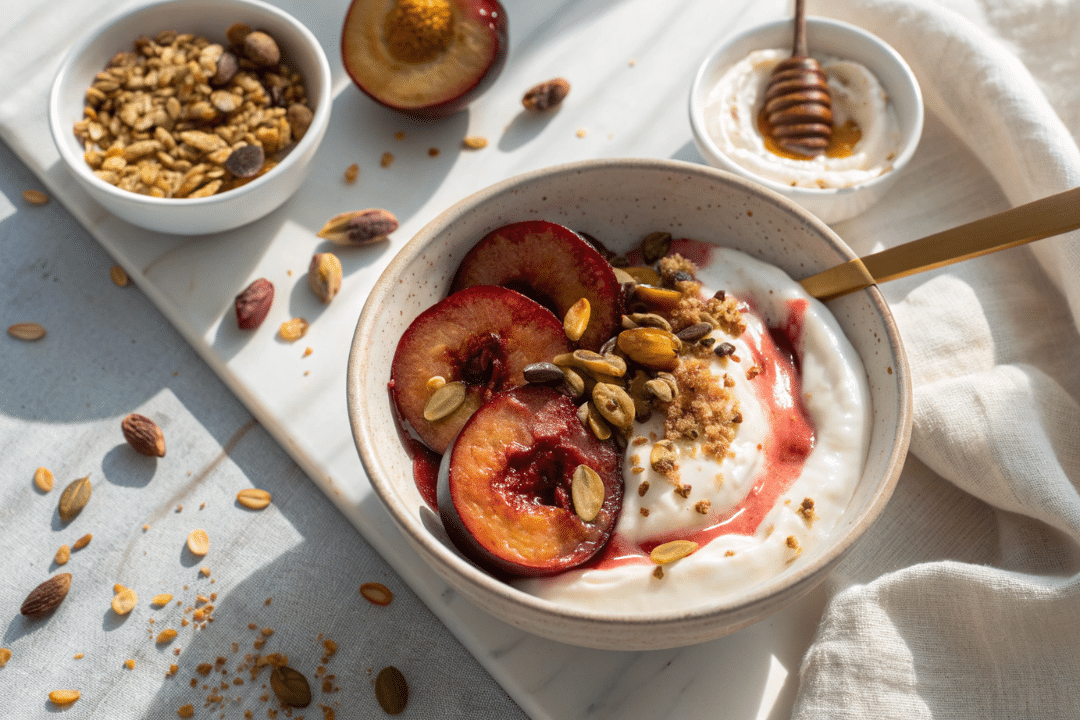
Set the oven, prep a pan, and the rest is straightforward technique that rewards attention.
Heat the Oven and Prep the Pan
Preheat to 400°F. High heat speeds caramelization without drying the fruit. Line a baking sheet with parchment or use a snug, buttered baking dish to keep syrupy juices from spreading thin.
Halve, Pit, and Steady the Fruit
Halve and pit each fruit, placing cut-side up so juices pool. If a half wobbles, slice a thin sliver from the bottom to stabilize it in the pan.
Make the Sugar–Cardamom Mix
In a small bowl, rub brown sugar with cardamom, orange zest, and a pinch of salt using your fingers. That friction releases oils and builds even flavor on each half.
Roast and Watch for Cues
Roast at 400°F until edges crinkle and juices appear in the pan, often 20–30 minutes depending on size and ripeness. Look for browned edges and visible syrup as your cue to pull them.
Whip the Base and Build the Bowl
Whisk greek yogurt with a splash of heavy cream to loose, soft peaks—airy, not stiff. Layer the base, spoon the warm fruit and pan syrup over it, and top with roasted walnuts, pecans, or almonds.
Finish, Variations, and Make-Ahead
Drizzle a little honey or maple in a controlled ribbon so sweetness stays balanced. For fast variations, try cinnamon-vanilla, grill-roasting with the lid closed, or a biscuit-style crunch layer. Roast the fruit ahead and serve at room temperature; store leftovers airtight up to 3 days.
| Step | Why it matters | Timing |
|---|---|---|
| Preheat to 400°F | Promotes quick caramelization | Immediate |
| Halve & stabilize | Even roasting, no rolling | 5–10 minutes |
| Roast until crinkled | Concentrates sugars into syrup | 20–30 minutes |
Conclusion
Aim for crinkled edges and glossy pan juices; that syrup is the shortcut to a balanced bowl. Use that juice right away — it carries most of the flavor.
The flavor logic is simple. Warm, caramelized fruit meets cool, tangy base. The contrast makes this recipe flexible with other stone fruit.
Save time by roasting while coffee brews or when the oven is already hot for another dish. Serve best fresh or at room temperature so the fruit tastes fuller against cold yogurt.
Store leftovers in an airtight container up to 3 days; texture softens but flavor holds. Treat this as a summer meal or a light dessert, and try swapping cinnamon for cardamom or changing the crunch layer for your next experiment.
For another cozy, savory contrast, see my soup swap idea at my favorite sunchoke and garlic soup.
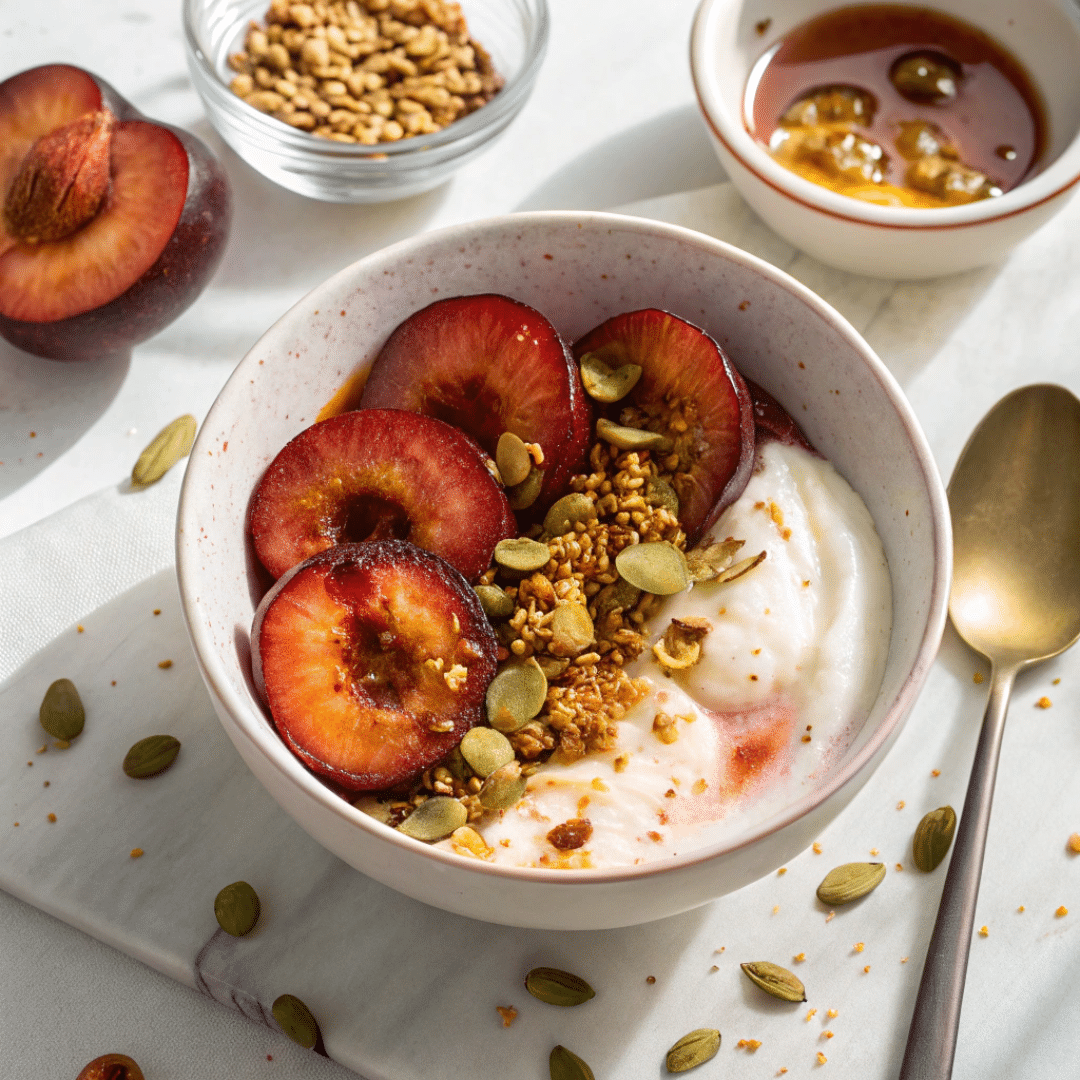
Roasted Plum Yogurt Bowl with Cardamom
Ingredients
Method
- Preheat oven to 400°F (200°C). Line a baking sheet with parchment or lightly butter a small baking dish.
- Halve and pit the plums, placing cut-side up. Trim a thin slice from the bottom if a half wobbles.
- In a small bowl, rub together brown sugar, cardamom, orange zest, and salt. Sprinkle evenly over the plum halves.
- Roast for 20–30 minutes until edges crinkle and juices pool, watching for syrup formation and slight caramelization.
- Whisk Greek yogurt with heavy cream until soft peaks form (airy but not stiff).
- Assemble bowls: layer yogurt, spoon warm roasted plums and pan syrup over the top, and finish with toasted nuts.
- Optional: drizzle extra honey or maple in a controlled ribbon for sweetness.
Notes
FAQ
What makes roasted plums pair so well with thick yogurt?
How do I choose fruit that will hold up when heated?
Can I substitute sweeteners or spices in the topping?
What yogurt should I use for the best texture?
What oven temperature and timing produce the best caramelization?
How do I prep fruit so it roasts evenly and doesn’t roll on the pan?
Should I add anything to the yogurt before building the bowl?
What toppings give the best texture contrast?
Any quick variations if I’m short on time?
How long will leftovers keep and how should I store them?
About The Author

John
John Watson is the passionate food enthusiast behind MePlusFood.com. With a deep love for exploring culinary delights, he shares honest restaurant reviews, mouthwatering recipes, and culinary adventures. Join John on his flavorful journey to savor the world one bite at a time.