Crispy Almond Pulp Crackers: A Simple Recipe to Love
I love turning almond pulp into crisp, golden bites that taste like a small kitchen victory.
Right after I strain homemade almond milk, I blend the skins first to soften tannins and deepen flavor. Then I add flax, chia, herbs, and a splash of almond milk only if needed so the mix comes together without getting wet.
I roll the dough to about 1/4 inch, dust the rolling pin with almond flour if it sticks, cut before drying, and choose a dehydrator or oven. At 130°F, the crackers need about eight hours to snap; in a 350°F oven, I bake 15 minutes, flip, then bake another 15 until fully dry.
These pulp crackers rescue leftover goodness—fiber, fat, and plant protein—and bake into something savory, toasty, and reliably crisp. Store them tight at room temp for a few days or chill for up to a week; a quick re-crisp in a warm oven brings them back.
Key Takeaways
- Use leftover almond pulp from homemade almond milk and blend the skins first for better flavor.
- Add flax, chia, and herbs; use a splash of milk only if needed to blend.
- Roll to 1/4 inch, cut before drying, and dust with almond flour to prevent sticking.
- Dehydrate 130°F ~8 hours or bake 350°F 15 + 15 minutes, flipping halfway.
- These crackers deliver fiber, fat, and protein; store airtight for best snap.
Why these Almond Pulp Crackers Make the Most of Leftover Almond Milk Making
Leftover pulp from homemade milk becomes a tiny act of kitchen conservation when I turn it into crisp snacks. It feels deliberate and practical. And it tastes like purpose.
I save leftover almond pulp because it packs fiber, fat, and protein. Blending the skins first tames tannins that once bothered my milk. In the crackers, that slight tannic edge shifts to savory depth.
Flax and chia bind the mix naturally. They add structure without eggs. That means reliable texture, whether I use a dehydrator or the oven.
A Zero‑Waste, Nutrient‑Dense Snack from Leftover Almond Pulp
- More from one batch: fewer scraps, more snack prep with minimal effort.
- Natural binders boost nutrition and help the dough hold its shape.
- Simple add‑ins—garlic, herbs, a drizzle of olive oil—turn a neutral base into a star.
What to Expect: Crisp Snap, Savory Depth, and Customizable Flavor
Dehydrating at 130°F keeps a clean snap. Baking at 350°F is faster and roaster. Watch the edges for even color; that tells you more than a timer.
Almond Pulp Crackers Recipe: Ingredients, Tools, and Step‑by‑Step
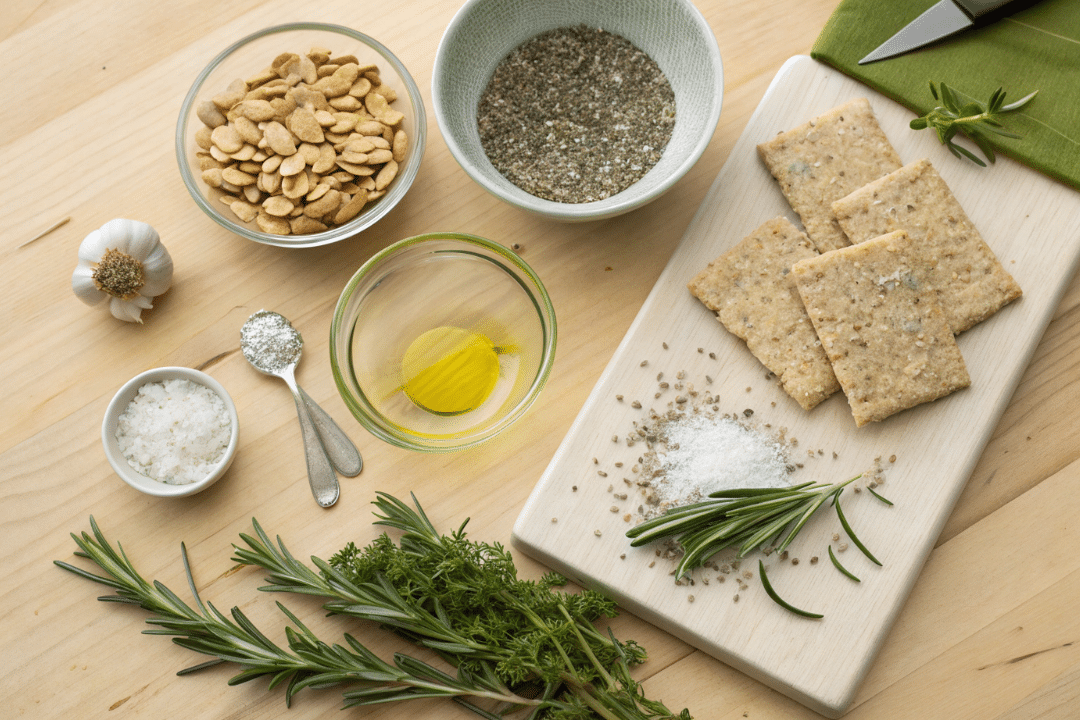
I keep a jar of wet pulp in the fridge so I can turn scraps into a crunchy snack any time. Below, I list what I use, how I prep, and exact cues to watch for while baking or dehydrating.
Ingredients You’ll Need
Wet almond pulp with skins from making almond milk, 2 tbsp flax seeds, 2 tbsp chia seeds, 2 tbsp fresh thyme, and 1–2 tbsp almond milk only if blending is dry. Salt and pepper to taste. That’s it.
Tools and Prep
Use a bowl or blender, a rolling pin, parchment paper on a baking sheet, and a fork or pizza wheel for scoring. Place another sheet of parchment paper on top when you use the rolling pin to prevent sticking.
Methods and Cues
- Preheat oven to 350°F. Line a baking sheet with parchment paper, scoop the dough, top with another sheet, and roll to 1/4 inch.
- Bake 15 minutes, flip, then bake another 15 minutes. Look for toasty edges and a firm feel.
- For raw-style crisp: dry at 130°F in a dehydrator about 8 hours until a clean snap.
- If dough resists, add almond milk 1–2 teaspoons at a time; stop when it holds when squeezed but isn’t wet.
| Method | Temp | Time | Doneness cues |
|---|---|---|---|
| Oven | 350°F | 15 + 15 minutes (flip) | Toasty edges, firm to the touch, lift clean from paper |
| Dehydrator | 130°F | About 8 hours | Dry snap, no chew, even color |
| Prep tips | — | — | Roll between sheet parchment paper; use a fork to vent; dust with a pin if sticking |
For more pantry-transforming ideas, try a related breakfast recipe using acorn flour that pairs well with savory boards.
Flavor Upgrades, Dietary Swaps, and Serving Ideas
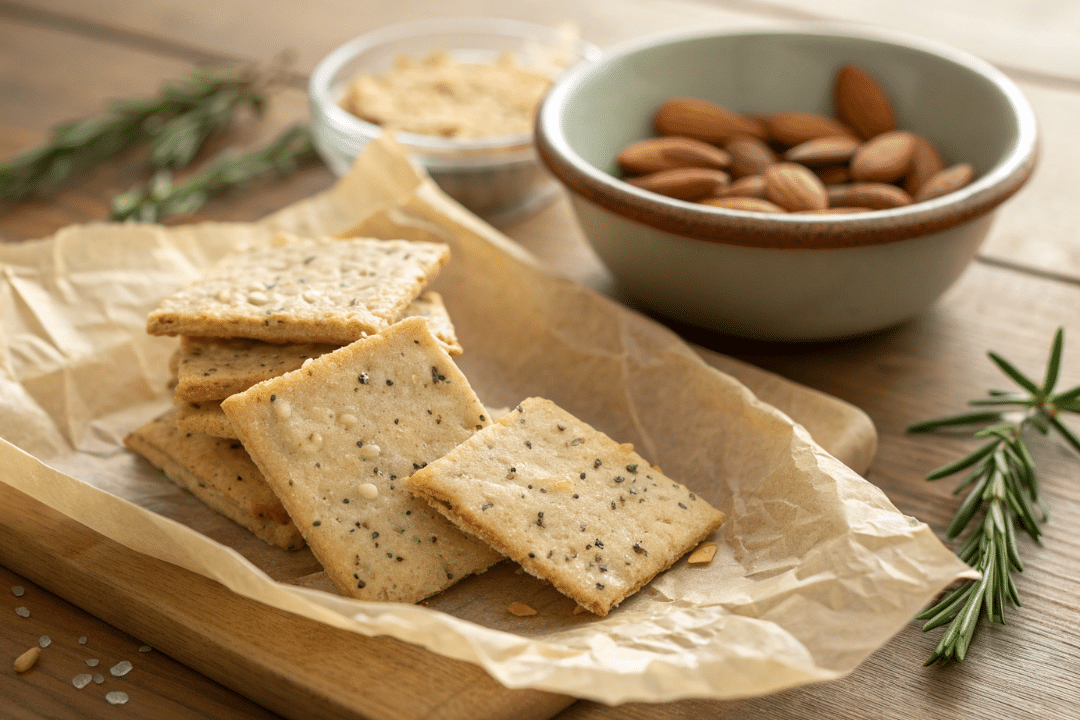
I reach for garlic and herbs first when I want an instant flavor upgrade. Two tablespoons of nutritional yeast and 1 teaspoon of garlic powder add a cheesy vibe. Drizzle 1 tablespoon olive oil to help with browning and mouthfeel.
Cheesy, Garlicky, and Herby Variations
Try fresh thyme, rosemary, or oregano—1–2 teaspoons chopped—mixed into the dough. For brightness, grate a teaspoon of lemon zest with minced garlic. For heat, add 1/4 teaspoon crushed red pepper or smoked paprika and a grind of black pepper.
Gluten‑Free, Vegan, and Low‑Waste Tweaks
The base is naturally gluten‑free and vegan. Dust with almond flour when handling sheet parchment paper to prevent sticking. Mix in 2 tablespoons of seeds for texture and stir for 2–3 minutes of stirring before shaping the dough.
How to Serve
These pulp crackers pair beautifully with vegan cheese, smoky bean dip, or a creamy almond pulp hummus. Serve on snack boards, with soups, or alongside salads for extra crunch. For a related sweet-savoury pairing, try this carrot halwa cheesecake idea here.
Conclusion
A quick bake and a careful cool turn leftovers into something I actually want to snack on. These almond pulp crackers are proof that simple steps after making almond milk pay off.
When you finish making homemade almond milk, move the pulp to a bowl while the oven heats. Roll to about 1/4 inch, cut before drying, then bake at 350°F for 15 minutes per side or dry at 130°F in a dehydrator for about 8 hours.
If the dough feels sticky, dust with a pinch of almond flour and roll between parchment paper. Let crackers cool fully; the snap sets as they rest.
Store airtight at room temperature for 3–4 days or in the fridge up to a week. If they soften, re‑crisp on a paper‑lined sheet in a warm oven for a few minutes. Small habits, big flavor—keep a pin, a spare sheet, and a tablespoon measure handy and repeat this easy recipe often.
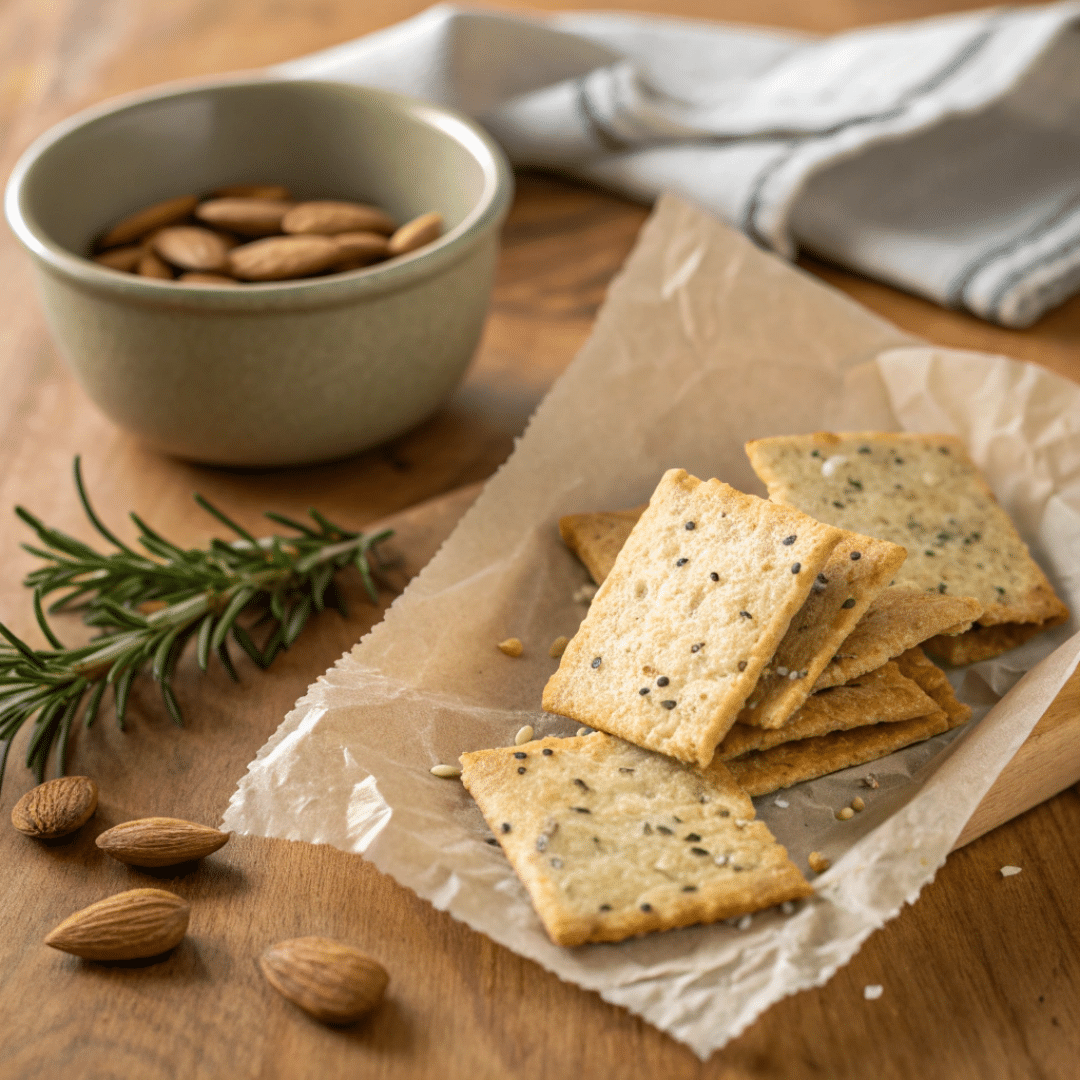
Crispy Almond Pulp Crackers
Ingredients
Method
- Combine almond pulp, flax seeds, chia seeds, thyme, salt, and pepper in a bowl. Add almond milk 1 teaspoon at a time only if the dough feels crumbly. Mix until it holds together when squeezed.
- Place dough between two sheets of parchment paper. Roll to about 1/4-inch thickness. Remove the top sheet and score into cracker squares with a fork or pizza wheel.
- Preheat the oven to 350°F (175°C). Bake for 15 minutes, flip the sheet, and bake another 15 minutes. Look for toasty edges and a firm, dry feel.
- Spread the dough on dehydrator trays. Dry at 130°F for about 8 hours, or until the crackers snap cleanly with no chew.
- Let crackers cool fully for maximum crispness. Serve with vegan cheese, dips, soup, or hummus.
Notes
FAQ
What can I make with leftover almond pulp after making homemade almond milk?
Do I need special tools to make these crackers?
How do I know when the crackers are done in the oven?
Can I make these gluten‑free or vegan?
How do I adjust thickness and texture when rolling the dough?
What flavor variations work best with this base?
Can I use a dehydrator instead of an oven?
How long do the crackers keep, and how should I store them?
Can I add seeds or extra protein to the recipe?
Is there a trick to preventing the dough from sticking to the paper when rolling?
About The Author

John
John Watson is the passionate food enthusiast behind MePlusFood.com. With a deep love for exploring culinary delights, he shares honest restaurant reviews, mouthwatering recipes, and culinary adventures. Join John on his flavorful journey to savor the world one bite at a time.