Crispy Pan-Fried Pork Gyoza with Ponzu Dipping Sauce
Jump to Recipe
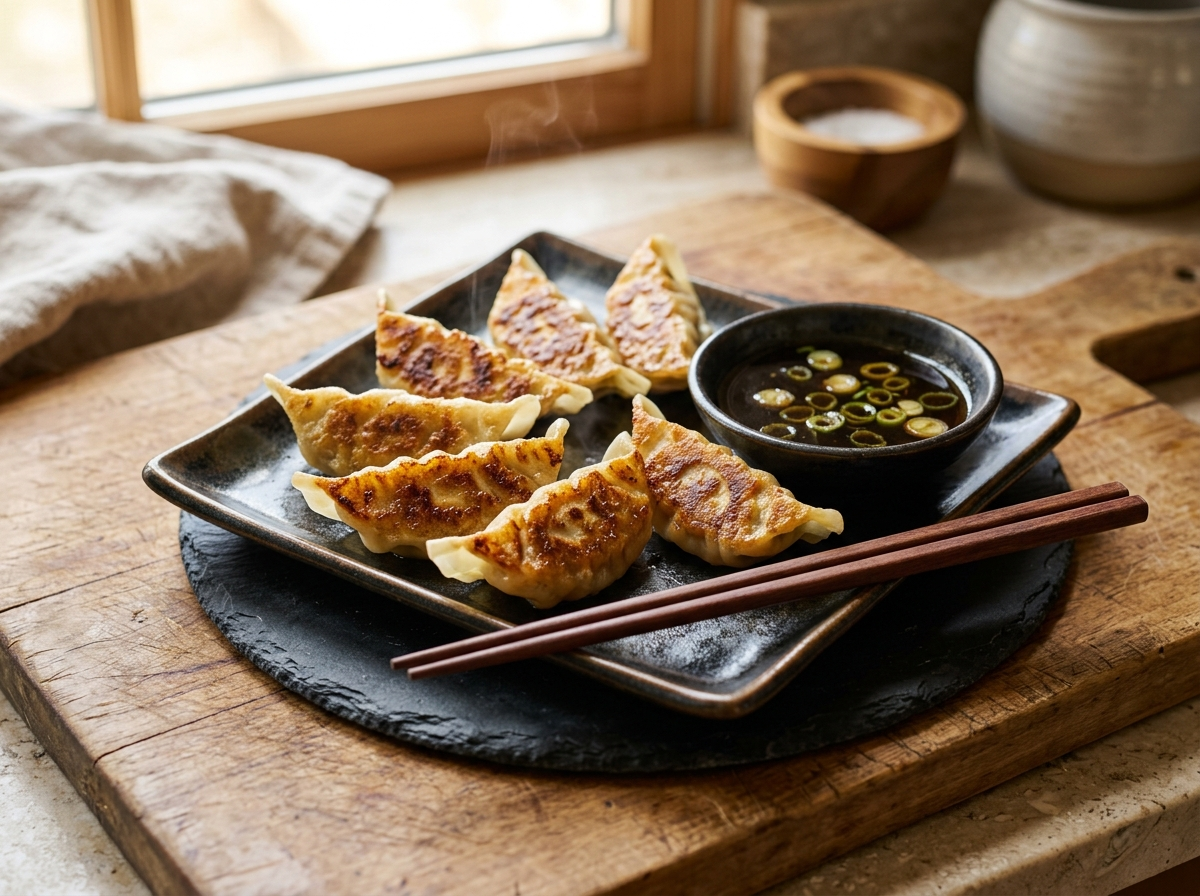
Crispy pork gyoza with ponzu comes down to one technique: sear the bottoms in oil first, then add water and steam under a lid so the filling cooks through while the wrapper stays tender on top. That combination, crisp on one side and pillowy everywhere else, is what separates good gyoza from a soggy dumpling.
The filling is just ground pork, finely chopped cabbage, garlic, ginger, and scallion, seasoned with soy sauce and a splash of sesame oil. I salt the cabbage first and squeeze out the liquid, otherwise the filling turns watery and the wrappers tear as you fold.
Ponzu takes five minutes: soy sauce, rice vinegar, fresh citrus juice, and a little mirin. It’s brighter than plain soy sauce and cuts through the richness of the pork.
This makes about 24 gyoza, enough for 4 as a starter or 2 as a light dinner with rice on the side.
Why You’ll Love This Recipe
- Crisp bottoms and soft tops from one simple pan-fry-then-steam method
- Ponzu comes together in 5 minutes with pantry ingredients
- Filling can be mixed a day ahead for faster weeknight folding
- Freezes well raw, so you can fry a small batch anytime
Ingredient Notes
- Ground pork: Use 80/20 fat content for juicy filling. Ground chicken thigh works as a substitute but the filling will be slightly drier.
- Napa cabbage: Salt it and squeeze out excess water before mixing into the filling, or the gyoza will steam-split from the extra moisture.
- Gyoza wrappers: Round dumpling wrappers, found in the freezer or refrigerated section of Asian grocery stores. Wonton wrappers can work in a pinch but seal less easily.
- Fresh ginger and garlic: Grate the ginger finely so it disperses through the filling instead of clumping in one bite.
- Ponzu base: Made from soy sauce, rice vinegar, mirin, and fresh lemon or lime juice. Bottled yuzu juice gives a more traditional citrus note if you can find it.
- Toasted sesame oil: Add it off the heat at the end of mixing the filling so the aroma doesn’t cook off.
Crispy Pan-Fried Pork Gyoza with Ponzu Dipping Sauce
Ingredients
Method
- Toss the chopped cabbage with 1/2 tsp salt and let it sit for 10 minutes, then squeeze out as much liquid as possible in a clean towel.
- Mix the pork, squeezed cabbage, garlic, ginger, scallion, soy sauce, sesame oil, sake, and white pepper in a bowl until evenly combined.
- Cover and rest the filling in the fridge for 15 minutes so the flavors settle before folding.
- Place 1 tbsp of filling in the center of a wrapper, keeping the edges clean and dry.
- Wet the edge with a fingertip dipped in water, fold in half, and pleat the top edge into 4 to 5 small folds while pressing the bottom flat to seal.
- Repeat with the remaining wrappers, keeping finished gyoza under a damp towel so they don't dry out.
- Heat 1 tbsp oil in a 10-inch nonstick skillet over medium-high heat until shimmering.
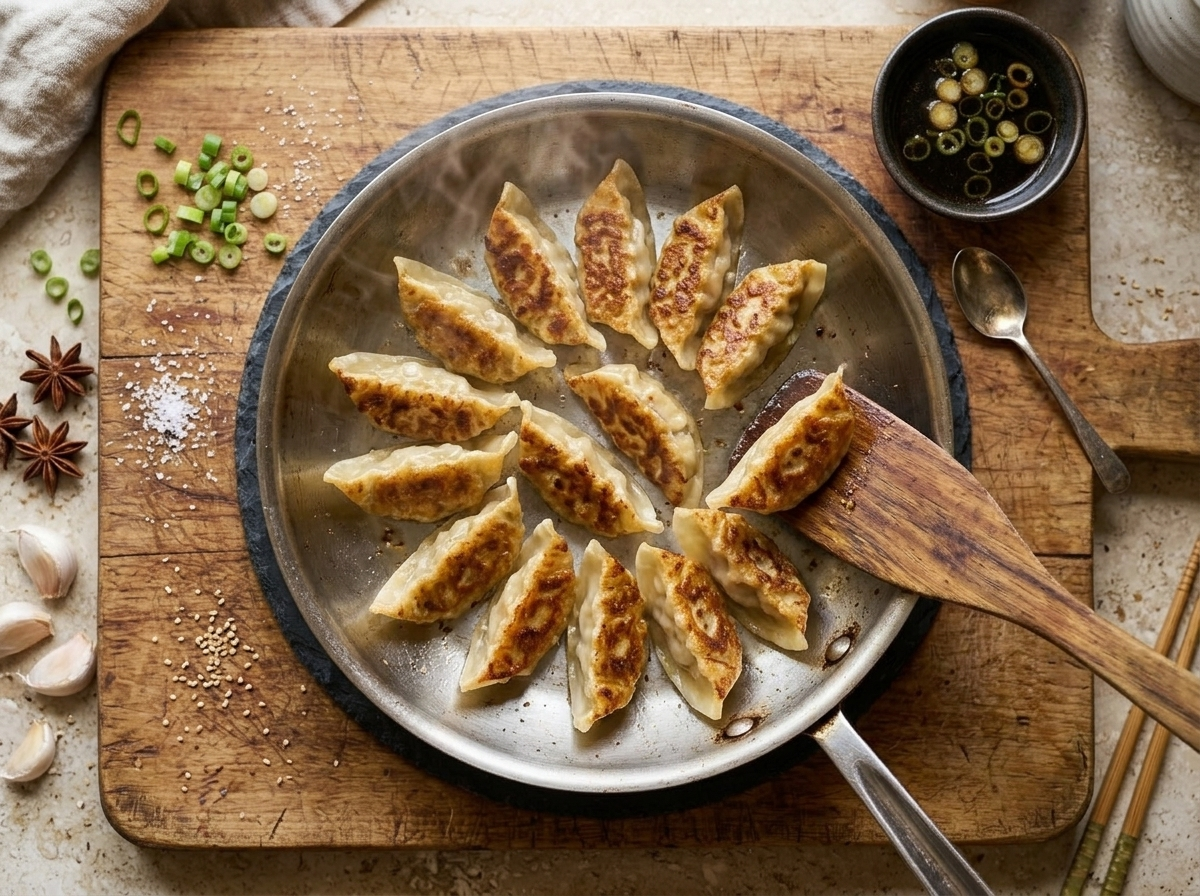
- Arrange 12 gyoza flat-side down in the pan and fry undisturbed for 2 minutes until the bottoms turn light golden.
- Pour 1/4 cup water into the pan off to the side, cover immediately, and steam for 4 to 5 minutes until the filling reaches 165 F / 74 C and the wrappers turn translucent on top.
- Uncover and cook for 2 to 3 more minutes until the water evaporates and the bottoms turn deep golden and crisp.
- Transfer to a plate and repeat with the second batch, adding the remaining oil and water as needed.
- Whisk together the soy sauce, rice vinegar, citrus juice, and mirin in a small bowl until combined.
- Stir in the sliced scallion just before serving and divide into small bowls for dipping.
Notes
- Salt and squeeze cabbage dry before mixing, this is the step most people skip and regret.
- Cook pork filling to 165 F / 74 C internal temperature before serving.
- Fry in batches of 12 in a 10-inch skillet for even browning.
- Uncover the pan for the last few minutes to crisp the bottoms.
- Make ponzu up to 3 days ahead and keep refrigerated in a sealed jar.
Tips for Success
- Squeeze the salted cabbage dry in a clean towel before mixing it into the pork.
- Keep a damp towel over the wrappers while you fold so they don’t dry out and crack.
- Fry gyoza in batches of 12 in a 10-inch skillet so they cook evenly without steaming each other.
- Add the water off to the side of the pan, not directly on the gyoza, to avoid splattering hot oil.
- Uncover the pan for the last 2 to 3 minutes so the bottoms crisp instead of staying soft.
Variations
- Swap half the pork for finely chopped shrimp for a lighter, slightly sweeter filling.
- Add a spoonful of chili crisp to the ponzu for a spicy version of the dip.
- Steam only, skipping the pan-fry, for a softer dumpling if you’re serving a crowd fast.
Storage and Reheating
Store cooked gyoza in an airtight container in the fridge for up to 3 days. Reheat in a dry skillet over medium heat for 2 to 3 minutes per side to bring back some crispness, or microwave for 60 seconds if you don’t mind a softer texture.
Uncooked gyoza freeze well. Lay them flat on a parchment-lined tray, freeze until solid, then transfer to a freezer bag for up to 2 months.
Cook frozen gyoza straight from the freezer, no need to thaw, just add 2 to 3 extra minutes to the steaming step.
Serving Suggestions
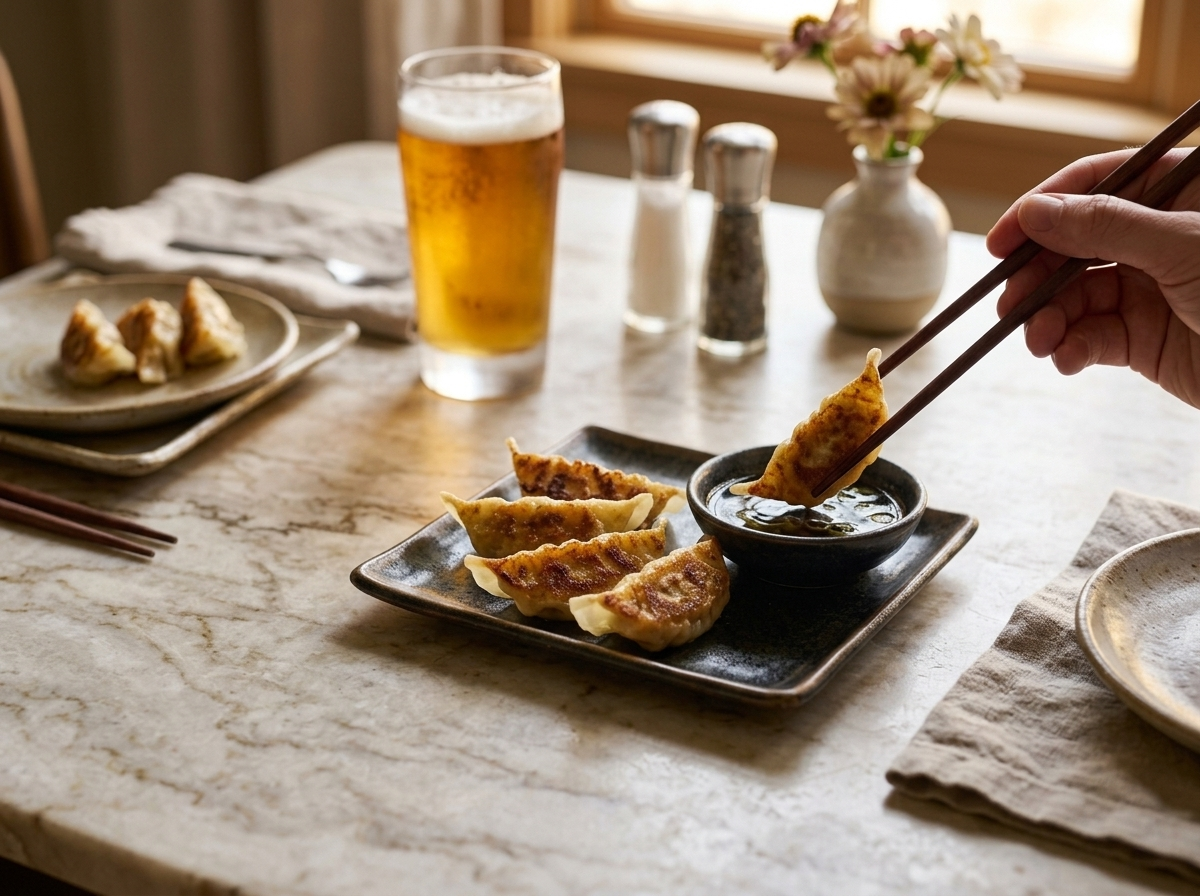
Serve crispy pork gyoza with ponzu as a starter alongside a simple cucumber salad or steamed edamame. A small bowl of steamed white rice turns the same plate into a light dinner for two.
I like setting out extra chili oil or a scattering of thinly sliced scallion so people can adjust their own dipping sauce. A cold beer or crisp Japanese lager works well with the richness of the pork.
FAQ
Why are my gyoza wrappers tearing when I fold them?
This usually means the wrappers dried out or the filling is too wet. Keep unused wrappers covered with a damp towel while you work, and squeeze all excess liquid out of the salted cabbage before mixing it into the pork. Overfilling each wrapper also puts too much strain on the seal.
Can I use ground chicken instead of pork in this gyoza filling?
Yes, ground chicken thigh is a good substitute for pork in this recipe. The filling will be slightly leaner and drier, so add an extra teaspoon of sesame oil to keep it moist. Cook chicken filling to the same 165 F / 74 C internal temperature as pork.
Can I freeze uncooked pork gyoza before frying them?
Yes, freeze them raw on a parchment-lined tray until solid, then bag them for up to 2 months. Cook straight from frozen, no thawing needed, just extend the covered steaming step by 2 to 3 minutes so the filling cooks through fully.
What goes well with crispy pork gyoza besides ponzu?
A simple cucumber salad, steamed edamame, or a bowl of white rice all round out the plate. Chili oil or a soy-vinegar dip work as backups if you want variety alongside the ponzu. Miso soup makes it feel like a full meal.
Are pork gyoza with ponzu gluten free?
Not as written, since regular gyoza wrappers and standard soy sauce both contain wheat. To make it gluten free, use rice paper or gluten-free dumpling wrappers and swap in tamari for the soy sauce in both the filling and the ponzu.
What’s the difference between gyoza and Chinese potstickers?
Gyoza wrappers are thinner and the filling leans more garlicky with cabbage, while potsticker dough is thicker and chewier. Gyoza also tend to be smaller and pleated tighter. Both use the same pan-fry-then-steam cooking method, but the seasoning and wrapper texture set them apart.
If you enjoyed this, try
About The Author

John
John Watson is the passionate food enthusiast behind MePlusFood.com. With a deep love for exploring culinary delights, he shares honest restaurant reviews, mouthwatering recipes, and culinary adventures. Join John on his flavorful journey to savor the world one bite at a time.