Crispy Pork Carnitas with Pickled Onion
Jump to Recipe
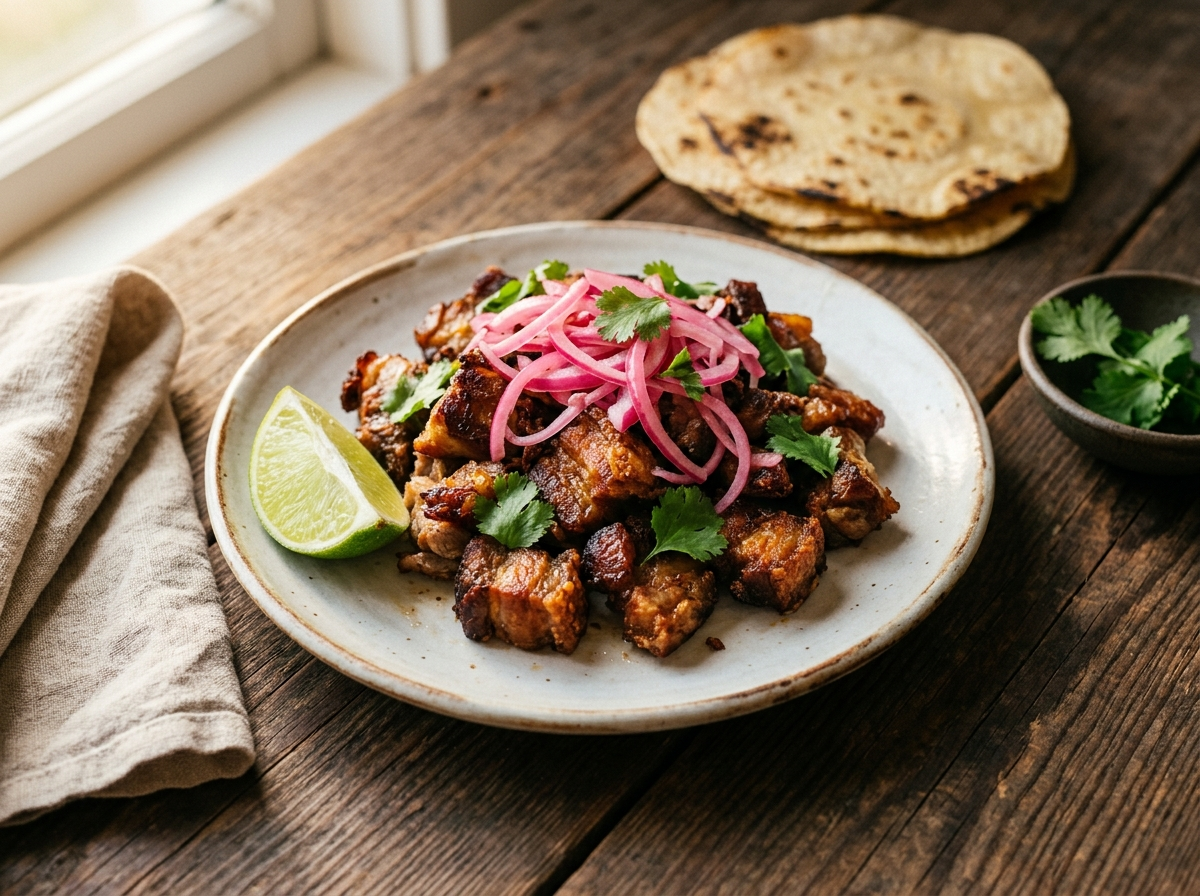
Carnitas works because of contrast. The pork goes into the pot fatty and tough, braises until it surrenders completely, then finishes in a hot skillet where the fat crisps the exterior to something almost crackly. That textural shift is the whole point.
The pickled onion is not a garnish. Bright, acidic, slightly crunchy, it counterbalances the fatty pork in a way that fresh onion or salsa just doesn’t. I make the pickled onion first so it has time to mellow while the pork cooks.
This is a two-step recipe, but neither step is complicated. The braising is mostly hands-off, and the crisping takes ten minutes at the end. Most of the work is just waiting.
Why You’ll Love This Recipe
- Pork crisps in its own fat, no extra oil needed
- Pickled onion takes 10 minutes and keeps for a week
- Braise liquid doubles as a sauce or rice cooker liquid
- Works for tacos, bowls, or nachos with zero extra effort
Ingredient Notes
- Pork shoulder (bone-in or boneless): Bone-in adds more collagen and flavor to the braise liquid, but boneless is easier to shred. Either works fine at 1.2 to 1.5 kg.
- Fresh orange juice: The citrus acidity helps tenderize the pork and adds a faint sweetness. Bottled juice works in a pinch, but fresh gives noticeably cleaner flavor.
- Red onion (for pickling): Red onion softens faster than white in the brine and turns a vivid pink. White or yellow onion can substitute but won’t have the same color payoff.
- Apple cider vinegar: I use apple cider vinegar for the pickle brine because it’s slightly mellow. White wine vinegar is a direct swap. Avoid balsamic here.
- Dried oregano (Mexican if available): Mexican oregano has a citrusy, slightly floral edge that suits pork well. Standard Mediterranean oregano works but tastes slightly more savory and less bright.
- Chipotle peppers in adobo: Adds smokiness and a controlled heat level. Use one pepper for mild, two for medium. Smoked paprika plus a pinch of cayenne is a reasonable substitute if you don’t have chipotles.
Crispy Pork Carnitas with Pickled Onion
Ingredients
Method
- Combine the apple cider vinegar, warm water, sugar, and salt in a small bowl and stir until both the sugar and salt dissolve completely.
- Pack the sliced red onion into a jar or heatproof bowl and pour the brine over, pressing the onion down so it is fully submerged. Set aside at room temperature for at least 30 minutes. The onion will turn pink and soften slightly.
- Pat the pork chunks dry with paper towels. In a small bowl, mix the cumin, oregano, smoked paprika, salt, and pepper, then toss the pork pieces in the spice mix until evenly coated.
- Place the pork in a single layer in a large Dutch oven. Add the orange juice, lime juice, chicken stock, minced chipotle, smashed garlic, and bay leaves. The liquid should come about halfway up the pork.
- Bring to a boil over medium-high heat, then reduce the heat to low, cover tightly, and braise for 1 hour 45 minutes to 2 hours until the pork is fork-tender and pulls apart with very little resistance.
- Remove the pork pieces with tongs and set on a plate or sheet pan. Discard the bay leaves. Pour the braising liquid through a fine-mesh sieve into a small saucepan and simmer over medium heat for 8 to 10 minutes until reduced by half. Reserve this sauce.
- Pat the braised pork pieces dry with paper towels. Use two forks to coarsely shred the meat, keeping some larger chunks for texture contrast. Do not shred everything fine.
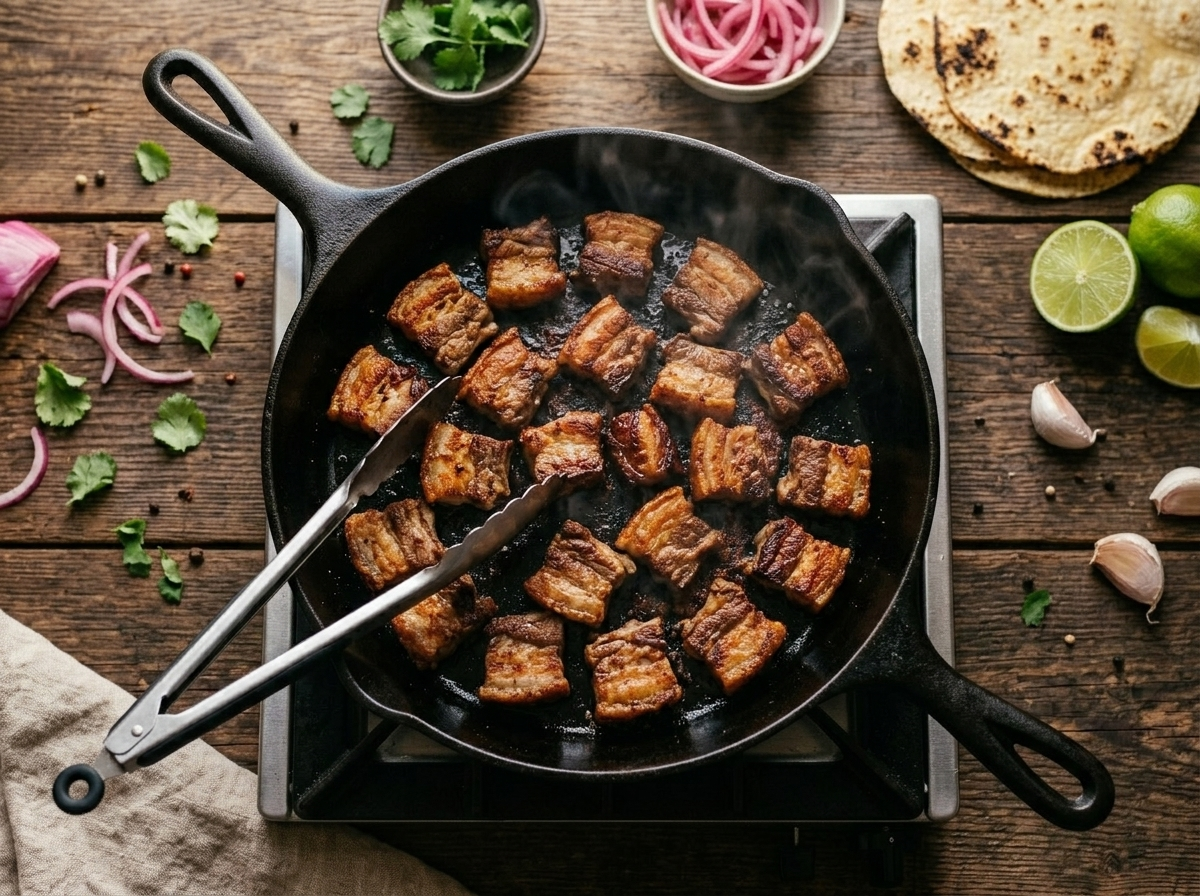
- Heat a 12-inch cast-iron skillet over medium-high heat until very hot, about 2 minutes. Add the pork in a single layer without crowding - work in two batches if needed.
- Press the pork flat with a spatula and cook undisturbed for 3 to 4 minutes until the bottom is deeply browned and crisp. Flip and crisp the other side for 2 minutes. Spoon a tablespoon of the reduced braising liquid over the pork in the last minute of cooking.
- Transfer the crisped carnitas to a serving plate. Repeat with any remaining pork.
- Warm the corn tortillas directly over a gas flame for 20 to 30 seconds per side until charred in spots, or wrap in a damp kitchen towel and microwave for 45 seconds.
- Pile crisped carnitas onto each tortilla and top with pickled onion, fresh cilantro, and sliced avocado if using. Serve with lime wedges on the side.
Notes
Tips for Success
- Cut pork shoulder into 5 cm chunks before braising so more surface area crisps up in the pan later.
- Don’t discard the braising liquid – reduce it by half and spoon it over the crisped pork for glossy, concentrated flavor, a technique that also works well with slow-roasted pork belly to build a lacquered finish.
- Press pork pieces flat against the skillet with a spatula and resist moving them for 3 to 4 minutes so a true crust forms.
- Make the pickled onion at least 30 minutes ahead so the slices turn pink and the sharpness of the raw onion softens.
- Pat pork pieces dry with paper towels before adding to the hot skillet to avoid steaming instead of crisping.
Variations
- Slow cooker version: braise on low for 8 hours, skip the Dutch oven, then crisp in a cast-iron skillet.
- Lamb carnitas: swap pork shoulder for bone-in lamb shoulder and replace oregano with ground coriander and cumin.
- Beer braise: replace the orange juice and stock with 330 ml of lager for a maltier, slightly bitter braise.
Storage and Reheating
Cooked carnitas keeps in an airtight container in the fridge for up to 4 days. Store the braising liquid separately in a small jar and use it to re-moisten the pork when reheating.
To reheat, add the pork to a hot dry cast-iron skillet with a spoonful of the reserved braising liquid. It will crisp back up in about 5 minutes over medium-high heat. The microwave is faster but you lose the crust entirely.
Pickled onions keep refrigerated in a sealed jar for up to 10 days. The flavor actually improves after 24 hours once the brine fully works through the onion.
Serving Suggestions
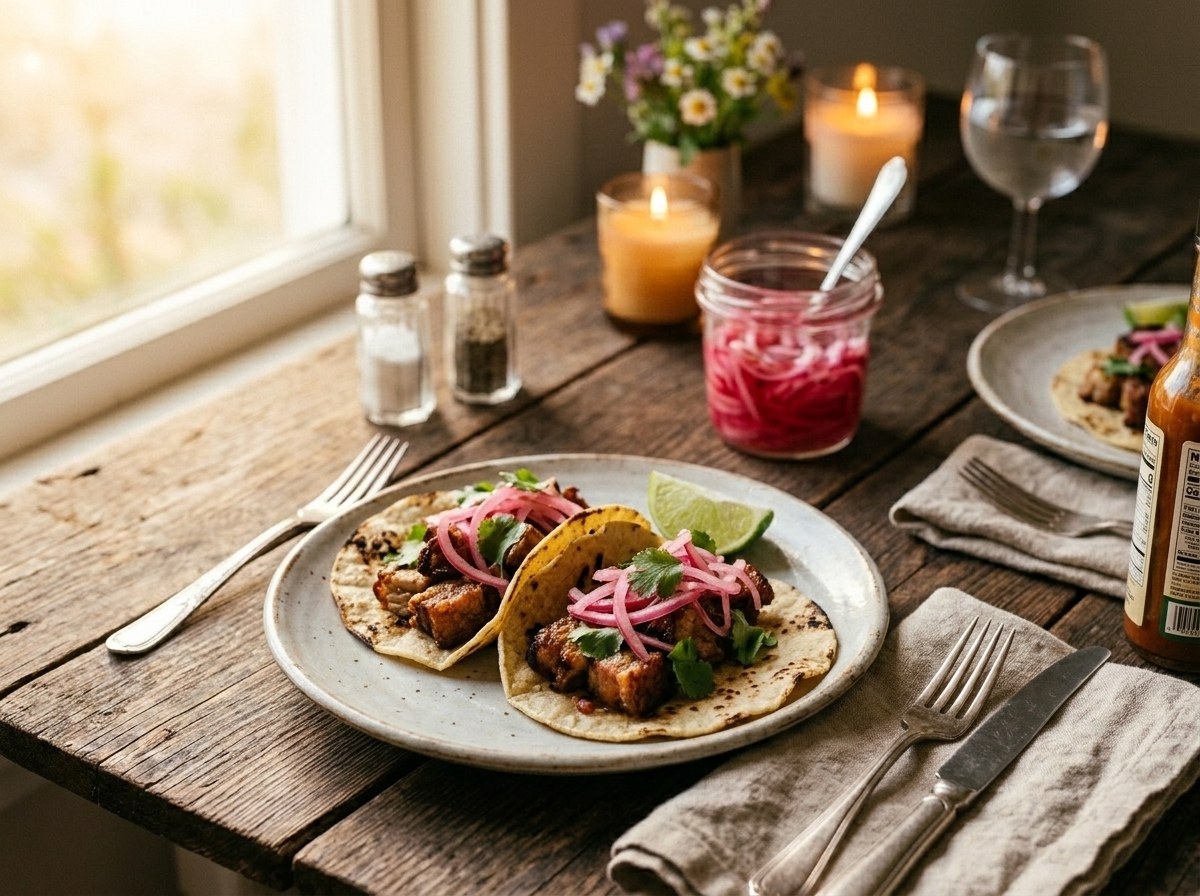
The most direct use is warm corn tortillas loaded with crisped carnitas, pickled onion, fresh cilantro, and a squeeze of lime. Sliced avocado rounds it out but isn’t required. Keep the toppings minimal so the pork stays the focus.
For a rice bowl, serve the carnitas over cilantro-lime rice with black beans, thinly sliced cabbage, and a spoonful of the reduced braising liquid as a sauce. That combination eats like a full meal and comes together in the time it takes to cook the rice.
Carnitas also makes a solid nacho topping, and the same crispy-meat logic behind smoked brisket birria quesadillas applies here when layering flavors under melted cheese. Spread chips on a sheet pan, add crisped pork and shredded Monterey Jack, broil for 3 to 4 minutes until the cheese melts, then scatter pickled onion and sour cream over the top once they come out of the oven.
FAQ
Why is my pork carnitas not getting crispy in the pan?
The most common reason is residual moisture on the pork. Pat the braised pieces dry with paper towels before they hit the skillet, and make sure the skillet is properly hot before adding anything. Crowding the pan causes steaming instead of crisping, so cook in batches if needed.
Can I use pork loin instead of pork shoulder for carnitas?
Pork loin is too lean for carnitas. Without enough intramuscular fat it dries out during braising and won’t crisp the same way at the end. Shoulder is the right cut because the fat renders during the braise and creates those crispy, browned edges.
How far ahead can I make the pickled red onions for this recipe?
You can make them up to a week ahead and they keep well in a sealed jar in the fridge. The flavor deepens and the raw sharpness fully mellows after the first 24 hours, so making them the night before is the best approach.
Can I freeze braised pork carnitas before the crisping step?
Yes, freeze the braised pork with some of the braising liquid to keep it from drying out. It holds well for up to 3 months. Thaw overnight in the fridge, pat dry, and crisp in a hot cast-iron skillet as normal.
Are pork carnitas gluten-free?
This recipe is naturally gluten-free. The one ingredient to check is the chipotle in adobo – most major brands contain no wheat, but a few do list trace amounts on the label, so it’s worth confirming before cooking for someone with celiac disease.
What’s the difference between carnitas and pulled pork?
Both start with braised pork shoulder, but carnitas finishes in rendered fat to create browned, caramelized edges, much like how beef cheek barbacoa tacos rely on slow braising for deep flavor before the final finish. Pulled pork is typically smoked or slow-roasted and stays saucy and soft throughout, without that crisped exterior. The texture difference is the defining factor.
About The Author

John
John Watson is the passionate food enthusiast behind MePlusFood.com. With a deep love for exploring culinary delights, he shares honest restaurant reviews, mouthwatering recipes, and culinary adventures. Join John on his flavorful journey to savor the world one bite at a time.