Fennel Citrus Breakfast Salad with Mint
The fennel citrus breakfast salad opens with a snap of thinly sliced bulbs and the bright juice of segmented oranges and other fruit. Thin slicing gives a celery-like crunch, while mixed fruit colors the bowl and lifts the plate visually and by flavor.
This dish comes together fast—about 10 to 15 minutes once the produce is prepped. Segment citrus over a bowl to catch the juice; use that juice to whisk a honey-lemon-olive oil dressing that balances sweet and tart.
Expect a clean taste: sweet fruit, mild anise from fennel, and cool mint. I’ll show precise techniques: trimming and razor-thin slicing, clean segmenting, and building a balanced vinaigrette. You can add avocado, nuts, cheese, or a simple protein for heft. It works well beyond morning—bright acidity, hydration, and a light texture make it reliable for brunch hosting.
Key Takeaways
- This recipe is quick: 10–15 minutes after prep.
- Thin slices create crisp texture; fronds add herb-like brightness.
- Segment fruit over a bowl to reserve juice for dressing.
- Technique matters: clean slicing and balanced vinaigrette.
- Customize with avocado, nuts, cheese, or protein for variety.
Why this Salad Belongs at Breakfast, Brunch, or a Light Dinner
This bowl balances tart slices, crisp vegetal slices, and herbaceous mint for a lively meal. The acid from the fruit wakes the palate and keeps the plate light, so you don’t need heavy sides to feel satisfied.
Sweet Fruit + Crisp Bulb + Mint: the Flavor Balance
Sweet segments temper the herb notes while mint lifts the profile. The mild anise edge from the bulb reads fresh, not overpowering, so hesitant cooks can expect a subtle touch rather than candy-like licorice.
Texture You Can Feel
Juicy segments sit beside a celery-like crunch and peppery greens for contrast. That tension between soft and crisp is central to the dish’s appeal.
Seasonal Advantage and Practical Pairings
In the US, the citrus season peaks in late November through spring, when oranges and grapefruits taste best. A well-timed citrus salad shows bright color and peak flavor.
- Make it dinner-worthy by adding cooked chicken, salmon, tuna, or chickpeas for protein.
- Or toss with grains like farro or quinoa to add heft and texture.
- Note vitamin C levels from the fruit—useful context when deciding portion sizes.
For more ideas on plating and greens, see mastering the art of gourmet salads.
Ingredients that Make the Bowl Pop with Color, Crunch, and Flavor
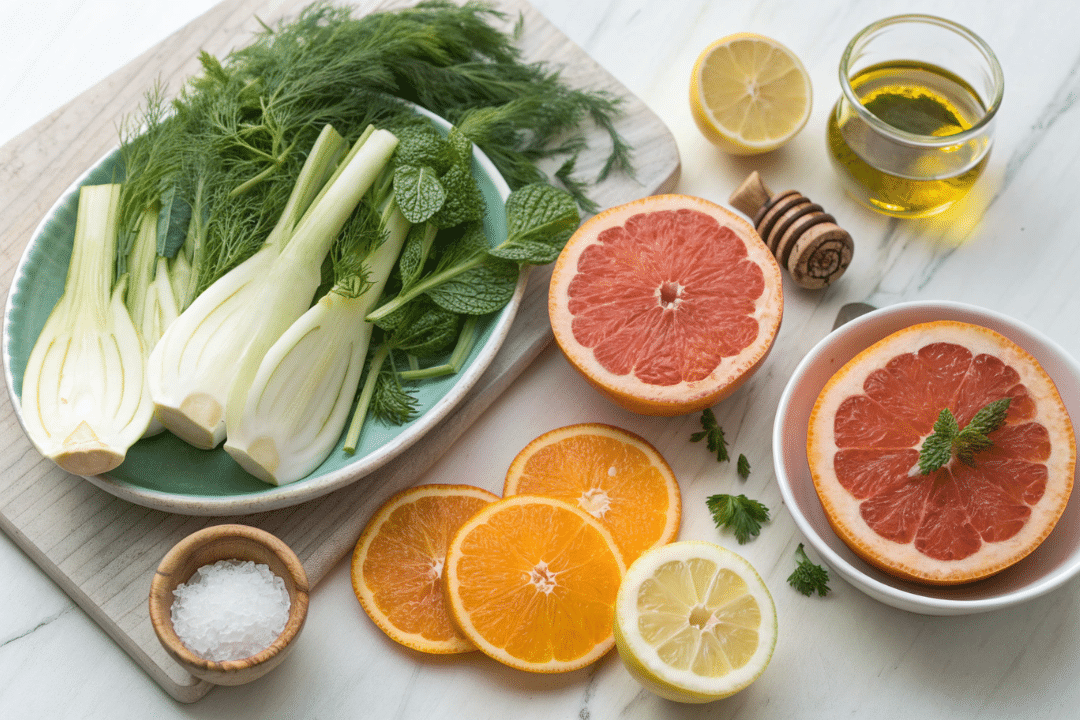
Choose a mix of oranges and grapefruit to layer color, acidity, and fragrant notes in the bowl. Pick a firm bulb and a handful of bright greens, then add mint sparingly so it reads as a top note rather than overpowering the plate.
Core Ingredient Roles
- Oranges (navel, Cara Cara, blood): sweet juice, zest, and visual contrast.
- Grapefruit: bitter-sweet balance that lifts richness.
- Bulb: thin slices give celery-like crunch and a mild anise finish.
- Fronds: use as a delicate herb for anise-like brightness.
- Arugula or baby greens: arugula adds pepper; baby greens keep it tender.
- Mint: tear leaves; start small to avoid a toothpaste effect.
- Optional add-ins: avocado for cream, pistachios or pine nuts for crunch, shaved pecorino for salt.
Buying and Selection Matrix
| Variety | Sweetness | Color | Role in bowl |
|---|---|---|---|
| Navel | High | Bright orange | Zest, easy to segment, juicy |
| Cara Cara | Moderate | Pink flesh | Berry-like note, visual lift |
| Blood orange | Moderate-tart | Deep red | Floral tartness and dramatic color |
| Grapefruit (pink/red) | Medium | Pale pink to red | Bitter-sweet contrast; prefer pink/red over white |
Look for bulbs that feel heavy for their size, are pale, and show no dents. Use fronds whole for a wispy finish or chopped when you want herb pockets. Balance fat (olive oil, avocado) and acid so the fruit stays bright and the bowl keeps a clean finish.
How to Prep Fennel Like a Pro for Thinly Sliced Crunch
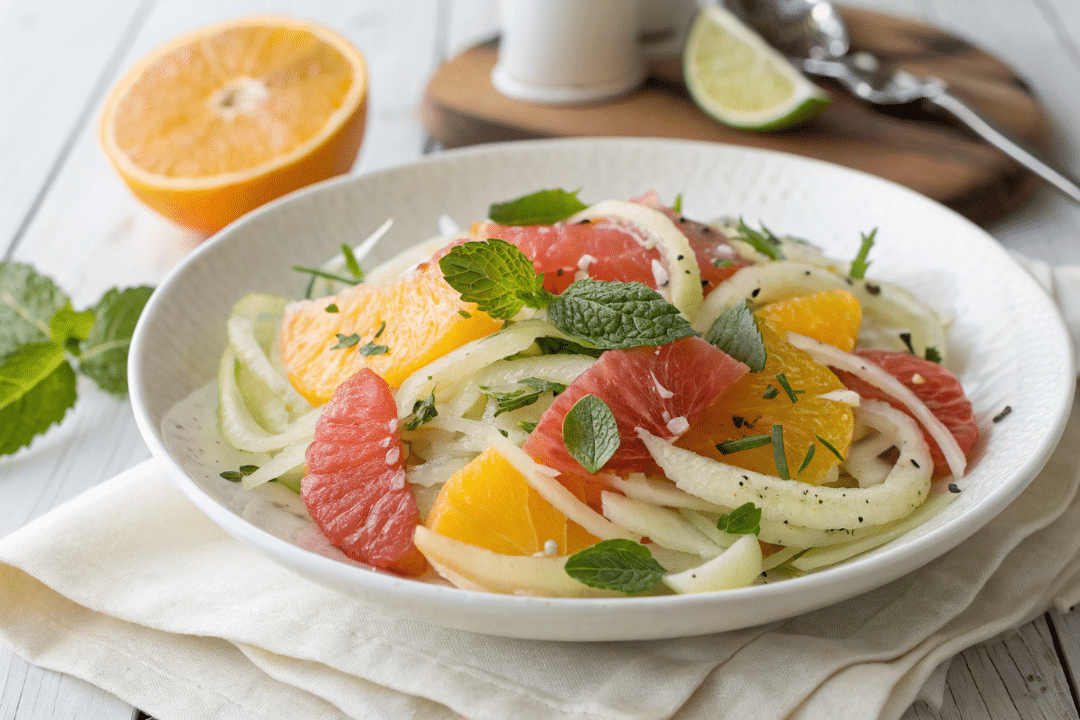
Begin by cutting away the stalks and damaged layers, then halve the bulb to steady it for thin slicing. That flat surface keeps the vegetable from slipping and makes each slice safer and more consistent.
Trim, Halve, and Slice Safely with a Chef’s Knife or Mandoline
Trim the stalks and the root end, peel off any bruised outer layers, and reserve the fronds. With the cut side down, halve the fennel bulb so the core holds the layers together.
If using a chef’s knife, aim for 1.5–2 mm for thinly sliced pieces that fold into the bowl. A mandoline will give the thinnest, most uniform slices; use the guard and work slowly to protect your fingers.
Don’t Waste the Stems: Smart Ways to Save Them for Stock or Soup
- Save stalks and tougher stems for vegetable stock or a simmered broth.
- Chop stems and blend with leek or potato for a simple fennel-leek soup—strain or leave rustic for texture. See a practical soup technique fennel-leek soup.
Keep Sliced Fennel Crisp and Pale If You’re Not Serving Right Away
To prevent browning, submerge the slices in cold water with a squeeze of lemon for 5–10 minutes. Drain and pat dry on a clean towel so excess water does not dilute the dressing.
Store slices chilled in an airtight container for short prep time; fronds keep best stored dry and added at the last minute for bright garnish.
Segmenting Citrus Without the Bitter Pith
Segmenting removes the white pith and membrane so the fruit tastes sweet, not bitter. The goal is tender, membrane-free pieces that give clean bites and bright pockets of flavor. .
Knife Method for Clean Slices and Tender Segments
Trim the ends so the fruit sits flat. Stand the orange or oranges on one end and cut away the peel and white pith from top to bottom.
Use a sharp paring knife to work beside each membrane and release segments. Aim for neat slices of flesh without the tough skin. Keep fingers behind the blade.
What to Do If the Fruit Falls Apart During Segmenting
If segments tear or are dry, stay calm. Chop remaining pieces into bite-size chunks and use them—texture still works.
Save any loose flesh; it adds color and texture when scattered across the greens.
Why Segment Over a Bowl: That Reserved Orange Juice Becomes Your Dressing Base
Segmenting over a bowl captures juice and stray bits. After you lift segments, press the spent membrane to extract more juice.
Separate drained segments from the collected juice so the salad doesn’t get watery too soon. Use the reserved juice as the acid in your dressing for a fresh, direct flavor.
Fennel Citrus Breakfast Salad Dressing With Olive Oil and Lemon Juice
Use the reserved juice as the backbone of a simple dressing that brings the bowl together. This vinaigrette is ratio-driven and easy to repeat.
Quick Vinaigrette Formula
Combine: 1/3 cup reserved fruit juice + 2 tablespoons lemon juice, 1 tablespoon honey, a pinch of salt, and 1/3 cup olive oil. Whisk or shake until glossy. For a thicker emulsion, add 1/2 teaspoon Dijon.
What Each Ingredient Does
- Reserved juice and lemon juice: acid and bright top notes.
- Honey: softens sharp edges and balances bitterness.
- Olive oil: adds body and mouthfeel.
- Salt: brings out the ingredients; taste after mixing, not before.
How to Tweak the Flavor
Add more honey by 1 teaspoon of honey to make it sweeter. Add 1 teaspoon of extra lemon juice to brighten. Grind fresh black pepper for a peppery lift. Adjust in small increments and taste between steps.
Make-Ahead and Emulsifying
Whisk in a bowl or shake in a jar. Store chilled in a sealed jar up to 3 days. Shake or re-whisk before using to re-emulsify. Dress greens lightly at first—start with a few tablespoons and add more if needed.
| Component | Standard Amount | Use if you want |
|---|---|---|
| Reserved fruit juice | 1/3 cup | Keep as base for a fresher, lighter vinaigrette |
| Lemon juice | 2 tablespoons | Add to increase brightness |
| Olive oil | 1/3 cup | Swap part for neutral oil for a lighter mouthfeel |
| Honey & salt | 1 tablespoon honey; pinch salt | Adjust salt after tasting; honey to soften acid |
Assemble the Salad for Maximum Visual Impact and Best Bite
Assemble with intention so each bite shows color, texture, and a clear balance of acid and fat. A quick plan saves texture and keeps the plate bright at serving.
Tossed Bowl vs. Layered Platter
A tossed bowl coats everything evenly and is fast for weeknights. It takes 1–2 minutes to dress and toss before serving.
A layered platter looks striking for guests. Arrange segments and slices in rows to keep each element distinct until people serve themselves.
Order Matters: Keep Greens Crisp
Drain segments well and hold them separate from greens until the last moment. Add greens last, drizzle a little dressing, then toss gently to avoid watering down the leaves.
Finishing Touches that Change the Bite
Finish with flaky sea salt, fresh black pepper, and a small drizzle of oil. Add torn mint or herb leaves on top for an aromatic lift.
Make it a Meal
For a heartier serving, add cooked grains like farro or quinoa, or proteins such as roasted chickpeas, tuna, salmon, or chicken. Add avocado or nuts for fat and crunch; if you add richness, brighten with extra acid.
- Assembly time: plan 5–7 minutes for a tossed bowl; 10–12 minutes for a layered platter.
- Serving tip: plate colorful segments against pale slices and dark greens for visual contrast.
Conclusion
Wrap up by focusing on the practical steps that preserve texture and flavor: thinly sliced fennel, membrane-free citrus segments, torn mint, and a juice-based dressing for balance.
Thin slices give the crisp bite; removing pith prevents bitterness. Reserve the collected juice to whisk into the dressing and assemble close to serving so leaves stay dry and bright.
Try a pink grapefruit next time, or swap arugula for mixed greens to change the pepper and bite. For serving: a tossed bowl for quick meals, a layered platter for guests, or a simple side with dinner.
Save stalks for stock and use fronds as garnish to reduce waste. Repeat the core steps—segment, whisk, toss, finish—to make the recipe reliably good every time.
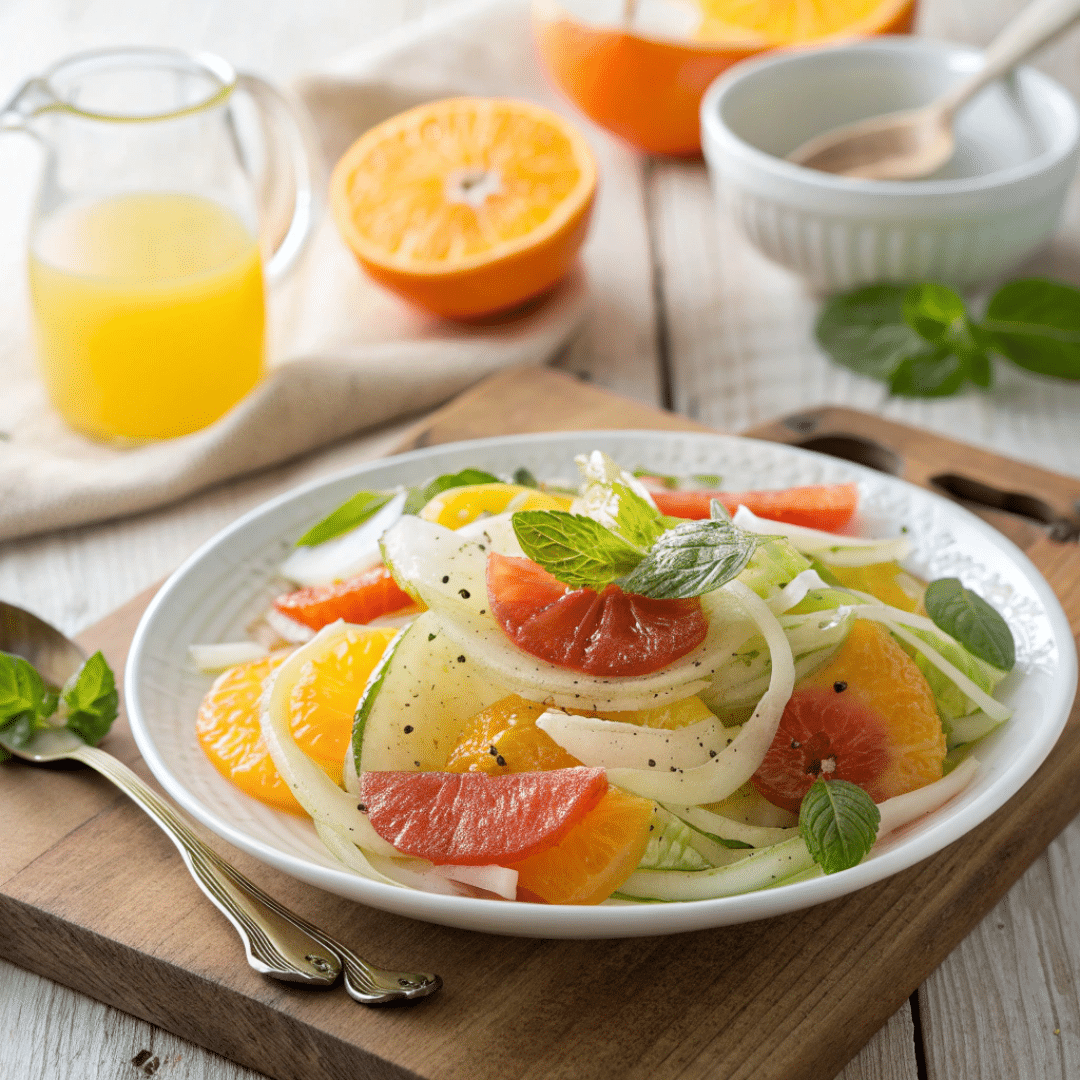
Fennel Citrus Breakfast Salad with Mint
Ingredients
Method
- Trim the fennel stalks, peel off any bruised layers, and halve the bulb to create a flat, stable surface for slicing.
- Slice the fennel thinly, about 1.5–2 mm thick, using a chef’s knife or mandoline for uniform pieces.
- Submerge the fennel slices in cold water with a squeeze of lemon for 5–10 minutes if not serving immediately, then drain and pat dry.
- Reserve the fennel fronds for garnish and set aside.
- Peel the oranges and grapefruit, removing all pith, and segment the fruit by cutting between the membranes.
- Collect the juice from the citrus in a bowl to use as the base for the dressing, pressing the remaining membranes to extract extra liquid.
- Combine the reserved citrus juice with lemon juice, honey, olive oil, and a pinch of salt in a small bowl or jar and whisk or shake until emulsified.
- Taste the dressing and adjust sweetness, acidity, or add a pinch of black pepper as needed.
- Toss the fennel slices, citrus segments, and greens gently in a bowl with 2–3 tablespoons of dressing, coating evenly.
- For a layered presentation, arrange fennel, citrus, and greens in rows and drizzle the dressing just before serving.
- Finish the salad with fennel fronds, torn mint leaves, flaky sea salt, and freshly ground black pepper.
- Add optional toppings such as avocado, roasted nuts, grains, or cooked protein to make the salad more substantial.
- Serve immediately to maintain crispness and bright flavors.
Notes
FAQ
What makes this fennel citrus breakfast salad a good choice for morning or brunch?
Which oranges should I use for the best flavor and color?
How do I slice the bulb so it stays crisp and thin?
Can I use both the fronds and the bulb? How should I use them?
What greens hold up best under the dressing and citrus juices?
How much mint should I add so it complements without overwhelming?
What optional add-ins pair well with the citrus and crisp slices?
How do I segment oranges without the white pith and save the juice?
My fruit fell apart while I was segmenting — what now?
What’s a reliable vinaigrette formula for this salad?
How do I adjust the dressing if I want it sweeter, brighter, or more peppery?
Can I make the dressing ahead and how should I store it?
Should I toss the salad or arrange it on a platter for serving?
What order of assembly keeps greens from getting soggy?
How do I finish the salad for the best final bite?
What proteins and grains pair well to make this a complete meal?
About The Author

John
John Watson is the passionate food enthusiast behind MePlusFood.com. With a deep love for exploring culinary delights, he shares honest restaurant reviews, mouthwatering recipes, and culinary adventures. Join John on his flavorful journey to savor the world one bite at a time.