Garlic Butter Lobster Risotto
Jump to Recipe
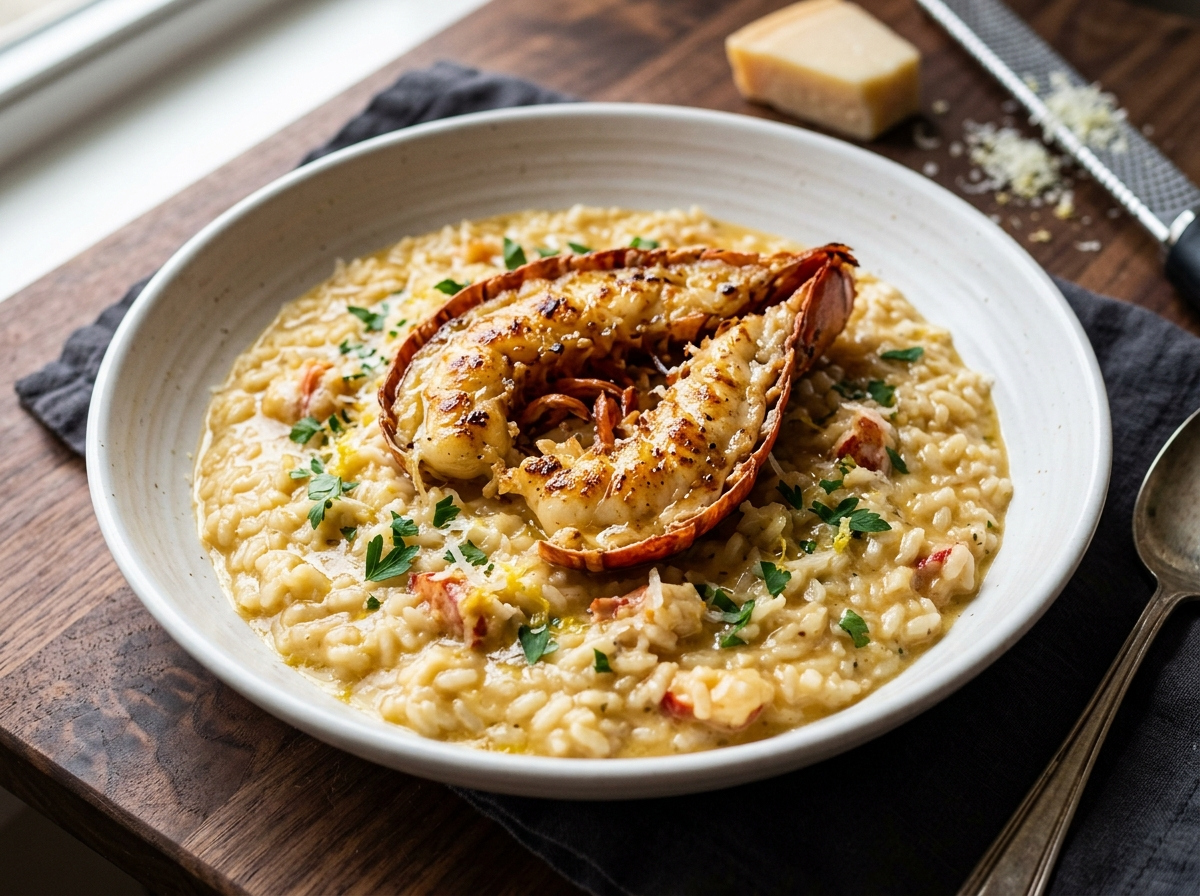
Lobster risotto earns its reputation as a restaurant dish because most recipes skip the one step that makes it worth ordering: cooking the shells into a quick stock. Skip that step and you get creamy rice with chunks of seafood on top. Do it right and every spoonful tastes like the whole lobster went into the pot.
This recipe uses two whole lobster tails – enough for four solid portions. You’ll split them, sear the meat in garlic butter, then set it aside while you build the risotto. The shells and any juices from the pan go straight into the stock.
Arborio is the standard rice here. It releases starch gradually as you add warm liquid ladle by ladle, giving you that thick, saucy consistency that’s not stiff or soupy. Carnaroli works too and holds its bite a little longer if you’re nervous about timing.
The whole process takes about 40 minutes start to finish, most of it at the stove. That’s the deal with risotto – it wants your attention.
Why You’ll Love This Recipe
- Quick lobster shell stock adds serious depth in 10 minutes
- Lobster stays tender because it finishes off-heat
- One pan for the sear, one pot for the risotto – minimal cleanup
- Parmesan and cold butter finish gives a glossy, restaurant-style consistency
Ingredient Notes
- Lobster tails: Two 200 g / 7 oz tails work well here. Frozen tails thawed overnight in the fridge are fine. Whole langoustine tails or large shrimp are a workable substitute if lobster isn’t available.
- Arborio rice: Do not rinse it – the surface starch is what thickens the risotto. Carnaroli is a good alternative if you want slightly firmer grains.
- Dry white wine: A dry Pinot Grigio or unoaked Chardonnay works. Use something you’d drink – the wine flavor concentrates early in the cook. Skip it and replace with an equal amount of extra stock if you prefer alcohol-free.
- Unsalted butter: You’ll use it in two stages: browning with garlic for the lobster sear, then cold cubes stirred in at the very end (mantecatura). Cold butter at the finish is important for the glossy texture.
- Parmesan: Freshly grated from a block melts more evenly than pre-shredded. Grana Padano is a close substitute with a slightly milder flavor.
- Shallots: Milder and sweeter than yellow onion, which is what you want here. A small white onion finely diced will substitute in a pinch.
- Fish stock or clam juice: You’ll use this as the base for the shell stock. Store-bought low-sodium fish stock is ideal. Bottled clam juice diluted 50/50 with water also works well.
Garlic Butter Lobster Risotto
Ingredients
Method
- Halve the lobster tails lengthwise with kitchen shears and a sharp knife. Pull the meat out and refrigerate it. Set the shells aside.
- Place the shells, 1 smashed garlic clove, bay leaf, and peppercorns in a 2-quart saucepan. Pour in the fish stock and bring to a gentle simmer over medium heat. Cook for 10 minutes, then strain through a fine-mesh sieve into a clean saucepan. Discard the solids. Keep the stock at a bare simmer on the lowest burner.
- Melt 2 tablespoons of butter in a 12-inch skillet over medium-high heat. Add the 3 sliced garlic cloves and cook for 45 to 60 seconds until fragrant and just starting to turn golden at the edges.
- Pat the lobster meat dry. Place it cut-side down in the pan. Sear for 90 seconds without moving until the edges turn opaque and light gold. Flip and cook for 60 seconds more. The meat should be just cooked through - it will finish later in the risotto. Transfer to a plate, tent loosely with foil, and set aside.
- In a 4-quart heavy-bottomed saucepan, heat the olive oil over medium heat. Add the shallots and cook for 3 to 4 minutes, stirring occasionally, until softened and translucent.
- Add the minced garlic and stir for 30 seconds until fragrant. Add the Arborio rice and stir for 2 minutes to coat each grain in oil until the edges look slightly translucent.
- Pour in the white wine and stir until it is fully absorbed, about 1 to 2 minutes.
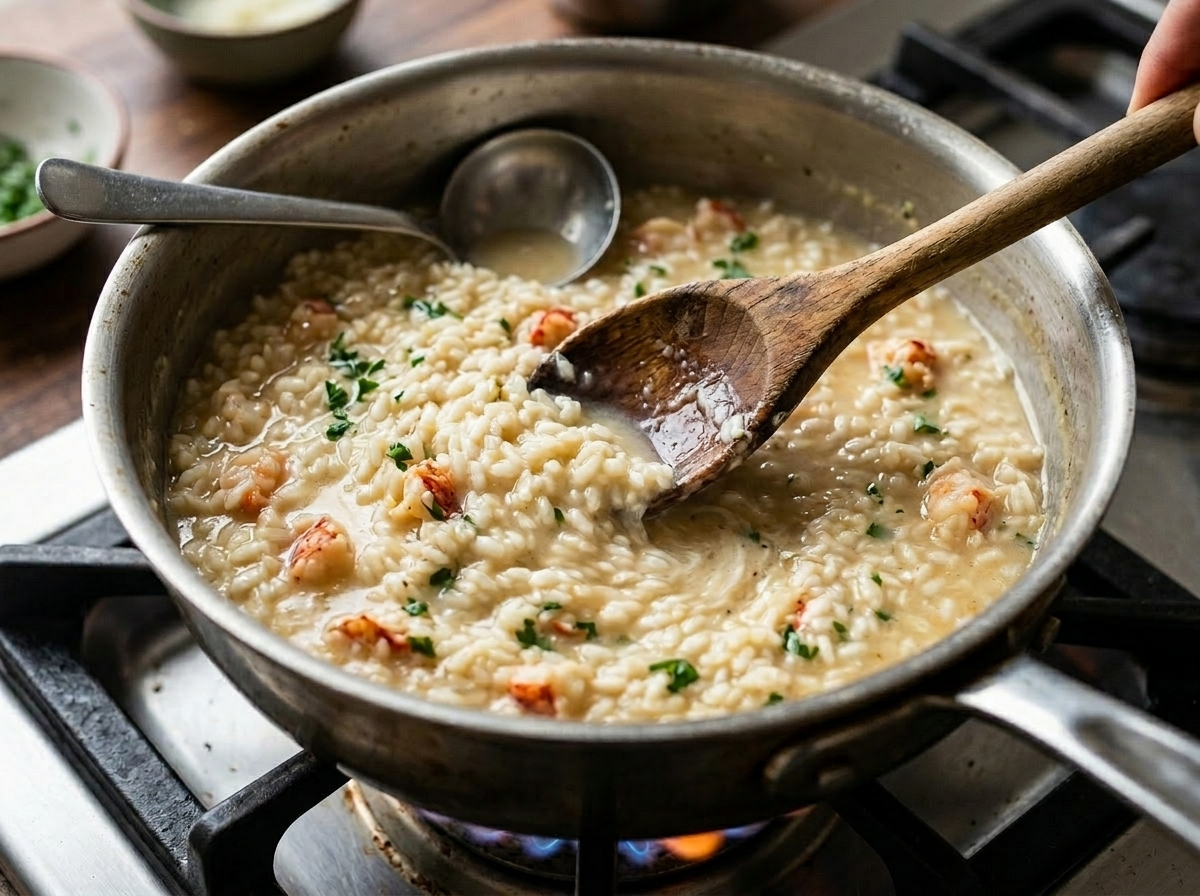
- Begin adding the warm shell stock one ladle at a time (about 120 ml per addition), stirring almost constantly and waiting until each ladle is absorbed before adding the next. Continue for 18 to 20 minutes until the rice is al dente - firm at the center but not chalky - and the mixture flows slowly like loose porridge. You may not need all the stock.
- Remove the saucepan from the heat. Add the cold butter cubes and grated Parmesan. Stir vigorously for 1 to 2 minutes until the butter melts fully and the risotto is glossy and thick.
- Stir in the lemon zest and chopped parsley. Taste and season with salt and black pepper.
- Fold in the reserved lobster meat gently or arrange the pieces on top. The residual heat will warm it through without overcooking it. Let the risotto sit for 2 minutes before spooning into wide shallow bowls. Garnish with a little extra parsley and serve immediately.
Notes
Tips for Success
- Keep your stock at a bare simmer in a separate saucepan so each ladleful you add is hot – cold stock drops the temperature and slows the starch release.
- Sear the lobster meat for no more than 90 seconds per side in the butter; it finishes cooking when you fold it back into the hot risotto off the heat.
- Add stock one ladle at a time and stir constantly until each addition is absorbed before adding the next – rushing this step produces gluey, uneven rice.
- Pull the risotto off the heat before it looks fully done; it will thicken as you stir in the cold butter and Parmesan, and carryover heat finishes the rice.
- Taste and season only after adding the Parmesan because it contributes significant salt – what tasted underseasoned before often needs only a small pinch to correct.
Variations
- Swap lobster for large sea scallops, searing them in the same garlic butter for a slightly sweeter flavor profile.
- Add a pinch of saffron to the first ladleful of stock for a golden color and faintly floral note that pairs well with the lobster.
- Stir in 2 tablespoons of mascarpone at the finish instead of cold butter for a richer, slightly tangy cream texture.
Storage and Reheating
Store leftover risotto in an airtight container in the fridge for up to 2 days. Keep the lobster meat separate if possible – stored inside the rice it can become tough when reheated.
To reheat, warm the risotto in a small saucepan over low heat with 2 to 3 tablespoons of water or stock, stirring until it loosens back to a creamy consistency. Add the lobster during the last 60 seconds, just long enough to warm through without overcooking.
Freezing is not recommended. Risotto breaks when frozen and thawed – the starch structure collapses and the texture turns grainy.
Serving Suggestions
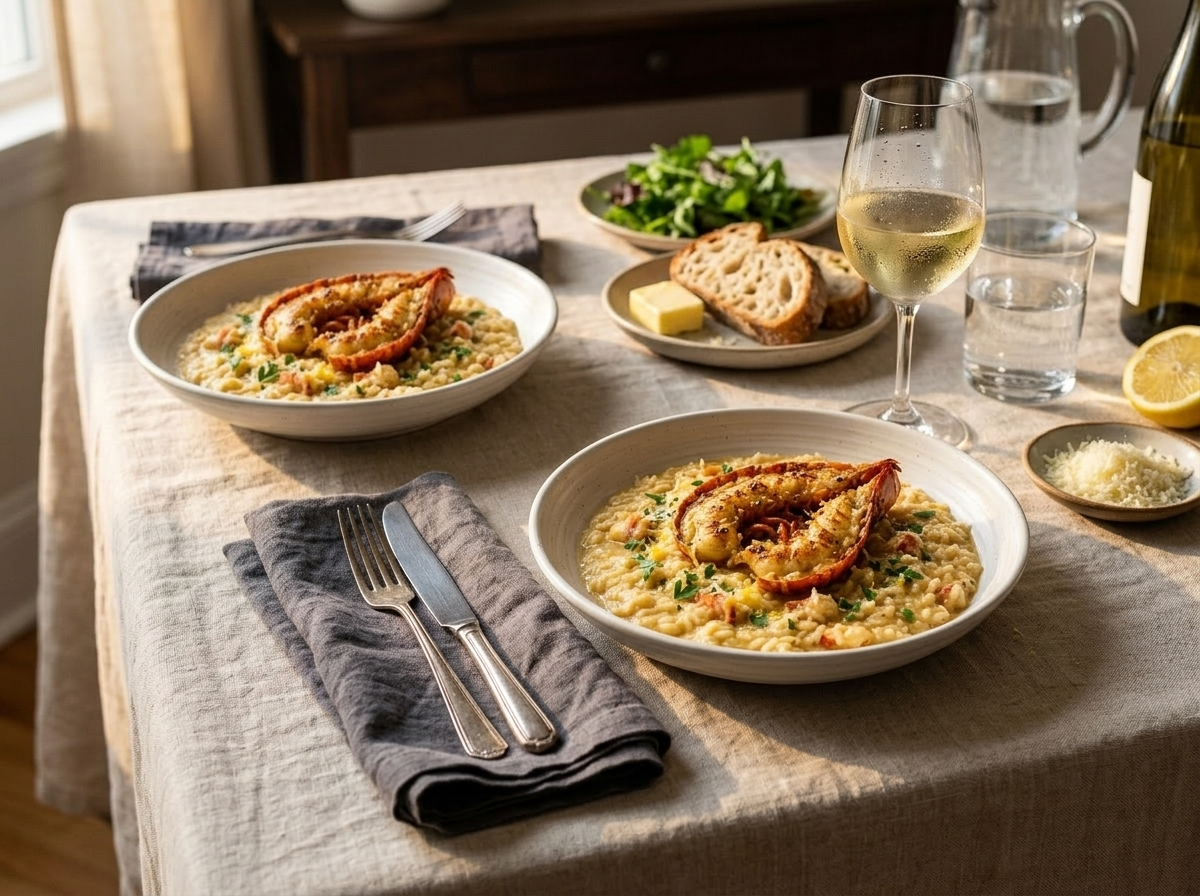
Serve the risotto in wide, shallow bowls to show the lobster pieces on top. A light drizzle of good olive oil and a few flat-leaf parsley leaves finish the plate without competing with the butter and Parmesan.
A simple arugula salad dressed with lemon juice and olive oil cuts through the richness well. Keep the sides minimal – this dish carries the meal on its own.
For wine, a white Burgundy or a dry Vermentino from Sardinia both work with the lobster and the buttery base. If you served white wine during cooking, pour the same bottle at the table.
FAQ
Why is my lobster risotto gluey instead of creamy?
Gluey texture usually means the stock was added too fast or all at once. Add it one ladle at a time and stir between each addition so the starch releases gradually. Also check you didn’t rinse the Arborio rice – that washes away the surface starch you actually need.
Can I use frozen lobster tails instead of fresh for this risotto?
Yes, frozen tails work fine. Thaw them overnight in the fridge, pat them dry before searing, and they’ll brown well in the garlic butter. Don’t thaw in warm water – it draws moisture into the meat and makes it steam rather than sear.
How do I know when the risotto is ready to take off the heat?
The rice should be just slightly firm at the center when you bite a grain – not crunchy, not fully soft. The consistency should flow slowly when you shake the pan, like loose porridge, because it thickens further as you fold in the butter and Parmesan off the heat.
Can I make the lobster shell stock ahead of time for this recipe?
Yes, the shell stock can be made up to 2 days ahead and kept refrigerated in a sealed container, or frozen for up to 1 month. Reheat it to a simmer before you start building the risotto so it’s hot when you need it.
What can I use instead of white wine in garlic butter lobster risotto?
Replace the wine with an equal volume of extra fish stock plus a small squeeze of lemon juice for acidity. The flavor will be slightly flatter at the base but the garlic butter and shell stock compensate well.
Is garlic butter lobster risotto gluten-free?
Arborio rice is naturally gluten-free, and the core ingredients in this recipe contain no gluten. The main risk is cross-contamination in store-bought fish stock – check the label and choose a certified gluten-free brand if that matters for your household.
About The Author

John
John Watson is the passionate food enthusiast behind MePlusFood.com. With a deep love for exploring culinary delights, he shares honest restaurant reviews, mouthwatering recipes, and culinary adventures. Join John on his flavorful journey to savor the world one bite at a time.