Polish Makowiec Roll with Honey Poppy Seed Filling
Jump to Recipe
This Polish makowiec poppy seed roll is a soft yeast dough rolled around a thick spiral of ground poppy seeds, honey, raisins and walnuts. It bakes in 40 minutes at 175 C / 350 F and slices into 12 rounds.
The dough is milk-and-egg based and only lightly sweet, so the filling stays in front. I simmer the poppy seeds in milk first, which softens them and keeps the spiral moist instead of gritty.
The one thing that goes wrong is a split seam with filling leaking onto the pan. Keep a 2 cm border, roll tightly and bake seam-side down.
Total time is about 3 hours 10 minutes, with roughly 45 minutes hands-on and the rest spent rising and cooling. Once baked, it keeps for 3 days at room temperature.
Why You’ll Love This Recipe
- Poppy seeds simmer in milk first, so the swirl stays moist
- Hands-on time is about 45 minutes, the rest is rising
- One sheet pan, one roll, 12 clean slices
- Freezes whole, so you can bake ahead for the holidays
Ingredient Notes
- Ground poppy seeds: Buy them ground, or grind whole seeds in a spice grinder in 2 or 3 batches until damp and clumpy. Canned poppy seed filling (about 500 g) works as a shortcut, so skip the simmer and stir in the raisins, walnuts and egg white.
- Honey: Maple syrup swaps in 1 to 1. The filling comes out slightly looser, so simmer it 1 minute longer.
- Walnuts: Chopped almonds or pecans work the same way. Leave them out for a nut-free roll and add 20 g more raisins.
- Raisins: Chopped dried figs or 50 g candied orange peel both work. Orange peel gives a more traditional holiday flavor.
- Whole milk: Whole milk gives the softest crumb. Oat milk works in the dough and the filling, but the dough bakes up a little drier.
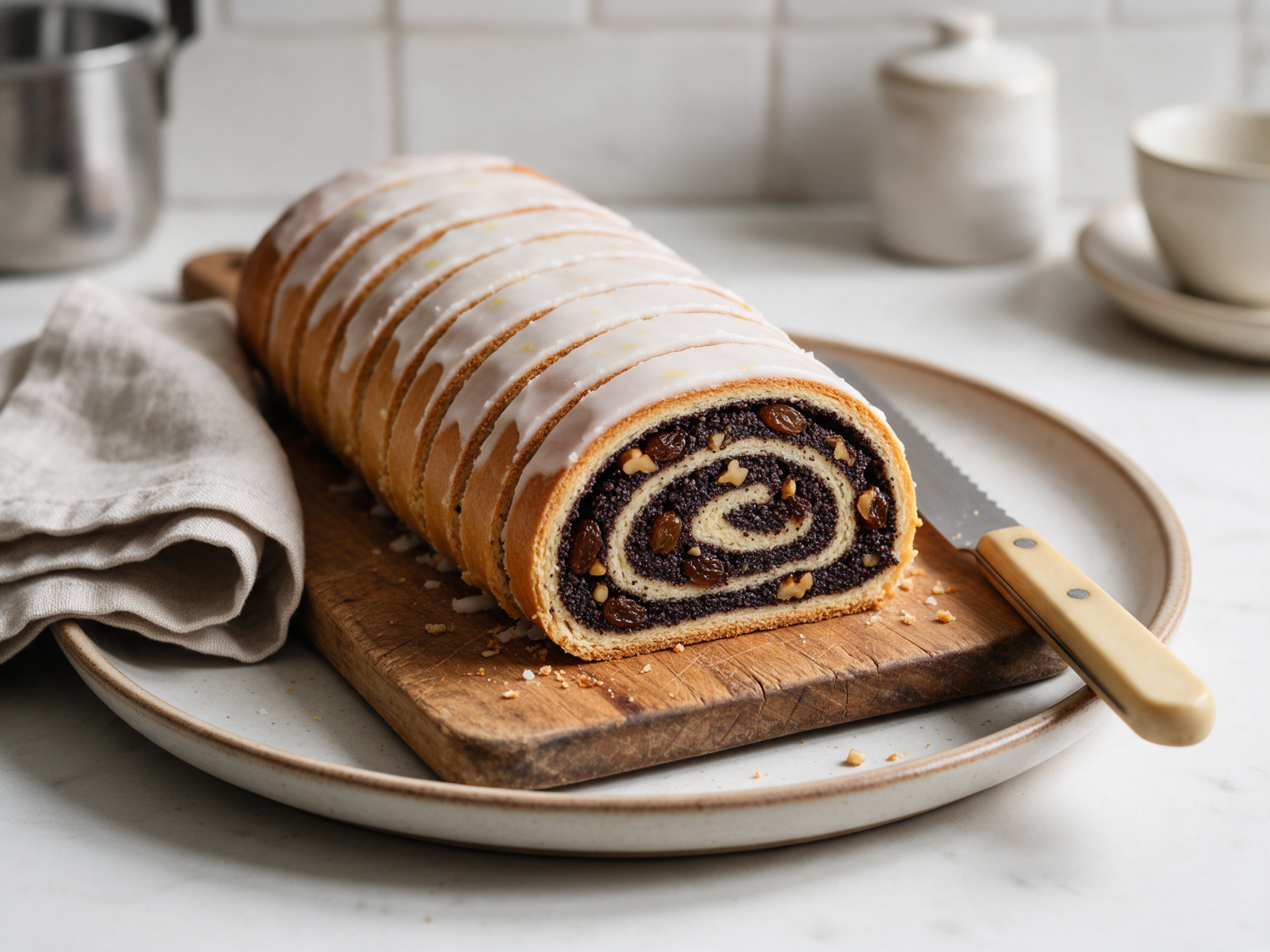
Polish Makowiec Roll with Honey Poppy Seed Filling
Ingredients
Method
- Whisk the flour, yeast, 50 g sugar, salt and lemon zest in a 4-quart / 3.8 L bowl. Add the warm milk, 1 egg, 1 egg yolk and melted butter, and stir until a shaggy dough forms. Refrigerate the leftover egg white for the filling.
- Knead on a lightly floured counter for 8 to 10 minutes until smooth and slightly tacky, adding up to 2 tbsp flour only if it sticks to your hands. Return it to the bowl, cover, and let it rise in a warm spot for 60 minutes until doubled.
- Combine the poppy seeds, 180 ml milk, 60 g sugar, honey and 40 g butter in a 3-quart / 2.8 L saucepan. Simmer over medium-low heat for 8 to 10 minutes, stirring constantly so it doesn't scorch, until it forms a thick paste that holds a spoon trail.
- Scrape the paste into a bowl and cool to room temperature, about 30 minutes. Stir in the raisins, walnuts, orange zest, almond extract and the reserved egg white. The filling should be spreadable, not runny.
- Line a 33 x 46 cm / 13 x 18-inch sheet pan with parchment. Roll the risen dough on a floured counter into a 30 x 40 cm / 12 x 16-inch rectangle about 4 mm thick, with a 40 cm side facing you.
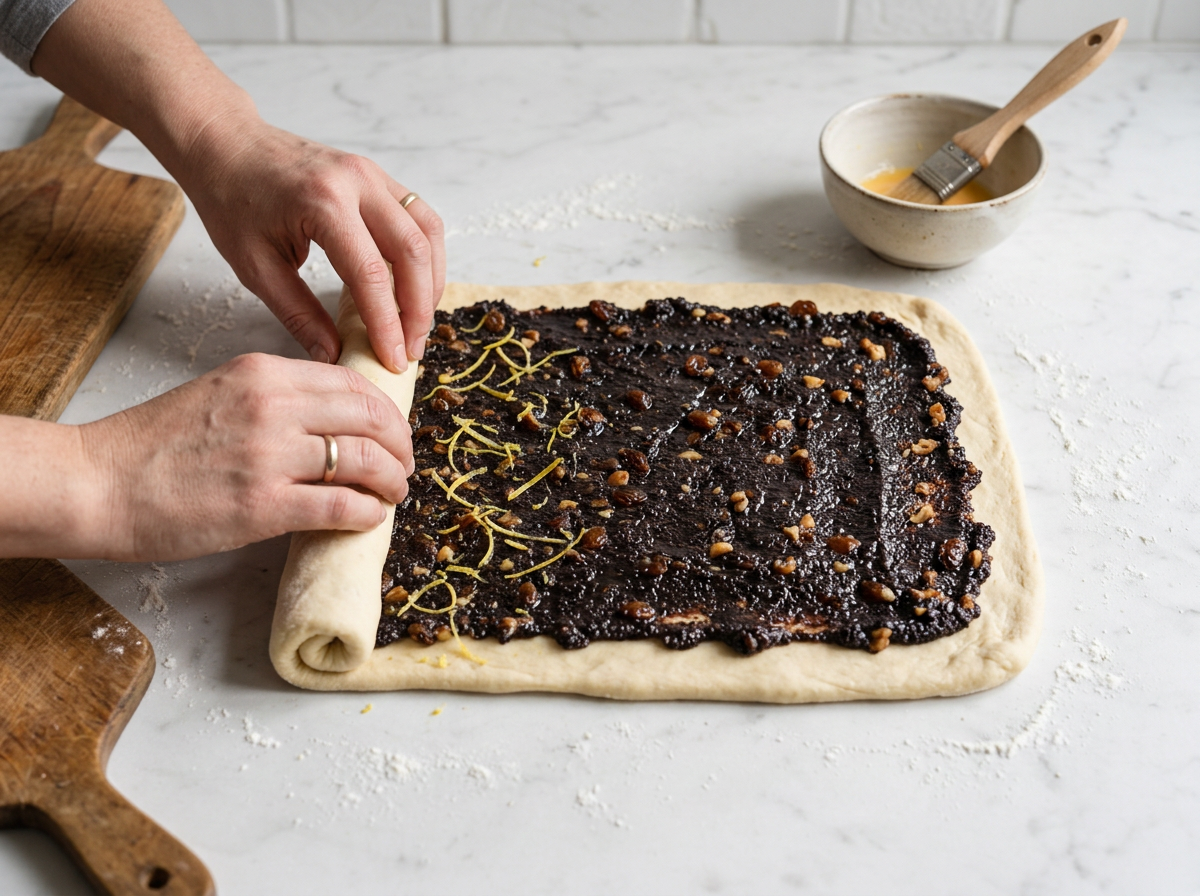
- Spread the filling evenly over the dough, leaving a 2 cm / 3/4-inch border on all sides. Roll up tightly from the 40 cm edge, pinch the seam and both ends closed, and set the roll seam-side down on the pan. A loose roll or a filling that reaches the edge is what splits the seam.
- Whisk the remaining egg with 1 tbsp milk and brush half over the roll. Let it rise uncovered in a warm spot for 30 minutes until puffy, and heat the oven to 175 C / 350 F while it rises.
- Brush the roll with the rest of the egg wash. Bake on the center rack for 40 minutes, until deep golden brown and an instant-read thermometer pushed through the end of the roll into the center reads 190 F / 88 C. If the top darkens early, tent it loosely with foil for the last 10 minutes.
- Cool the roll on the pan for 30 minutes. Whisk the powdered sugar with the lemon juice into a thick drizzle and pour it over the roll. Slice into 12 pieces about 2.5 cm / 1 inch thick with a serrated knife.
Notes
- Cool the filling fully before spreading, or the dough tears and the layers go gummy.
- Roll the dough no thinner than 4 mm so it carries the weight of the filling.
- Taste a pinch of the poppy seeds first, since old ones taste bitter and sugar won't fix that.
- Bake on the center rack at 175 C / 350 F and check for 190 F / 88 C.
- Cool 30 minutes, then slice with a serrated knife for clean spirals.
Tips for Success
- Grind whole poppy seeds until they look damp and clump together, since fine grinding releases the oils that make the filling creamy.
- Cool the filling to room temperature before spreading, or warm filling melts the butter in the dough and the layers turn gummy.
- Leave a 2 cm / 3/4-inch border on every edge and pinch the seam shut, then set the roll seam-side down.
- Brush with egg wash twice, once after shaping and again right before baking, for a deep, even gloss.
- Check the center with an instant-read thermometer and pull the roll at 190 F / 88 C rather than guessing by color.
Variations
- Stir 50 g chopped candied orange peel into the filling and use orange juice instead of lemon juice in the glaze.
- Divide the dough and filling in half for two slimmer rolls, then bake 30 to 35 minutes until they reach 190 F / 88 C.
- Replace the walnuts with chopped almonds and add 1/2 tsp ground cinnamon to the filling for a warmer, spiced version.
Storage and Reheating
Makowiec keeps for 3 days at room temperature, wrapped tightly in foil or sealed in an airtight container. Let the glaze set for 15 minutes before wrapping. The moist poppy filling keeps the crumb soft, and the fridge firms it up, so leave it on the counter.
To freeze, wrap the cooled, unglazed roll in plastic wrap and then foil, and freeze for up to 3 months. Thaw it still wrapped at room temperature for 3 to 4 hours, then make a fresh glaze.
To reheat slices, warm them on a sheet pan at 150 C / 300 F for 8 minutes, or microwave a single slice for 10 to 15 seconds. The oven method keeps the edges slightly crisp.
Serving Suggestions
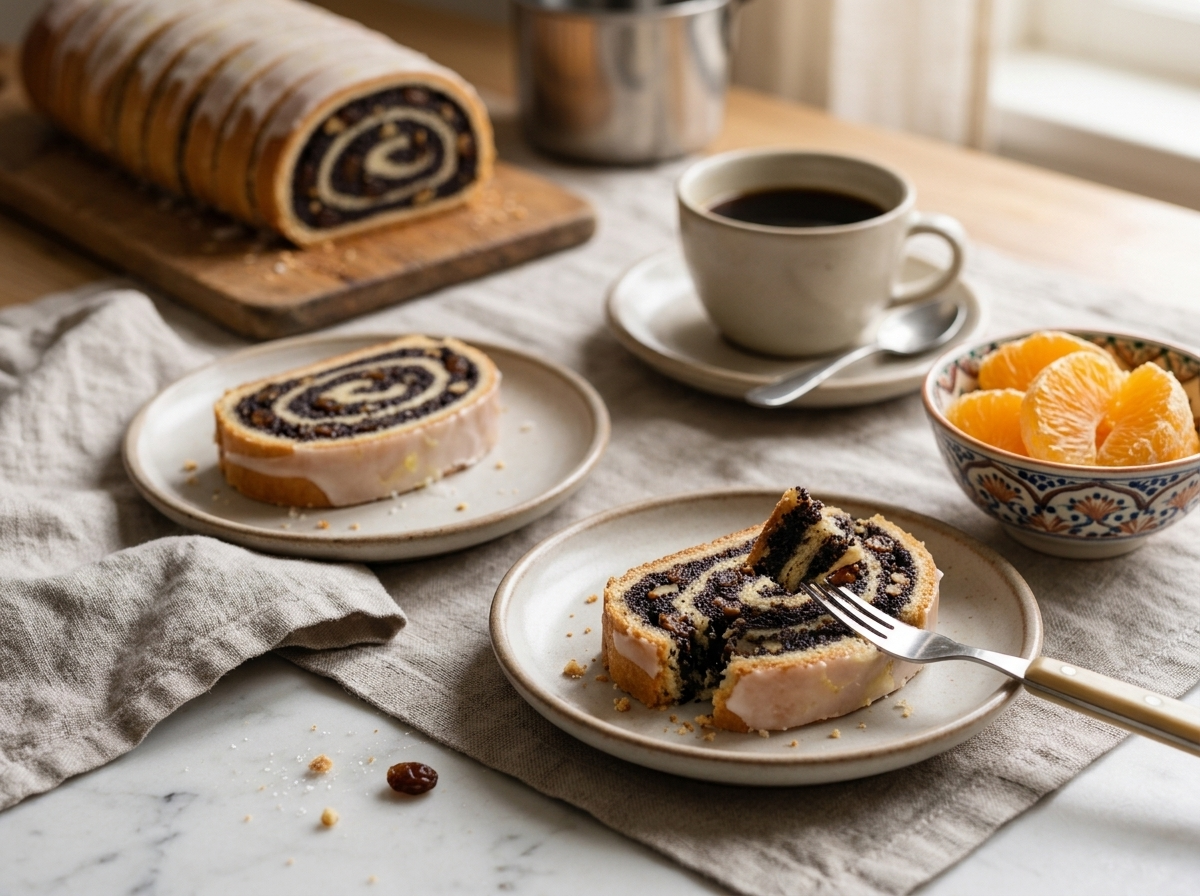
Serve makowiec in 2.5 cm / 1-inch slices with black coffee or tea with lemon. One slice is dense enough that it eats like a small meal.
For a holiday dessert plate, add orange segments or a spoonful of plain yogurt. The acidity cuts through the sweet, nutty filling.
Slice only what you’ll eat in one sitting. Cut faces dry out faster than the wrapped roll does.
FAQ
Why did my makowiec split and leak filling in the oven?
The seam opened because the filling reached the edge, the roll was loose, or the seam faced up. Leave a 2 cm / 3/4-inch border, roll tightly, pinch the seam shut and bake seam-side down. Cool, thick filling matters too, because runny filling pushes outward as it heats.
Can I use canned poppy seed filling instead of grinding poppy seeds for makowiec?
Yes, use about 500 g of canned poppy seed filling and skip the milk, sugar, honey and butter simmer. Stir in the raisins, walnuts, zest, almond extract and egg white as written. Canned filling is sweeter and smoother, so taste it first and cut the raisins to 20 g if it already tastes sweet.
Can I freeze makowiec, and should I glaze it first?
Yes. Freeze the cooled, unglazed roll wrapped in plastic wrap and foil for up to 3 months. Thaw it still wrapped at room temperature for 3 to 4 hours, then drizzle on a fresh lemon glaze, because glaze weeps and turns sticky after freezing.
How do I know when makowiec is done baking?
Makowiec is done when the top is deep golden brown and an instant-read thermometer pushed through the end of the roll into the center reads 190 F / 88 C. That takes about 40 minutes at 175 C / 350 F. If the top darkens before then, tent the roll loosely with foil for the last 10 minutes.
What drink goes well with makowiec poppy seed roll?
Black coffee or lemon tea cuts through the sweet, nutty filling. For a dessert plate, add orange segments or a spoonful of plain yogurt for acidity. Skip sweetened whipped cream, since each slice already has about 20 g of sugar and the extra sweetness flattens the poppy flavor.
What is the difference between makowiec and Hungarian bejgli?
Makowiec is a Polish yeast roll with a soft crumb and a thick spiral of poppy seed filling. Hungarian bejgli is a close cousin with a denser dough and a glossy, crackled crust, filled with poppy seed or walnut. Both are Christmas bakes.
More from the kitchen
About The Author

John
John Watson is the passionate food enthusiast behind MePlusFood.com. With a deep love for exploring culinary delights, he shares honest restaurant reviews, mouthwatering recipes, and culinary adventures. Join John on his flavorful journey to savor the world one bite at a time.