Roasted Duck with Orange and Star Anise
Jump to Recipe
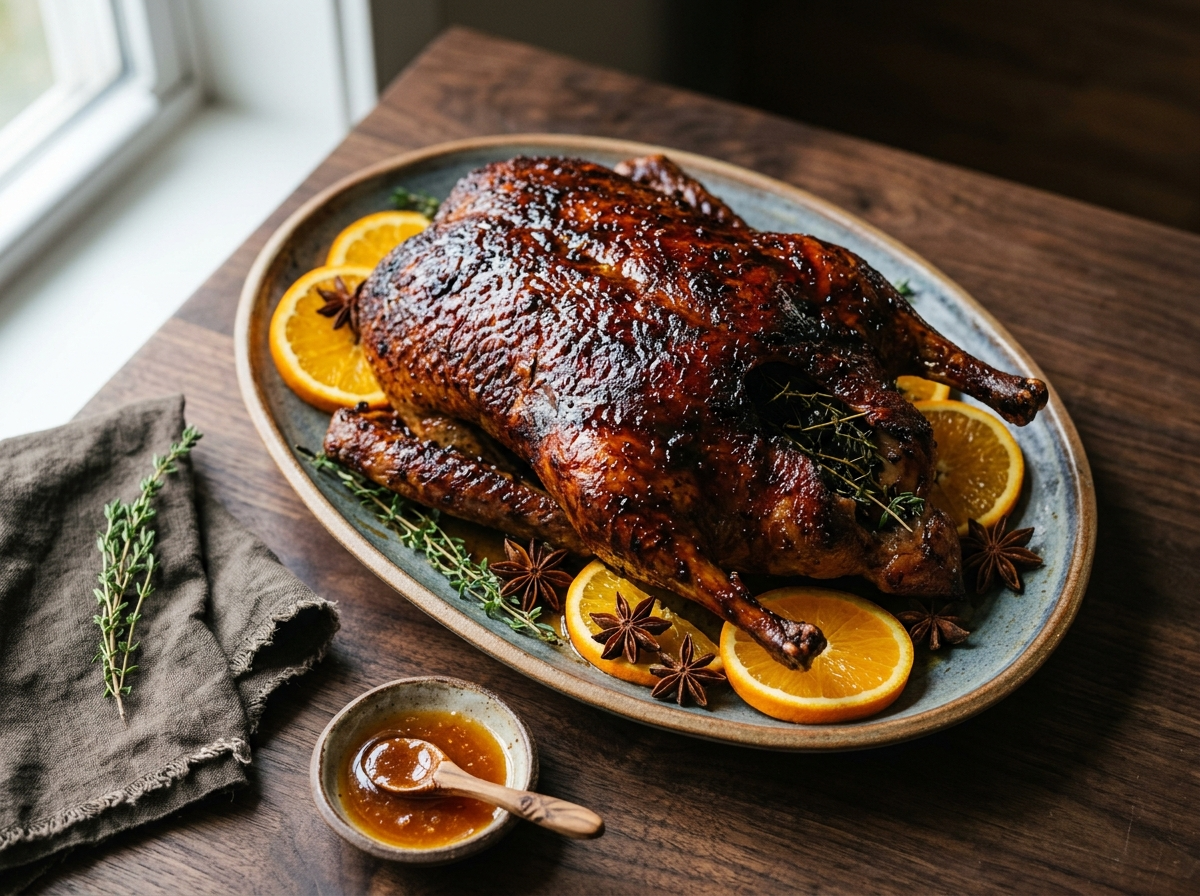
Duck has a reputation for being fussy, but the technique here is straightforward: score the fat, render it low and slow, then finish with heat and a glaze that caramelizes on contact.
The orange and star anise pairing is a classic for a reason. The acidity of the citrus cuts through the duck’s fat, and the anise adds a faintly licorice warmth that keeps the glaze from tasting like marmalade on meat.
I use whole star anise steeped into the glaze rather than ground spice. The flavour is cleaner and you can pull the pods out before spooning the sauce over the bird.
This works well for a Sunday roast or a dinner-party centerpiece. The glaze can be made a day ahead, and the duck benefits from drying in the fridge overnight so the skin crisps evenly.
Why You’ll Love This Recipe
- Skin renders genuinely crisp without deep-frying or tricks.
- Orange-star anise glaze is balanced, not sweet or cloying.
- Glaze and prep can both be done a day ahead.
- One roasting pan, minimal cleanup after the bird comes out.
Ingredient Notes
- Whole duck (about 2 kg / 4.4 lb): A Pekin or Moulard duck works well here. Pat it very dry before scoring – moisture is the enemy of crisp skin. If you can, leave it uncovered in the fridge overnight.
- Fresh orange juice: Use freshly squeezed for the glaze – about 3 medium oranges yields roughly 180 ml. Bottled juice is thinner and sweeter, which throws off the balance.
- Orange zest: Zest the oranges before juicing. The zest adds a more concentrated citrus note to the glaze that juice alone can’t replicate.
- Whole star anise: Four pods is enough. More than five and the anise flavour starts to dominate. Remove before serving.
- Honey: A mild honey like acacia or clover works best. Strong-flavoured honey (buckwheat, manuka) can clash with the star anise. Maple syrup is a workable substitute.
- Soy sauce: Low-sodium soy keeps the glaze from tipping too salty as it reduces. Tamari works as a gluten-free swap with no noticeable difference in flavour.
- Garlic cloves: Smashed and added to the glaze, then removed. They add depth without making the sauce taste like garlic duck.
- Five-spice powder: A small amount rubbed into the cavity adds background spice. Skip it if you want a cleaner orange-forward profile.
Roasted Duck with Orange and Star Anise
Ingredients
Method
- Pat the duck completely dry with paper towels, inside and out.
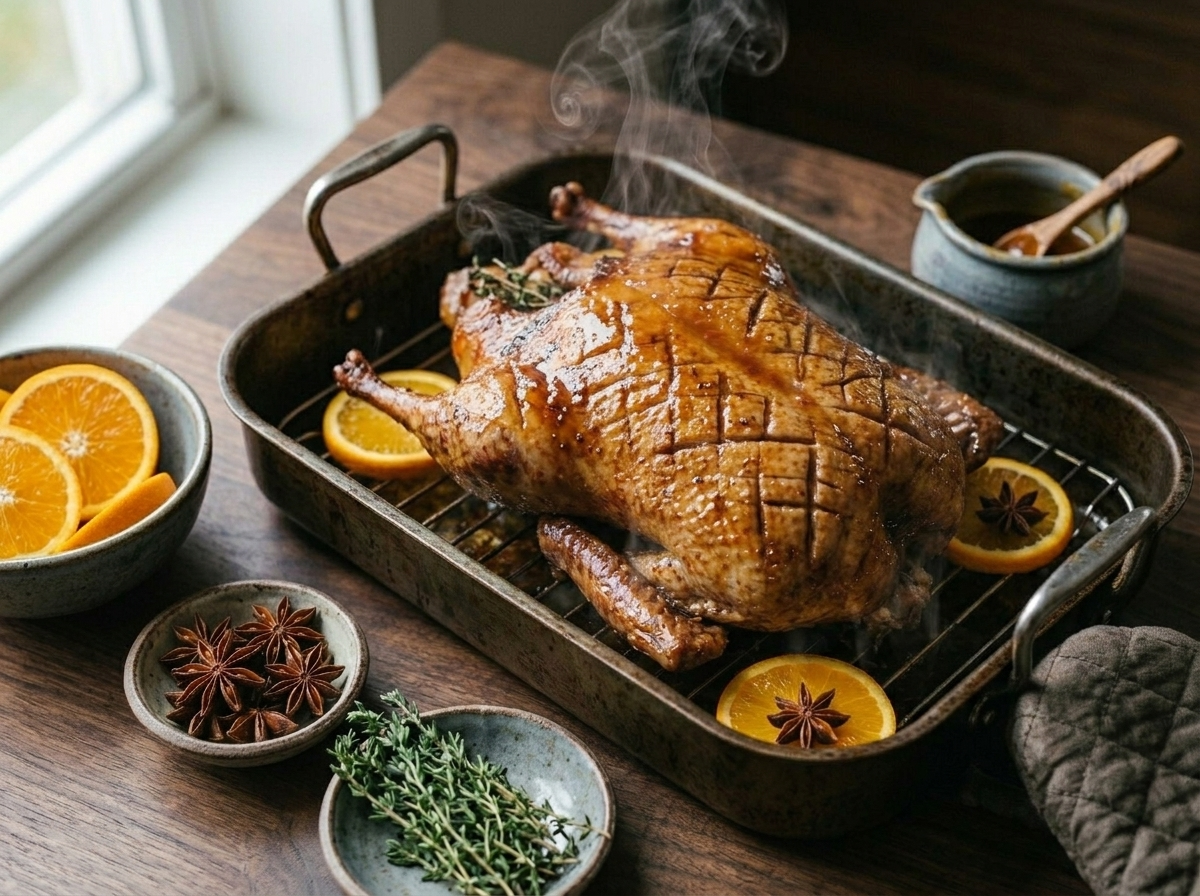
- Using a sharp knife, score the breast and thigh skin in a crosshatch pattern at 1 cm intervals, cutting through the fat but stopping before you reach the meat.
- Rub the inside of the cavity with five-spice powder. Season the outside generously with salt and pepper.
- Place the duck breast-side up on a rack set in a roasting pan. Refrigerate uncovered for at least 1 hour, or overnight for best results.
- Combine orange juice, orange zest, star anise, honey, soy sauce, garlic, ginger, and rice vinegar in a small saucepan over medium heat.
- Bring to a gentle simmer and cook for 12 to 15 minutes, stirring occasionally, until the glaze reduces by about half and coats the back of a spoon.
- Strain through a fine-mesh sieve into a small bowl. Stir in sesame oil and set aside.
- Heat the oven to 160 C / 320 F.
- Place the duck breast-side down on the rack. Roast for 45 minutes to render the fat.
- Remove the pan from the oven. Carefully pour off accumulated fat from the pan (reserve it for another use - it's excellent for roast potatoes).
- Flip the duck breast-side up. Increase oven temperature to 200 C / 390 F.
- Roast for a further 30 minutes, then brush the duck generously with the orange-star anise glaze.
- Continue roasting for 20 more minutes, brushing with glaze every 10 minutes, until the skin is deep mahogany and an instant-read thermometer inserted into the thickest part of the thigh reads 74 C / 165 F.
- Transfer the duck to a cutting board and tent loosely with foil. Rest for 15 minutes.
- Carve the duck, starting by removing the legs at the joint, then slicing the breast meat away from the carcass.
- Warm any remaining glaze gently and spoon over the carved duck before serving.
Notes
Tips for Success
- Score the duck skin in a crosshatch pattern down to but not through the meat so fat renders completely during roasting.
- Start the duck breast-side down at 160 C / 320 F for 45 minutes to render fat before increasing heat for the final crisp.
- Reduce the glaze until it coats a spoon thickly before brushing – a thin glaze will run off and burn on the pan floor.
- Brush the glaze every 10 minutes during the final 20 minutes of roasting for a layered, lacquered finish.
- Rest the duck for at least 15 minutes tented loosely with foil before carving so juices redistribute evenly.
Variations
- Swap orange for blood orange and add a cinnamon stick to the glaze for a deeper, richer winter version.
- Use mandarin juice and a teaspoon of Sichuan peppercorns instead of star anise for a more floral heat.
- Replace honey with pomegranate molasses for a more tart, Middle Eastern-leaning glaze.
Storage and Reheating
Leftover duck keeps in an airtight container in the fridge for up to 3 days. Store carved meat and glaze separately so the skin doesn’t go soggy.
To reheat, place duck pieces skin-side up on a rack over a baking sheet and warm at 180 C / 355 F for 10 to 12 minutes. This brings the skin back closer to crisp rather than chewy.
Cooked duck freezes well for up to 2 months. Freeze carved meat (without skin) submerged in a little of the reserved pan juices to prevent drying out.
Serving Suggestions
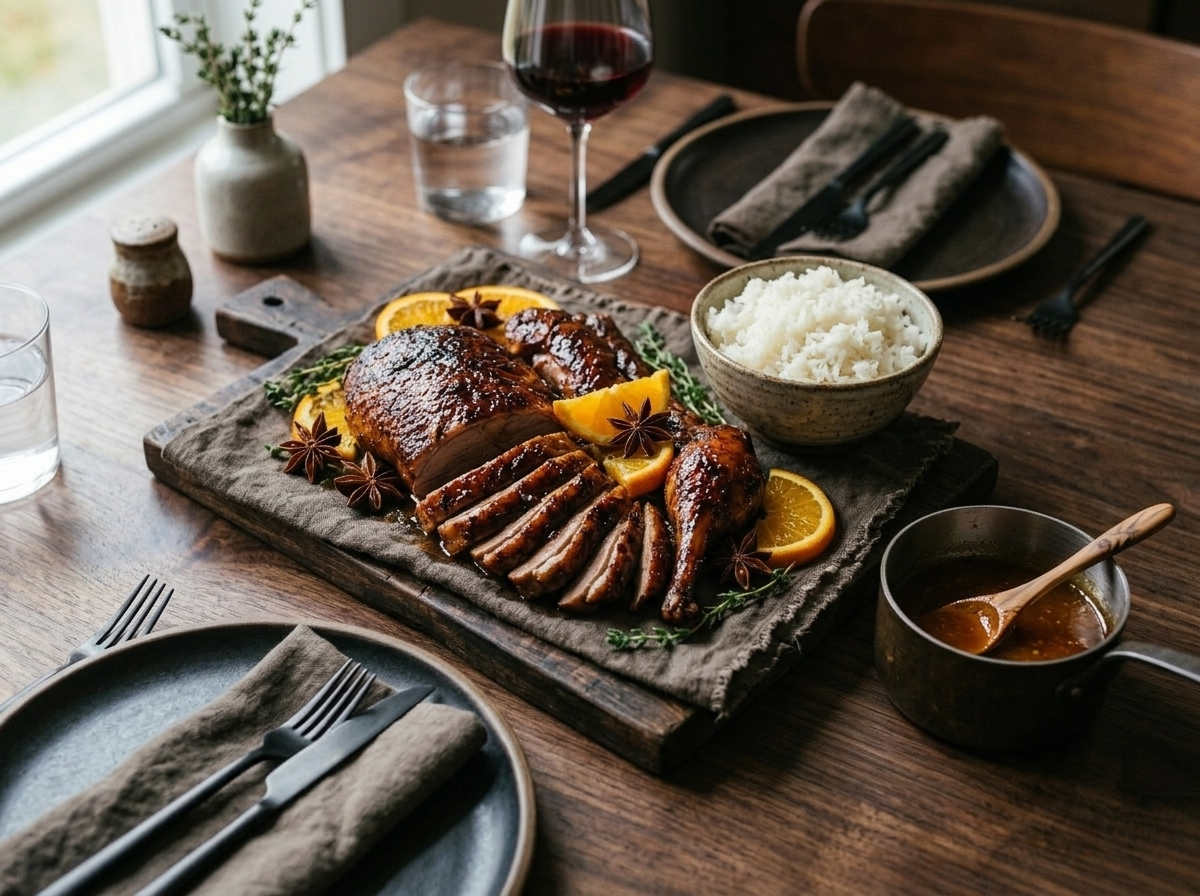
Roasted duck with this glaze pairs well with something starchy that can catch the sauce – egg noodles tossed in sesame oil, steamed jasmine rice, or soft polenta all work. Avoid anything heavily seasoned that competes with the star anise.
For vegetables, I like roasted fennel or braised red cabbage alongside, or the Szechuan dry fried green beans if you want to lean into the Asian-inspired direction. Both have enough character to stand up to duck fat without disappearing. A simple green salad with a sharp vinaigrette also cuts through the richness nicely.
For a full dinner-party spread, start with a light broth-based soup or a crispy snapper and green mango salad, then serve the duck as the main with a bottle of Pinot Noir or an off-dry Riesling. Both hold up to the sweetness of the glaze.
FAQ
Why is my roasted duck skin soft instead of crisp?
The most common cause is moisture on the skin before it goes into the oven. Pat the duck completely dry and leave it uncovered in the fridge for at least a few hours, ideally overnight. Starting the roast at a lower temperature also gives the fat time to render before the skin tries to crisp.
Can I use duck legs instead of a whole duck for this orange and star anise recipe?
Yes, duck legs work well and cook faster – about 40 minutes at 180 C / 355 F after a 20-minute render at lower heat. Reduce the glaze quantity by about a third and start brushing in the final 15 minutes.
How far in advance can I make the orange and star anise glaze?
The glaze keeps in the fridge for up to 5 days in a sealed jar. Warm it gently in a small saucepan before brushing – it thickens as it cools and won’t spread evenly cold.
What temperature should the duck reach inside before I take it out of the oven?
The thickest part of the thigh should read 74 C / 165 F on an instant-read thermometer. Unlike chicken, the breast meat at around 68 C / 155 F is also safe and stays noticeably more tender at that point.
Is this roasted duck with orange glaze gluten-free?
Not with standard soy sauce, which contains wheat. Swap in tamari or a certified gluten-free soy sauce and the rest of the recipe is naturally gluten-free.
What is the difference between this orange-glazed duck and classic French canard a l’orange?
Classic canard a l’orange is built on a brown stock-based sauce finished with Grand Marnier, with no whole spices — a similar use of bold, fruit-forward glaze technique also appears in five spice duck breast with cherry reduction. This version skips the stock sauce in favor of a simpler soy-honey reduction with star anise, which reads closer to Chinese roast duck flavour profiles.
About The Author

John
John Watson is the passionate food enthusiast behind MePlusFood.com. With a deep love for exploring culinary delights, he shares honest restaurant reviews, mouthwatering recipes, and culinary adventures. Join John on his flavorful journey to savor the world one bite at a time.