Roasted Garlic Focaccia with Rosemary and Flaky Salt
Jump to Recipe
Roasted garlic and rosemary focaccia is a no-knead olive oil pan bread topped with soft roasted garlic and chopped fresh rosemary. It takes about 2 hours 25 minutes start to finish, and most of that is the dough resting on its own.
I roast the garlic while the dough does its first rise, so the oven time overlaps and nothing sits idle. The dough is wet, around 80% hydration, which gives you an open, tender crumb and a base that fries crisp in the pan oil.
One judgment call matters here. Tuck the whole cloves into the dimples and coat them in oil. Cloves left bare on the surface scorch at 230 C / 450 F and turn bitter.
A 23 x 33 cm / 9 x 13-inch pan gives 12 squares. Served with roasted garlic and white bean soup, it eats like a full meal, and the leftovers freeze well.
Why You’ll Love This Recipe
- Needs no kneading, only a spatula and four quick folds
- Garlic roasts while the dough rises, so oven time overlaps
- Base fries crisp in olive oil while the crumb stays open
- Squares freeze well, so one pan covers a week of meals
Ingredient Notes
- bread flour: Bread flour gives the chewiest crumb. All-purpose flour works too, but the focaccia will be a little softer, so hold back about 20 ml of the water.
- instant yeast: If you only have active dry yeast, use 9 g (2 3/4 tsp) and stir it into the warm water for 5 minutes before mixing.
- garlic: Roasting whole heads gives you both a spreadable paste and whole soft cloves. In a pinch, use about 100 g of store-bought roasted garlic cloves, patted dry.
- fresh rosemary: Dried rosemary works at 2 tsp total, crumbled and stirred into the garlic paste. Fresh thyme leaves are a milder swap if rosemary tastes too resinous to you.
- extra-virgin olive oil: Use a mild, fruity olive oil, since much of it ends up in the crust. Avocado oil browns fine, but you lose the flavor.
- flaky sea salt: Coarse sea salt works. If you only have kosher salt, use a scant 1/2 tsp, since the fine grains taste saltier.
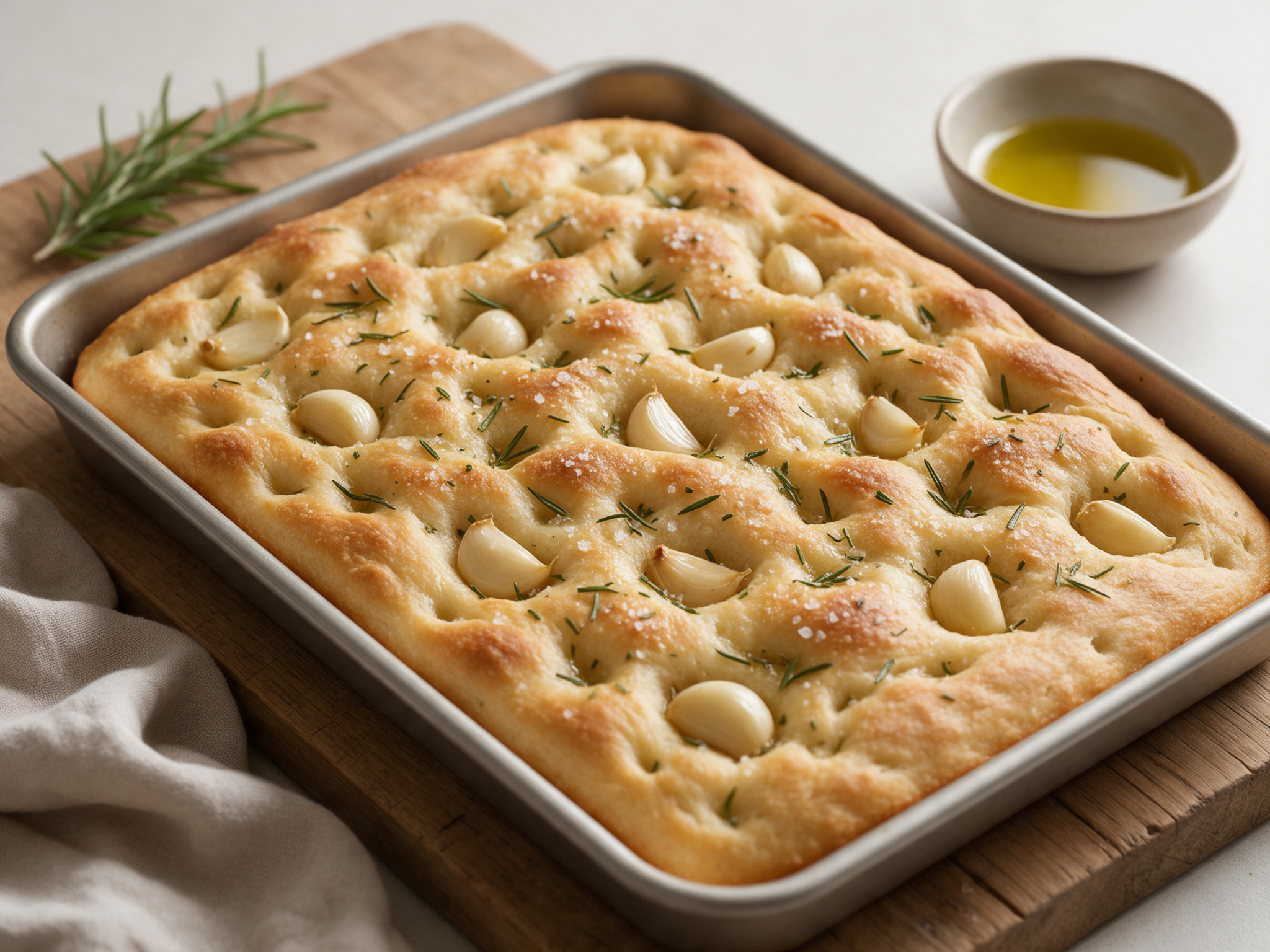
Roasted Garlic Focaccia with Rosemary and Flaky Salt
Ingredients
Method
- Whisk 500 g bread flour, 7 g instant yeast, and 10 g fine salt in a 4-quart / 3.8 L bowl. Add 400 ml warm water (35 C / 95 F) and 1 tbsp olive oil, then stir with a wet silicone spatula for about 2 minutes until no dry flour remains. The dough will be shaggy and sticky. Cover and set a 30-minute timer.
- While the dough rests, heat the oven to 200 C / 400 F. Slice 1 cm off the top of each garlic head to expose the cloves, set each on a square of foil, drizzle with 1/2 tbsp olive oil, and wrap tightly. Roast for 40 minutes, until the cloves are golden and squish easily.
- When the timer goes off, wet your hand and fold the dough: lift one edge, stretch it up, and fold it over the center. Turn the bowl a quarter turn and repeat until you've made 4 folds. Cover and rest another 30 minutes, until puffy and about 1.5 times its original size.
- Unwrap the garlic and cool it for about 10 minutes, until you can handle it. Squeeze the cloves into a bowl. Mash half of them with 2 tbsp olive oil and half of the chopped rosemary into a rough paste, and leave the rest whole.
- Pour 3 tbsp olive oil into a 23 x 33 cm / 9 x 13-inch metal baking pan and swirl to coat the bottom and sides. Scrape the dough in, flip it once to coat both sides in oil, and gently stretch it toward the corners. It won't reach them yet and doesn't need to. Cover and proof for 30 minutes until puffy and jiggly. Heat the oven to 230 C / 450 F during the last 15 minutes, with a rack in the center.
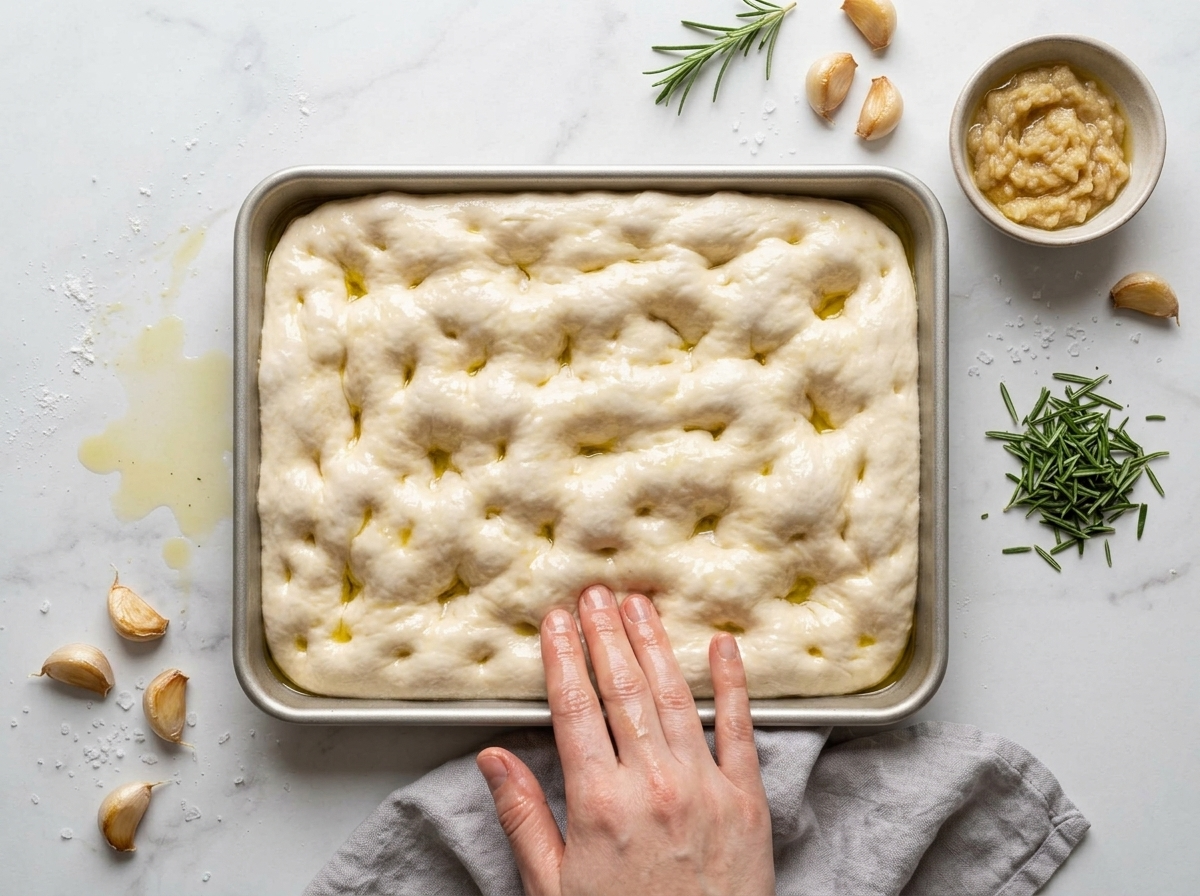
- Oil your fingertips and press dimples straight down until you touch the pan, stretching the dough into the corners as you go. Spoon the garlic paste over the surface, tuck the whole cloves into the dimples, scatter the remaining rosemary, drizzle with 1 tbsp olive oil, and sprinkle on 1/2 tsp flaky salt.
- Bake for 22 to 25 minutes, until the top is deep golden and a spatula lifts a corner to show a crisp, browned base. A thermometer in the center should read 205 F / 96 C. The cloves should look golden, not dark brown.
- Slide the focaccia onto a wire rack right away so steam doesn't soften the base. Cool for 10 minutes, then cut into 12 squares (3 by 4).
Notes
- Start roasting the garlic right after mixing so it's ready when the dough is.
- Use a metal pan, not glass, for the crispest base.
- Weigh the flour and water, since cup measures can shift the hydration noticeably.
- Cool at least 10 minutes before cutting so the crumb sets.
Tips for Success
- Wet your hands and spatula before touching the dough, because 80% hydration dough sticks to dry skin and tears when you fold it.
- Oil the pan with a full 3 tablespoons, since that oil fries the base into a crisp, golden crust.
- Press the dimples all the way down to the pan so the toppings stay put and the dough doesn’t puff into a dome.
- Tuck whole garlic cloves into the dimples and coat them in oil so they caramelize instead of scorching at 230 C / 450 F.
- Check the center with an instant-read thermometer for 205 F / 96 C if the top browns before you trust the middle.
Variations
- Press 100 g halved cherry tomatoes and 60 g pitted olives into the dimples with the garlic. They shrink and sweeten as the bread bakes.
- Swap the rosemary for fresh thyme and add the zest of one lemon to the garlic paste for a brighter, lighter flavor.
- Make the dough ahead: use 2 g (3/4 tsp) yeast, finish the folds, then refrigerate the covered bowl for 12 to 18 hours before panning.
Storage and Reheating
Roasted garlic and rosemary focaccia keeps at room temperature for up to 2 days. Cover the pan loosely with foil or a clean towel, or store the squares in a paper bag, since plastic softens the crust. I skip the fridge because it stales bread faster.
Freeze cooled squares, wrapped individually in foil and then in a freezer bag, for up to 3 months. Reheat room-temperature pieces on a sheet pan at 190 C / 375 F for 8 to 10 minutes, or frozen pieces for 12 to 15 minutes, until the edges are crisp and the center is hot.
For make-ahead, refrigerate the dough instead of the baked bread. Chill it 12 to 18 hours after the folds, then pan, proof, and bake as written.
Serving Suggestions
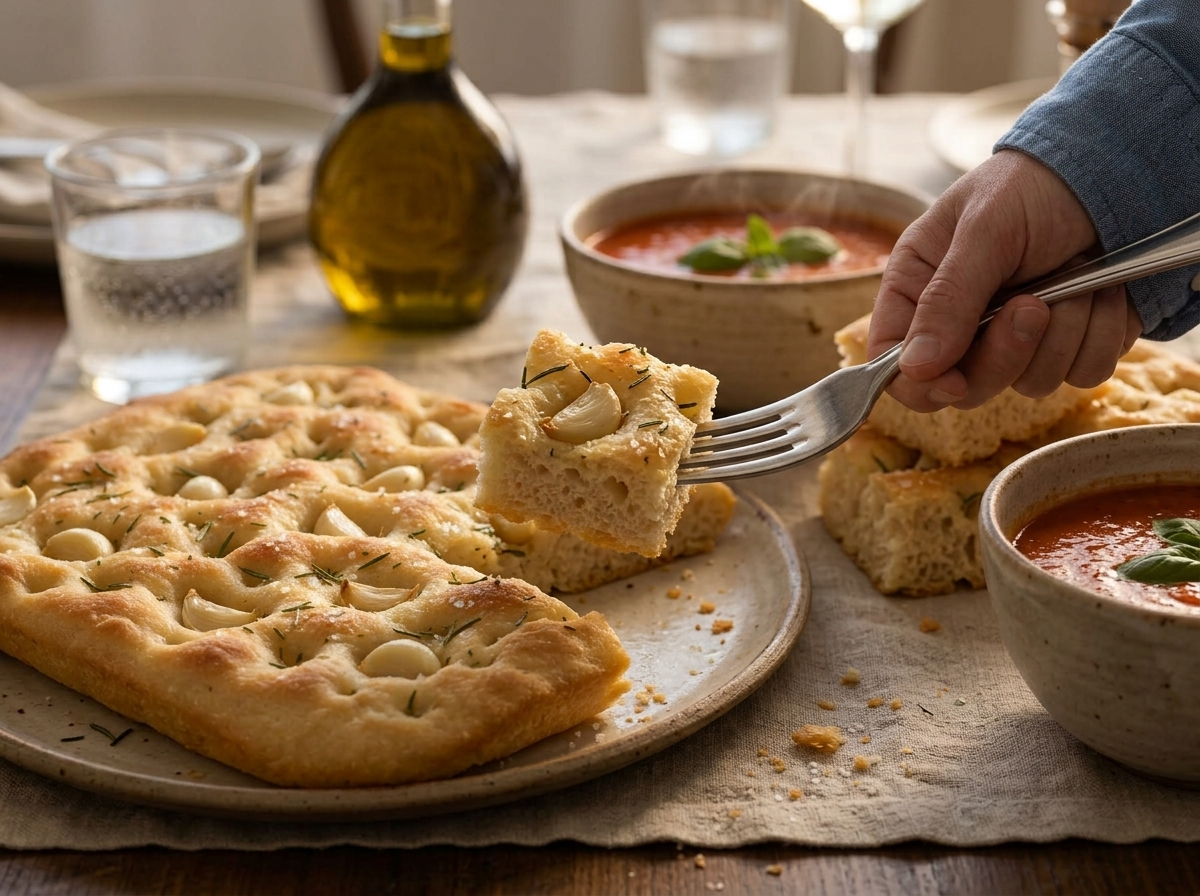
Roasted garlic and rosemary focaccia works as a side for roasted red pepper tomato soup, white bean and kale soup, or a big green salad with lemon dressing. Cut it into 12 squares and tear off a corner for dunking.
For a sandwich, split a square horizontally and fill it with roasted red peppers, arugula, and hummus. Keep it vegetarian and it eats like a full meal.
A small dish of olive oil with a splash of balsamic is enough for dipping if you’re serving it as a starter.
FAQ
How do I know when roasted garlic focaccia is fully baked?
The top should be deep golden brown, and a spatula should lift a corner to show a crisp, browned base. An instant-read thermometer in the center should read 205 F / 96 C. If the edges look pale and soft, give it another 3 to 5 minutes.
Can I use dried rosemary instead of fresh in focaccia?
Yes, use 2 teaspoons of dried rosemary in place of the 2 tablespoons fresh, and crumble it between your fingers first. Stir all of it into the garlic paste rather than scattering it on top, where the dry needles can scorch at 230 C / 450 F.
How far ahead can I make the dough for roasted garlic focaccia?
The dough keeps 12 to 18 hours in the refrigerator. Cut the yeast to 2 g (3/4 tsp), finish the folds, then cover and chill. Next day, pour it into the oiled pan, proof 45 to 60 minutes until puffy, then dimple, top, and bake.
What soup goes best with roasted garlic and rosemary focaccia?
Tomato soup and white bean and kale soup both work well. The bread’s olive oil and garlic balance an acidic or brothy bowl, and a torn square soaks up the liquid nicely. Either pairing eats like a full meal and keeps the table vegetarian.
Is roasted garlic and rosemary focaccia vegan and dairy free?
Yes. The dough uses only flour, water, yeast, salt, and olive oil, with no milk, butter, eggs, or honey. It does contain gluten from the wheat flour. A straight 1:1 gluten-free flour swap won’t work here, because the open crumb depends on wheat gluten.
What is the difference between focaccia and pizza dough?
Focaccia dough is wetter, 80% hydration in this recipe, so it bakes into a thick, soft, open crumb with a fried base in a generously oiled pan. Pizza dough usually runs 60 to 70% hydration, gets stretched thinner, and bakes hotter. Focaccia comes from Liguria in Italy.
You might also like
About The Author

John
John Watson is the passionate food enthusiast behind MePlusFood.com. With a deep love for exploring culinary delights, he shares honest restaurant reviews, mouthwatering recipes, and culinary adventures. Join John on his flavorful journey to savor the world one bite at a time.