Silky Sichuan Mapo Tofu with Ground Pork and Chili Oil
Jump to Recipe
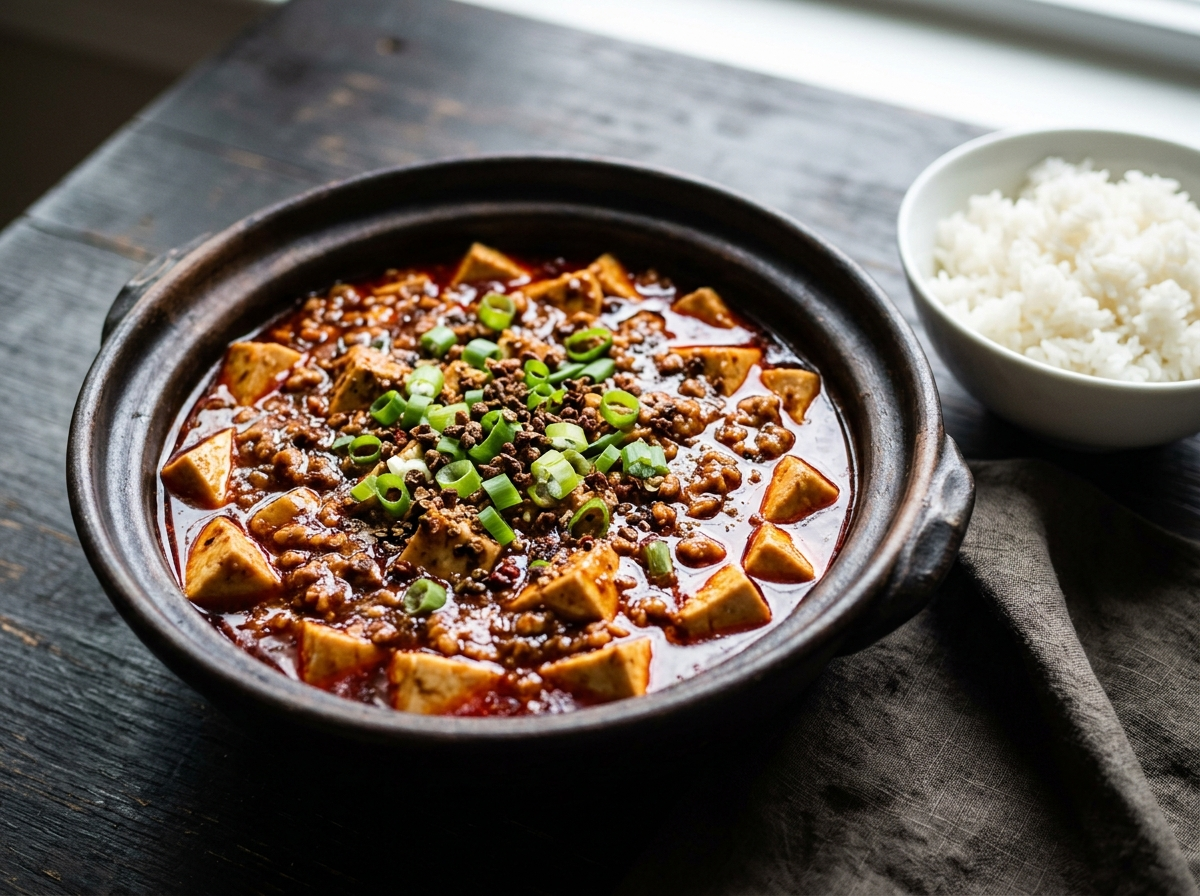
Spicy Sichuan mapo tofu with pork is a stir-fried braise of soft tofu cubes and ground pork simmered in a chili-red sauce built from doubanjiang, fermented black beans, and whole Sichuan peppercorns. The dish gets its name from an old Chengdu cook nicknamed ‘pockmarked grandma,’ and the sauce should taste hot, salty, and faintly numbing all at once.
I use silken or soft tofu here, not firm, because the texture contrast against the coarse pork is the whole point. Firm tofu turns the dish chalky.
The one thing that trips people up is the peppercorns. Skip toasting and grinding them fresh and you lose most of the numbing ma la effect that makes this dish what it is.
It comes together in about 35 minutes, most of that just simmering while the tofu drinks up the sauce.
Why You’ll Love This Recipe
- Ready in 35 minutes with mostly hands-off simmering
- Numbing Sichuan peppercorn heat balances rich pork
- One pan and minimal cleanup for a weeknight dinner
- Soft tofu stays intact using the right simmer technique
Ingredient Notes
- Soft or silken tofu: Use soft or silken tofu, not firm, so it stays tender and soaks up sauce. Blanch briefly in salted water first to firm the cubes without changing the texture.
- Ground pork: Pork with 15-20% fat gives the sauce body and richness. Ground chicken thigh works as a leaner swap, but the sauce will taste lighter.
- Doubanjiang (fermented broad bean paste): This is the backbone of the sauce, salty and funky. Look for Pixian doubanjiang; chili bean sauce works in a pinch but is milder.
- Douchi (fermented black beans): Adds deep savory funk under the chili heat. You can skip it if unavailable, the sauce will just taste a bit flatter.
- Sichuan peppercorns: These give the numbing ‘ma’ sensation that defines the dish. Toast and grind them fresh; black pepper is not a real substitute here.
- Chili oil: Adds red color and extra heat at the end. Use store-bought or homemade, keeping the chili flakes in for texture.
- Cornstarch slurry: Thickens the sauce so it clings to tofu and rice instead of pooling on the plate. Add it in two additions so you can control the final texture.
Silky Sichuan Mapo Tofu with Ground Pork and Chili Oil
Ingredients
Method
- Cut tofu into 2 cm cubes. Bring a pot of salted water to a boil, add tofu, and simmer 2 minutes to firm it up. Drain gently and set aside.
- Toast Sichuan peppercorns in a dry skillet over medium heat for 30 seconds until fragrant, then grind in a mortar or spice grinder.
- Heat oil in a wok or large skillet over medium heat. Add ground pork and cook, breaking it up, for 4-5 minutes until browned and no longer pink, reaching 160 F / 71 C internally.
- Push pork to one side, add doubanjiang and douchi to the oil, and fry for 1-2 minutes until the oil turns brick red and fragrant.
- Add garlic and ginger, stir for 30 seconds until fragrant but not browned.
- Pour in stock, soy sauce, and sugar. Stir to combine and bring to a gentle simmer.
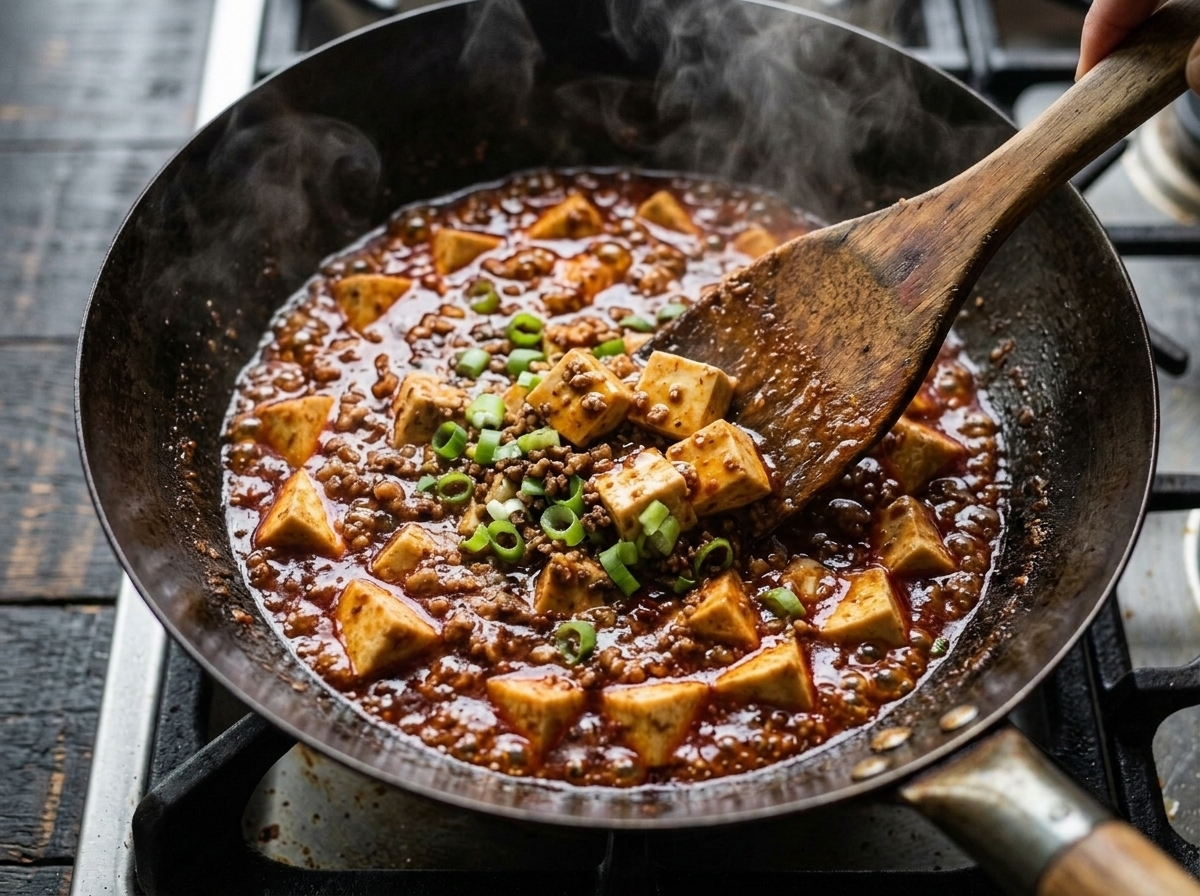
- Slide the tofu cubes into the sauce. Simmer gently for 5-6 minutes, spooning sauce over the tofu instead of stirring hard, so the cubes stay whole.
- Stir the cornstarch slurry, then pour in half. Simmer 30 seconds and check thickness, the sauce should coat the back of a spoon; add more slurry if needed.
- Sprinkle ground Sichuan peppercorns and half the scallions over the top. Simmer 1 more minute.
- Remove from heat, drizzle with chili oil, and scatter remaining scallions. Serve hot over steamed rice.
Notes
- Toast and grind Sichuan peppercorns fresh, pre-ground versions lose potency fast.
- Fry doubanjiang low and slow until the oil turns red, don't rush this step.
- Use a wok or wide skillet so tofu simmers in a thin sauce layer.
- Cook ground pork to 160 F / 71 C internal before adding sauce ingredients.
- Nudge tofu with the back of a spoon instead of stirring hard to keep cubes whole.
Tips for Success
- Toast whole Sichuan peppercorns in a dry pan for 30 seconds before grinding to wake up the numbing oil.
- Simmer tofu gently, don’t let it boil hard, or the cubes break apart into curds.
- Add cornstarch slurry in two additions, checking sauce thickness before adding more.
- Fry the doubanjiang in oil until it turns brick red, this step builds the base flavor.
- Blanch tofu cubes in salted water for 2 minutes before simmering so they hold their shape.
Variations
- Swap ground pork for ground beef or lamb for a heartier, more mineral-tasting sauce.
- Make it vegetarian by using mushroom mince and vegetable stock instead of pork and chicken stock.
- Add cubed eggplant or sliced shiitake mushrooms in the last 5 minutes for extra body.
Storage and Reheating
Store leftover mapo tofu in an airtight container in the fridge for up to 3 days. The tofu keeps softening as it sits, so texture is best within the first 2 days.
Reheat gently in a skillet over medium-low heat with a splash of stock or water, stirring occasionally, for about 5 minutes until warmed through. Avoid the microwave on high, it can make the tofu rubbery at the edges.
Freezing isn’t ideal since tofu turns spongy once thawed, but the sauce alone, strained off the tofu, freezes fine for up to 2 months.
Serving Suggestions
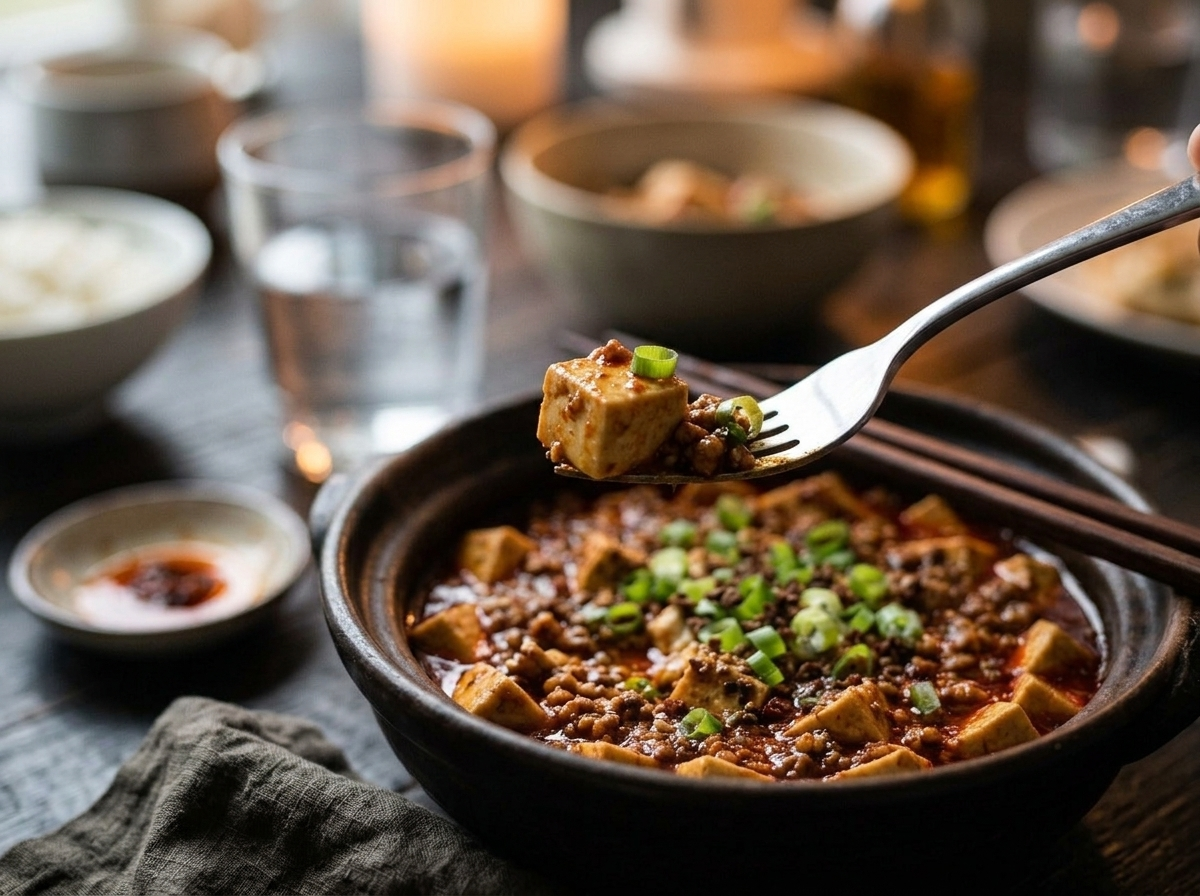
Spicy Sichuan mapo tofu with pork eats like a full meal over steamed white rice, which soaks up the sauce and tempers the heat. Spoon extra sauce over the rice instead of mixing everything together at once.
Round out the meal with a simple side like blanched bok choy or a cucumber salad with rice vinegar, something cool and crisp to offset the numbing spice.
For a heartier spread, add garlic-stir-fried greens and a light broth soup on the side, which is standard in Sichuan home cooking.
FAQ
Why did my mapo tofu turn out watery instead of thick?
Your sauce is under-thickened, or the tofu released too much water. Add the cornstarch slurry in two small additions, letting each one simmer for 30 seconds before deciding if you need more. Blanching the tofu briefly beforehand also removes excess moisture, so the sauce clings better.
Can I use firm tofu instead of soft tofu in mapo tofu?
You can, but the texture changes. Soft or silken tofu is traditional and gives the contrast against the coarse pork that defines the dish, while firm tofu turns chewy and less absorbent. If firm is all you have, cut it smaller and simmer a bit longer so it still takes on sauce.
Can I make Sichuan mapo tofu with pork ahead of time?
Yes, the pork and sauce base hold up well in the fridge for 2 days. Cook the sauce and pork ahead, then add fresh tofu and simmer just before serving so the cubes don’t break down from repeated reheating. This keeps the texture closer to fresh.
What goes with spicy Sichuan mapo tofu besides rice?
Steamed white rice is the classic base, but blanched greens like bok choy or gai lan work well alongside it. A cold cucumber salad with rice vinegar also cuts through the heat. Skip heavy sides, the dish is rich enough on its own.
Is Sichuan mapo tofu with pork gluten free?
It depends on the doubanjiang and soy sauce you use, since some brands add wheat flour as a filler. Check labels for gluten-free doubanjiang and use tamari instead of regular soy sauce if needed. Otherwise the dish is naturally gluten free.
What’s the difference between mapo tofu and mapo doufu with pork?
They’re the same dish, mapo doufu is just the Mandarin pinyin name (doufu means tofu). Traditional versions from Chengdu use pork, though some regional and modern takes swap in beef or skip meat. The name always points to the numbing-spicy doubanjiang sauce.
You might also like
About The Author

John
John Watson is the passionate food enthusiast behind MePlusFood.com. With a deep love for exploring culinary delights, he shares honest restaurant reviews, mouthwatering recipes, and culinary adventures. Join John on his flavorful journey to savor the world one bite at a time.