Slow Cooker Massaman Beef Curry
Jump to Recipe
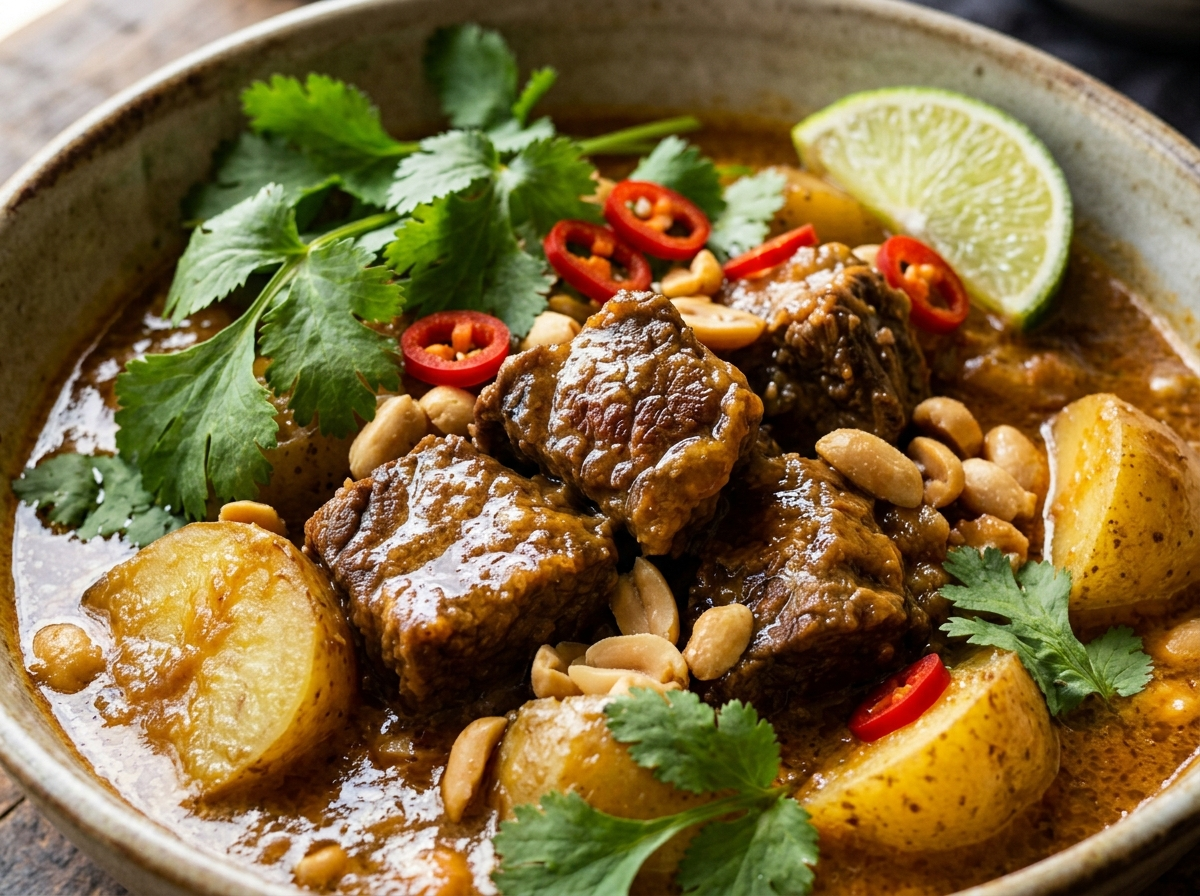
Massaman curry sits somewhere between a Thai curry and a Persian stew – warmly spiced with cinnamon, cardamom, and star anise, thickened with coconut milk, and finished with roasted peanuts. It’s not a quick weeknight dish by nature, but the slow cooker makes it almost hands-off, delivering the kind of depth you’d expect from a lemongrass coconut chicken curry with far less effort.
The trick is searing the beef before it goes in. That step adds color and a slightly caramelized depth the slow cooker can’t create on its own. Everything after that is just time.
After 7 to 8 hours on low, the beef is completely tender, the potatoes have absorbed the sauce, and the whole pot smells like a Thai kitchen. Serve it over jasmine rice and it eats like a full meal.
Why You’ll Love This Recipe
- Beef turns fork-tender after 7 to 8 hours on low
- Massaman paste does most of the seasoning work for you
- Potatoes and peanuts make it a complete one-pot meal
- Tastes better the next day – ideal for batch cooking
Ingredient Notes
- Massaman curry paste: I use Mae Ploy brand for a deeper, more aromatic result. Maesri works well too. Homemade paste is excellent but adds significant prep time.
- Beef chuck: Chuck has enough marbling to stay moist through 8 hours of slow cooking. Brisket also works. Lean cuts like topside will dry out.
- Coconut milk: Use full-fat coconut milk for a sauce that emulsifies properly. Light coconut milk produces a thinner, slightly watery result.
- Waxy potatoes: Yukon Gold or baby potatoes hold their shape in the slow cooker. Russet potatoes will break down and thicken the sauce too much.
- Fish sauce: Adds saltiness and umami without tasting fishy. Substitute soy sauce or tamari for a fully vegetarian version.
- Palm sugar: Provides a rounded sweetness that brown sugar or coconut sugar can replicate fairly closely. Use the same quantity.
- Roasted peanuts: Add these at the end to keep some crunch. Stirring them in at the start produces a softer, more paste-like texture.
- Tamarind paste: Brings a gentle acidity that balances the coconut milk. In a pinch, a teaspoon of lime juice works, but the flavor is less complex.
Slow Cooker Massaman Beef Curry
Ingredients
Method
- Pat the beef cubes dry with paper towels and season with salt and pepper.
- Heat the oil in a large cast-iron skillet over high heat until the oil just starts to smoke.
- Sear the beef in two or three batches, leaving space between pieces, for 2 to 3 minutes per side until a deep brown crust forms. Transfer each batch to the slow cooker insert.
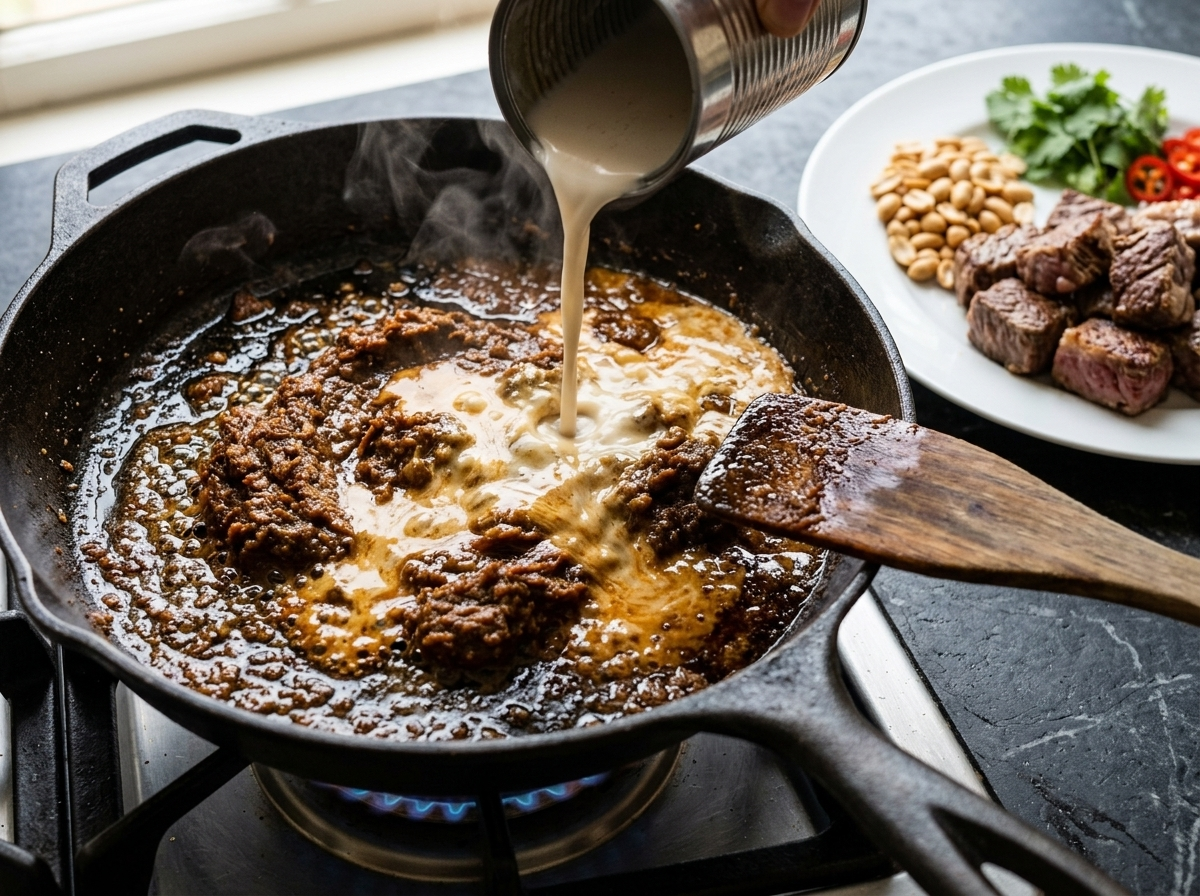
- Reduce the heat to medium and add the Massaman paste to the same skillet. Fry for 1 to 2 minutes, stirring constantly, until fragrant and the paste darkens slightly.
- Pour in the coconut milk and beef stock, scraping up any browned bits from the base of the pan.
- Stir in the fish sauce, palm sugar, and tamarind paste until combined. Bring to a bare simmer, then pour the sauce over the beef in the slow cooker.
- Add the onion wedges, bay leaves, and cinnamon stick. Stir gently to distribute.
- Set the slow cooker to LOW and cook for 4 hours.
- At the 4-hour mark, add the halved potatoes, pushing them down into the sauce.
- Continue cooking for a further 3 to 4 hours on LOW, until the beef is completely tender and pulls apart easily with two forks and the potatoes are cooked through.
- Remove and discard the cinnamon stick and bay leaves.
- Skim any visible fat from the surface with a spoon.
- Taste the sauce and adjust with more fish sauce for saltiness, palm sugar for sweetness, or tamarind for acidity.
- Stir in the roasted peanuts and let the curry rest for 10 minutes.
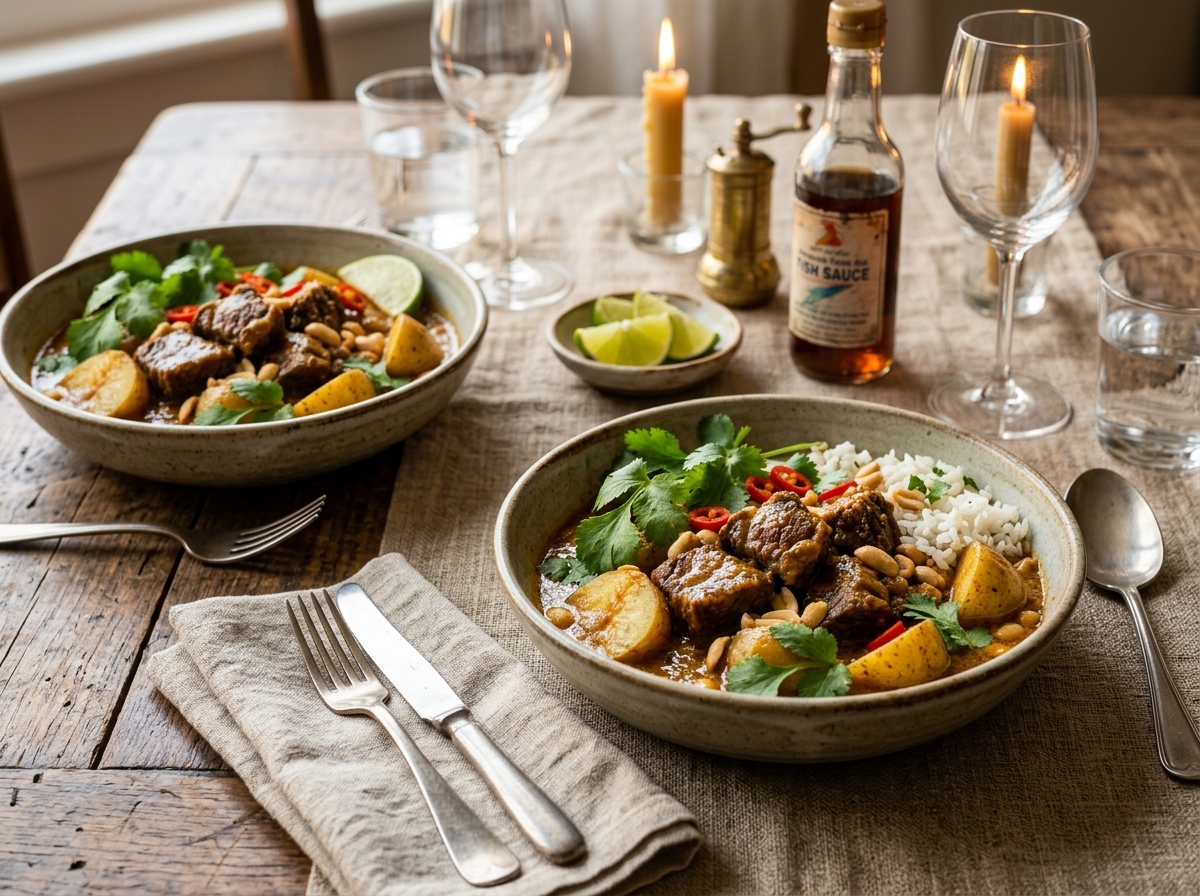
- Serve over jasmine rice, topped with fresh cilantro and a wedge of lime on the side.
Notes
Tips for Success
- Sear beef chunks in batches over high heat until a deep brown crust forms on at least two sides before adding to the slow cooker.
- Fry the Massaman paste in the same skillet for 1 to 2 minutes until fragrant before stirring in the coconut milk – this activates the spices.
- Add potatoes halfway through cooking, around the 4-hour mark, so they stay intact and don’t turn to mush by serving time.
- Skim visible fat from the surface before serving, especially if using a fattier cut – Massaman sauce should be silky, not greasy.
- Taste and adjust fish sauce, palm sugar, and tamarind in the last 30 minutes – slow cooking can dull salt, so a final seasoning pass matters.
Variations
- Swap beef for bone-in chicken thighs and reduce cook time to 4 to 5 hours on low.
- Use chickpeas and sweet potato instead of beef for a plant-based Massaman that still eats hearty.
- Add half a stick of cinnamon and two cardamom pods directly to the pot for a more aromatic, spiced-forward sauce.
Storage and Reheating
Cool the curry completely and refrigerate in an airtight container for up to 4 days. The flavors develop further overnight, so leftovers are genuinely better the next day.
To reheat, warm gently in a saucepan over medium-low heat with a splash of water or coconut milk to loosen the sauce. Avoid boiling, which can cause the coconut milk to split.
This curry freezes well for up to 3 months. Freeze without rice in portion-sized containers. Thaw overnight in the refrigerator before reheating.
Serving Suggestions
Jasmine rice is the standard pairing – its subtle floral note works with the warm spices in the sauce, the same way it anchors a dish like tamarind glazed salmon with coconut rice. Steamed rice absorbs the curry well and keeps the focus on the beef.
For a lower-carb option, cauliflower rice or steamed broccolini both work alongside. A wedge of lime on the side lets each person adjust the acidity to their taste.
If you’re serving a group, add a simple cucumber salad dressed with rice vinegar and chili for contrast – the cool, crisp texture cuts through the richness of the coconut sauce.
FAQ
Why does my Massaman beef curry look oily on top after slow cooking?
Coconut milk and the fat from beef chuck will separate during long cooking, pooling at the surface. Skim with a spoon before serving, or refrigerate overnight and lift the solidified fat cap off cold.
Can I use lamb instead of beef chuck in Massaman curry?
Lamb shoulder is a solid substitute and actually traditional in some versions of the dish, much like the slow-braised approach used in a spiced goat curry with roti. Keep the same cooking time – lamb shoulder breaks down at a similar rate to beef chuck at low heat.
Can I make slow cooker Massaman beef curry the night before and reheat it for dinner?
Yes, and it’s one of the best make-ahead curries for exactly that reason. Reheat covered over medium-low heat with a splash of coconut milk, stirring gently until hot through.
What goes well with Massaman curry besides jasmine rice?
Roti or flatbread is a classic pairing for scooping up the sauce. A lightly dressed cucumber salad or pickled vegetables alongside add a sharp contrast to the rich coconut base.
Is Massaman beef curry gluten-free?
It can be, but check your curry paste label first – some brands add wheat-based thickeners or soy sauce. Fish sauce, coconut milk, and all other core ingredients are naturally gluten-free.
What’s the difference between Massaman curry and Panang curry?
Massaman is milder, sweeter, and spiced with warm baking-type spices like cinnamon and cardamom, influenced by Persian and Indian cooking. Panang is richer, nuttier, and more intensely chili-forward with a thicker, drier-style sauce.
About The Author

John
John Watson is the passionate food enthusiast behind MePlusFood.com. With a deep love for exploring culinary delights, he shares honest restaurant reviews, mouthwatering recipes, and culinary adventures. Join John on his flavorful journey to savor the world one bite at a time.