Smoked Paprika Lamb Shoulder with Charred Onions
Jump to Recipe
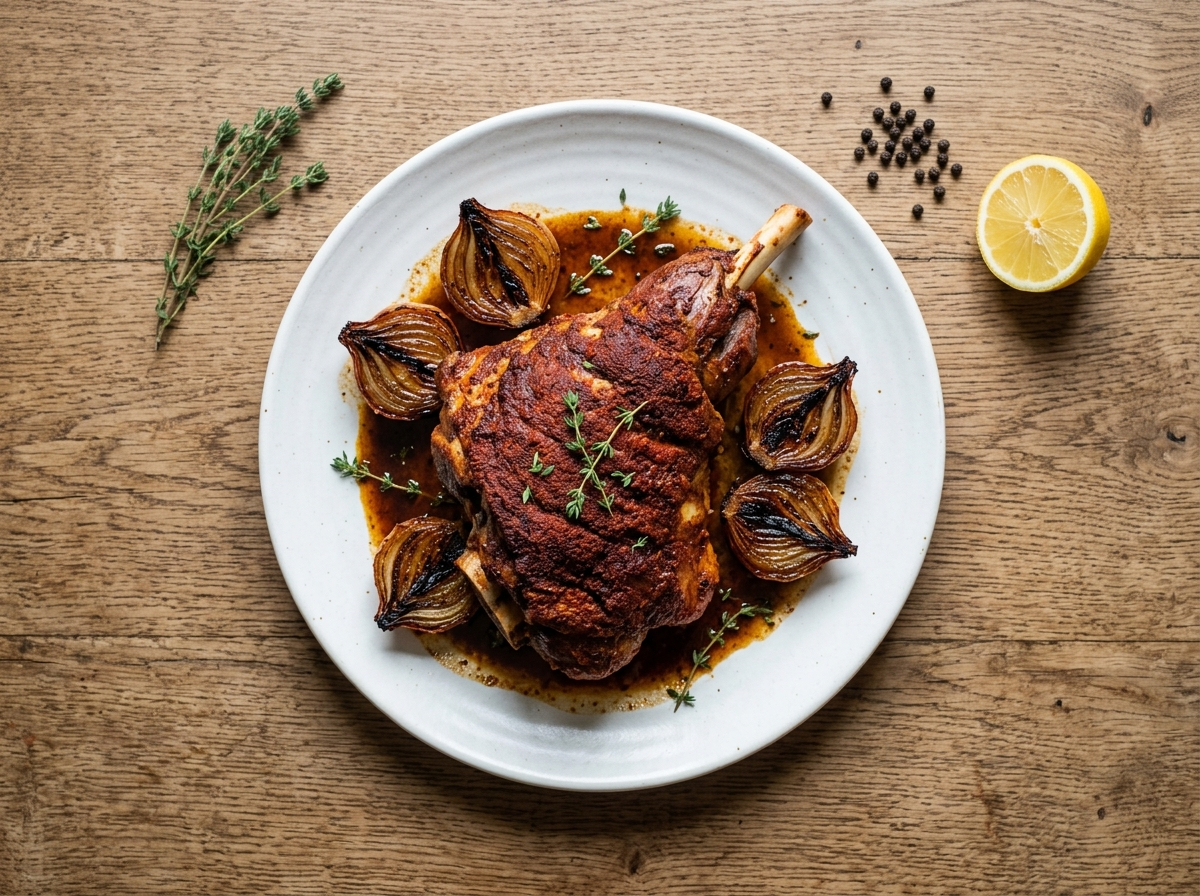
Lamb shoulder is one of the most forgiving cuts you can put in an oven. The fat content means it stays juicy even if you push the cooking time, and the connective tissue breaks down into something almost gelatinous after a few hours at low heat.
The spice rub here is built around smoked paprika — the same smoked paprika that defines a good slow roast — not sweet paprika, not hot paprika, but the kind that smells faintly of oak and dried chilis. Combined with garlic paste, cumin, and a little olive oil, it forms a thick paste that clings to every crevice of the meat and chars slightly at the edges during roasting.
The onions are not a garnish. They sit under the lamb the entire cook, soaking up rendered fat and spiced juices until they’re soft, jammy, and dark at the edges. By the time you lift the lamb out, the onions have basically made their own sauce.
This feeds four generously and holds well, which makes it a practical choice for a Sunday cook that carries into the week.
Why You’ll Love This Recipe
- Hands-off roasting with a deeply spiced crust
- Charred onions create a built-in pan sauce
- Leftovers reheat well for weekday meals
- One roasting pan, minimal cleanup
Ingredient Notes
- bone-in lamb shoulder: Bone-in gives you better flavor and helps the meat hold its shape during the long roast. Boneless shoulder works but may cook 20-30 minutes faster, so check internal temp earlier.
- smoked paprika: Use Spanish smoked paprika (pimenton de la vera) for the most pronounced oak-smoke flavor. Sweet paprika is a weak substitute – it lacks the depth that defines this crust.
- yellow onions: Yellow onions caramelize without burning as easily as white onions. Red onions work and add a slightly sharper flavor, but they’ll turn the pan juices a dark purple.
- ground cumin: Toasting and grinding whole cumin seeds gives a brighter, more citrusy note, but pre-ground cumin works well in a rub like this where the fat and heat bloom the spice anyway.
- garlic: Grate or press the garlic into a paste so it incorporates evenly into the rub – chunky garlic pieces can scorch during the high-heat sear phase.
- olive oil: Acts as the binder for the rub. Any neutral oil like sunflower or grapeseed works if you prefer a less fruity fat layer.
Smoked Paprika Lamb Shoulder with Charred Onions
Ingredients
Method
- Heat the oven to 160 C / 320 F. Take the lamb out of the fridge 45 minutes before cooking so it reaches room temperature evenly.
- Mix the smoked paprika, cumin, coriander, garlic paste, olive oil, salt, and pepper in a bowl until you have a thick, uniform paste.
- Pat the lamb shoulder completely dry with paper towels. Score the fat cap in a 1 cm deep crosshatch pattern with a sharp knife.
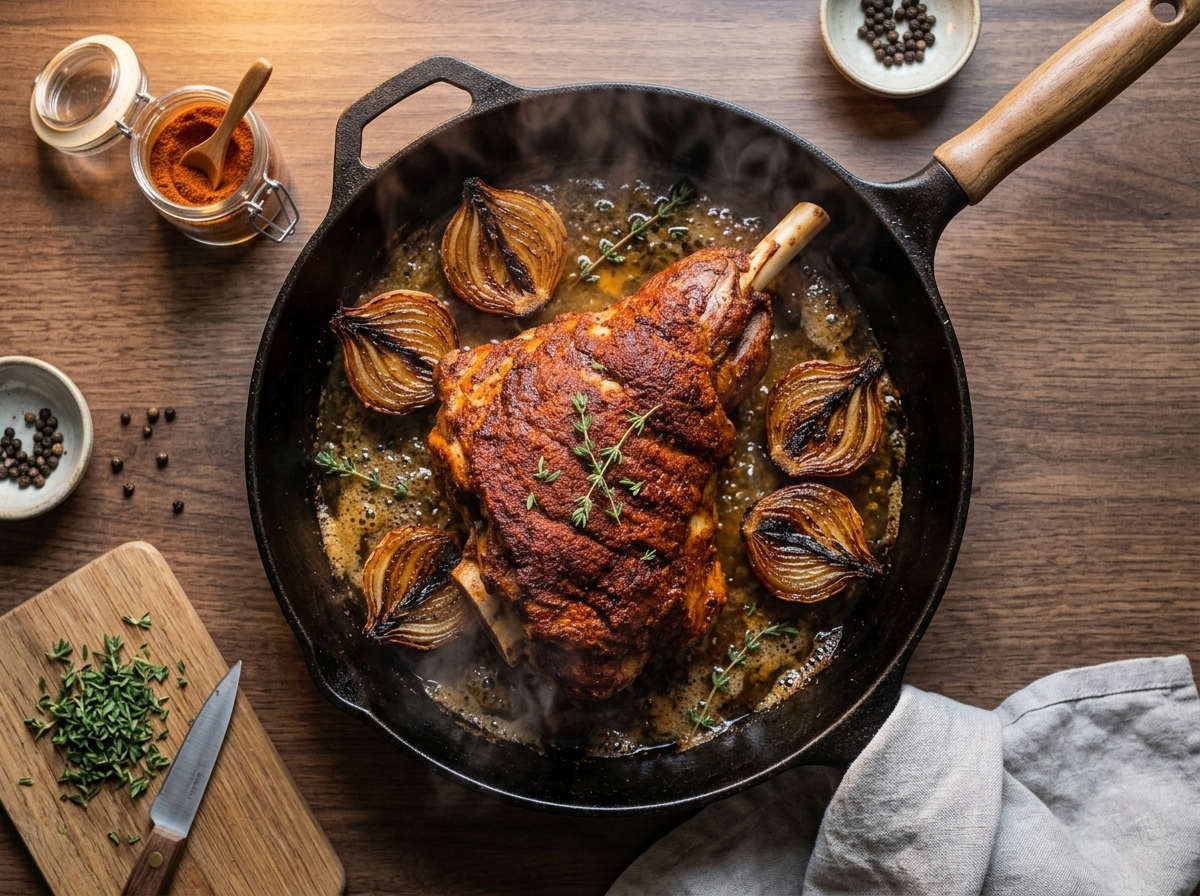
- Rub the paste over every surface of the lamb, pressing it firmly into the scored fat and any crevices. It should look like a deep rust-red coating with no bare patches.
- Arrange the halved onions cut-side down in a single layer in your roasting pan. Scatter the thyme sprigs and bay leaves between the onions.
- Pour the stock into the pan around the onions - not over them - so there's a shallow liquid base to prevent scorching during the first phase of cooking.
- Place the rubbed lamb shoulder on top of the onions, fat-side up. The onions act as a natural rack.
- Cover the pan tightly with a double layer of aluminum foil and place it on the middle rack of the oven.
- Roast covered at 160 C / 320 F for 2 hours. The lamb should be releasing fat and the onions beginning to soften when you check at the 2-hour mark.
- Remove the foil, raise the oven temperature to 200 C / 390 F, and continue roasting uncovered for 45 to 60 minutes until the crust is deep brown and the lamb reaches at least 90 C / 195 F on an instant-read thermometer inserted into the thickest part away from the bone.
- The onion cut-sides should be dark brown to black at the edges and completely soft when pressed. If they're coloring too fast, add a splash of water to the pan.
- Lift the lamb onto a cutting board and tent loosely with foil. Rest for 20 minutes - the internal temperature will climb another 3 to 5 degrees as it sits.
- Discard the thyme sprigs and bay leaves. Place the roasting pan over medium heat on the stovetop. Add 100 ml of water or additional stock and scrape up all the charred fond from the base with a wooden spoon until you have a loose, dark sauce.
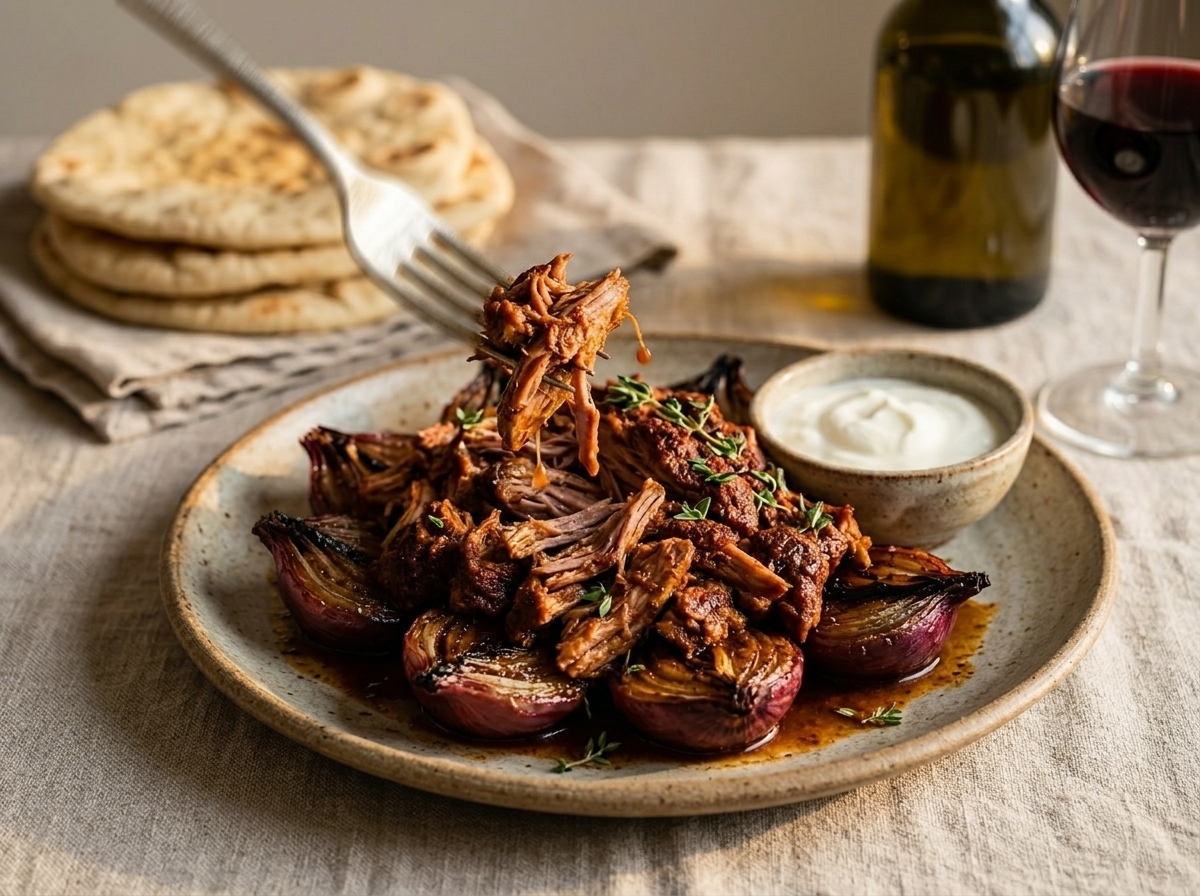
- Shred or carve the lamb and serve over the charred onions with the pan sauce spooned over the top.
Notes
Tips for Success
- Pat the lamb completely dry before applying the rub so the paste adheres as a thick, even layer.
- Score the fat cap 1 cm deep in a crosshatch pattern to help the spice paste penetrate and render faster.
- Roast the onion halves cut-side down for the first two hours so they char on the bottom without drying out.
- Rest the lamb uncovered for at least 20 minutes before carving – the internal temp will rise 3 to 5 degrees as it sits.
- Deglaze the onion pan with 100 ml of water or stock after removing the lamb to loosen all the charred fond into a loose sauce.
Variations
- Add 1 tsp cinnamon and a handful of dried apricots to the onions for a Moroccan-style sweetness.
- Swap smoked paprika for harissa paste to get a chili-forward crust with more heat and complexity.
- Use lamb neck instead of shoulder for a slightly fattier, more gelatinous result that shreds even more easily.
Storage and Reheating
Leftover lamb keeps well in an airtight container in the fridge for up to 4 days. Store the shredded meat and charred onions together so the onions keep the lamb moist.
To reheat, place in a covered baking dish with a splash of water or stock and warm at 160 C / 320 F for 20 minutes. Avoid microwaving large chunks – the fat doesn’t redistribute evenly and the texture suffers.
For freezing, portion the shredded meat into freezer bags with some of the pan juices. It freezes well for up to 3 months. Thaw overnight in the fridge before reheating.
Serving Suggestions
The lamb and onions work well over a loose white bean puree that can absorb the pan juices. A warm spiced lentil flatbread on the side to scoop everything up is a good call.
For a lighter plate, pile the shredded lamb onto roasted cauliflower or serve alongside a sharp cucumber and herb salad – the acid cuts the richness of the fat. A dollop of plain yogurt or labneh on the plate does the same job.
If you want a fuller spread, a smoky roasted carrot plate and a simple green salad with lemon dressing round the meal out without competing with the smoky lamb.
FAQ
Why does my smoked paprika lamb crust turn black on top instead of forming a dark bark?
That usually means the oven heat is too high during the first hour, or the rub was applied too thick in patches. Start at a lower temperature (160 C) for the first 2 hours, then raise heat to 200 C for the final 30 minutes to build the bark without burning the paprika.
Can I use boneless lamb shoulder instead of bone-in for this recipe?
Yes, boneless shoulder works fine but cooks faster, typically 30 to 45 minutes less. Use an instant-read thermometer and pull the lamb at 90 C / 195 F internal temp for the same pull-apart texture.
How do I know when the charred onions under the lamb are done correctly?
The cut sides should be deep brown to black at the edges and the layers should feel completely soft when you press them with a spoon. If they’re still firm after 2.5 hours, they need more time – add a splash of water to prevent scorching.
Can I prep the smoked paprika rub and marinate the lamb overnight?
You can marinate for up to 24 hours in the fridge, and the flavor does deepen noticeably. Cover the rubbed lamb tightly with plastic wrap and let it come to room temperature for 45 minutes before it goes into the oven.
What goes well with smoked paprika lamb shoulder besides flatbread?
White bean puree, roasted carrots, or a simple cucumber and herb salad all work well alongside the lamb. The key is a starchy or acidic element to balance the fat and smoke from the paprika crust.
Is smoked paprika lamb shoulder gluten-free?
This recipe as written is gluten-free – the rub and pan ingredients contain no wheat or gluten sources. Just confirm your smoked paprika brand is processed in a gluten-free facility if cross-contamination is a concern.
About The Author

John
John Watson is the passionate food enthusiast behind MePlusFood.com. With a deep love for exploring culinary delights, he shares honest restaurant reviews, mouthwatering recipes, and culinary adventures. Join John on his flavorful journey to savor the world one bite at a time.