Smoky Eggplant Yogurt Pita
The first bite should taste of char, bright lemon, and a creamy pull that invites a second scoop.
I roast whole fruit until the skin goes black, scoop the soft flesh, then pulse it briefly with tahini, Greek yogurt, kosher salt, and fresh lemon so the texture stays chunky enough to hold on warm pita.
This is a practical Middle Eastern-style eggplant dip built into a simple meal you can serve as an appetizer or a weeknight dinner.
Key technique: drain excess liquid and use short pulses so the dip keeps its smoke and texture instead of turning watery.
Finish with a drizzle of good olive oil and za’atar, warm the bread, and treat the plate as a casual mezze—dip, share, and add a quick salad if you like.
Key Takeaways
- This recipe delivers a scoopable dip plus a creamy tahini-yogurt sauce for a flexible meal.
- Char hard and hot, then scoop and drain to preserve smoky flavor and avoid sogginess.
- Short pulses control texture; don’t overblend.
- Season deliberately with lemon and kosher salt to brighten the richness.
- Serve warm with bread and simple sides for an easy Middle Eastern-inspired dinner.
Why this Smoky Eggplant Yogurt Pita Works Every Time
A balanced scoop needs four things: char for depth, acid for lift, fat for silkiness, and salt for clarity. Nail those and the spread never tastes flat.
The Flavor Formula
Charred eggplant provides the backbone — that roasted bite gives contrast to bright lemon. Use fresh lemon juice; it lifts roasted notes in a way bottled juice cannot.
Fat from tahini and Greek yogurt adds body. Olive oil finishes the bowl and ties flavors without dulling the char.
Texture You Control
Pulse briefly for a rustic dip that holds chunks and resists watery separation. Blend longer for a smoother spread, but taste and adjust salt and lemon if you change the texture.
When to Serve It
Serve as an appetizer with pita chips or chips, as a mezze side beside grilled meat and salads, or as an easy dinner spooned into warm bread with quick toppings.
| Use | Texture | Best Pairing | Why it works |
|---|---|---|---|
| Appetizer | Smoother spread | Pita chips, crudités | Easy to scoop and share |
| Mezze side | Rustic pulses | Grilled vegetables, salads | Holds up on a mixed plate |
| Weeknight dinner | Spoonable, slightly chunky | Warm bread, olive oil | Comforting, quick to assemble |
Reliability checklist: eggplant fully softened, excess moisture drained, seasoning adjusted at the end, and olive oil added as a finish. Decide on raw or mellowed garlic depending on whether you want a bright bite or a subtler roast-forward profile.
Ingredients that Make the Difference
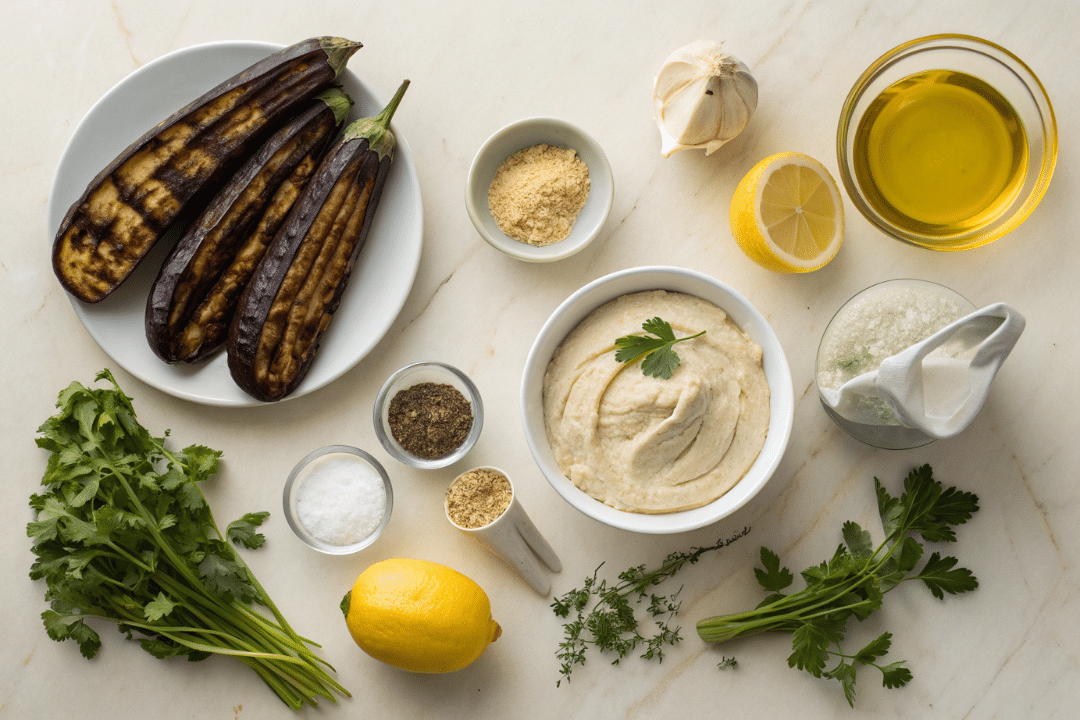
Start with quality produce and a few focused pantry items for the best result. The choices you make at the market change texture, bitterness, and how much seasoning you’ll need later.
Choosing Produce in the U.S.
Look for fruit with smooth, firm skin and a good weight for size. Avoid oversized specimens; they usually hold larger seeds and can taste bitter.
If you only find large ones, plan to scoop and drain longer. Taste and salt more deliberately to tame extra water and any bitter bit.
Greek Yogurt vs Labneh
Labneh brings more body and tang and keeps the dip thicker. Greek yogurt is easier to find and works well if you drain the scooped flesh first.
Drain longer or strain yogurt briefly to match labneh’s texture if you prefer a firmer spread.
The Non-Negotiables
Tahini gives nutty depth, garlic provides the aromatic backbone, kosher salt sharpens, and fresh lemon juice adds bright lift. Stir tahini before measuring; separation is normal.
Short swaps that won’t derail the dish: use labneh for less yogurt, add a touch more juice if the lemon is weak, and start with less tahini if the jar tastes bitter.
Finishers and Small Changes
Za’atar or sumac shifts the bowl toward herbal or tart notes. Fresh mint, toasted pine seeds, or pomegranate seeds add texture and contrast without changing technique.
Keep the core ingredients steady in your rotation and swap finishes to make the same recipe feel new.
Getting Real Smokiness: Roasting, Broiling, or Grilling the Eggplant
To get real char and concentrated flavor, you must push the heat until the skin blackens and the flesh collapses. High, direct heat is the goal; that blackened exterior seals flavor and yields a soft interior that tastes deeper after draining.
Oven on a Baking Sheet
Preheat the oven to 425°F. Pierce the whole fruit a few times to release steam, place on a baking sheet, and roast about 45 minutes, turning halfway.
Doneness cue: the skin should be black, and the eggplant should collapse when gently squeezed, not just be soft after a set time.
Broiler, Fast and Tidy
Use a foil-lined sheet set ~6 inches from the broiler. Turn every 15 minutes for 30–45 minutes so the exterior chars evenly without long oven time.
This method chars fast and keeps the rest of the oven free for other baking tasks.
Grill or Open Flame for Maximum Smoke
Direct flame gives the deepest smoke. Rotate over medium-high coals or a gas flame until the surface is blistered and black all around.
Expect more soot on the skin; that flavor is worth the extra cleanup.
After Cooking: Scoop, Drain, Discard Skin
Let the fruit cool slightly, split and scoop the soft flesh into a bowl. Avoid scraping too many bitter char bits from the inside of the skin.
Drain the scooped flesh in a colander over a bowl for 1–2 hours so the final dip stays thick, not watery.
- Why high heat: it blackens skin and concentrates flavor, not slowly bakes.
- Safety/cleanup: piercing prevents steam bursts; foil makes cleanup easier.
- Quick guide: oven for convenience, broiler for speed, grill for max smoke—any method works if you drain and season afterward.
Mixing the Yogurt-Tahini Sauce Without Losing that Smoky Edge
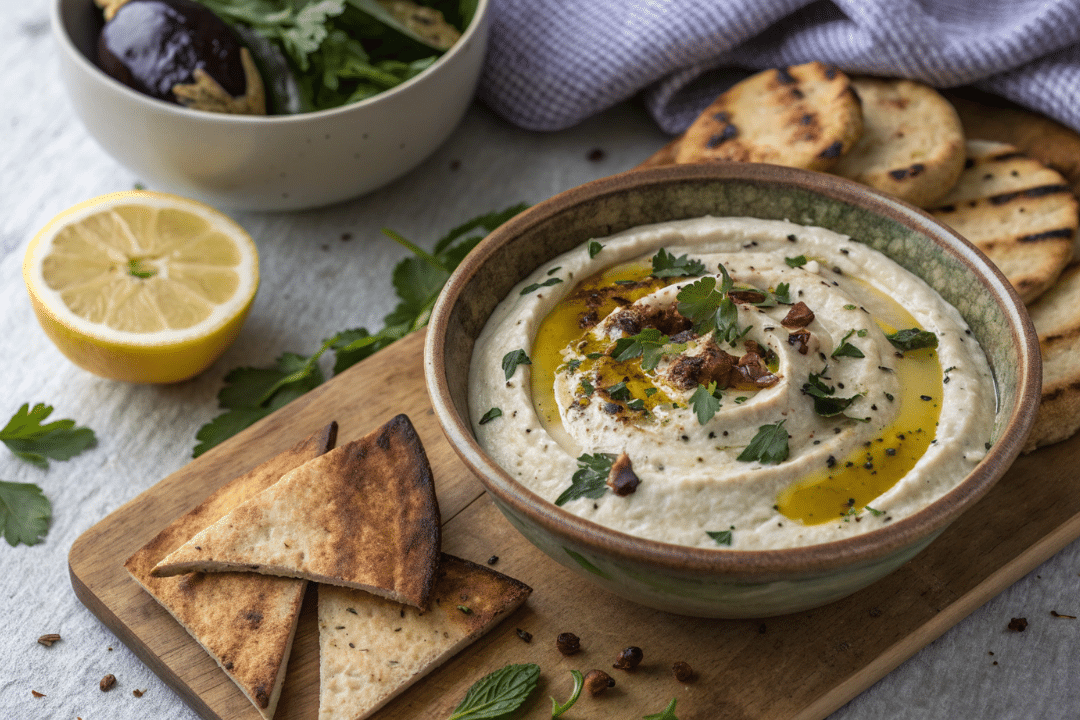
Protect the roasted flavor by pulsing just enough to bind, not to erase texture. Use a food processor in short bursts—one to three two‑second pulses—then scrape down. Stop early if the flesh looks shiny and still holds small pieces.
Food Processor Tips
Short pulses keep the dip tasting of char rather than just creamy sauce. Over-processing smooths the bowl and dulls the roast note.
Balancing the Bowl
Taste after a few pulses. Add lemon juice for lift, salt for clarity, or tahini for body. Start with a tablespoon of tahini; some brands run bitter, so add slowly until the nutty depth feels round, not harsh.
Garlic Options
Raw garlic gives a bright, pungent bite. Gently sautéed garlic in olive oil tastes sweeter and softer while still reading as garlic in the dip.
- Consistency check: the dip should mound on a spoon. If it slumps, it needs more draining or a touch more tahini—not extra yogurt.
- Technique loop: pulse → taste → adjust → stop when the roast is clearly leading.
| Element | Raw Garlic | Sautéed Garlic |
|---|---|---|
| Flavor | Sharp, immediate | Sweet, mellow |
| Use in process | Add before pulsing | Sauté in olive oil, then stir in |
| Pulse guidance | Short pulses (1–3) | Fewer pulses; fold in at the end |
For a related serving idea, try a wrap variation described in this delicious wrap.
Pita Bread, Pita Chips, and the Best Way to Build a Scoopable Pita Meal
How you serve the spread changes the whole meal—from soft folds to crunchy bites. Choose soft rounds for a fold-and-scoop dinner, or turn the rounds into crisp chips when you want a shareable appetizer.
Warm Rounds vs Toasted Chips: When Each One Shines
Warm pita bread works when you want pliability. It folds, holds sauce, and makes a quick wrap for a main-course plate or a casual side.
Pita chips add contrast. They highlight texture and make dipping communal. Use chips when the spread is the center of an appetizer board.
How to Crisp Bread in the Oven
Preheat the oven to 375°F. Cut rounds into wedges, toss lightly with olive oil, and spread in one layer on a sheet.
Bake for 8–12 minutes until golden and dry. Let cool completely in the pan to lock in crunch; cooling prevents steam from softening chips.
- Do not overcrowd the sheet—air flow is key.
- Store fully cooled chips airtight to keep them crisp for party time.
Serving and Topping Ideas
Build a scoopable plate by spreading or spooning the sauce, adding a swirl of tahini or extra olive oil, then finishing with herbs and seeds.
Top with pine nuts, parsley, or a pinch of sumac or za’atar to add brightness. A final drizzle of good oil ties each bite together.
Make-Ahead Game Plan to Avoid Sogginess
Cook the eggplant and mix the sauce up to two days ahead. Keep the bread or chips separate until serving.
If the sauce thickens in the fridge, loosen it with a tablespoon of water or lemon right before serving. For gatherings, set out components and assemble plates fresh so the bread stays crisp.
| Use | Texture | Best context |
|---|---|---|
| Warm pita bread | Pliable, scoopable | Main plate, sandwiches, family dinner |
| Pita chips | Crunchy, snackable | Appetizer board, cocktail party, side |
| Mixed | Both textures | Buffet or build-your-own spread |
Conclusion
Focus on heat, drainage, and short pulses; when those are right, the rest is seasoning and assembly.
Cook until the skin blackens and the flesh collapses, then scoop and drain so the dip stays thick. Use short food‑processor bursts to keep texture; overblending mutes that roasted note.
Taste first for lemon and salt, then add tahini and garlic in small amounts so each element supports the smoke rather than stealing it. Finish with a drizzle of olive oil and your preferred spices.
Both oven and broiler methods work—watch the skin, not the clock. Serve as a simple meal or a dinner component with warm bread or chips and customizable toppings.
Once you lock the method, vary finishes, not ratios, to keep results consistent. For a serving idea, try this delicious wrap.
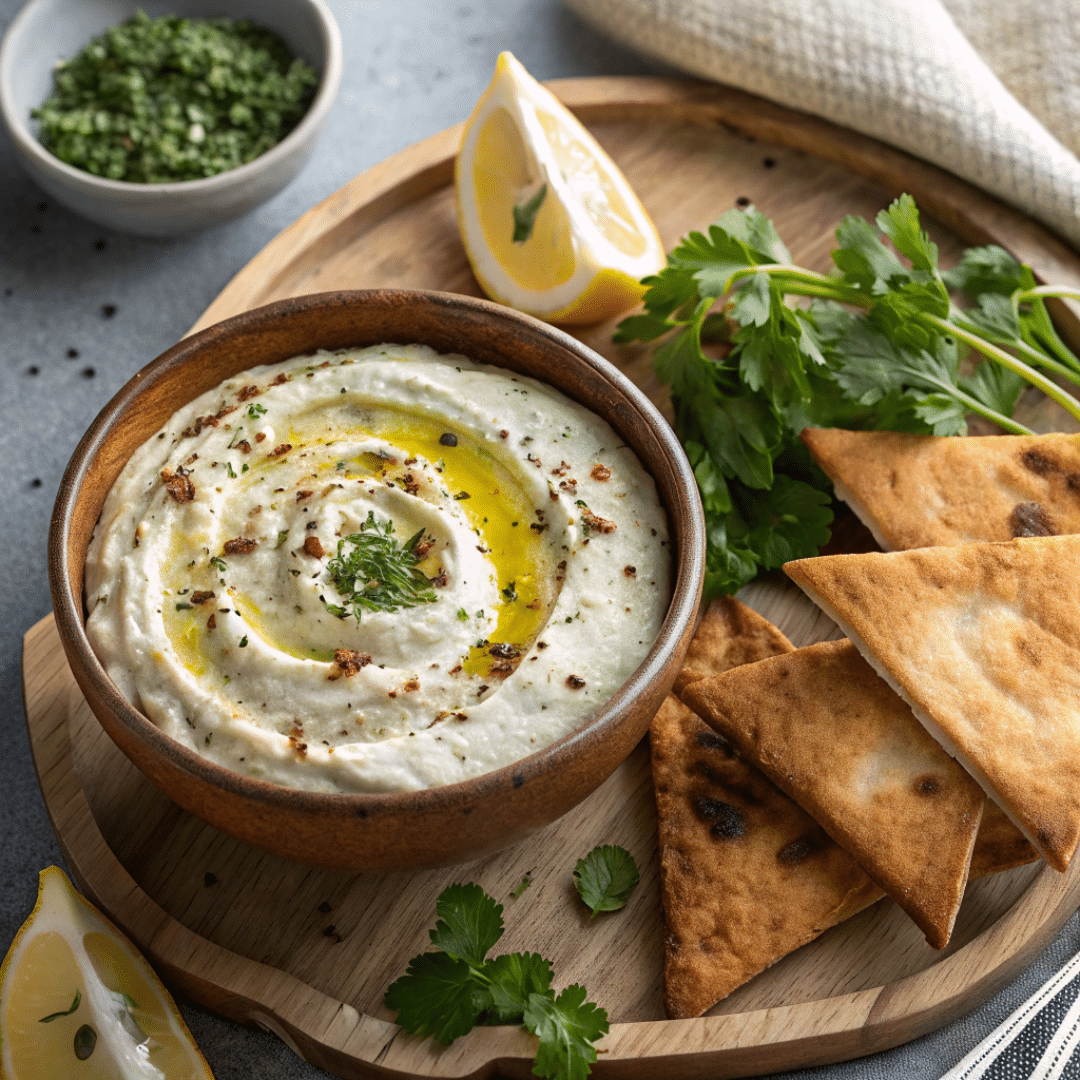
Smoky Eggplant Yogurt Pita
Ingredients
Method
- Preheat the oven to 425°F (220°C), pierce the eggplants several times, and roast on a baking sheet for about 45 minutes, turning halfway, until the skins are blackened and the flesh collapses when pressed.
- Alternatively, broil or grill the eggplants over high heat, rotating until evenly charred and fully softened.
- Let the eggplants cool slightly, then split and scoop the soft flesh into a colander, avoiding excess bitter skin.
- Drain the flesh for 1–2 hours to remove excess moisture and concentrate flavor.
- Transfer the drained eggplant to a food processor and add yogurt, tahini, lemon juice, garlic, and salt.
- Pulse in short bursts just until combined, stopping while small chunks remain for a rustic texture or blending slightly longer for a smoother spread.
- Taste and adjust with more lemon, salt, or tahini as needed until the smoky flavor leads and the balance feels clean.
- Spoon the mixture into a bowl, drizzle with olive oil, and finish with herbs, spices, or seeds if desired.
- Serve with warm pita bread for scooping or alongside crisp pita chips.
Notes
FAQ
What makes this smoky eggplant yogurt pita so reliable?
How do I choose the best eggplant at the market?
Can I substitute Greek yogurt with something thicker or thinner?
Which method gives the best smoke flavor — oven, broiler, or grill?
How do I prepare the charred flesh after roasting?
What are easy tips for getting good texture in the dip?
Should garlic be raw or cooked in this recipe?
How can I make crisp pita chips at home?
What toppings finish the dish well?
Can I make components ahead and how do I store them?
How should I reheat leftovers without losing texture?
Are there good dietary swaps for tahini or yogurt?
About The Author

John
John Watson is the passionate food enthusiast behind MePlusFood.com. With a deep love for exploring culinary delights, he shares honest restaurant reviews, mouthwatering recipes, and culinary adventures. Join John on his flavorful journey to savor the world one bite at a time.