French Bistro Crispy Duck Leg with Lentils and Bacon
Jump to Recipe
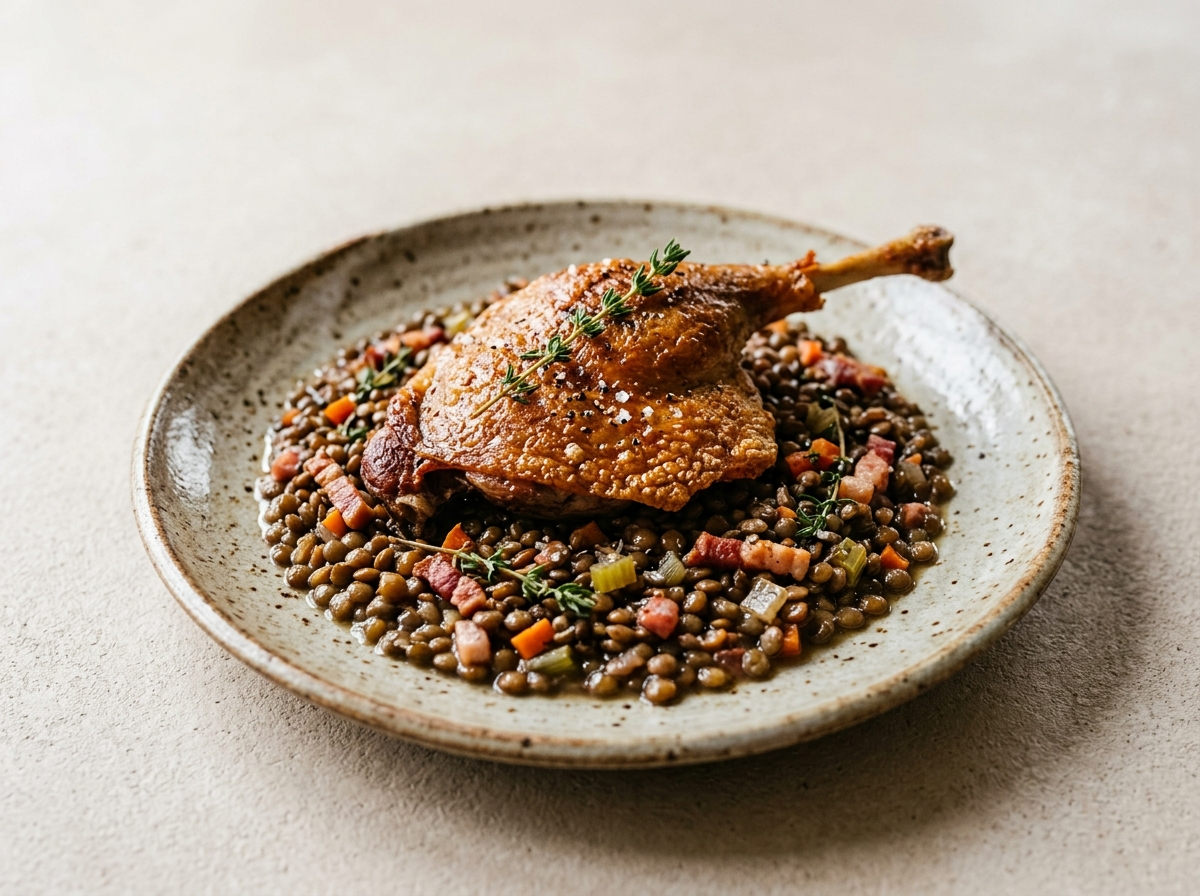
Crispy duck leg with lentils and bacon is a French bistro plate built on one simple trick: start the duck skin-side down in a cold pan so the fat renders out slowly, leaving skin that shatters when you bite into it.
While the duck finishes in the oven, you braise Puy lentils in the same rendered fat with bacon lardons, carrot, celery, and thyme. The lentils soak up everything good happening in that skillet.
I’ve burned my share of duck skin by rushing the heat. Go low and slow at the start and you won’t have that problem.
A splash of sherry vinegar at the end cuts through the richness so the whole plate doesn’t sit heavy. This is a weekend dinner that eats like something from a small Lyon bistro, in the same rustic vein as a slow cooked beef cheek bourguignon, but it comes together in about 65 minutes.
Why You’ll Love This Recipe
- Duck skin turns deep golden and shatter-crisp
- Lentils soak up rendered duck fat and bacon
- One skillet handles both duck and lentils
- Feels like a French bistro dinner at home
Ingredient Notes
- Duck legs: Look for legs with the thigh attached, 250-300 g each. Bone-in, skin-on is what gets you the crackling texture.
- Bacon lardons: Thick-cut bacon diced into small cubes works fine if you can’t find pre-cut lardons. Pancetta is a good swap for a milder, less smoky flavor.
- Puy or green lentils: These hold their shape after simmering. Red or split lentils turn to mush here, so skip those.
- Sherry vinegar: Adds a nutty tang that balances the duck fat. Red wine vinegar works as a substitute, just use slightly less.
- Chicken stock: Use low-sodium stock so you can control the salt once the bacon and duck fat are in the pot.
French Bistro Crispy Duck Leg with Lentils and Bacon
Ingredients
Method
- Pat duck legs dry and score the skin in a tight crosshatch, cutting through the fat but not into the meat.
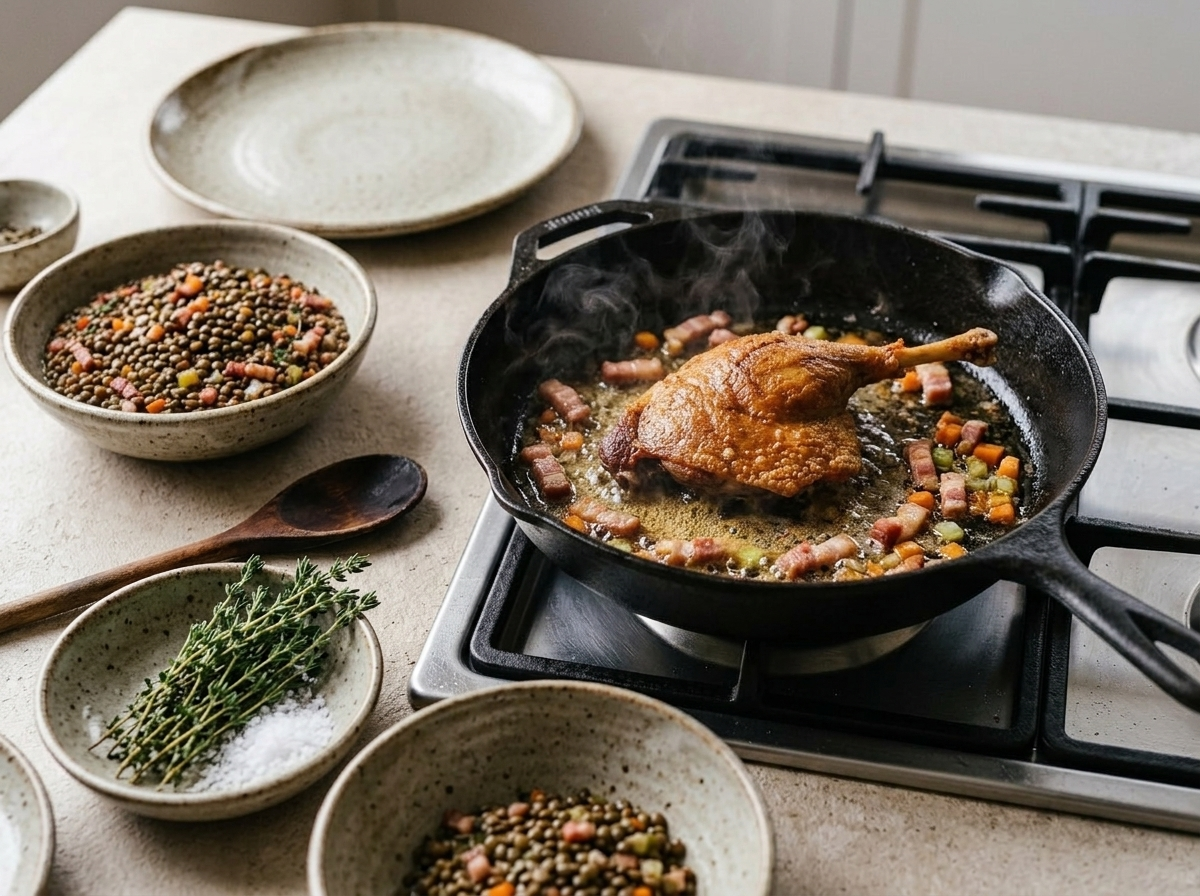
- Season both sides with salt and pepper, then place duck legs skin-side down in a cold, oven-safe skillet.
- Set the skillet over medium-low heat and let the fat render slowly for 12-15 minutes, until the skin is deep golden and most of the fat has pooled in the pan.
- Flip the duck legs and sear the flesh side for 2 minutes.
- Transfer the skillet to a 190 C / 375 F oven, skin-side up, and roast for 20-25 minutes until the internal temperature reaches 165 F / 74 C and the skin is crisp.
- Remove duck legs from the skillet, tent loosely with foil, and rest for 5 minutes while you finish the lentils. Reserve 2 tbsp of the rendered duck fat.
- While the duck roasts, cook the bacon lardons in a medium saucepan over medium heat for 5-6 minutes until crisp. Remove bacon and set aside, leaving the fat in the pan.
- Add the reserved duck fat, onion, carrot, and celery to the saucepan and cook for 5 minutes until softened.
- Stir in garlic and lentils, then add chicken stock, thyme, and bay leaf. Bring to a simmer.
- Cook uncovered for 20-25 minutes, stirring occasionally, until the lentils are tender but still hold their shape and most of the liquid has absorbed.
- Remove the bay leaf and thyme sprigs, stir the bacon back in, and deglaze with sherry vinegar, scraping up any browned bits.
- Season with salt and pepper, stir in the butter, and finish with chopped parsley.
- Spoon the warm lentils onto plates and set a crispy duck leg on top of each portion. Serve right away while the skin is still crackling.
Notes
- Render duck fat slowly on low heat or the skin burns before it crisps.
- Use dried Puy lentils, not canned, so they don't turn mushy.
- Save leftover duck fat for roasting potatoes another night.
- Deglaze with sherry vinegar right after cooking to lift the browned bits.
Tips for Success
- Start duck skin-side down in a cold pan so fat renders slowly without scorching the skin.
- Score the skin in a tight crosshatch to help fat escape and speed up crisping.
- Use Puy or green lentils, not red, so they hold their shape after 25 minutes of simmering.
- Skim excess duck fat from the skillet before adding stock so the lentils don’t turn greasy.
- Rest the duck legs 5 minutes after roasting so the juices settle before you slice.
Variations
- Swap bacon for pancetta and add a splash of white wine for a lighter, brighter lentil base.
- Stir in a handful of baby spinach at the end for color and a fresh, slightly bitter note.
- Use duck breast instead of legs and reduce oven time to 12 minutes for a rosier, faster dinner.
Storage and Reheating
Store leftover duck legs and lentils in separate airtight containers in the fridge for up to 3 days. Keep the duck skin uncovered or loosely wrapped so it doesn’t turn soft from trapped steam.
To reheat, warm the lentils in a saucepan over medium heat with a splash of stock until hot. Reheat the duck leg skin-side up under a broiler for 3-4 minutes, or in a 200 C / 400 F oven for 10 minutes, to bring back some crispness.
I don’t recommend freezing the duck skin separately, it never crisps back up the same way. The lentils freeze well on their own for up to 2 months.
Serving Suggestions
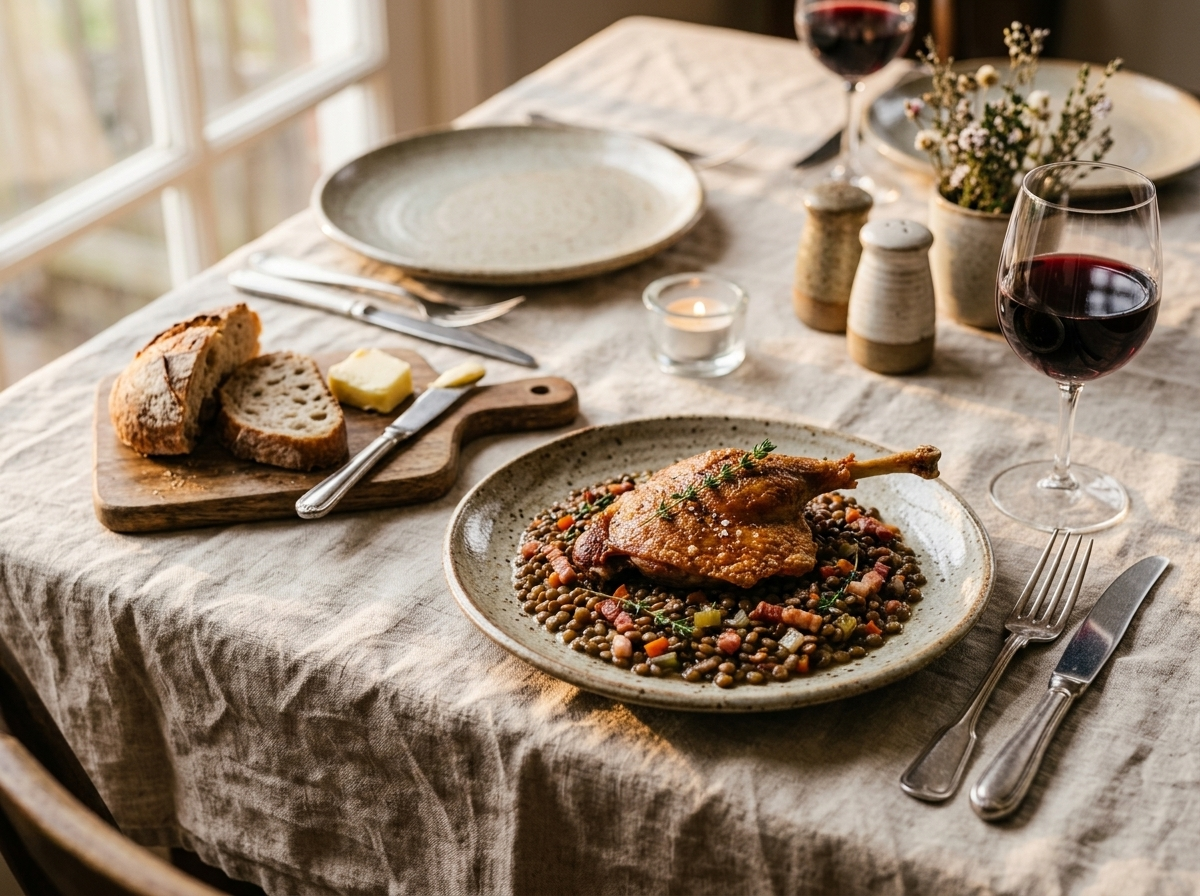
Spoon the lentils into shallow bowls and set the duck leg on top, much like plating a roasted duck with orange and star anise, so the skin stays visible and crisp. A drizzle of the pan juices over the lentils adds extra flavor without extra effort.
A simple green salad with a sharp mustard vinaigrette cuts the richness nicely. Crusty bread on the side is good for mopping up the lentil braising liquid.
For wine, a light Beaujolais or a dry Alsace Pinot Gris both work with the bacon and duck fat.
FAQ
Why isn’t my duck leg skin getting crispy?
Usually the pan was too hot too fast, which seizes the skin before the fat underneath renders out. Start skin-side down in a cold skillet and build heat gradually over 12-15 minutes. Patting the skin bone-dry before cooking also helps a lot.
Can I use canned lentils instead of dried for this duck leg recipe?
You can, but you’ll lose some of the braise’s depth since canned lentils don’t absorb the bacon fat and stock the same way. If using canned, drain them and add during the last 5 minutes just to heat through, skipping the 25-minute simmer.
Can I make the duck leg and lentils ahead of time?
Yes, the lentils actually taste better a day later once the flavors settle. Cook both components, cool, and refrigerate separately for up to 2 days, then reheat the duck under a broiler to re-crisp the skin before serving.
What wine goes well with crispy duck leg and lentils?
A light-bodied red like Beaujolais or a dry Pinot Gris both complement the dish. The bright acidity in either wine cuts through the rendered duck fat and bacon without fighting the earthy lentils.
Is crispy duck leg with lentils and bacon gluten free?
Yes, as written this dish is gluten free since duck, lentils, bacon, and stock don’t contain gluten. Just double check your chicken stock label, since some brands add gluten-based thickeners or flavorings.
What’s the difference between this and duck confit with lentils?
Duck confit is cured in salt and slow-cooked in fat for hours, giving fall-apart meat but softer skin. This crispy duck leg method sears and roasts in under an hour, similar in spirit to a honey glazed duck leg with braised cabbage, trading some tenderness for a crackling skin you don’t get with confit.
More from the kitchen
About The Author

John
John Watson is the passionate food enthusiast behind MePlusFood.com. With a deep love for exploring culinary delights, he shares honest restaurant reviews, mouthwatering recipes, and culinary adventures. Join John on his flavorful journey to savor the world one bite at a time.