Lemongrass Coconut Chicken Curry
Jump to Recipe
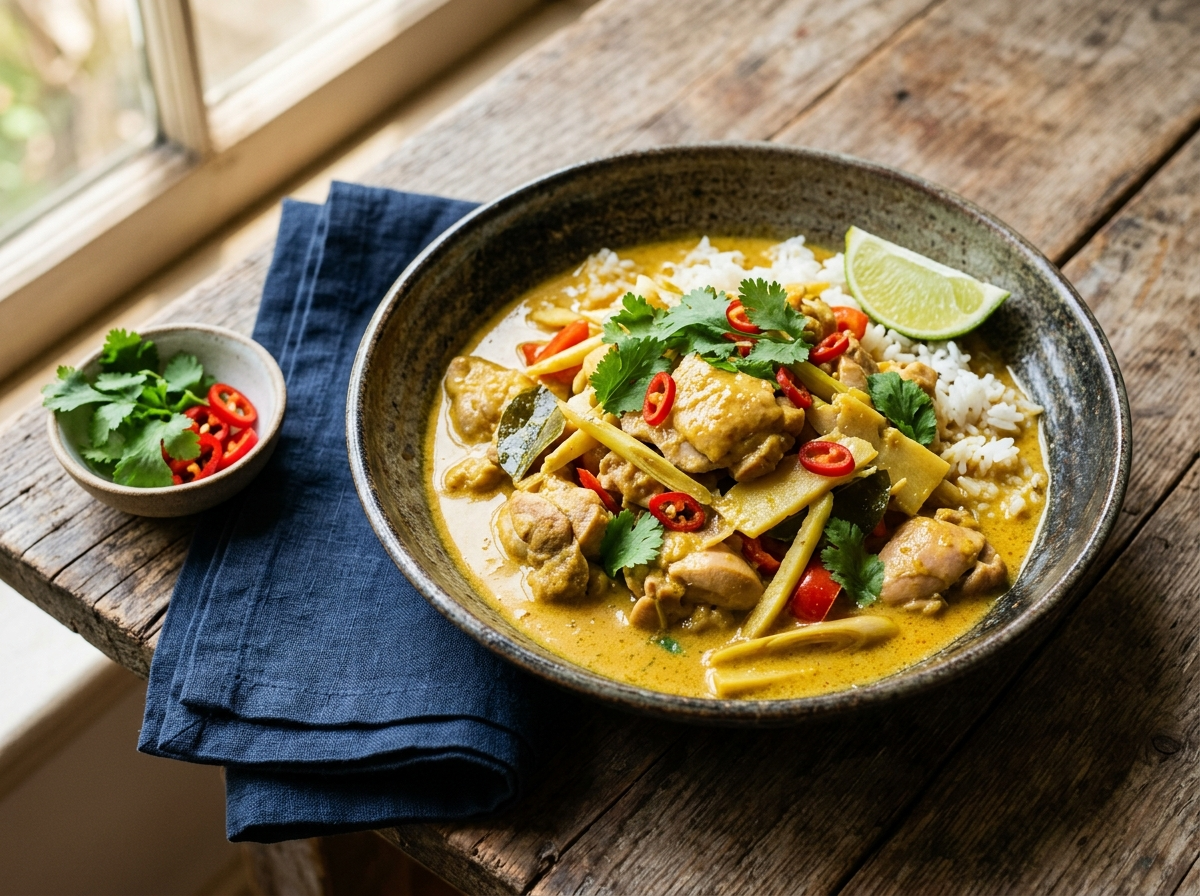
This curry gets most of its character from lemongrass, not a jarred curry paste. You bruise the stalks and let them steep directly in the coconut milk while everything else cooks, which gives the sauce a clean citrus-herbal note that paste alone can’t replicate.
The base is a short list: lemongrass, ginger, garlic, Thai red chili, fish sauce, and a full can of coconut milk. Most of those are pantry staples if you cook Asian food with any regularity.
Chicken thighs are the right cut here. They hold up to the braising time without drying out, and the fat from the skin (if you use skin-on) melts into the sauce and adds richness without any extra oil.
It all comes together in about 40 minutes on a single wide skillet or wok.
Why You’ll Love This Recipe
- Fresh lemongrass gives the sauce a clean, citrusy depth
- One pan, minimal cleanup, weeknight-friendly timing
- Coconut milk makes the sauce naturally creamy without dairy
- Chicken thighs stay tender even with a full simmer
Ingredient Notes
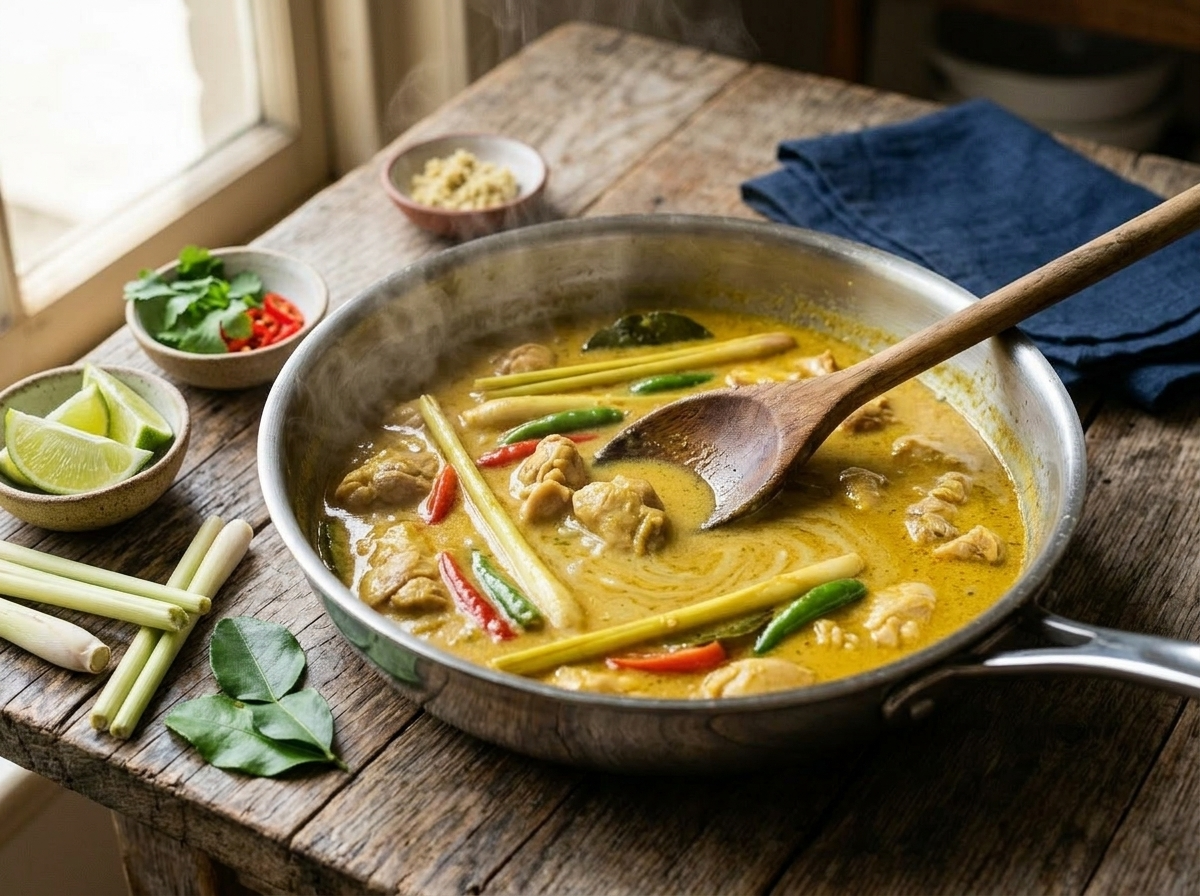
- Lemongrass: Use only the bottom 5-6 inches of the stalk, the pale part. Bruise it hard with the back of a knife before adding so the oils release into the sauce. Frozen lemongrass paste (1 tsp per stalk) works in a pinch but gives a slightly muddier flavor.
- Coconut milk: Full-fat canned coconut milk gives the sauce its body. Light coconut milk produces a thinner, less rich result. Shake or stir the can before opening since the cream separates.
- Chicken thighs: Boneless, skinless thighs are the easiest to serve, but bone-in skin-on add more flavor to the braising liquid. If using bone-in, add 10 extra minutes of cook time.
- Fish sauce: Fish sauce provides salt and umami here, so don’t skip it. For a vegetarian version, sub with soy sauce or tamari plus a small squeeze of lime.
- Thai red chili: One fresh red chili gives mild heat. Use two for a noticeable kick, or swap with a half teaspoon of red pepper flakes if fresh chilies aren’t available.
- Kaffir lime leaves: Optional but worth using if you can find them. Add 3-4 leaves with the lemongrass and remove before serving. They deepen the citrus layer noticeably.
Lemongrass Coconut Chicken Curry
Ingredients
Method
- Pat the chicken pieces dry with paper towels. Season lightly with salt and pepper on all sides.
- Heat the oil in a 12-inch wide skillet or wok over medium-high heat until shimmering.
- Add the chicken in a single layer without crowding. Sear for 3-4 minutes per side until golden brown. Work in two batches if needed. Transfer to a plate and set aside. The chicken does not need to be cooked through at this stage.
- Reduce heat to medium. In the same pan, add the sliced shallots and cook for 2-3 minutes, stirring, until softened and lightly golden at the edges.
- Add the garlic, grated ginger, and sliced chili. Cook for 1 minute, stirring constantly, until fragrant but not browned.
- Add the bruised lemongrass stalks and kaffir lime leaves if using. Stir to combine with the aromatics.
- Pour in the coconut milk and chicken stock. Stir in the fish sauce and brown sugar. Bring to a gentle simmer.
- Return the seared chicken to the pan, nestling the pieces into the sauce. The sauce should come about halfway up the chicken.
- Simmer on medium-low, partially covered, for 14-16 minutes until the chicken is cooked through and reads 74 C / 165 F on an instant-read thermometer.
- Remove the lid and increase heat slightly to medium. Simmer uncovered for a further 4-5 minutes until the sauce reduces and coats the back of a spoon.
- Remove and discard the lemongrass stalks and kaffir lime leaves.
- Stir in the lime juice. Taste and adjust with a few extra drops of fish sauce if it needs more salt, or a small pinch of sugar if too sharp.
- Spoon the curry over jasmine rice. Scatter fresh cilantro leaves on top and serve with lime wedges on the side.
Notes
Tips for Success
- Bruise lemongrass stalks firmly with the back of a chef’s knife before adding to release the aromatic oils.
- Sear the chicken thighs in a single layer until golden before adding the sauce, or they’ll steam instead of brown.
- Simmer uncovered the last 5 minutes to thicken the coconut sauce slightly if it looks too thin.
- Remove lemongrass stalks before serving since they’re fibrous and unpleasant to bite into.
- Add a small pinch of sugar to balance the salt from fish sauce if the sauce tastes flat.
Variations
- Swap chicken for peeled shrimp and cut cook time to 6-8 minutes total.
- Add 1 cup cubed sweet potato with the coconut milk for a heartier, starchy version.
- Stir in a handful of fresh spinach or sliced bok choy in the final 2 minutes for added greens.
Storage and Reheating
Store cooled curry in an airtight container in the fridge for up to 4 days. The coconut sauce thickens considerably overnight, which is fine, it loosens back up with a splash of water or broth when reheated.
To reheat, warm gently in a skillet over medium-low heat, stirring occasionally, until the chicken reaches 74 C / 165 F through. Avoid high heat since coconut milk can separate and look grainy.
This curry freezes well. Pack it flat in freezer bags and freeze for up to 3 months. Thaw overnight in the fridge before reheating.
Serving Suggestions
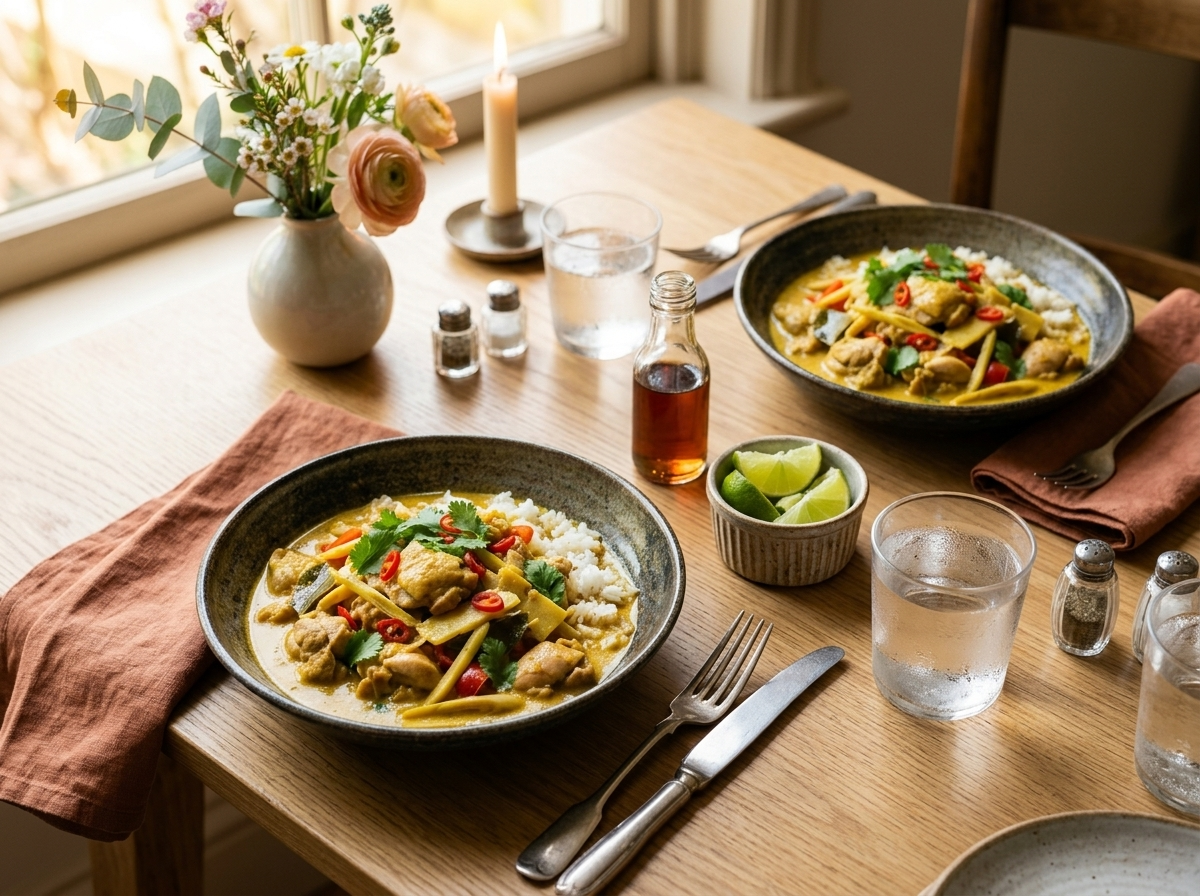
Jasmine rice is the standard pairing and it handles the sauce well. Serve it right next to the curry so diners can combine them on the plate, or spoon the curry directly over a mound of rice in a wide bowl.
For a lower-carb plate, cauliflower rice or thin rice noodles both work. A side of quick-pickled cucumber slices, not unlike a bright cucumber and herb bowl, cuts through the richness of the coconut milk and adds a sharp contrast.
Scatter fresh cilantro, a few slices of fresh red chili, and a wedge of lime over the top before bringing it to the table. A drizzle of coconut cream finishes it cleanly if you want a richer presentation.
FAQ
Why does my lemongrass coconut curry sauce look grainy or separated?
Coconut milk splits when it’s boiled too hard or for too long. Keep the heat at a steady simmer rather than a rolling boil, and you’ll get a smooth, glossy sauce. If it does separate, whisk in a tablespoon of cold coconut milk off the heat.
Can I use coconut cream instead of coconut milk in this curry?
Coconut cream works and produces a noticeably richer, thicker sauce. Thin it with about 60 ml of water or chicken stock to keep the consistency saucy rather than paste-like.
Can I make this lemongrass chicken curry ahead and reheat it for a dinner party?
Yes, and it actually tastes better the next day after the lemongrass and ginger have had more time to infuse the sauce. Make it up to 2 days ahead, refrigerate, and reheat gently on the stovetop over medium-low heat.
What goes well alongside lemongrass coconut chicken curry at the table?
Jasmine rice is the most natural match since it absorbs the sauce without competing with the lemongrass fragrance. A sesame-dressed noodle or cucumber salad adds a cool, acidic contrast that balances the richness.
Is lemongrass coconut chicken curry gluten-free?
It is, provided you use a gluten-free fish sauce, which most Thai brands are, and check your coconut milk label for any added thickeners. Serve over rice or rice noodles to keep the whole meal gluten-free.
What’s the difference between this lemongrass curry and a standard Thai green or red curry?
Thai green and red curries get their base flavor from a pre-made paste of chilies, shrimp paste, and spices. This lemongrass coconut curry skips the paste and builds flavor directly from fresh lemongrass, ginger, and garlic, so the citrus note is more pronounced and less spice-blend-forward.
About The Author

John
John Watson is the passionate food enthusiast behind MePlusFood.com. With a deep love for exploring culinary delights, he shares honest restaurant reviews, mouthwatering recipes, and culinary adventures. Join John on his flavorful journey to savor the world one bite at a time.