Thai Basil Beef Stir Fry
Jump to Recipe
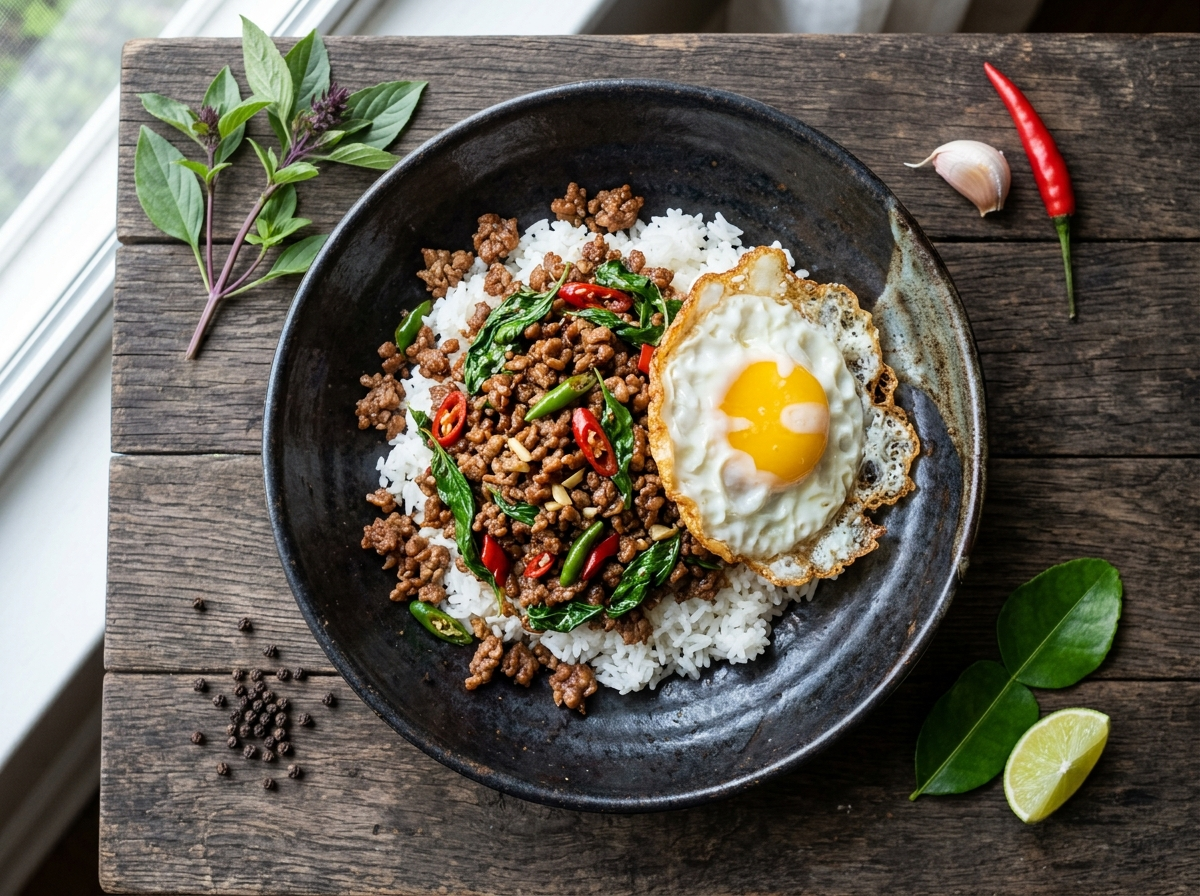
Thai basil beef, known in Thailand as pad kra pao, is one of those dishes that street food stalls turn out in under five minutes. The appeal is the contrast: savory, slightly sweet beef with crispy edges, cut through by the sharp, clove-like bite of fresh holy basil.
The sauce is four ingredients – oyster sauce, fish sauce, a touch of sugar, and a splash of water. That’s it. The complexity comes from the heat of the wok and a generous handful of chilies and garlic that go in first.
I use 80/20 ground beef here because the fat content helps the meat get those browned, almost crispy bits on the bottom of the pan, the same reason ground pork in a wok stir fry benefits from higher fat content. Leaner beef or sliced flank steak both work, but you lose some of that texture.
Serve it over jasmine rice with a fried egg on top if you want to eat it the way most Thais do. The yolk breaks into the sauce and ties everything together.
Why You’ll Love This Recipe
- Crispy, caramelized beef edges from high-heat cooking
- Four-ingredient sauce you can build from pantry staples
- Fresh Thai basil added last keeps the aroma sharp
- Comes together in under 20 minutes on a single pan
Ingredient Notes
- Ground beef (80/20): The higher fat content helps the beef brown and crisp rather than steam. You can use ground pork or a mix of both – common in Thailand.
- Fresh Thai basil (holy basil preferred): Holy basil has a sharper, more clove-forward flavor than sweet Thai basil, and it’s the authentic choice for pad kra pao. Sweet Thai basil is a fine substitute and easier to find at most grocery stores.
- Oyster sauce: Gives the sauce its glossy body and a deep, slightly briny sweetness. For a gluten-free version, use a tamari-based oyster sauce or coconut aminos plus a pinch of sugar.
- Fish sauce: Adds salt and fermented depth. If you need to keep this dish fish-free, substitute soy sauce or tamari, though you’ll lose some of the funk that makes the dish.
- Thai chilies (bird’s eye): These are small and genuinely hot. Start with 2 and taste – you can always add more. Serrano or fresno chilies work as a milder substitute.
- Garlic: Use fresh cloves, not jarred paste. You want real texture and bite here. Roughly chop rather than mince so you get small toasted pieces in the finished dish.
Thai Basil Beef Stir Fry
Ingredients
Method
- Combine oyster sauce, fish sauce, soy sauce, sugar, and water in a small bowl. Stir until the sugar dissolves. Set aside.
- Roughly chop the garlic cloves so you get small uneven pieces. Slice the chilies into thin rounds. Thinly slice the shallots.
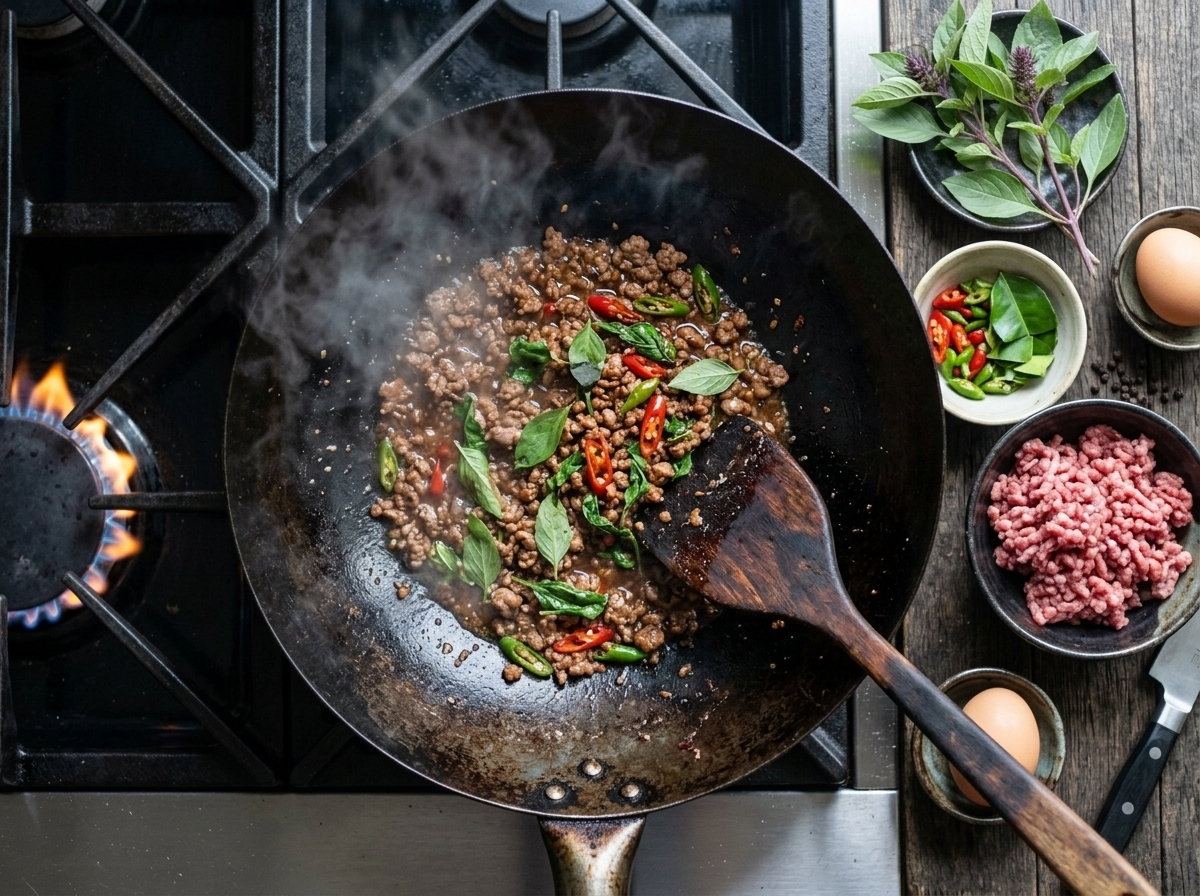
- Heat a wok or large skillet over high heat until smoking. Add the vegetable oil and swirl to coat.
- Add garlic, chilies, and shallots. Stir constantly for 30 to 45 seconds until fragrant and the garlic just starts to turn golden at the edges.
- Add the ground beef in an even layer. Press it flat against the pan and leave undisturbed for 60 to 90 seconds until the bottom develops a brown, caramelized crust.
- Break up the beef with a spatula and continue cooking over high heat, stirring occasionally, for 3 to 4 minutes until most of the pink is gone and you see crispy browned bits throughout.
- Pour in the sauce mixture. Stir to coat the beef evenly and cook for 1 minute until the sauce thickens slightly and glazes the meat.
- Remove the wok from the heat. Add the fresh basil leaves and fold them in quickly - residual heat will wilt them in about 20 to 30 seconds.
- Spoon the beef over steamed jasmine rice. Top each plate with a fried egg if using, and serve immediately while the basil fragrance is still strong.
Notes
Tips for Success
- Get the wok or skillet ripping hot before adding oil – the meat should sizzle and sear on contact.
- Press the beef flat against the pan and resist stirring for 60 to 90 seconds to build those caramelized edges.
- Add the basil off the heat or in the final 30 seconds only – prolonged heat turns it limp and dull.
- Mix the sauce ingredients in a small bowl before you start cooking so you can pour it in one motion without fumbling.
- Use a wok if you have one – the sloped sides let you push the beef to the edge and fry garlic and chilies in the center without crowding.
Variations
- Swap ground beef for thinly sliced flank steak for a chewier, restaurant-style texture.
- Use ground chicken or pork with the same sauce for a lighter version that still has full flavor.
- Make it vegetarian by using crumbled firm tofu and replacing fish sauce with soy sauce plus a drop of rice vinegar.
Storage and Reheating
Store leftover Thai basil beef in an airtight container in the fridge for up to 3 days. The basil will darken and soften, but the flavor holds well.
Reheat in a hot skillet for 2 to 3 minutes rather than the microwave – this brings back some of the caramelized edges that go soggy when steamed. Add a splash of water if the sauce has thickened too much.
Freezing is possible but not ideal. The beef texture survives freezing for up to 2 months, but the basil essentially disappears. If you freeze it, stir in a fresh handful of basil when reheating.
Serving Suggestions
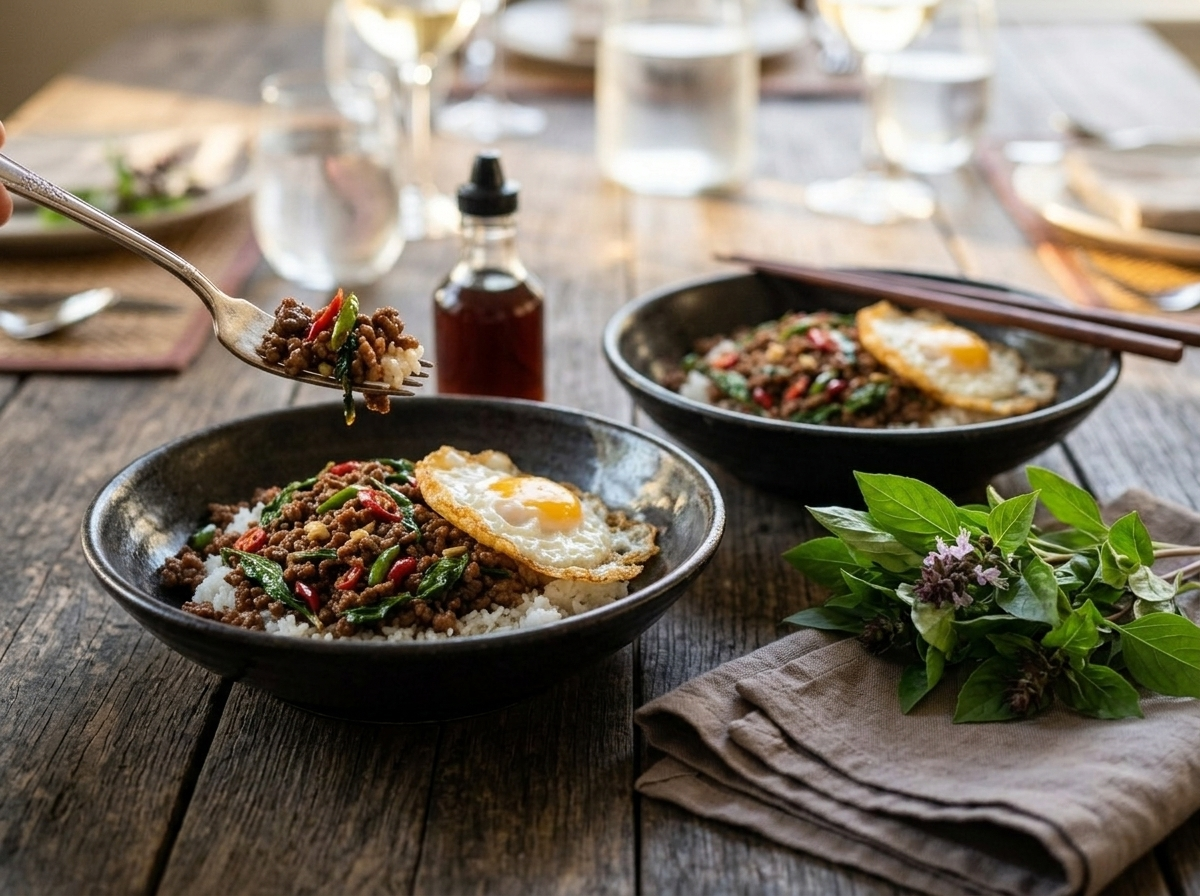
The standard serve is over steamed jasmine rice with a fried egg on top – the runny yolk is not optional if you want the full experience. Use a sunny-side egg so the yolk stays loose.
For a lower-carb plate, spoon the beef over cauliflower rice or thinly shredded cabbage that’s been lightly wilted in the same pan. The sauce soaks in well either way.
For a spread, pair it with Thai cucumber salad and a fragrant lemongrass coconut chicken curry. The cool, lightly pickled cucumber cuts through the richness of the beef and balances the heat from the chilies.
FAQ
Why does my Thai basil beef turn out grey instead of getting crispy brown edges?
The pan isn’t hot enough, or there’s too much meat crowded in at once. Cook in a single layer over high heat and don’t stir for the first minute – that contact time is what builds the brown crust.
Can I use sweet basil instead of holy basil in pad kra pao?
Yes, sweet Thai basil works and is the most common substitute outside Thailand. It’s milder and slightly anise-forward rather than peppery, so the dish will taste a little softer but still good.
Can I make Thai basil beef ahead and reheat it for meal prep?
The beef and sauce reheat well up to 3 days out, but don’t add the basil until you’re ready to serve. Stirring in fresh basil after reheating keeps the fragrance alive.
What goes well with Thai basil beef besides rice?
A fried egg on top is the classic pairing – it’s how it’s typically served at Thai street stalls. A simple cucumber salad with rice vinegar and a pinch of sugar also balances the heat well.
Is Thai basil beef stir fry gluten-free?
Standard oyster sauce contains wheat, so the dish as written is not gluten-free. Use a certified gluten-free oyster sauce or substitute tamari for both the oyster and fish sauce to make it safe for a gluten-free diet.
What’s the difference between pad kra pao and other Thai stir fries like pad see ew?
Pad kra pao uses holy basil and a light fish-and-oyster sauce base with chilies – it’s punchy, fragrant, and saucy but not sweet. Pad see ew uses wide rice noodles, dark soy sauce, and Chinese broccoli, giving it a sweeter, stickier profile with no basil.
Loved this? Try these next
About The Author

John
John Watson is the passionate food enthusiast behind MePlusFood.com. With a deep love for exploring culinary delights, he shares honest restaurant reviews, mouthwatering recipes, and culinary adventures. Join John on his flavorful journey to savor the world one bite at a time.